
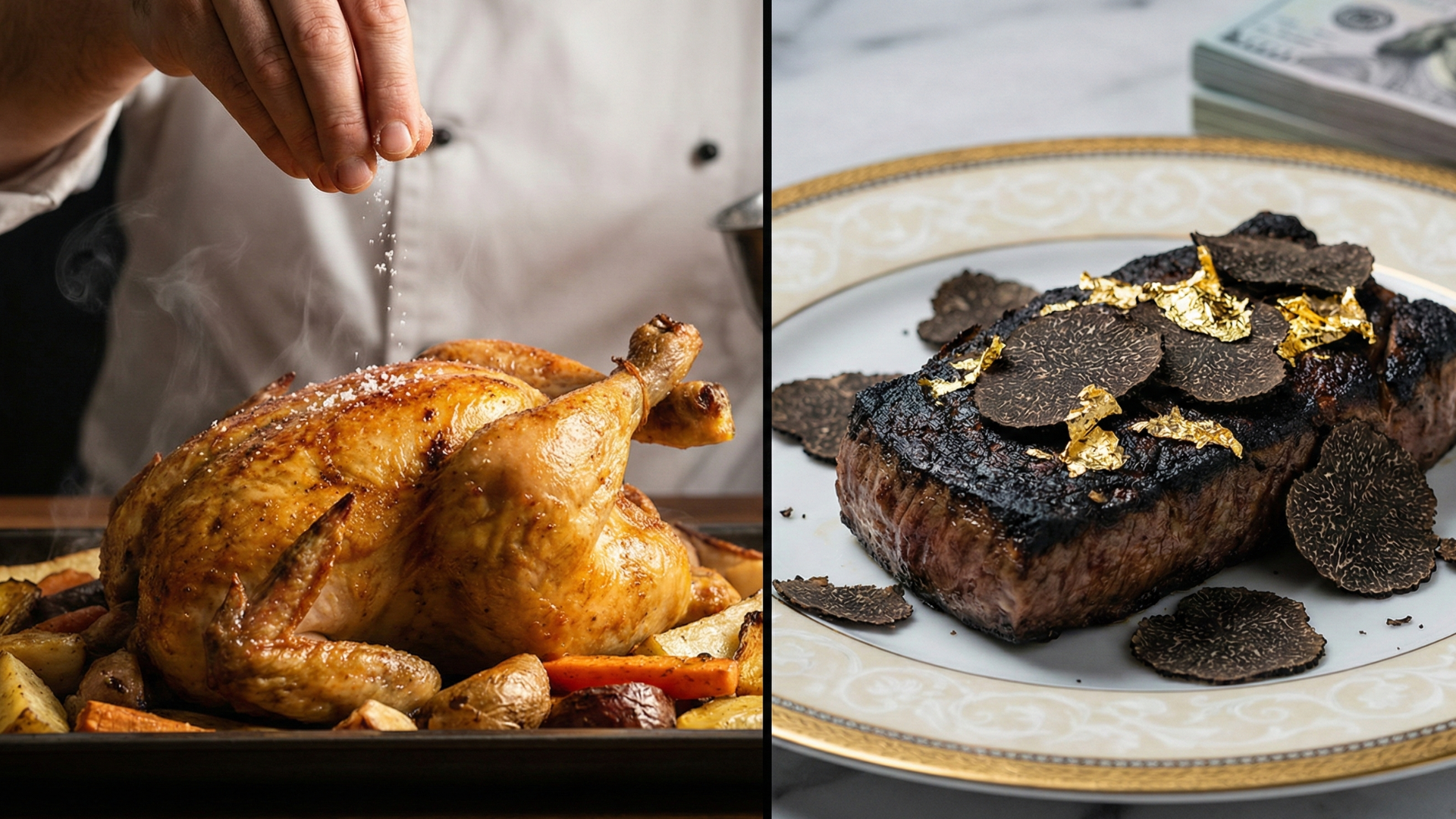
Why Expensive Ingredients Don’t Make You a Better Cook
The assumption that premium ingredients automatically produce superior results pervades cooking culture, creating the belief that buying better costs more and that budget constraints prevent good cooking. This narrative benefits specialty food retailers and creates aspirational shopping habits, but it misrepresents how cooking actually works and what separates good results from mediocre ones. Technique, timing, and understanding what you’re doing matter far more than ingredient price points for most home cooking situations. Expensive ingredients can enhance dishes when used appropriately, but they cannot compensate for poor execution and often get wasted when cooks don’t understand how to handle them properly. The gap between ingredient cost and cooking results is larger than food marketing suggests. A skilled cook produces better meals with standard ingredients than an inexperienced cook produces with premium ones. Understanding this distinction helps you invest cooking energy where it actually improves results rather than assuming that spending more money solves cooking challenges. Technique Trumps Ingredients in Most Situations Proper cooking methods transform ordinary ingredients into good food while poor technique ruins expensive ingredients just as effectively as cheap ones. Heat control matters more than ingredient quality for most cooking tasks. Knowing when to use high heat versus low heat, understanding how pans retain and distribute heat, recognizing when food is properly seared versus burned—these skills affect results regardless of what you’re cooking. Seasoning appropriately with salt makes more difference to flavor than buying premium ingredients. Under-seasoned expensive steak tastes worse than properly salted standard steak. Salt enhances and balances flavors in everything you cook, making it the most impactful flavor element in your kitchen. Timing doneness correctly prevents ruining good ingredients. Overcooked expensive fish becomes dry and disappointing just like overcooked cheap fish. Knowing when food is done—through temperature, texture, or visual cues—preserves quality regardless of what you paid for ingredients. Understanding cooking processes like browning, deglazing, reducing, and emulsifying creates flavor through technique. These methods develop complexity from basic ingredients without requiring expensive specialty items. Knife skills affect cooking results by ensuring even cooking and proper texture. Uniformly cut vegetables cook evenly while haphazardly chopped ones create texture inconsistencies and uneven doneness regardless of vegetable quality. Building flavors through layering aromatics, acids, fats, and seasonings creates depth that expensive single ingredients cannot provide. Knowing how to develop flavor through cooking process matters more than starting with premium ingredients. The cook who understands these fundamentals produces better food with ordinary ingredients than someone who buys expensive items but doesn’t know how to handle them properly. Expensive Ingredients Often Get Wasted Through Misuse Premium ingredients require appropriate handling and preparation that inexperienced cooks often don’t provide, resulting in wasted money and disappointing results. High-end proteins get overcooked constantly because people don’t understand doneness temperatures or resting periods. A $40 steak cooked to 180°F internal temperature tastes worse than a $12 steak cooked to 135°F and rested properly. Delicate ingredients like fresh herbs, specialty greens, or premium produce deteriorate quickly when stored improperly. Buying expensive ingredients without knowing how to store them means watching them spoil before you use them. Subtle flavor differences in premium ingredients disappear when overwhelmed by heavy sauces or aggressive seasonings. Using truffle oil on heavily seasoned pasta wastes the truffle because you can’t taste it through everything else. Expensive cuts of meat get treated like lesser cuts requiring long cooking times. Cooking tender premium cuts low and slow turns them dry and tough when they should be cooked quickly at high heat. Specialty ingredients get used in inappropriate applications where their unique qualities don’t matter. Using expensive olive oil for high-heat cooking destroys its flavor compounds—you might as well use regular oil. Premium ingredients often shine best with minimal preparation. Buying them then cooking them elaborately can mask rather than highlight what you paid for. The expensive ingredient needed simple treatment, not complex preparation. The waste comes from not understanding how ingredients work rather than from the ingredients themselves being problematic. Standard Ingredients in Good Recipes Outperform Premium Ingredients in Bad Ones Recipe quality and cooking method matter more than ingredient cost for determining final results. Well-developed recipes using ordinary ingredients produce consistent good results. A tested recipe with proper ratios, cooking times, and technique guidance succeeds with standard ingredients. Poor recipes fail regardless of ingredient quality. Using expensive butter in a bad cake recipe still produces bad cake. The recipe’s structural problems—wrong ratios, incorrect technique, poor method—create failure that ingredients cannot fix. Recipe testing and development creates reliability. Recipes from sources that actually test their formulas work better than recipes thrown together without verification, regardless of suggested ingredients. Understanding why recipes work allows substitution of standard ingredients for premium ones. When you know the recipe’s underlying logic, you can adapt ingredient choices while maintaining good results. Traditional recipes evolved using available affordable ingredients. Classic dishes became classics using whatever people had access to, not specialty items. These recipes work because they’re fundamentally sound, not because they require expensive ingredients. Home cooks often achieve better results following reliable recipes with basic ingredients than attempting ambitious recipes with premium ingredients they don’t know how to handle. The recipe quality determines the outcome more than the ingredient quality in most home cooking situations. Ingredient Quality Matters Most Where Ingredients Aren’t Transformed The situations where premium ingredients genuinely improve results involve minimal cooking that showcases the ingredient rather than transforming it. Fresh raw applications like salads, caprese, or crudo highlight ingredient quality because there’s no cooking to develop flavor. When ingredients are eaten raw or barely cooked, their inherent quality matters significantly. Simple preparations with few ingredients put the spotlight on each component. Pasta with garlic and olive oil showcases the olive oil quality. Margherita pizza highlights the tomato and mozzarella. These simple dishes benefit from better ingredients because there’s nowhere to hide. Finishing elements added at the end taste exactly like themselves without transformation. The final drizzle of olive oil, the shaving of Parmesan, the squeeze of lemon—these additions aren’t cooked, so their quality is directly