
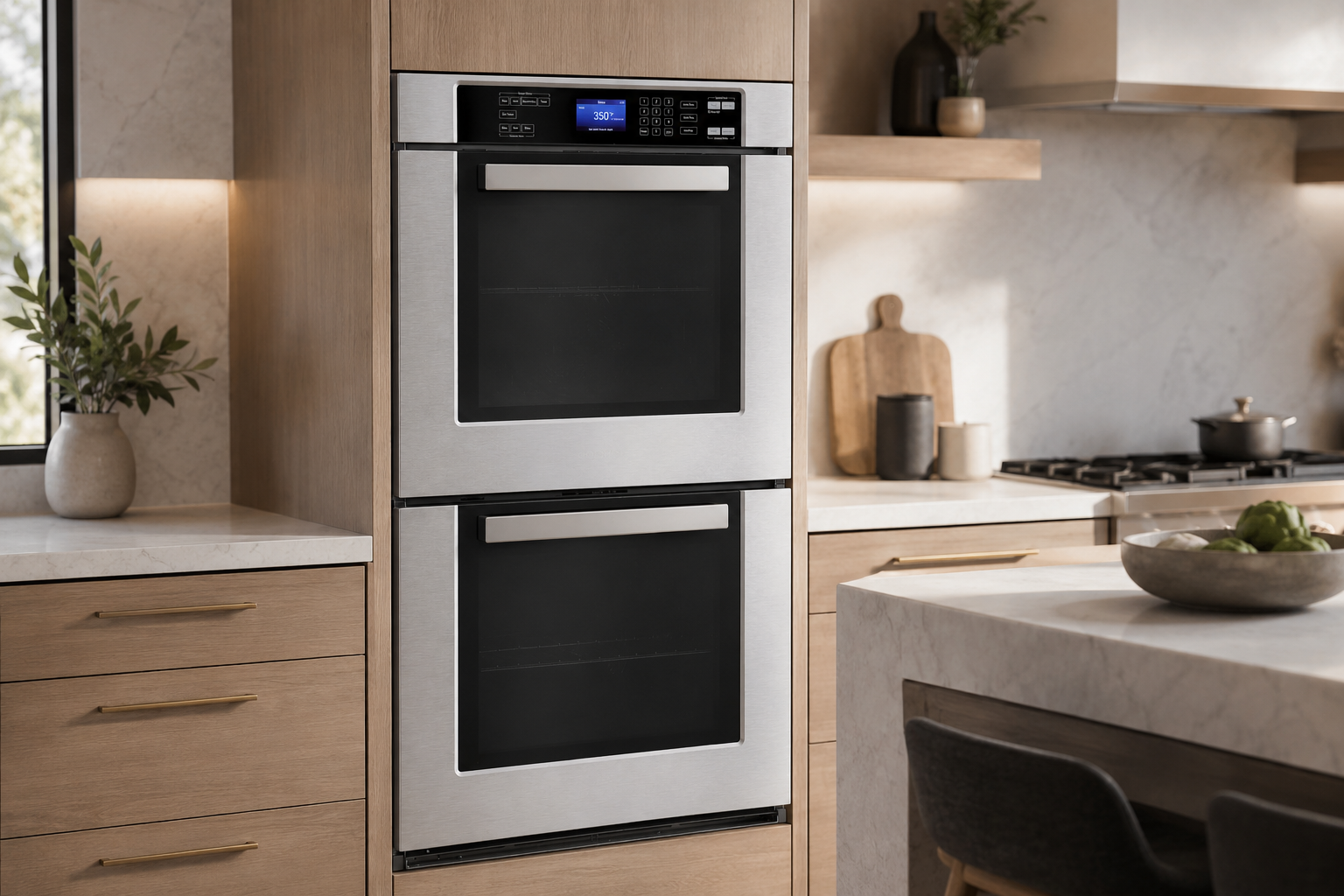
convection wall oven

The COS-30EDWC Double Wall Oven: Two 5.0 Cu. Ft. Cavities with Turbo True European Convection

Wall ovens change the way a kitchen functions. Separating the oven from the cooktop creates independent cooking zones that improve workflow, allow more ergonomic oven access, and open up layout possibilities that traditional ranges can’t provide. The COS-30EDWC takes this further by stacking two full 5.0 cubic foot ovens into a single 30-inch built-in unit, giving you 10 cubic feet of total oven capacity within the footprint a single wall oven would otherwise occupy. Both cavities include Turbo True European Convection with a fan-assisted circular heating element, self-cleaning functions, soft touch controls with LED displays, interior lighting, and a temperature probe for precise internal food monitoring. The brushed stainless steel exterior pairs with distinctive blue porcelain interiors that make the interior cavity easy to monitor and simple to clean. What makes this oven genuinely useful for households that cook seriously is the simultaneous independent operation of two full-sized cavities. Running a roast in one oven at 325°F while baking at 375°F in the other isn’t a compromise — both cavities maintain their set temperatures independently, run their own timers, and operate entirely separately. Holiday cooking, batch baking, and multi-course entertaining all become significantly more manageable when two complete ovens are available at once rather than sequencing dishes through a single cavity. Why Two Ovens In One Unit Makes Practical Sense The logic behind double wall ovens becomes clear quickly once you’ve spent time managing a busy kitchen with only one oven available. Simultaneous Independent Cooking: Single ovens force compromises when recipes require different temperatures. You either cook sequentially, letting something cool while the oven adjusts, or you pick a middle temperature that’s ideal for neither dish. Two independent cavities eliminate this entirely. Both ovens maintain precise independent temperatures, letting you cook dishes on their own terms without adjustments or timing gymnastics. Footprint Efficiency: The COS-30EDWC fits two complete 5.0 cu. ft. ovens into a 30-inch wide built-in installation. Buying two separate single wall ovens would require two separate cabinet cutouts and considerably more wall space. The stacked configuration delivers double the capacity within the same lateral footprint, making it an efficient solution for kitchens where wall space is limited. Ergonomic Oven Access: Built-in wall ovens install at heights that put oven interiors at or near counter level, eliminating the bending required to access floor-level range ovens. The COS-30EDWC’s upper cavity typically aligns with counter height, making loading and checking food straightforward. The lower cavity sits below counter level but remains more accessible than a range oven that’s nearly at floor height. Holiday and Entertaining Capacity: Thanksgiving, Christmas, and large dinner party cooking routinely expose the single-oven limitation. Needing to coordinate multiple dishes through one oven creates logistical challenges that affect timing, food temperature, and host stress levels. Two complete ovens running simultaneously handle these high-demand situations without compromise. Separation of Functions: Having two ovens lets you dedicate one to long, slow cooking while keeping the other available for shorter tasks. A pork shoulder braising at 275°F for six hours doesn’t need to monopolize your only oven, preventing any other baking or roasting for that entire period. The second cavity remains available throughout. Turbo True European Convection Explained The Turbo True European Convection system in both cavities represents meaningfully different technology from standard convection, and understanding why matters for evaluating what this oven actually delivers. What Standard Convection Does: Basic convection ovens add a fan to circulate air around food. This circulation reduces hot spots and speeds cooking compared to conventional radiant heat alone. The fan creates movement that prevents the stagnant air layers that cause uneven baking in traditional ovens. What True European Convection Adds: True European Convection, sometimes called third element convection, adds a dedicated circular heating element surrounding the fan at the back of the oven cavity. This element heats air as the fan circulates it rather than just moving air that’s being heated by the oven’s main elements. The result is more consistent temperature distribution throughout the entire cavity, from front to back and corner to corner. Turbo Operation: The Turbo designation indicates higher fan speeds that increase air circulation intensity beyond standard convection. Greater airflow means faster heat transfer to food surfaces, improving browning and reducing cooking times more significantly than standard convection. Turbo convection particularly benefits items that need surface browning alongside thorough internal cooking. Practical Baking Benefits: Even temperature distribution means multiple sheet pans bake consistently without requiring mid-bake rotation. Cookies on the top rack brown at the same rate as those on the bottom rack. Cakes bake evenly without domed tops from hot centers. This consistency is particularly valuable in a 5.0 cu. ft. cavity where larger batches and multiple rack positions are regularly in use. Roasting Advantages: Convection roasting circulates hot air around all exposed surfaces simultaneously, developing browning on more of the exterior than conventional radiant heat achieves. Chicken skin crisps more thoroughly, roast vegetables caramelize more evenly, and large cuts develop better exterior crust while maintaining internal moisture. Temperature Adjustment: Convection cooking typically requires reducing recipe temperatures by 25°F or shortening cooking times by 20-25% compared to conventional oven recipes. The Turbo European Convection system accelerates this effect further, so recipes developed for conventional ovens need attention to timing when converted to Turbo operation. Seven Oven Functions and When to Use Each Both cavities offer seven oven functions covering a range of cooking applications beyond simple baking and roasting. Bake: Standard bake mode uses both top and bottom heating elements without fan assistance for conventional radiant heat cooking. This mode suits recipes developed for traditional ovens and techniques where air circulation would be disruptive — delicate soufflés, custards, and cheesecakes that benefit from gentle, even heat rather than active air movement. Convection Bake: Activates the fan and circular heating element for even temperature distribution throughout the cavity. This is the everyday workhorse function for most baking and roasting tasks, delivering faster and more consistent results than standard bake for most foods. Convection Roast: Similar to convection bake but optimized
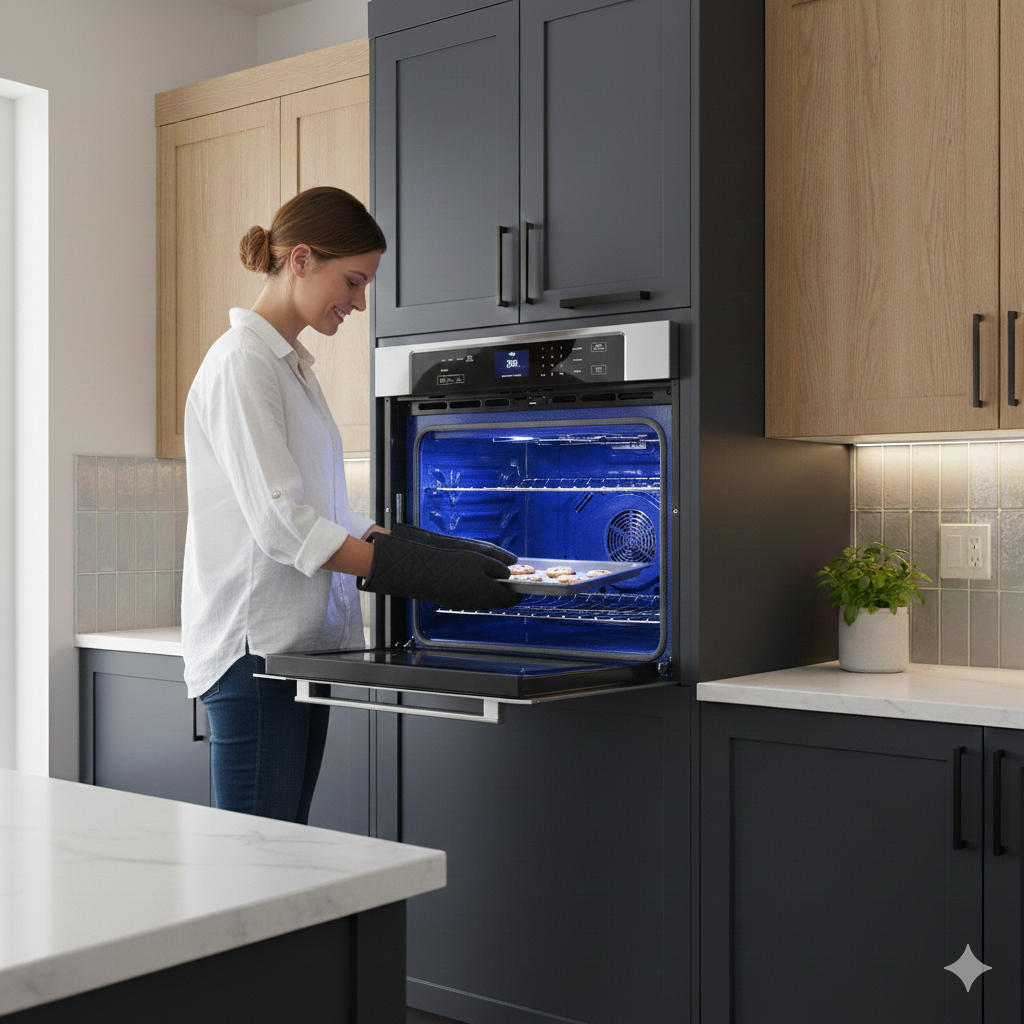
The COS-30ESWC Wall Oven: 30-Inch European Convection with Brilliant Blue Porcelain Interior

Wall ovens free kitchens from the constraints of traditional range-and-oven combinations by allowing separate installation of cooking surfaces and ovens at ergonomic heights. The COS-30ESWC provides this flexibility in a 30-inch single oven configuration with 5.0 cubic foot capacity, Turbo True European Convection technology, seven oven functions, and a brilliant blue porcelain interior that distinguishes it visually from standard black or white oven cavities. Part of Cosmo’s EWC Series, this built-in wall oven combines European convection engineering with modern soft touch controls, self-cleaning functionality, and included temperature probe for precise cooking. The 30-inch wall oven format represents the most common residential size, fitting standard cabinet openings while providing adequate cooking capacity for typical household needs. European convection systems position a circular heating element around the fan rather than using separate heating elements with fan circulation, creating more direct heat distribution. The substantial 5.0 cu. ft. capacity handles large cooking projects while the seven oven functions address various cooking tasks from baking to broiling. For households wanting separated cooking equipment that positions the oven at comfortable working height rather than requiring bending to floor level, wall ovens provide ergonomic and kitchen design advantages. 5.0 Cubic Foot Capacity for Substantial Cooking The generous 5.0 cu. ft. oven capacity provides substantial interior space that accommodates large cooking projects without stepping up to double oven configurations. Large roasting pans, full-size sheet pans, and oversized casseroles all fit comfortably in the spacious cavity. This volume eliminates frustration from trying to squeeze large items into inadequate ovens. Holiday cooking when you need to roast large turkeys or prepare multiple dishes benefits from the capacity. The volume handles Thanksgiving birds and accompanying sides without requiring rotation or creative positioning. Multiple rack positions with substantial vertical clearance allow cooking several dishes simultaneously at different heights. The convection fan ensures consistent heating across all rack levels. Family-sized meals and batch cooking fit naturally in the 5.0 cu. ft. space. You can prepare large lasagnas, big batches of cookies, or multiple casseroles without space constraints. The capacity serves serious home cooking without the excessive size and cost of larger ovens that many households rarely need. This volume balances capability with reasonable kitchen space requirements. Standard 30-inch width maintains the capacity in typical wall oven dimensions that fit common cabinet openings. You get substantial volume without requiring custom cabinetry for oversized appliances. Turbo True European Convection for Even Heating The European convection system represents a distinct engineering approach that positions heating elements directly around the fan for more efficient heat distribution. Circular heating element surrounding the convection fan creates heated airflow directly at the fan rather than heating air separately and then circulating it. This integrated approach delivers more consistent temperatures throughout the oven cavity. Fan-assisted heat distribution eliminates hot and cold spots that plague conventional ovens. The forced air circulation ensures food cooks evenly regardless of rack position. Faster cooking times result from efficient heat transfer through moving air. Many foods cook 25% faster in convection ovens while achieving better browning. More consistent results across all rack positions allow cooking multiple items simultaneously with confidence. Bottom rack items don’t undercook while top rack ones overbrown. The European engineering approach to convection creates performance advantages over basic fan-circulation systems. The integrated heating element and fan design represents more sophisticated implementation. Energy efficiency improves through faster cooking at lower temperatures. Convection allows reducing oven temperature by 25°F compared to conventional baking while achieving equivalent or better results. Seven Oven Functions for Cooking Versatility Multiple oven functions provide specialized heating configurations for different cooking tasks, expanding capability beyond basic bake and broil. Bake function provides standard heating for cakes, cookies, casseroles, and general baking tasks. This fundamental mode handles most everyday cooking. Convection bake activates the fan and circular heating element for even heating and faster cooking. This mode excels for roasting, baking multiple items, and tasks requiring consistent temperatures. Broil function delivers intense top heat for browning, crisping, and finishing dishes. This high-heat mode creates surface browning without overcooking interiors. The varied functions address different cooking needs without requiring separate appliances or techniques. One oven handles tasks that might otherwise require multiple cooking methods. User selection through soft touch controls makes choosing appropriate functions straightforward. The LED display clearly indicates active modes and temperatures. The seven functions provide genuine versatility rather than just marketing complexity. Each mode serves distinct cooking purposes that benefit from specific heating configurations. Soft Touch Controls with LED Display Modern soft touch controls replace traditional knobs with responsive panel controls that provide precise operation and sleek aesthetics. Digital temperature setting allows exact degree control rather than estimating dial positions. You set specific temperatures through the touch panel with clear numerical feedback. LED display provides bright, clear indication of oven status, temperature, and function settings. The illuminated display is easily readable from normal working distances. Smooth control surface integrates seamlessly with the oven’s front panel. The controls don’t protrude or create cleaning obstacles – the surface wipes clean easily. Responsive touch operation provides immediate feedback to inputs. The controls register selections clearly without requiring repeated touching or pressure. Multiple function access through the control panel allows selecting from all seven oven modes, adjusting temperatures, setting timers, and configuring cooking parameters. Modern aesthetic of touch controls complements contemporary kitchen designs while suggesting current technology without unnecessary complexity. The control interface balances sophistication with usability. The system provides comprehensive functionality without overwhelming users with excessive options. Self-Cleaning Function for Easy Maintenance The built-in self-cleaning cycle uses extremely high temperatures to burn off food residue and grease, dramatically simplifying oven maintenance. High-temperature cleaning (typically 800-900°F) incinerates food particles and grease deposits, reducing them to ash that wipes away easily after the cycle completes. Automated cleaning eliminates manual scrubbing of oven interiors. The self-cleaning cycle handles the hard work while you attend to other tasks. Time savings compared to manual cleaning are substantial. A self-cleaning cycle requires only setting the controls and removing racks, versus hours of scrubbing. Effective removal of baked-on