
The No-Oven Summer Dinner Playbook: Stovetop, Air Fryer, and Grill-Only Meals
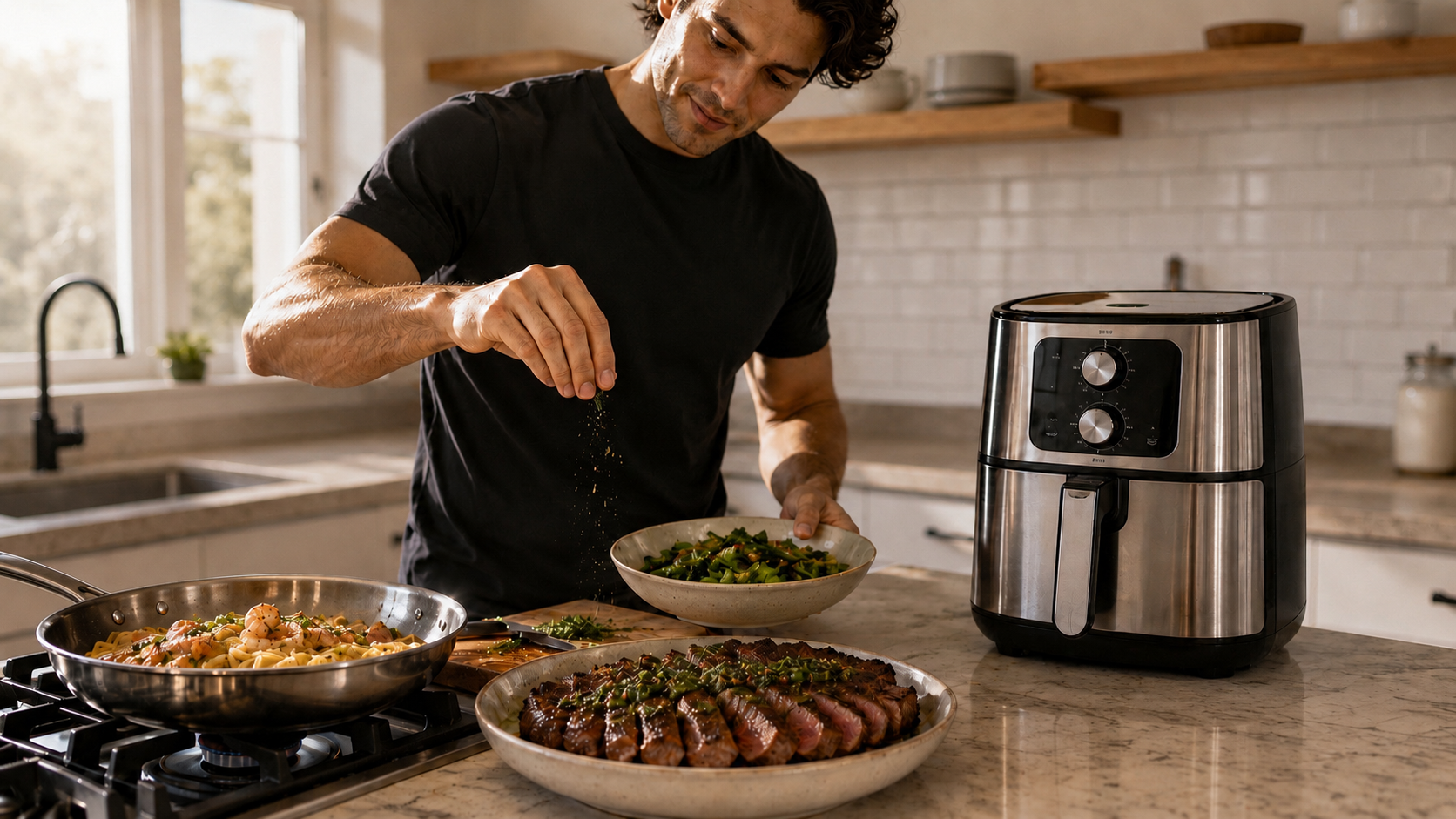
The oven is the kitchen appliance most worth avoiding in summer, and not just marginally — running a conventional oven at 375°F for 45 minutes in a kitchen that’s already fighting 90°F outdoor temperatures is one of the most counterproductive things you can do to your household’s comfort and your cooling bill simultaneously. The oven radiates heat through its door, its seals, and its body throughout the entire cooking period and for 30-45 minutes after it shuts off. In summer, this is the kitchen equivalent of running a space heater in a room you’re paying to air condition. The practical response isn’t to eat worse food. It’s to build a cooking repertoire that produces genuinely good dinners through methods that don’t involve heating a large cavity to high temperatures for extended periods — stovetop cooking that’s fast and contained, air fryer cooking that heats a compact space quickly and efficiently, and grill cooking that generates all its heat outdoors where it dissipates naturally. Together these three methods cover every dinner format that a household needs across a full summer without once requiring the oven. This playbook is organized by cooking method and dinner type — not because you’d use only one method per night, but because understanding what each method does best helps you build complete dinners from the right combination of techniques. A complete summer dinner often involves two of these three methods working simultaneously: the grill handling protein while the stovetop manages a quick sauce, or the air fryer running vegetables while a stovetop pasta comes together. The oven sits unused, the kitchen stays cooler, and the food is genuinely good. The Stovetop Summer Playbook The stovetop is the most versatile no-oven cooking method because it handles everything from delicate sauce work to high-heat searing in the same piece of equipment. Its limitation in summer is heat output — gas and electric burners do generate some ambient heat — but a focused 20-30 minute stovetop cooking session generates dramatically less heat than a 45-minute oven cycle and produces no residual heat once the burners turn off. The key to stovetop summer cooking is speed. Long, covered stovetop braises that run for hours generate sustained heat in an enclosed kitchen in ways that are as problematic as oven cooking. Quick stovetop cooking — 20-30 minutes total from heat-on to plate — is the format that works in summer without meaningfully affecting kitchen comfort. Stovetop Summer Dinners One-Pan Lemon Garlic Shrimp Pasta: Heat olive oil in a wide skillet over medium-high heat. Add minced garlic and let it bloom for 60 seconds. Add jumbo shrimp seasoned with salt, pepper, and red pepper flakes — cook 2 minutes per side until pink and just done. Remove shrimp and set aside. Add white wine to the pan and let it reduce by half, scraping up any fond. Add pasta cooking water (reserved from cooking pasta simultaneously on another burner), a knob of butter, and lemon juice. Toss cooked pasta in the sauce, add shrimp back, finish with fresh parsley and lemon zest. Total active cooking time: 15 minutes. Total heat generation: minimal. Steak and Chimichurri with Quick Stovetop Sear: Cast iron on high heat with a thin film of oil until smoking. Season a 1-inch ribeye or New York strip generously with salt and pepper. Sear 3-4 minutes per side for medium-rare without moving. Rest 5 minutes. While the steak rests, make chimichurri: finely chopped parsley, garlic, red wine vinegar, red pepper flakes, olive oil, salt. The entire cooking process takes 15 minutes. Serve over quickly sautéed greens or room-temperature grain salad. Thai Basil Chicken (Pad Kra Pao): Ground chicken in a hot wok or wide skillet with oil, garlic, and bird’s eye chilies. High heat throughout — 8-10 minutes total. Fish sauce, oyster sauce, and a small amount of sugar go in toward the end. Fresh Thai basil folded in at the very last second and wilted from residual heat only. Serve over jasmine rice cooked simultaneously on another burner. A top-to-plate time of 20 minutes and one of the most satisfying quick dinner formats available. Shakshuka: Olive oil in a wide skillet over medium heat. Sauté diced onion and bell pepper until softened, 5-7 minutes. Add garlic, cumin, smoked paprika, cayenne, and canned crushed tomatoes. Simmer 10 minutes until sauce thickens. Create wells in the sauce and crack eggs directly into them. Cover the pan and cook until whites are set and yolks are still runny — 5-7 minutes depending on heat. Finish with crumbled feta, fresh herbs, and a drizzle of olive oil. Serve from the pan directly to the table with crusty bread. One pan, one burner, 25 minutes total, and a dinner that feels more intentional than its effort level suggests. Soba Noodle Bowls with Sesame Ginger Sauce: Cook soba noodles per package instructions, rinse under cold water and drain. While noodles cook, whisk together sesame oil, soy sauce, rice vinegar, fresh ginger grated, garlic paste, honey, and chili oil for the sauce. Toss cold noodles in the sauce. Top with shredded rotisserie chicken, shredded cucumber, sliced scallions, sesame seeds, and fresh cilantro. The only stovetop work is boiling the noodles — everything else is assembly. Serve cold or at room temperature. This dinner is actively better in summer heat than it would be warm. Cacio e Pepe: One of the most technically satisfying pasta dishes achievable and one of the fastest. Boil pasta — spaghetti or tonnarelli — until just under al dente, reserving significant pasta water. In a wide skillet, toast coarsely cracked black pepper in olive oil for 60 seconds until fragrant. Add a ladle of pasta water to the pepper and let it reduce slightly. Add pasta and toss aggressively, adding pasta water gradually and finely grated pecorino romano in stages while tossing continuously until the cheese emulsifies into a creamy sauce rather than clumping. The entire dish takes 15 minutes and uses one pot and one pan. No cream, no butter