
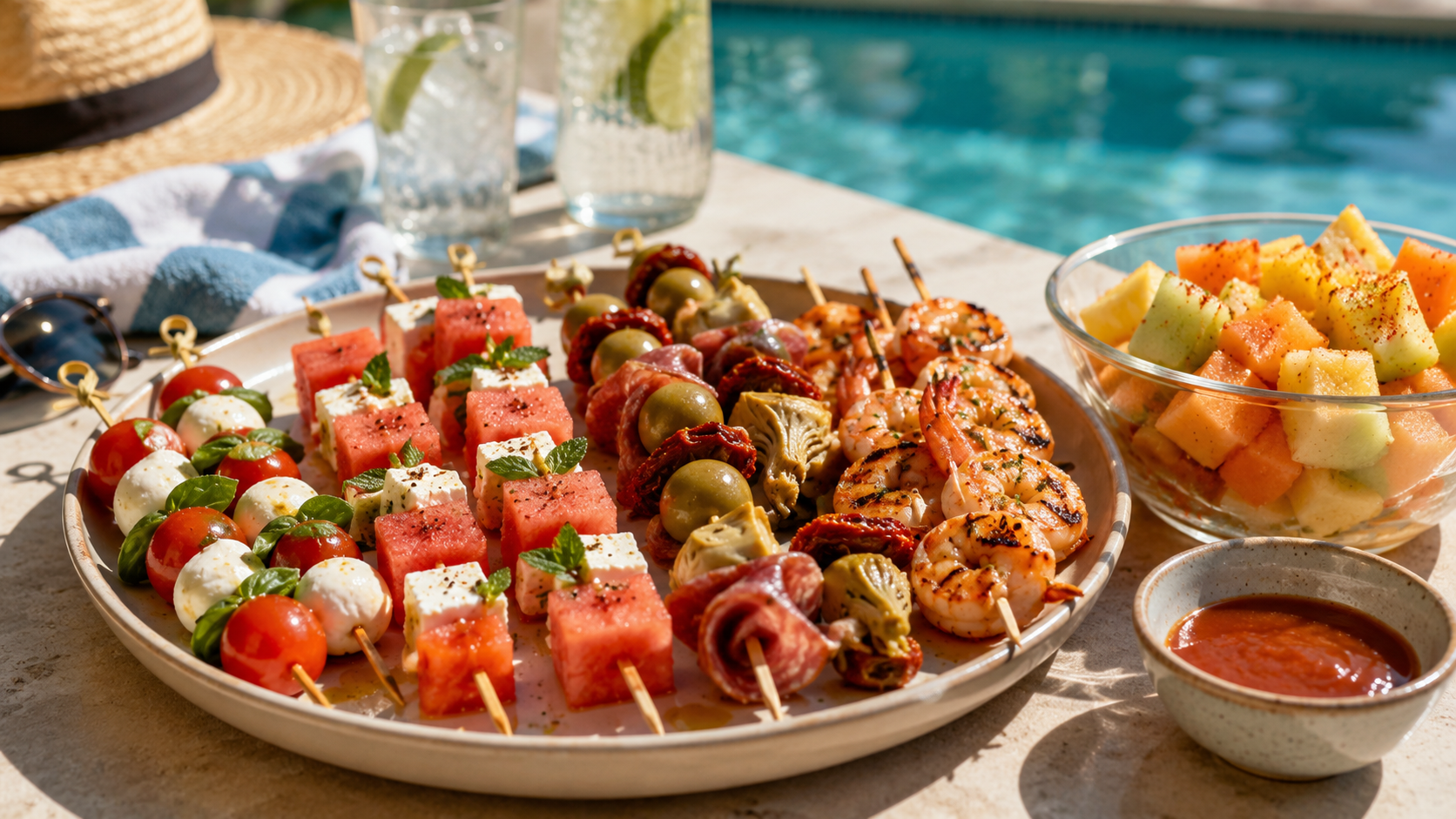
Pool Snacks That Actually Work in the Heat: No Melting, No Mess
Anyone who has tried to eat cheese and crackers beside a pool in 90°F heat knows the problem. The cheese softens within minutes, the crackers absorb ambient humidity and lose their snap, and by the time the second person has served themselves the whole situation has become an unappetizing warm mess that nobody wants to touch. Chips go stale. Chocolate melts. Dips separate. Ice cream is a race against physics that you always lose. Pool snacking has specific constraints that indoor entertaining doesn’t — heat that accelerates every form of food degradation, humidity that attacks textures, direct sunlight that raises surface temperatures above ambient air, and the practical reality that people are wet, moving between water and food constantly, and don’t want to deal with plates, utensils, or anything that requires careful handling while dripping. The snacks that actually work in this environment are designed around these constraints rather than ignoring them. This isn’t about health food or sophisticated entertaining. It’s about finding the foods that hold up structurally and flavor-wise in genuine summer heat, that can be eaten with one hand or directly from a vessel without drama, and that survive the window between being set out and actually being consumed without becoming something you’d rather not eat. The categories that work in the pool environment are more specific than most people assume — and they’re genuinely satisfying once you know what they are. The Rules That Pool Snacks Need to Follow Before the specific foods, the framework that separates pool-viable snacks from ones that fail in the environment. Heat Stability Above Everything Else: Anything containing chocolate, whipped cream, soft cheese, or mayonnaise-based components exposed directly to sun will fail within 20-30 minutes at typical summer pool temperatures. These aren’t borderline cases — they’re predictable failures. Heat-stable snacks are either dry and shelf-stable, naturally cold enough to have a long warm-up window, or preserved by acidity or salt rather than refrigeration. Structural Integrity When Wet: Pool snacking happens with damp or fully wet hands. Crackers that crumble when touched, delicate chips that shatter, and anything requiring two-hand coordination to eat without spilling are poor pool snack choices regardless of flavor. Foods that can be picked up with wet fingers, bitten cleanly, and eaten without consequence work. Foods that require careful handling don’t. No Plate Dependence: Ideal pool snacks eat directly from the container, the skewer, or the hand without requiring a plate to catch components. Foods that fall apart into multiple pieces, require a fork, or create crumbs that scatter into pool furniture don’t suit the environment. Finger foods, skewered items, and anything in its own natural container are the formats that work. Flavor That Holds at Temperature: Some foods taste best cold and become disappointing as they warm. Others are designed for room temperature or warm serving and aren’t compromised by ambient heat. Understanding which category your snack falls into determines whether it’s a pool-appropriate choice or one that will disappoint guests 30 minutes after being set out. Skewered Foods: The Definitive Pool Snack Format Skewers solve most pool snack problems simultaneously — they provide a dry handle that keeps wet hands away from food, they create portion control that makes serving from a communal tray easy and hygienic, and they keep food off surfaces that attract insects and collect debris. Caprese Skewers: Cherry tomatoes, fresh mozzarella ciliegine, and fresh basil leaves threaded onto short bamboo skewers. Drizzle with good olive oil and a pinch of flaky salt before serving. These hold up well in heat longer than a plated caprese because the individual components stay distinct rather than sitting in accumulated liquid. The mozzarella will soften slightly after 45 minutes but remains completely edible — the serving window is generous. Keep them in a cooler until 15-20 minutes before serving. Watermelon and Feta Skewers: Cubed watermelon with small cubes of firm feta alternating on short skewers, finished with a few mint leaves and a crack of black pepper. The sweet-salty-herby combination is one of the most refreshing possible pool snack flavor profiles, and watermelon’s high water content means it stays cool longer than other fruits after coming out of the cooler. Feta’s salt content makes it more heat-stable than fresh cheeses. Antipasto Skewers: Salami folded in quarters, pitted olives, marinated artichoke hearts, sun-dried tomatoes, and cubes of provolone on full-length skewers. All of these components are naturally shelf-stable or salt-preserved, meaning heat affects them much less than fresh dairy or mayo-based items. These hold up at pool temperatures for 45-60 minutes without quality degradation — one of the more forgiving pool snack formats available. Grilled Shrimp Skewers: Pre-grilled shrimp on skewers served at room temperature with a dipping sauce on the side. Cook shrimp with garlic, olive oil, lemon, and paprika, thread on skewers, grill until just done, and refrigerate until serving. Room temperature shrimp on skewers is a completely appropriate serving temperature — shrimp doesn’t need to be hot to be good, and the grill seasoning holds up as it warms. Serve with a small cup of cocktail sauce or spicy aioli per person rather than a shared dip. Fruit Skewers with Tajín: Cubed melon, pineapple, and mango on skewers dusted with Tajín — the chili-lime salt that has become the definitive fruit seasoning for outdoor eating. Tajín is specifically good for pool snacking because the salt and acid slow fruit from becoming watery and the heat-compatible flavors don’t suffer as fruit warms slightly. Prepare from a cooler and these hold a good eating window of 30-40 minutes before becoming too warm. Cold Items That Have Long Warm-Up Windows Not everything needs to stay cold — but some items can come out of the cooler and hold acceptable quality for long enough that they’re genuinely practical for pool service. Frozen Grapes: Wash grapes, pat dry, and freeze on a sheet pan before transferring to a freezer bag. Serve directly from frozen in a bowl or cup. Frozen grapes function as both a snack and a