
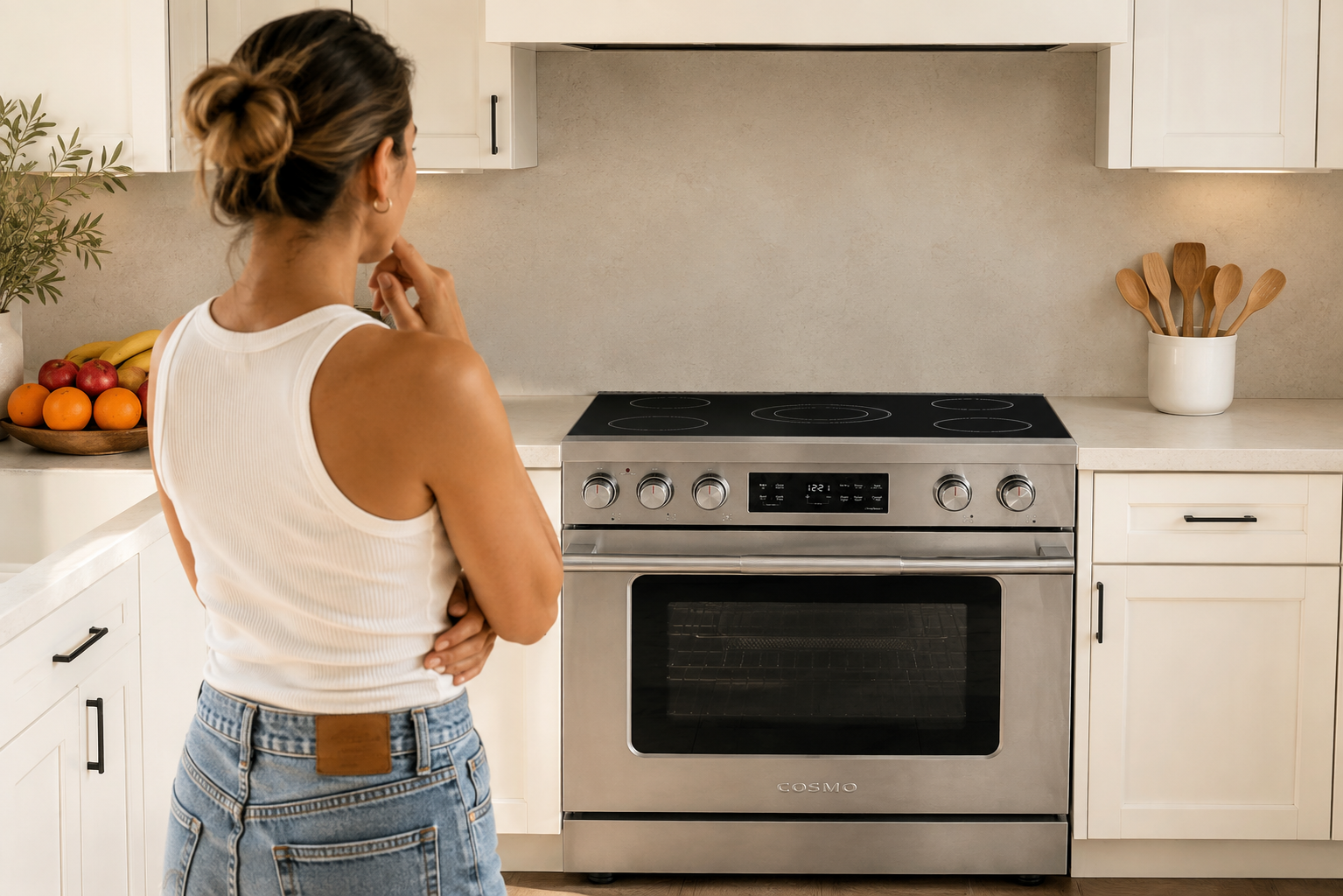
How to Choose the Right Range Size for Your Kitchen
Range size is one of the most consequential decisions in any kitchen purchase or renovation, and it’s one that most buyers make too quickly — choosing based on what’s available in their price range or what fits the opening left by the previous appliance rather than thinking carefully about what width actually serves how they cook. The wrong size range creates daily friction that doesn’t go away: a 30-inch range in a kitchen where 36 inches would have fit feels limiting every time you need a fifth burner, and a 36-inch range crammed into a space that barely accommodates it makes the kitchen feel narrower every time you open the oven. Getting range size right requires thinking about three things simultaneously: what the kitchen’s physical space actually allows, what your cooking patterns genuinely require, and how the range’s width affects the kitchen’s overall layout and workflow. These three factors don’t always point in the same direction, and understanding how to weigh them produces a better decision than treating range size as purely a space question or purely a performance question. The Standard Range Widths and What Each One Is Before getting into how to choose, understanding what the available widths actually are and what they typically include helps frame the decision correctly. 24-Inch Ranges: The smallest standard range configuration, typically featuring four burners and a smaller oven cavity — often 2.0-2.7 cubic feet. The 24-inch width is designed for compact kitchens, small apartments, condos, studio configurations, and secondary cooking spaces where a standard-width range simply won’t fit. It’s not a compromise version of a full-size range — it’s a purpose-built solution for specific space constraints. If your kitchen genuinely can’t accommodate a 30-inch range, a quality 24-inch model delivers real cooking capability within its format. 30-Inch Ranges: The most common residential range width by a significant margin, and the default configuration that most kitchen cabinetry, countertops, and layouts are built around. A 30-inch range typically offers four or five burners and an oven cavity between 4.8 and 6.1 cubic feet depending on the model and series. Most home kitchens — including most renovated kitchens — are designed with a 30-inch range opening as the standard assumption, which makes the 30-inch range the right starting point for most buyers unless there’s a specific reason to go wider or narrower. 36-Inch Ranges: A meaningful step up in cooking surface capacity, typically offering five or six burners and an oven cavity between 3.8 and 6.1 cubic feet. The 36-inch width requires a correspondingly wider kitchen opening and more surrounding counter space, but delivers significantly more simultaneous cooking capacity for households that regularly cook multiple dishes at once, entertain frequently, or simply want the roomier cooking experience a wider surface provides. Fitting a 36-inch range requires either an existing 36-inch opening or cabinet modification — it doesn’t simply swap in where a 30-inch range lived without some kitchen work. 48-Inch Ranges: The professional-scale configuration typically found in serious home kitchens where cooking is a primary household activity. At 48 inches, these ranges typically offer eight or more burners, often combined with a griddle or additional cooking surface, and two separate oven cavities. The 48-inch range requires a dedicated kitchen design built around it — it’s not a drop-in upgrade from a smaller width but rather a kitchen centerpiece that the surrounding layout is planned to accommodate. Step One: Measure What You Actually Have The most important measurement in range size selection is the existing opening or the space available for an opening — and this measurement needs to be done carefully rather than estimated. Measuring an Existing Opening: If you’re replacing an existing range, measure the width of the cabinet opening the range sits in — the clear space between the adjacent cabinet faces on each side. Measure at the top, middle, and bottom of the opening since openings aren’t always perfectly uniform. The measurement that matters is the narrowest point. Standard openings are built to accommodate ranges with a small clearance on each side — typically ¼ to ½ inch per side — so a 29½-inch opening accommodates a 30-inch range, and a 35½-inch opening accommodates a 36-inch range. If your existing opening measures exactly 30 inches, a 30-inch range fits with appropriate clearance. If it measures 30 inches and you’re considering a 36-inch range, you’re looking at cabinet modification. Measuring Available Space: If you’re planning a new kitchen or renovating without an existing range in place, measure the total available space between fixed elements — walls, structural columns, windows, or fixed cabinetry that can’t move. This gives you the maximum possible range width before considering the counter space that needs to remain on each side of the range. Depth and Height: Width gets the most attention but depth and height also matter for proper fit and installation. Standard range depth is approximately 27-29 inches to the rear of the range body, with handles extending the effective depth by several inches into the kitchen. Height on most standard ranges is approximately 36 inches to the cooking surface, designed to align with standard counter height. Verify these dimensions against your specific kitchen measurements rather than assuming standard dimensions always apply. Clearance Requirements: Ranges require minimum clearances to adjacent combustible materials — cabinets, walls, and countertops — for safe operation. These clearances vary by model and fuel type and are specified in the range’s installation documentation. Account for these clearances when calculating available space rather than filling every available inch with the range. Step Two: Assess Your Actual Cooking Patterns Space availability tells you what’s possible. Cooking patterns tell you what’s actually useful. The two considerations together determine the right answer. How Many Burners Do You Actually Use Simultaneously: This is the most direct question for range size selection and the most honest assessment most people can make. Think about your most complex typical cooking session — not the holiday meal, but a regular weeknight dinner that’s more involved than average. How many burners