
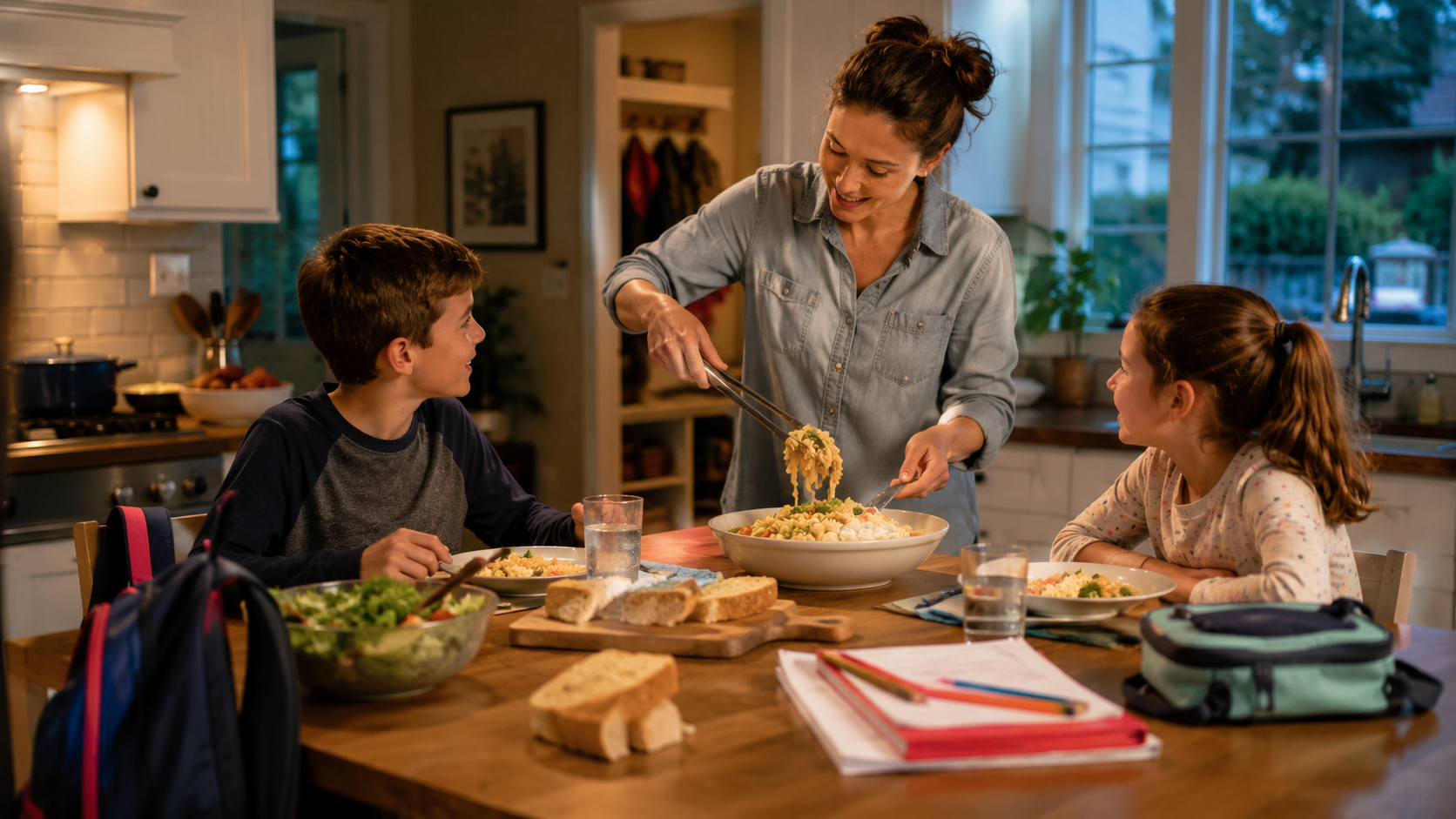
Back to School: Quick Weeknight Dinners for Busy Families
The back to school transition hits the dinner table harder than most families anticipate. Summer’s flexible schedule — cooking when you feel like it, eating when it’s ready, nobody needing to be anywhere at a specific time — gets replaced almost overnight by a logistics operation where dinner needs to be on the table within a defined window between after-school activities, homework, and bedtimes that don’t move. The meals that worked fine in July suddenly feel impossible in September not because they got harder to cook but because the time available to cook them collapsed. The families that navigate this transition well aren’t necessarily the ones with the most cooking skill or the best equipment. They’re the ones who planned for it — who built a weeknight dinner rotation around the actual constraints of a school-year schedule rather than hoping summer’s relaxed approach would somehow stretch into fall. That planning involves understanding which cooking techniques genuinely fit a 30-minute window, which meals can be partially or fully prepared ahead so weeknight assembly is minimal, and which shortcuts deliver results good enough that nobody at the table is complaining. This is a practical guide to making weeknight family dinners work during the school year — not aspirationally, but actually, in real households with real time constraints and children who have opinions about what they’ll eat. Understanding the Real Weeknight Window Before the recipes, an honest assessment of what the weeknight cooking window actually looks like for most families — because designing dinner around an imaginary 45 minutes of uninterrupted cooking time produces a plan that falls apart immediately. The Actual Timeline: Most school-year weeknight dinners need to go from starting to eating in 30 minutes or less. This isn’t the time from when you turn on the first burner to when the food hits the table — it’s from when you walk into the kitchen after work or after pickup to when food is in front of everyone. That 30 minutes includes any prep work, any cooking, plating, and getting everyone to the table. Some nights it’s less. Rarely is it more without something being dropped. Parallel vs. Sequential Cooking: The difference between a 20-minute dinner and a 45-minute dinner is often not the cooking time but whether the steps happen in parallel or sequentially. A pasta dish where you boil water, then cook the pasta, then make the sauce, then combine them takes 40 minutes. The same dish where the water goes on immediately, the sauce is made while the water heats and the pasta cooks, and everything finishes simultaneously takes 20 minutes. Learning to identify and execute parallel cooking — multiple things happening at once rather than one after another — is the single most impactful efficiency change for weeknight cooking. The Mental Load Factor: Weeknight cooking happens when mental bandwidth is lowest — after a full work day, after school pickup, after the first round of homework negotiations. This is not the time for recipes that require sustained attention, complex technique, or more than two or three active decisions. The best weeknight recipes are ones you could execute while partially distracted because they’ve been made enough times to be familiar, or because they’re genuinely simple enough to manage on autopilot. The Weeknight Dinner Framework Rather than a random collection of recipes, a functional back-to-school dinner rotation is built around a framework that tells you how to approach each night of the week based on what that day’s schedule actually allows. Monday — Fast and Familiar: Monday after the first day of the school week is rarely the night for trying something new. Keep Monday in the rotation for the two or three things your family makes most reliably and most quickly. The goal is getting everyone fed with minimal friction. Speed and familiarity matter more than variety on Monday. Tuesday — Sheet Pan or One-Pan: One pan, one cleanup, minimal active cooking time. Sheet pan dinners go in the oven and come out ready to serve. One-pan stovetop dishes handle protein and vegetables together in a single skillet. The oven handles the cooking while you handle homework or other tasks. Wednesday — Make-Ahead Leftover or Batch: Wednesday works best when Monday or Sunday’s cooking produced intentional leftovers or a batch component — a large protein that becomes multiple meals, a big pot of grains that serves as the base for multiple different dinners, or a fully prepared dish that reheats in 15 minutes. Thursday — Assembly Dinner: Tacos, grain bowls, wraps, salad bars — meals assembled from individual components rather than cooked together. Many components can be prepped Sunday or Monday and held refrigerated through the week. Thursday assembly is genuinely minimal work when the ingredients are already prepared. Friday — Lower Pressure: Friday’s flexibility depends on the family’s actual Friday activity level, but it’s often the night where a slightly more involved dinner is manageable because the next morning doesn’t start early. Use Friday for anything that needs a little more time or attention than the earlier week allows. The Recipes: Weeknight Dinners That Actually Fit the Schedule Monday Rotation: Sheet Pan Chicken Thighs and Vegetables Sheet pan chicken thighs are the weeknight anchor recipe that families return to continuously because they require almost no active cooking time once prep is done. Ingredients: Bone-in skin-on chicken thighs, whatever vegetables are available (broccoli, bell peppers, zucchini, cherry tomatoes, potatoes all work), olive oil, garlic powder, smoked paprika, salt, pepper, lemon. Method: Preheat oven to 425°F. Toss vegetables with olive oil, salt, and pepper on a sheet pan. Season chicken thighs with olive oil, garlic powder, paprika, salt, and pepper and nestle among the vegetables. Roast 35-40 minutes until chicken skin is crispy and golden and vegetables are tender and slightly caramelized at the edges. Squeeze lemon over everything before serving. Active cooking time: 10 minutes of prep. Then you walk away. The oven handles the rest while you manage everything else happening in the household. Clean up