
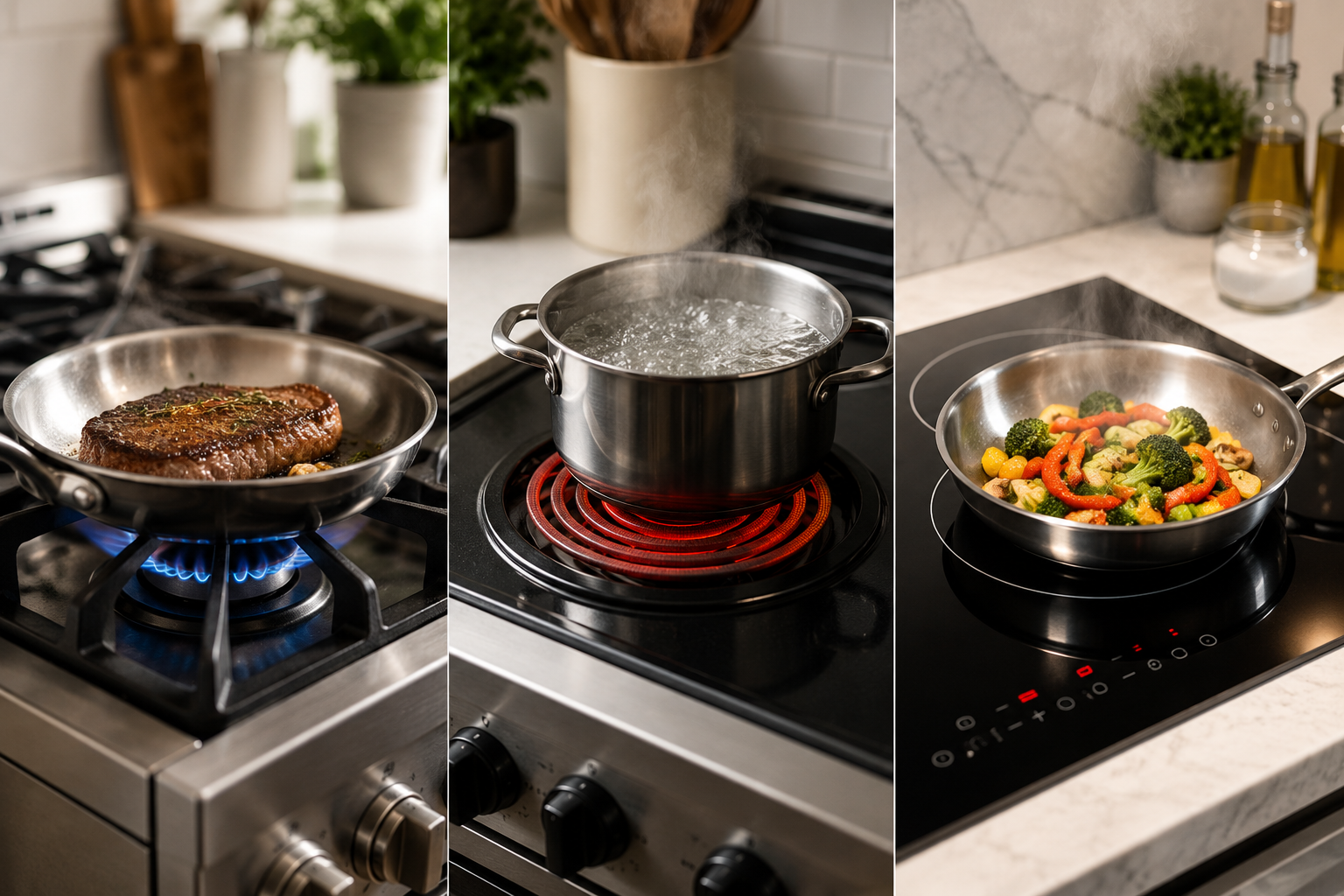
Gas vs. Electric vs. Induction: How to Actually Choose Between Them
Choosing between gas, electric, and induction cooking generates more debate than almost any other kitchen decision. Strong opinions exist on all sides, often based on personal cooking history, regional cooking traditions, or advice from people whose circumstances differ significantly from your own. The reality is that each cooking method has genuine strengths and real limitations, and the right choice depends on factors specific to your household — how you cook, what your home can support, how much you want to spend upfront versus ongoing, and what tradeoffs you’re willing to accept. Most of the debate happens at the extremes. Passionate gas advocates cite immediate heat response and visual flame feedback. Induction enthusiasts point to speed and precision that neither gas nor traditional electric can match. Electric defenders note simplicity and accessibility. All three groups are largely correct about their preferred method’s strengths, which makes the conversation confusing for anyone trying to decide without a strong prior preference. Understanding what each method actually does well — and where each genuinely falls short — cuts through the noise. What Gas Actually Does Well Gas cooking has a longer residential history than either electric alternative, and its continued dominance in serious home kitchens reflects genuine functional advantages rather than pure nostalgia. Immediate Visual Feedback: The flame provides real-time information about heat output that neither electric nor induction can replicate. You can see a small flame, a medium flame, and a roaring flame, and adjust intuitively based on what you’re seeing. This visual feedback reduces reliance on numbered settings and lets cooks develop intuition quickly. When you turn down a gas burner, you see immediately that it happened and approximately how much. Heat Transition Speed: Gas burners transition between temperatures faster than traditional electric coils, which take time to heat up and cool down. When a sauce threatens to break or something is browning too quickly, turning down gas delivers results in seconds. This responsiveness matters most during high-attention cooking where fast corrections prevent ruined dishes. Cookware Compatibility: Gas works with every cookware type without exception — cast iron, copper, aluminum, stainless steel, glass, ceramic, carbon steel. There are no compatibility requirements or restrictions. This universality means gas cooks never think about whether a pan will work on their cooktop. High Heat Availability: Gas burners at their highest settings deliver sustained high heat that electric cooktops struggle to match consistently. Searing large cuts of meat, maintaining a hard boil in large stockpots, and cooking in oversized woks all benefit from the sustained high-output heat that gas provides. Cooking During Power Outages: Gas cooktops continue working during power outages (with manual ignition using a lighter or match), providing cooking capability when electric alternatives become completely non-functional. For households in areas prone to storms or power instability, this practical advantage has real value. Where Gas Falls Short Understanding gas cooking’s genuine weaknesses helps evaluate whether they matter for your specific cooking patterns. Combustion Byproducts: Gas combustion produces carbon monoxide, nitrogen dioxide, and formaldehyde inside your home. Properly adjusted burners minimize these emissions, but they never eliminate them entirely. Research into residential gas cooking and indoor air quality has grown substantially in recent years, with findings suggesting more meaningful health impacts than previously understood, particularly in homes with poor ventilation. This isn’t a reason to avoid gas categorically, but adequate ventilation isn’t optional — it’s essential. Energy Efficiency: Gas burners release significant heat into the surrounding kitchen rather than into cookware. Estimates suggest only 40% of gas energy actually reaches the food being cooked, with the remainder heating the kitchen, the range, and the air around the burner. This inefficiency translates to higher operating costs and hotter kitchens during summer cooking. Cleaning Difficulty: Gas cooktops involve grates, burner caps, burner bases, and the surface beneath them — all of which accumulate grease and food debris in hard-to-reach areas. Thorough cleaning requires disassembling components, soaking grates, and scrubbing burner parts individually. Compared to the single flat surface of ceramic or induction cooktops, gas cleaning is genuinely more involved. Uneven Flame Distribution: Gas flames heat the center of cookware more intensely than edges, creating temperature gradients across pan surfaces. For most cooking this doesn’t matter, but for techniques requiring perfectly even heat distribution — large pancakes, delicate sauces, candy making — the uneven heating pattern requires attention and pan movement that electric methods don’t demand. Infrastructure Requirements: Gas cooking requires gas lines, which many homes and virtually all apartments lack. Adding gas service involves permits, licensed plumbers, utility connections, and costs that can run several thousand dollars. Homes already plumbed for gas face no issue, but homes without existing service face meaningful upfront investment just to enable gas cooking. What Traditional Electric Actually Does Electric coil and ceramic glass cooktops occupy a middle ground that gets somewhat unfairly dismissed in conversations dominated by gas enthusiasts and induction advocates. Accessibility and Simplicity: Electric cooktops work in any home with standard electrical service, requiring no gas lines or special circuit upgrades beyond what most homes already have. The technology is simple, reliable, and widely understood by both installers and repair technicians. Parts are available everywhere, service is straightforward, and the learning curve is minimal. Even Heat Distribution: Electric elements heat cookware more evenly than gas flames, eliminating the hot center that gas creates. Flat-bottomed pans make full contact with smooth electric surfaces, distributing heat across the entire cooking surface rather than concentrating it where flames contact the pan base. Lower Purchase Price: Quality electric cooktops cost substantially less than equivalent gas or induction models. For households where cooking is functional rather than a primary hobby, electric cooktops deliver adequate performance at lower upfront cost. The price difference across a full kitchen suite can be significant. Residual Heat Cooking: Electric surfaces retain heat after elements shut off, providing useful residual cooking that reduces energy consumption when used deliberately. Experienced electric cooktop users turn elements off slightly before food reaches target doneness, allowing residual heat to finish cooking without additional energy use.