
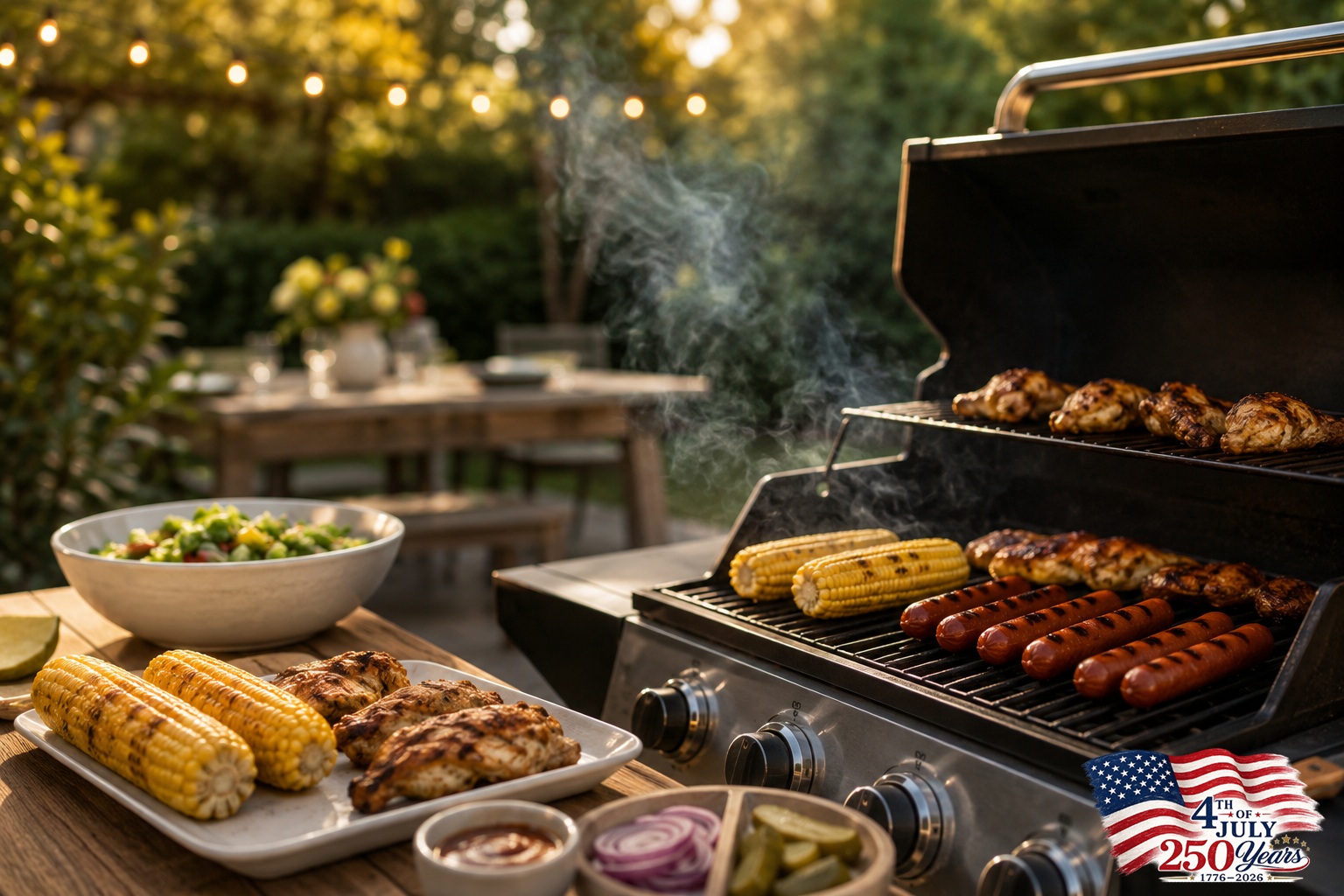
The Ultimate Fourth of July BBQ Checklist
The Fourth of July puts more pressure on a backyard cooking setup than almost any other day of the year. It’s not one meal — it’s an all-day event that typically spans a long lunch, an afternoon of grazing, and a full dinner spread, often for more people than a typical weekend gathering. The grills that run flawlessly for a Tuesday night dinner sometimes reveal gaps when they’re asked to handle six hours of continuous cooking for twenty guests. A little advance planning the week before turns the holiday into something you actually enjoy rather than something you’re managing under pressure. This checklist works through the planning in the order that actually matters — equipment first, since gaps there are the hardest to fix last-minute, then food planning, then the day-of logistics that keep things running smoothly once guests arrive. One Week Out: Equipment and Grill Readiness The week before is when equipment problems are still fixable. Discovering a dead propane tank or a grill that won’t ignite on the morning of the Fourth turns a fun day into a stressful scramble. Check Propane Levels: If your grill runs on liquid propane, verify your tank has enough fuel for a full day of cooking — a holiday cookout burns through more propane than a typical weeknight dinner. A full 20-pound tank typically provides 18-20 hours of grilling time at medium heat, but high-heat searing and extended cooking sessions reduce this. If you’re uncertain how much fuel remains, most hardware stores and propane exchange locations can weigh a tank quickly. Buy or exchange for a full tank with several days to spare rather than discovering an empty one on the holiday itself, when exchange locations are busiest and most likely to be out of stock. Test Ignition and Burners: Fire up the grill a few days ahead and run it through all burners at various heat settings. This catches ignition problems, uneven burner performance, or any maintenance issues while there’s still time to address them. A grill that’s sat unused since last season sometimes needs a few minutes to clear out any debris or settled dust in the burner tubes before it runs cleanly. Clean the Grates and Interior: Built-up grease and carbon from previous use affects both flavor and fire safety. Scrub grates thoroughly with a grill brush, and if it’s been a while, remove and clean the flavor bars or heat distribution plates underneath where grease accumulates most heavily. A buildup of old grease is one of the more common causes of dangerous flare-ups during high-volume cooking sessions. Inspect Gas Lines and Connections: Check hoses and connections for cracks, brittleness, or leaks — soap and water solution brushed on connections will bubble visibly if gas is escaping. This is a five-minute check that matters significantly more on a day when the grill will run continuously for hours. Verify the Temperature Gauge: An accurate temperature gauge matters when you’re managing multiple proteins with different doneness targets across a long cooking session. If your grill includes a built-in thermometer, verify its accuracy against a separate probe thermometer, since built-in gauges can drift out of calibration over time and lead to misjudged cooking times. Check Rotisserie Equipment If You Have It: If your grill includes a motorized rotisserie kit, test the motor and confirm the spit rod and forks are in good condition. A whole rotisserie chicken or a rotisserie roast is a genuinely impressive centerpiece for a holiday spread, but only if the equipment is confirmed working before guests arrive expecting it. Five Days Out: Menu and Shopping Planning Locking in the menu with enough lead time avoids the grocery store chaos that builds through the days immediately before the holiday, when popular cuts of meat and key ingredients sell out at busy stores. Plan for Volume and Timing, Not Just Recipes: A Fourth of July spread typically needs items that can be ready at different points throughout the day — something quick for early arrivals, a main spread for the core meal, and lighter options for evening grazing as the day continues. Mapping out roughly what’s being served when helps you shop accurately and avoid either running short or making far more than needed. Buy Proteins Early If Possible: Popular cuts — brisket, ribs, good steaks, whole chickens — often sell out at smaller grocery stores in the days immediately before major grilling holidays. Buying several days ahead and freezing if needed, or at minimum reserving items with a butcher counter, avoids the situation where your planned menu isn’t actually available two days before the event. Account for Different Cooking Times: Brisket and ribs that need low, slow cooking over many hours operate on a completely different schedule than burgers and hot dogs that cook in minutes. If your menu spans both categories, plan which items go on the grill first and build a rough timeline working backward from when you want everything ready. Items requiring long cook times should typically start hours before guests arrive, while quick-cooking items get added closer to serving time. Don’t Forget Sides That Don’t Need the Grill: Potato salad, coleslaw, baked beans, corn on the cob, and similar sides can be prepared mostly or entirely ahead of time, reducing what needs active attention on the day itself. Building a menu where roughly half the dishes are make-ahead sides significantly reduces day-of stress. Plan Your Beverage and Ice Strategy: Ice sells out at local stores by midday on major summer holidays. Buy ice the day before if your freezer space allows, or plan an early morning ice run on the day itself rather than assuming it’ll be available in the afternoon. Two to Three Days Out: Prep Work Spreading prep work across multiple days rather than cramming it all into the day before reduces the time pressure that makes holiday cooking feel chaotic. Make Sauces and Marinades Ahead: Barbecue sauce, marinades, and dry rubs all benefit from being made several days ahead — flavors