
Why Your Oven Temperature Is Probably Lying to You
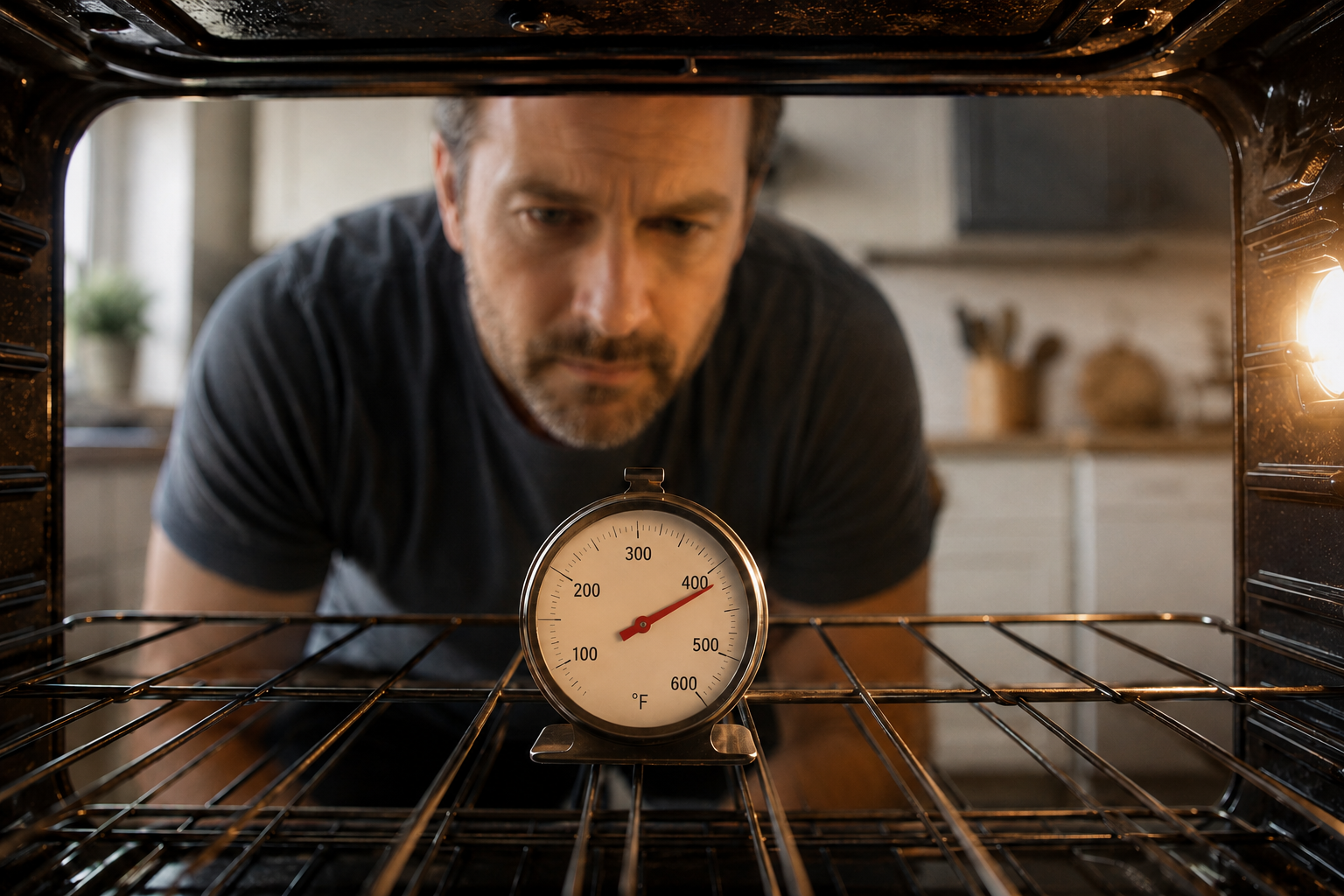
Set your oven to 350°F and there’s a meaningful chance the interior never actually reaches that temperature, or reaches it briefly before swinging well above or below it for most of the cooking cycle. This isn’t a defect specific to any particular oven brand or price point — it’s a near-universal characteristic of how home ovens regulate temperature, and understanding it explains a surprising number of cooking frustrations that get blamed on recipes, ingredients, or cooking skill when the actual cause is sitting quietly in the appliance itself. Most home cooks assume their oven dial or digital display represents reality — that setting 350°F means the oven interior holds steady at 350°F throughout the cooking process. The actual behavior is considerably messier, and the gap between displayed and actual temperature explains everything from inconsistent baking results to recipes that work perfectly for some people and fail mysteriously for others using what should be identical instructions. How Oven Temperature Regulation Actually Works Understanding the mechanism behind oven temperature control reveals why the temperature swings happen and why they’re largely unavoidable with standard residential oven technology. The Cycling Behavior: Home ovens don’t maintain constant heat output. Instead, they cycle the heating elements on and off, turning elements on when the interior temperature drops below the set point and off when it rises above it. This cycling creates a sawtooth temperature pattern rather than a flat line — the actual interior temperature oscillates above and below the target setting continuously throughout cooking, rather than holding steady at the displayed number. Typical Swing Range: Standard residential ovens typically swing 15-25°F above and below their set temperature during normal cycling, meaning an oven set to 350°F might actually range between 325°F and 375°F throughout a cooking session, repeatedly. Budget ovens with simpler thermostats can swing more dramatically — sometimes 30-40°F in either direction. Higher-end ovens with more sophisticated temperature sensors and control systems typically swing less, but even premium ovens rarely hold dead-steady at the exact set temperature. Why This Design Exists: Continuous, perfectly steady heat output would actually require more sophisticated and expensive heating element control than the simple on/off cycling that most ovens use. The cycling approach is a cost-effective engineering compromise — elements run at full output when on, rather than modulating to a precise partial output, because full-output heating elements are simpler and cheaper to manufacture than elements capable of precise variable output. The Thermostat Placement Problem: Oven thermostats and temperature sensors are positioned at a single point, typically near the back or side wall of the cavity. This single-point measurement doesn’t account for temperature variation throughout the rest of the cavity — areas near the door, the corners, and spaces close to heating elements can run at meaningfully different temperatures than the area immediately surrounding the sensor, even when the sensor itself accurately reads its local temperature. Why Your Specific Oven Might Be Worse Than Average Beyond the inherent cycling behavior that all ovens exhibit, specific factors can make individual ovens run significantly hotter or cooler than their displayed settings. Calibration Drift Over Time: Oven thermostats can drift out of calibration through normal use and aging, particularly in older units or those that have experienced significant temperature cycling over years of regular use. An oven that was accurately calibrated when new might run 20-30°F off from its displayed temperature after several years without anyone noticing, because the gradual nature of the drift makes it hard to detect through normal cooking experience. Door Seal Degradation: Oven door gaskets degrade over time, losing their ability to seal completely. A compromised seal allows heat to escape continuously, which can cause the oven to run its heating elements more frequently to compensate, sometimes creating different cycling patterns than a properly sealed oven, and occasionally causing the displayed temperature to diverge further from actual cavity conditions. Sensor Position and Damage: Physical damage, buildup of food residue, or even minor sensor positioning issues from manufacturing variance can all affect how accurately the temperature sensor reflects actual cavity conditions. A sensor partially shielded by buildup reads differently than a clean sensor exposed directly to cavity air. Installation and Leveling Issues: An oven that isn’t properly leveled during installation can experience uneven heat distribution that interacts with the cycling behavior in ways that create more pronounced hot and cold zones than a properly leveled unit would show. How to Find Out What Your Oven Is Actually Doing Rather than assuming your oven’s temperature display is accurate or inaccurate, directly testing it removes the guesswork and gives you information that immediately improves your cooking results. The Oven Thermometer Method: A simple, inexpensive oven thermometer — the dial or mechanical type that doesn’t require batteries or calibration of its own — placed in the center of the oven and left there during a normal preheat and cooking cycle reveals the actual temperature your oven reaches and maintains. This is the single most useful and accessible tool for understanding your specific oven’s real behavior, and it costs under $10 in most cases. Reading the Pattern, Not Just One Number: Rather than checking the thermometer once and noting a single reading, observe it periodically throughout a 20-30 minute period after the oven indicates it has preheated. This reveals the cycling pattern — how high the temperature swings above the set point, how low it drops, and how long each cycle takes. This pattern information is more useful than a single snapshot reading because it shows you the actual range your food experiences during cooking rather than one moment in that range. Multi-Position Testing: Testing temperature at multiple rack positions and locations within the cavity — center, near the door, in back corners — reveals whether your oven has significant hot or cold zones beyond the standard cycling behavior. Many home cooks discover their oven runs notably hotter in the back than the front, or that one side consistently browns faster than the other, information that directly explains baking inconsistencies they may