
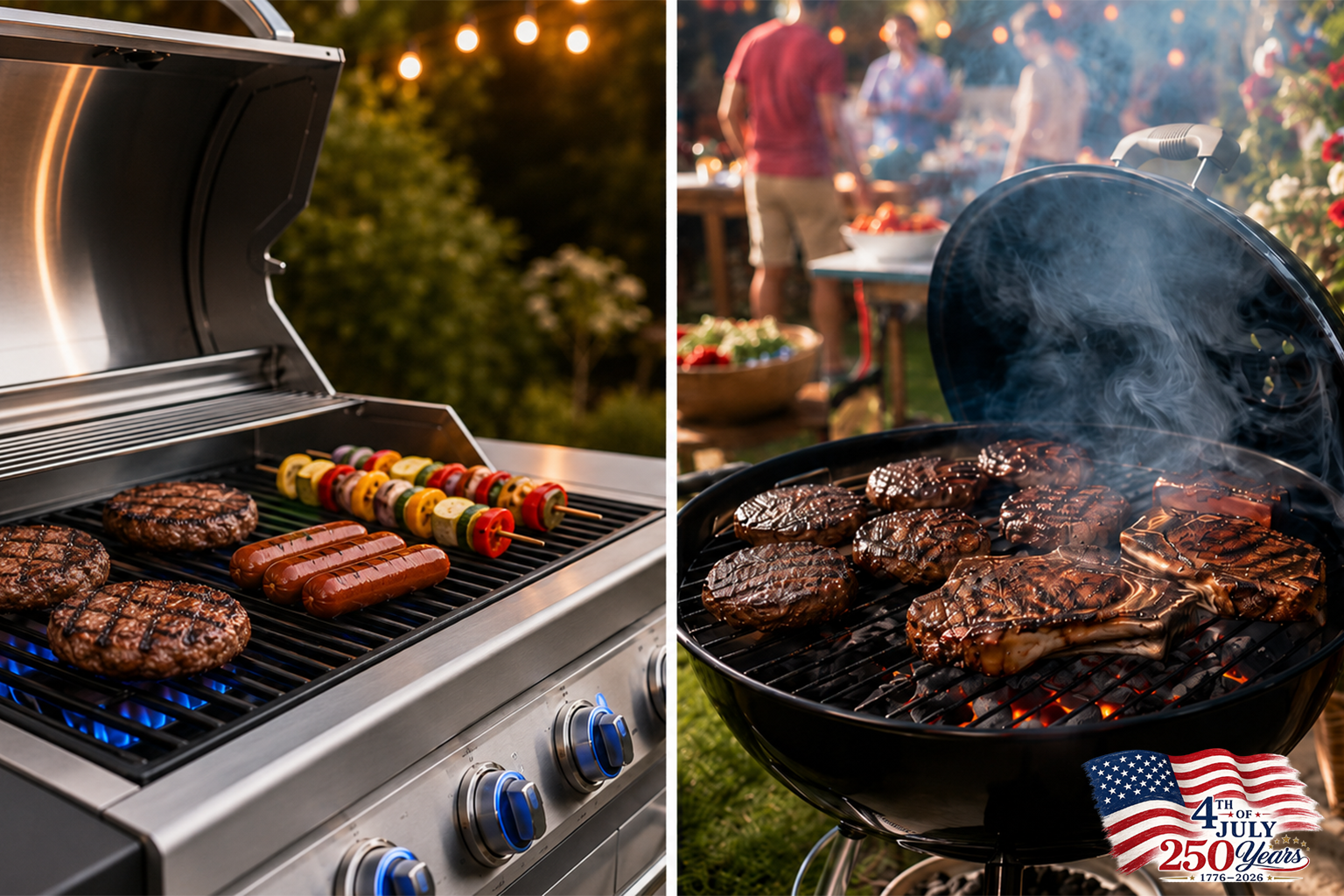
Gas vs. Charcoal Grill: Which Wins on the Fourth of July?
Few debates in backyard cooking generate as much heat as the gas versus charcoal question, and the Fourth of July is when it peaks. Everyone has a position. Charcoal advocates insist the flavor difference is so significant that gas grilling is essentially just outdoor cooking on a glorified stovetop. Gas advocates point out that charcoal requires more time, more skill, and more cleanup for a flavor difference that most guests — especially the ones three beers in and waiting for their burger — couldn’t identify in a blind taste test. Both sides make legitimate points. The problem with the debate is that it typically frames the question as an absolute when the actual answer depends on what you’re cooking, how many people you’re feeding, how much time you have, and what you genuinely value in a cooking experience. Understanding what each fuel type actually does well — and where each falls short — produces a more useful answer than picking a side based on identity or tradition. What Charcoal Actually Does Charcoal’s reputation for superior flavor is real but frequently misunderstood. The flavor difference isn’t primarily from the charcoal itself burning — it comes from what happens when fat and juices from cooking food drip onto the hot coals below. The Drip-and-Smoke Effect: When fat hits glowing charcoal, it vaporizes immediately into smoke and combustion byproducts that rise back up and coat the food. This process deposits aromatic compounds — aldehydes, furans, and other volatile chemicals produced by fat combustion — onto food surfaces in ways that genuinely affect flavor. It’s not subtle. When it’s working correctly, charcoal grilling produces a smoky, slightly charred exterior flavor that gas grilling simply cannot replicate because fat dripping onto burner tubes or flavor bars in a gas grill doesn’t produce the same combustion chemistry. Temperature Ceiling: Charcoal can reach higher temperatures than most residential gas grills — quality lump charcoal beds can sustain temperatures above 700°F, which is beyond what most home gas grills achieve. This extra heat produces more aggressive searing, faster Maillard browning, and more pronounced grill marks than the same food cooked on gas. Heat Variability as a Feature: Charcoal beds are naturally uneven — some areas burn hotter than others depending on coal distribution and airflow. Experienced charcoal grillers use this variability intentionally, creating hot zones for searing and cooler zones for gentle cooking or holding, sometimes within inches of each other. This isn’t a bug. It’s a management tool that produces results difficult to replicate on gas where temperatures are more uniform across burners. Two-Zone Fire Setup: Building a charcoal fire with coals stacked on one side and an empty side on the other creates a direct heat zone and an indirect heat zone in the same grill. This two-zone setup allows searing proteins over direct heat and then moving them to indirect heat to finish cooking through without burning exteriors — a technique that works on gas as well but is particularly effective on charcoal where the two zones have a more dramatic temperature differential. What Charcoal Gets Wrong Charcoal’s genuine advantages come with real operational costs that matter specifically in a Fourth of July context. Time to Ready: Charcoal takes 20-30 minutes from lighting to a grill that’s ready for cooking — longer if you’re using a chimney starter (the recommended method) and waiting for coals to ash over properly. On a day when guests are arriving, children are running around, and you’re also managing food prep, that 30-minute window creates scheduling pressure that gas eliminates entirely. Temperature Control Is a Skill: Managing a charcoal fire’s temperature requires adjusting vents, redistributing coals, and reading visual cues that take experience to interpret accurately. For a grill master comfortable with charcoal, this management is second nature. For someone who grills primarily on gas but fires up the charcoal grill specifically for the Fourth of July, it’s a potential source of inconsistent results at the worst possible moment. Fuel Management Over a Long Day: A Fourth of July cookout that runs from noon through evening requires multiple rounds of cooking — lunch items, afternoon snacks, dinner proteins. Charcoal fires require replenishment during long cooking sessions, and adding fresh charcoal to an active fire requires managing the new coals through their initial high-heat phase before they settle into steady cooking temperature. On gas, turning a burner up or down takes one second. Cleanup Reality: Post-party charcoal cleanup involves waiting for coals to cool completely (a few hours at minimum, or overnight to be safe), then disposing of ash properly before the grill can be stored. Gas cleanup is wiping down grates and replacing the cover. On a day when you’re already managing post-party fatigue and cleanup from hosting, the charcoal ash disposal step is a genuinely meaningful consideration. Weather Sensitivity: Wind affects charcoal fires in ways it doesn’t affect gas. Strong wind can cause temperature spikes from increased oxygen flow, or can cool fire beds faster than expected. Rain interrupts charcoal fires in ways that gas grills handle more gracefully with their enclosed burner systems. What Gas Actually Does Gas grills have been dismissed as inferior tools by charcoal purists for decades, but this dismissal underestimates what gas does genuinely well. Instant Readiness: Turn a knob, push an ignition button, and a gas grill is at cooking temperature within 10-15 minutes. There’s no charcoal to light, no waiting for an ash-over that signals proper cooking temperature, and no concern about whether the coals are ready when the first guests arrive hungry. For a holiday with complex logistics and variable timing, this reliability has real practical value. Precise Temperature Control: Gas burner output adjusts immediately and precisely. Reduce heat on a gas burner and it drops within seconds. Increase it and it rises just as quickly. Managing multiple burners at different temperatures simultaneously — searing on high heat while holding finished items at low heat while indirectly roasting something at medium — is straightforward on gas in a way that