
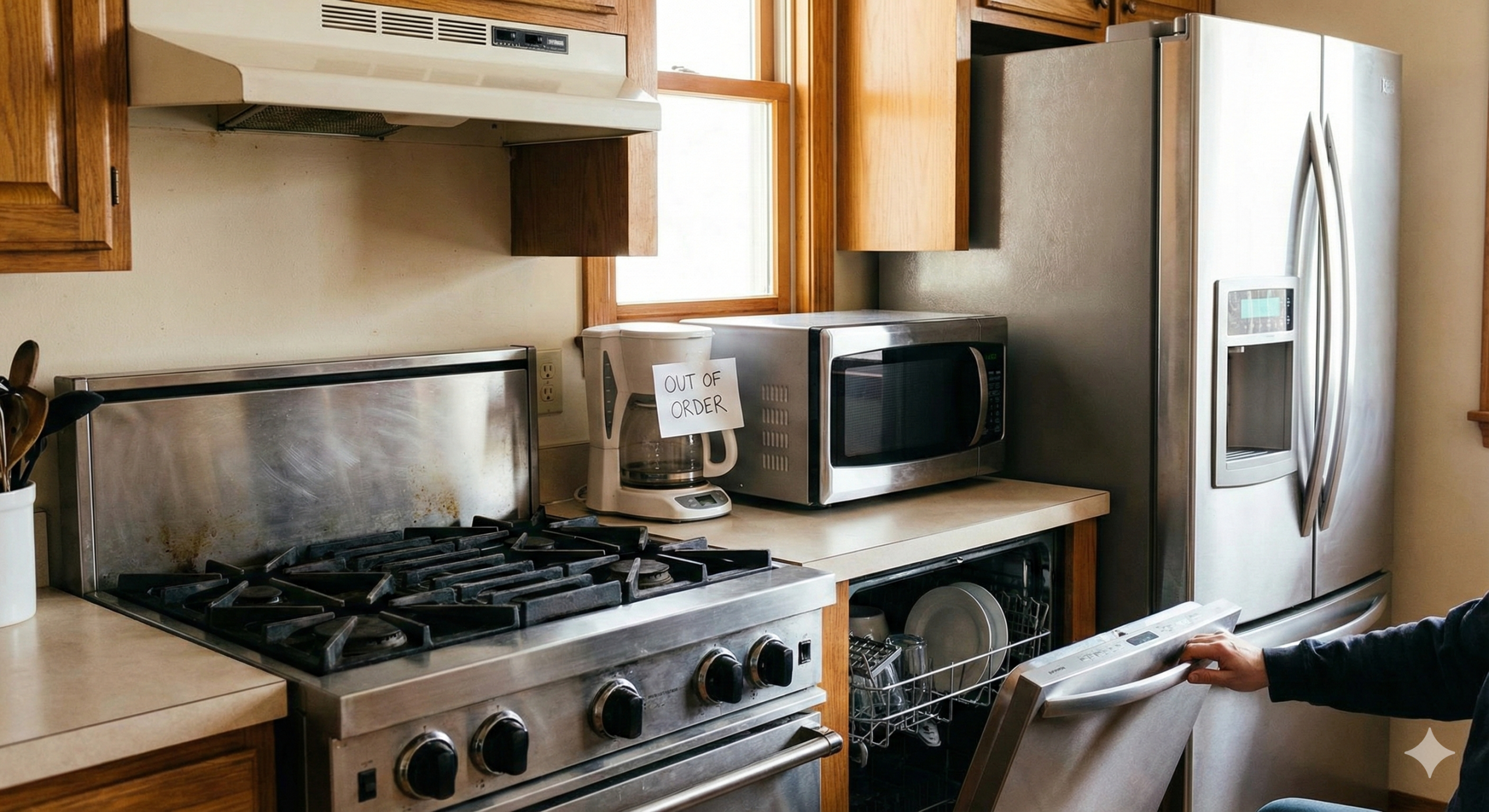
Kitchen Appliances That Break the Fastest (And Which Ones Actually Last)
Not all kitchen appliances are created equal when it comes to longevity, and understanding which categories tend to fail quickly versus which ones typically last for years helps you make smarter purchasing decisions and budget appropriately. Some appliances consistently last decades with minimal maintenance, while others seem designed to fail just after warranty expiration. The patterns aren’t random – specific design factors, component quality, and usage intensity create predictable reliability differences across appliance categories. The frustration of appliance failure goes beyond simple inconvenience and replacement cost. When appliances break prematurely, you lose time to repairs or shopping for replacements, deal with the hassle of installation, and often face the environmental impact of disposing of items that should have lasted far longer. Understanding reliability patterns across appliance types helps you set realistic expectations, budget for replacements, and make informed choices about which categories deserve investment in quality versus which ones might not justify premium pricing. Dishwashers: The Reliability Wild Card Dishwashers occupy a middle ground in appliance reliability, with lifespans varying dramatically based on quality, brand, and usage patterns that make them surprisingly unpredictable. Average lifespan expectations for dishwashers typically range from 7-12 years, though many fail earlier while some last significantly longer. This wide variation reflects real differences in build quality across price points and brands. Common failure points include door latches and seals that wear from repeated use, spray arms that clog or break, circulation pumps that fail, and control boards that malfunction. These components experience constant stress during operation, making them vulnerable to premature failure. Hard water accelerates dishwasher problems dramatically by creating mineral buildup that clogs spray arms, damages pumps, and reduces cleaning effectiveness. Homes with hard water see significantly shorter dishwasher lifespans unless they use water softeners or maintenance routines. Budget models typically fail faster than mid-range or premium options because of lower-quality pumps, cheaper door mechanisms, and less robust construction that doesn’t withstand daily use as well. The initial savings often disappear when you need replacement years earlier. Heavy use reduces lifespan more than occasional use. Families running dishwashers daily put far more stress on components than couples using them a few times weekly, creating reliability differences based on household size and cooking frequency. Maintenance significantly affects longevity. Regular filter cleaning, occasional spray arm inspection, and using appropriate detergents extend life, while neglecting maintenance accelerates failure. Refrigerators: Built-In Complexity Creates Problems Modern refrigerators pack increasingly complex features into appliances that run continuously, creating more potential failure points than simpler predecessors that often lasted 20+ years. Average lifespan has decreased as refrigerators gained features. Where basic models from decades past frequently hit 20-25 years, modern refrigerators typically last 10-15 years, with some premium models failing even earlier despite high prices. Ice makers and water dispensers represent the most common failure points in modern refrigerators. These features add mechanical complexity and water system components that frequently malfunction, sometimes multiple times during the refrigerator’s life. Compressor failure ends many refrigerators’ lives since replacement costs approach new appliance prices for all but the most expensive models. Compressors that once reliably ran for decades now sometimes fail within 5-10 years. French door and side-by-side models tend to have more problems than simple top-freezer refrigerators because of additional door mechanisms, more complex ice systems, and greater mechanical complexity overall. Smart features and electronic controls create new failure modes that didn’t exist in mechanically controlled refrigerators. Control boards, touchscreens, and connectivity features add cost and complexity while sometimes reducing rather than improving reliability. Budget refrigerators often use lower-quality compressors and cheaper components that result in shorter lifespans. The initial savings might not justify the earlier replacement and greater repair frequency. Ranges and Ovens: Generally Reliable Workhorses Ranges and ovens, particularly gas models, represent some of the most reliable kitchen appliances when you choose quality construction and avoid unnecessary complexity. Gas ranges consistently outlast electric ranges on average, often hitting 15-20 years with proper care. The simpler mechanical components and lack of complex electrical systems create fewer failure points. Electric ranges typically last 13-17 years, with failures often involving heating elements, control boards, or oven sensors. These electrical components eventually fail but generally provide years of reliable service first. Failure points in ranges include burner ignitors on gas models, heating elements on electric models, oven sensors, control panels, and door mechanisms. Most of these repairs are relatively affordable compared to replacing the entire appliance. Simple mechanical controls last longer than complex digital interfaces in ranges. Basic knobs and switches rarely fail, while touchscreens and elaborate control systems create additional failure modes. Self-cleaning features stress ovens through extreme temperatures that can damage components or warp oven cavities over time. Ranges without self-cleaning or those where the feature is rarely used often last longer. Quality indicators include heavy-gauge metal construction, sealed burners on gas ranges, solid door hinges, and substantial control knobs. These details suggest durability that justifies higher initial costs. Range Hoods: Simple Design Supports Longevity Range hoods represent one of the most reliable appliance categories because of their relatively simple mechanical design with few components that can fail. Average lifespan of 15-20 years is common for quality range hoods that receive basic maintenance. The simple fan and light mechanisms rarely fail when manufactured properly. Motor quality determines much of a range hood’s longevity. Quality motors run quietly and reliably for years, while cheap motors become noisy, vibrate excessively, and fail prematurely. Control switches occasionally fail but repair costs are minimal. Basic mechanical switches last longer than complex touch controls, though both generally provide years of service. Lighting components need replacement occasionally but this represents routine maintenance rather than system failure. LED lights last dramatically longer than older incandescent or halogen bulbs. Filter maintenance affects longevity indirectly by preventing grease buildup that can stress motors and create fire hazards. Regular cleaning extends range hood life while improving performance. Ductwork problems sometimes get blamed on range hoods when inadequate ducting reduces airflow and forces motors to work harder. Proper installation with appropriate ducting protects