
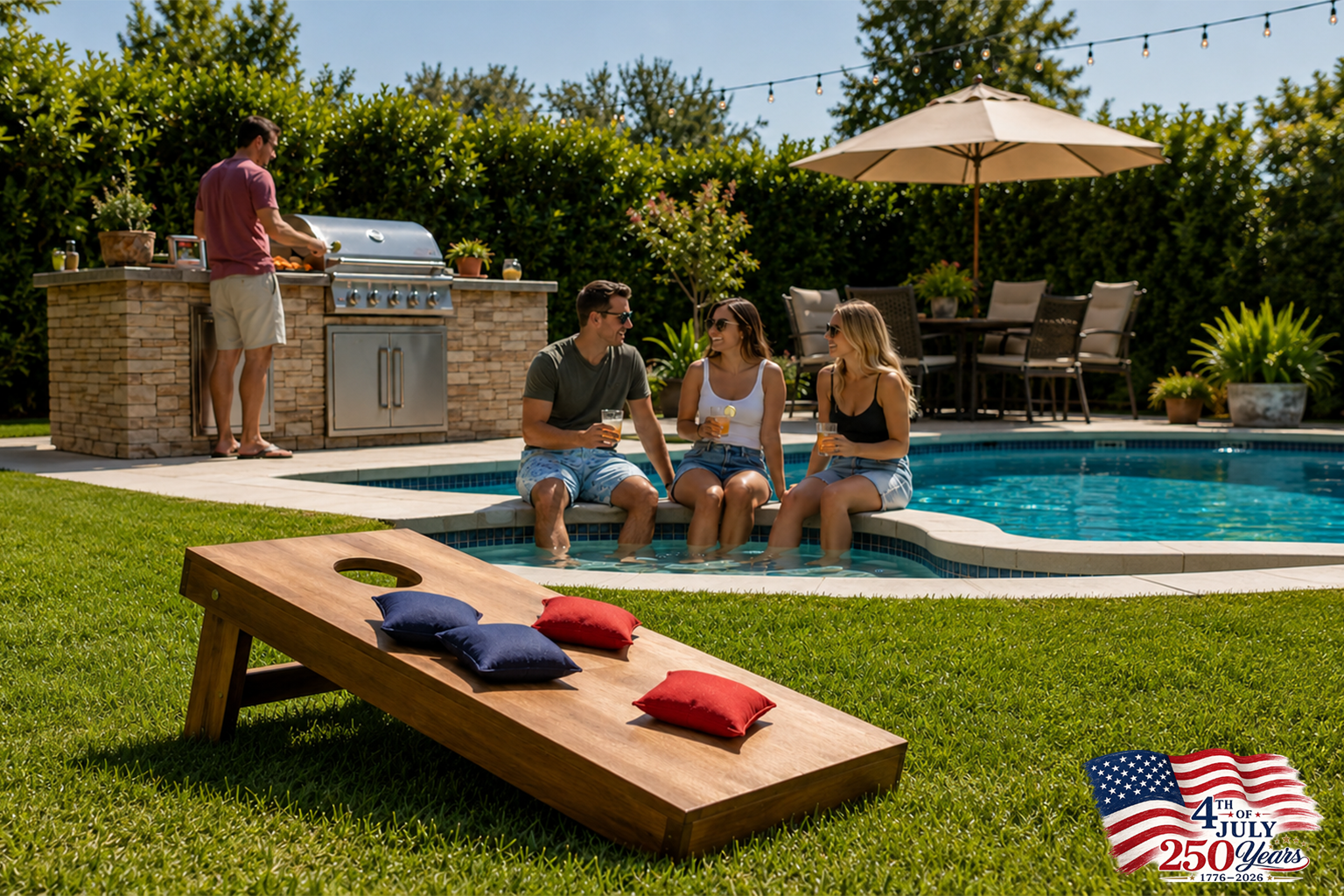
Backyard BBQ Games Everyone Will Love
The difference between a good backyard cookout and a great one rarely comes down to what’s on the grill. Food is table stakes — everyone expects it to be good. What separates the gathering people talk about for weeks from the one they politely enjoyed and then forgot is how the time between arriving and eating actually feels. Games are how you fill that time in a way that brings people together rather than leaving them stranded in small clusters trying to generate conversation with acquaintances they barely know. Good backyard games share a few qualities that bad ones don’t: they work across a wide age range, they don’t require extensive rules explanations, they tolerate interruption gracefully when someone needs to check the grill or refresh their drink, and they generate enough friendly competition to give people something to talk about without requiring athletic ability or coordination that might embarrass less physically confident guests. The games that actually get played repeatedly at cookouts aren’t usually the most elaborate ones — they’re the ones with low setup friction, natural stopping and starting points, and enough inherent silliness to make losing feel fine. Cornhole Cornhole has become the defining game of American backyard gatherings for good reasons that go beyond mere trend. It works. How It Works: Two boards are placed 27 feet apart for official play, or closer for casual games, with a 6-inch hole at the top of each angled surface. Teams of two alternate throwing 16-ounce fabric bags filled with corn or synthetic fill, aiming to either land bags through the hole (3 points) or on the board surface (1 point). Teams cancel out each other’s points each round — if Team A scores 5 and Team B scores 3, only Team A gets 2 points for that round. First to 21 points wins. Why It Works for Cookouts: The 27-foot distance is long enough to require skill but short enough that most adults can play competently without practice. Rounds move quickly. The cancellation scoring system keeps games from ending embarrassingly lopsidedly. Players can hold drinks while playing — genuinely important for a backyard party format. Age Range: Kids around 8 and up can play meaningfully. Adults of all ages and fitness levels participate equally. Cornhole doesn’t advantage the young or athletic. Setup Considerations: Official boards are 2×4 feet with a specific hole diameter. Purchased sets are consistent enough that you don’t need to build your own. Store them flat and keep the bags dry — bags that absorb moisture from wet storage become inconsistent in weight and flight. Tournament Potential: Cornhole scales naturally to larger gatherings through bracket tournament formats. Eight teams produce a bracket that takes 3 rounds to determine a winner — achievable over a couple of hours of party time without dominating the entire event. Bocce Ball Bocce ball is the game that surprises people. They’ve seen it in parks and assumed it was boring until someone roped them into playing, at which point they became immediate converts. How It Works: One player throws the pallino (small target ball) to establish its position. Teams then alternate throwing or rolling their larger bocce balls, trying to end up closest to the pallino. The team with the closest ball scores a point for each of their balls that sits closer to the pallino than the closest opposing ball. Games typically go to 12 points. Why It Works for Cookouts: Bocce moves at a conversational pace — players are walking slowly back and forth to inspect ball positions, debating measurements, and arguing cheerfully about which ball is actually closer. This pace generates more conversation and laughter than faster-moving games that require continuous attention. The measuring disputes are half the fun. Surface and Space: Bocce traditionally plays on packed dirt or sand. Grass works fine for casual play and actually adds strategic complexity as uneven surfaces affect ball trajectories. You need roughly 60×12 feet for a standard court, though casual play in smaller spaces with adjusted distances works well for most backyards. Age Range: One of the most age-inclusive games available. Grandparents and young children can participate meaningfully alongside adults because the game rewards strategic positioning rather than athletic ability. Grandparent-grandchild teams are perennially competitive in bocce. Skill Ceiling: Bocce has genuine depth that rewards experience — reading surface slopes, understanding how to knock opponents’ balls away without losing position, and managing risk when deciding whether to attempt a difficult throw versus playing it safe. Casual players enjoy it immediately while experienced players appreciate the strategy. Kan Jam Kan Jam fills the gap for people who want a faster-paced, more physically active game than cornhole or bocce without requiring the coordination of more athletic options. How It Works: Two cylindrical goals (kan) are placed about 50 feet apart. Teams of two face each other — one player at each kan. The thrower attempts to hit or land the frisbee in the opposite kan. The thrower’s partner can redirect (deflect) the frisbee to help it hit or enter the kan. Scoring: hitting the kan directly scores 1 point, knocking a deflected disc into the slot on the kan’s side scores 2 points, the thrower putting the disc directly through the top slot is an instant win. First to 21 wins, but you must reach exactly 21 — going over resets you to 15. Why It Works for Cookouts: Kan Jam is significantly more active than cornhole with satisfying moments when a good deflect-to-slot combination scores 2 points. The partner deflection mechanic means even weaker throwers can contribute meaningfully to their team’s success because their partner can adjust bad throws. Physical Involvement: More movement than cornhole — players need to move to deflect well, and the frisbee can take erratic paths. Not so physical that fitness matters, but energetic enough that it generates more noise and spectator interest than slower-paced games. Age Range: Best suited to teens through adults in their 50s and 60s who are reasonably mobile. Less accessible