
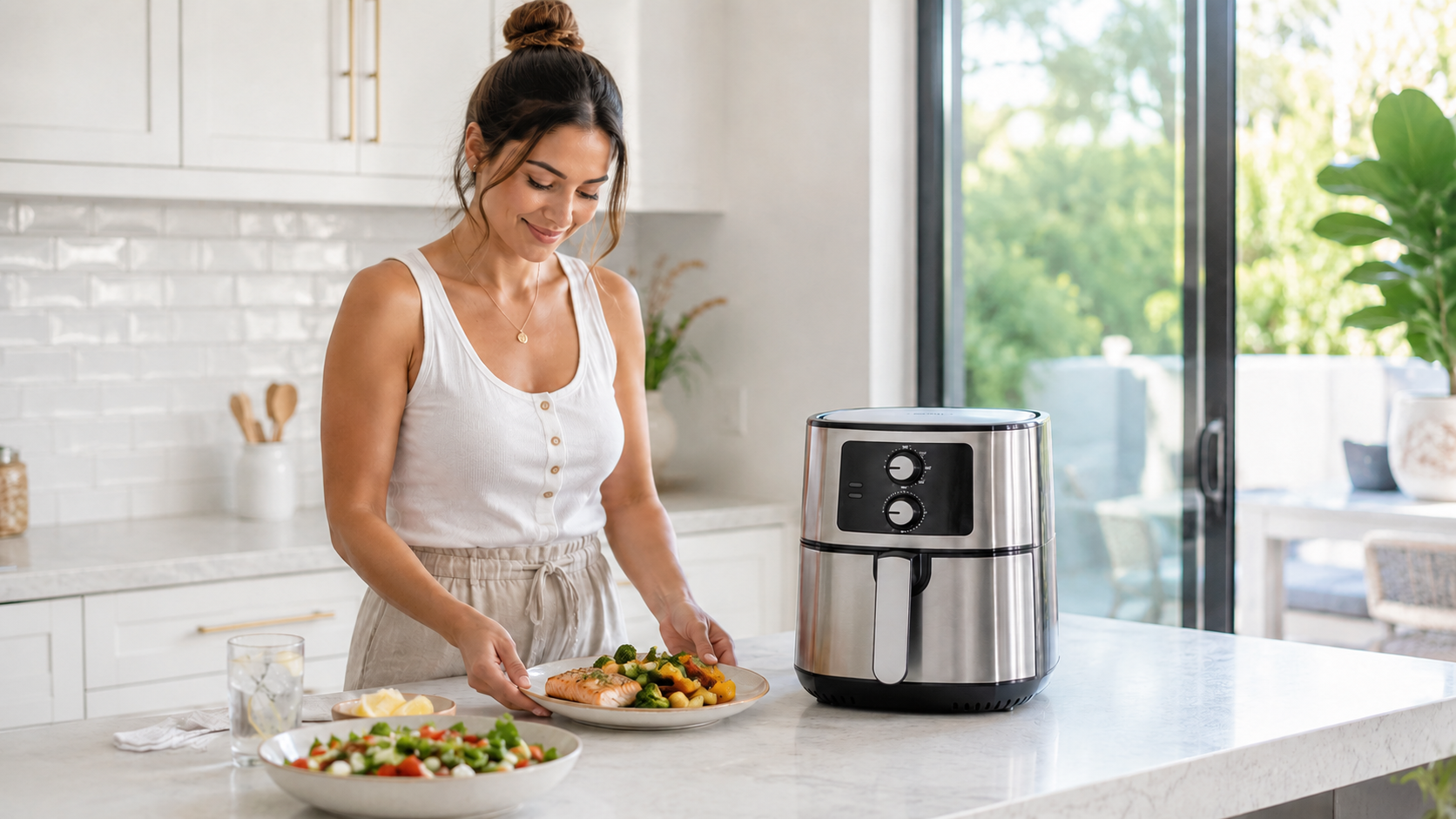
air fryer summer cooking

Your Air Fryer Is the Most Useful Appliance You Own in Summer | Here’s Why

Most kitchen appliances have a season where they shine and a season where they fade into the background. The stand mixer comes out heavily in November and December for holiday baking and sits largely unused from March through October. The slow cooker earns its keep during cold months when braised short ribs and chili seem like obvious dinner choices and retreats to a cabinet shelf when summer arrives. The air fryer is different — it’s genuinely useful year-round, but summer is specifically when it becomes the most important appliance in your kitchen, the one you’d choose to keep if forced to give up everything else. This isn’t a general endorsement of air fryers as a category. It’s a specific argument about why summer creates conditions where the air fryer’s particular combination of capabilities — speed, heat efficiency, versatility, and minimal cleanup — addresses problems that summer cooking creates more acutely than any other season. Understanding why summer and air fryers are specifically well-matched helps you actually use the appliance to its potential rather than treating it as a specialty gadget for frozen foods and chicken wings. The Heat Problem Summer Creates in Your Kitchen Every argument for the air fryer in summer starts here, because this is the foundational problem the appliance solves better than anything else. What Your Oven Does to Your Home in Summer: A standard oven running at 375°F for 45 minutes isn’t just cooking food — it’s radiating heat into the surrounding kitchen through the door glass, the door seals, and the oven body throughout the entire cooking period. After the oven shuts off, it continues radiating heat as the cavity cools. In a home where the air conditioner is already working against 90°F outdoor temperatures, the oven’s heat contribution forces the cooling system to work harder, increases electricity consumption, and makes the kitchen itself genuinely uncomfortable during cooking. The Efficiency Gap: Gas ovens convert approximately 40% of their consumed energy into cooking heat. Traditional electric ovens do somewhat better at 65-70%. The remainder becomes waste heat distributed into your kitchen. An oven that runs for an hour in summer is doing something you don’t want — adding significant heat to a space you’re paying to keep cool. What the Air Fryer Does Instead: Air fryers heat a compact cavity of 2-6 quarts rather than a 5+ cubic foot oven. They reach cooking temperature in 3-5 minutes rather than the 10-15 minute preheat conventional ovens require. They complete most cooking tasks in 8-20 minutes rather than 25-45 minutes for oven equivalents. The total heat generated into your kitchen environment during an air fryer cooking session is dramatically lower — both because the heated cavity is smaller and because the cooking duration is significantly shorter. For a household trying to maintain comfortable indoor temperatures during a summer heat event, this difference is immediately felt rather than theoretically appreciated. The Numbers: Consider a chicken breast. Oven method: 10-15 minutes preheat plus 25-30 minutes cooking. Total time with oven actively heating: 35-45 minutes. Air fryer method: 3-5 minutes to temperature plus 15-18 minutes cooking. Total time: 18-23 minutes. The air fryer produces less than half the kitchen heat for the same result. Multiplied across every dinner preparation for a summer that runs from June through September, this efficiency difference affects both your electricity bill and your daily comfort in the kitchen in ways that accumulate meaningfully. Speed Changes What’s Practical for Summer Cooking Beyond the heat argument, speed is the second reason summer specifically benefits from air fryer cooking. Summer cooking has different time dynamics than the rest of the year, and the air fryer’s speed profile aligns with those dynamics unusually well. Summer Evening Cooking Context: Summer evenings are when people most want to be outside — on the patio, by the pool, at a neighbor’s yard, watching the kids play until the light fades. Coming inside to manage a 45-minute oven dinner competes with everything that makes summer evenings worth having. A cooking method that handles dinner in 15-20 minutes of mostly unattended operation fits the summer evening lifestyle in a way that extended oven cooking doesn’t. The After-Activity Cooking Problem: Summer days fill with activities that push dinner later than usual — afternoons at the beach, evening bike rides, extended pool sessions, outdoor socializing that runs longer than planned. Arriving home at 7pm hungry and tired, nobody wants to discover that dinner requires an hour of active kitchen time. Air fryer cooking handles the “we’re home later than expected and hungry now” scenario better than almost any other cooking method. Chicken thighs in 22 minutes. Salmon in 12 minutes. Roasted vegetables in 15 minutes. These timelines work when you’re already hungry and the alternative is waiting. Entertaining Without Kitchen Captivity: Summer hosting often involves guests present while you’re still preparing food — outdoor parties, casual backyard gatherings, impromptu dinner invitations accepted at 4pm for a 6pm dinner. The air fryer’s speed and minimal attention requirement means you can run cooking batches without disappearing into the kitchen for extended periods. Set the air fryer, go back to your guests, return when the timer sounds. The appliance manages itself in a way that oven cooking doesn’t. The Summer Food Inventory Aligns Perfectly with Air Fryer Strengths Summer’s characteristic foods — the things people actually want to eat when temperatures are high — happen to be exactly the foods that air fryers handle best. Proteins That Dominate Summer Eating: Chicken in every form — wings, thighs, breasts, tenders — is peak air fryer territory. The circulating hot air produces crispy skin and juicy interiors that rival deep frying for texture without the oil management. Shrimp in 6-8 minutes. Salmon fillets in 10-12 minutes. Fish tacos built from air-fried fish. Chicken sandwiches with a genuinely crispy exterior. These are summer’s most common protein preparations, and they’re all in the air fryer’s strongest territory. Summer Vegetables: The air fryer produces roasted vegetables with better caramelization and texture than oven roasting

How to Cook Without Heating Up Your Kitchen This Summer | Beat the Heat in the Kitchen

There’s a specific misery to cooking dinner in a kitchen that’s already 80°F before the oven turns on. The range hood runs, the fans run, the air conditioner works harder, and by the time the food is ready the cook is overheated and the kitchen is genuinely uncomfortable. In summer, and particularly during the kind of extended heat events that have become more frequent across both Europe and North America, conventional indoor cooking creates a feedback loop where the act of preparing food makes the environment worse for everyone in it. The good news is that modern cooking equipment and a small amount of menu planning make it entirely possible to feed a household well throughout summer without ever turning the oven on, without running high-output gas burners that dump combustion heat into the kitchen air, and without the hours of indoor stovetop cooking that conventional weeknight dinner approaches require. The strategies aren’t complicated, but they require thinking about summer cooking differently than the rest of the year — prioritizing techniques and equipment that generate minimal heat indoors rather than simply defaulting to whatever you’d normally make. Why Your Kitchen Gets So Hot When You Cook Understanding what actually generates heat during cooking helps you make targeted decisions about what to change rather than vague attempts to cook “lighter.” The Oven Is the Biggest Offender: A conventional oven running at 375°F for an hour isn’t just heating the food inside it — it’s radiating heat into the surrounding kitchen throughout that entire period through the door glass, the door seals, and the oven body itself. Oven cavity temperatures of 375°F with even modest insulation limitations mean the oven exterior and surrounding cabinetry run meaningfully above room temperature, contributing steady heat to the kitchen environment throughout the cooking process and often for 30-45 minutes after the oven shuts off as residual heat dissipates. Gas Burners and Combustion Heat: Gas cooking is approximately 40% efficient at transferring heat to food — the remaining 60% of the energy goes into the surrounding air as waste heat from combustion. On a hot summer day, running multiple gas burners for an extended cooking session contributes a substantial amount of heat to the kitchen environment. This is one of the reasons professional kitchens in hot climates run aggressive ventilation — the heat load from gas cooking in an enclosed space is genuinely significant. Steam and Humidity: Boiling water, simmering soups, and cooking pasta all release steam into the kitchen air. This added humidity makes the same temperature feel more uncomfortable, and in homes without air conditioning or with undersized units, the additional moisture load compounds heat discomfort significantly. Appliance Waste Heat: Even refrigerators, dishwashers running their drying cycles, and other kitchen appliances contribute background heat to the kitchen environment. This background load matters most in already-hot conditions where every additional heat source pushes the room temperature higher. Strategy One: Move Cooking Outside The most complete solution to kitchen heat is removing cooking from the kitchen entirely. This is more practical than it sounds for most households with outdoor space. The Grill as Primary Cooker: A backyard or balcony grill running at full temperature generates all its heat outdoors where it disperses naturally into open air rather than accumulating in an enclosed kitchen. Everything you’d normally cook on a stovetop or in an oven can be adapted for grill cooking — proteins obviously, but also vegetables, bread, pizza, fruit, and even some baked goods. The grill handles high-heat searing, slow indirect roasting, and everything in between without contributing a single degree to the indoor temperature. Extending the Grill’s Menu Range: Most people think of grills primarily for burgers and steaks, which underutilizes what outdoor grilling can handle. Whole chickens cooked indirect take an hour and a half without any oven involvement. Grilled pizza — dough directly on grill grates over medium heat — cooks in 8-10 minutes and produces a char that conventional ovens can’t replicate. Grilled corn, zucchini, eggplant, bell peppers, peaches, and stone fruits all take minutes and require no indoor cooking. Fish fillets, shrimp skewers, and shellfish on the grill cook faster than most indoor methods. Expanding your grill repertoire beyond the obvious protein-centric menu genuinely transforms it into a complete cooking system rather than a supplement to indoor cooking. The Side Burner Opportunity: Many gas grills include a side burner — a single outdoor gas burner positioned beside the main grill cooking surface. This burner handles pasta boiling, sauce making, corn on the cob, and any stovetop task that would otherwise require running indoor burners in a hot kitchen. Moving these tasks outdoors eliminates both the stovetop heat and the steam that indoor boiling generates. Portable Induction as Outdoor Station: A portable single-burner induction cooktop taken to a covered patio or outdoor table creates a compact outdoor cooking station that handles stovetop work with zero combustion heat and minimal radiated heat compared to gas. Induction converts approximately 85-90% of consumed energy into cooking heat with very little waste into the surrounding environment, making it one of the cooler-running stovetop options regardless of where it’s used. Strategy Two: Embrace the Air Fryer The air fryer is genuinely the most useful summer appliance in most kitchens — not because it produces some categorically different result from the oven, but because it accomplishes similar things in a fraction of the time and generates a fraction of the heat. Why Air Fryers Run Cooler Than Ovens: A standard oven heats a 5+ cubic foot cavity and maintains that temperature for the entire cooking period, continuously generating heat whether the food needs it or not. An air fryer heats a compact cavity of 2-6 quarts, reaches temperature much faster, and completes most cooking tasks in less time than equivalent oven cooking. The total heat generated into the kitchen environment is dramatically lower — both because the cavity is smaller and because the cooking duration is shorter. What the Air Fryer Handles Well in Summer: Chicken pieces and