
When to Repair vs. Replace Kitchen Appliances: Making Smart Decisions About Your Kitchen Equipment
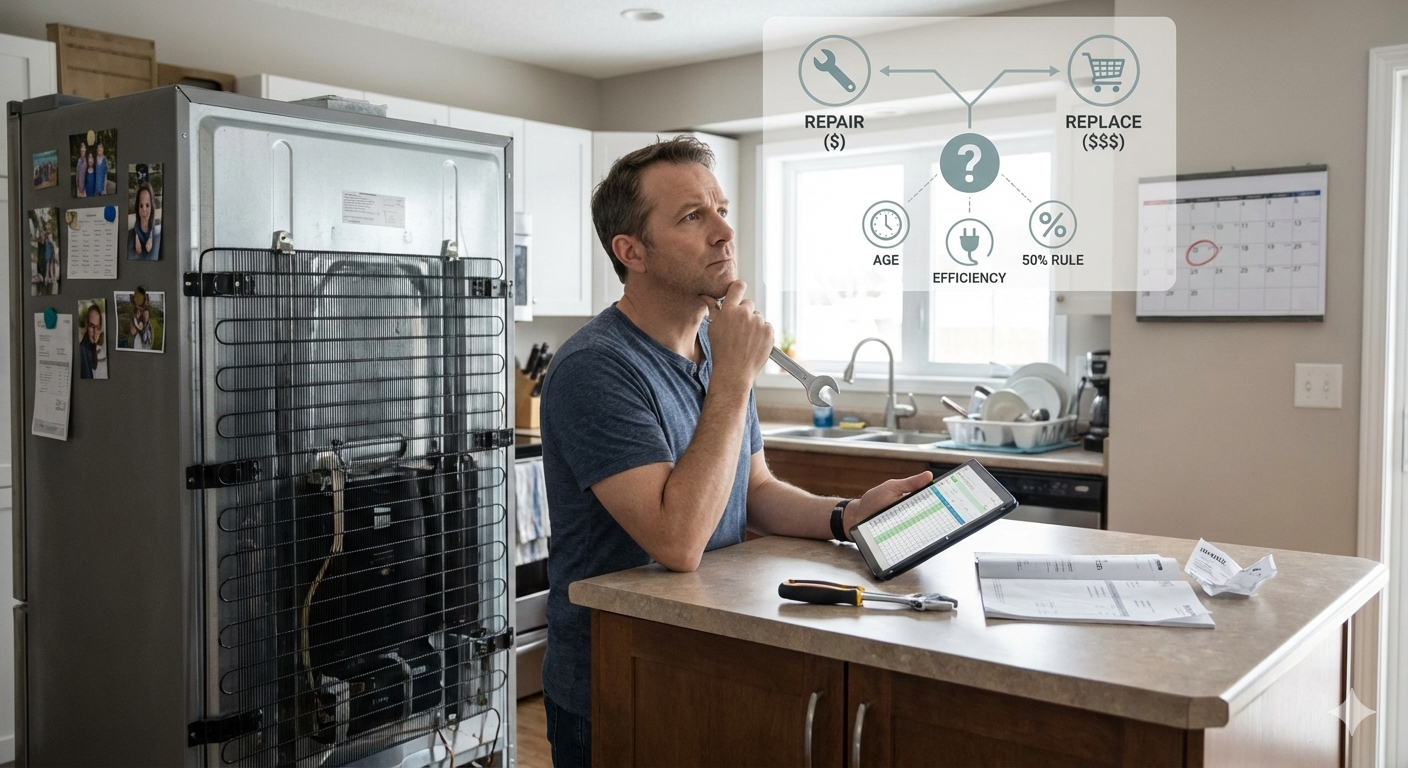
Kitchen appliances eventually fail. Range burners stop lighting, dishwashers start leaking, refrigerators quit cooling, and ovens heat inconsistently. When appliances malfunction, you face a decision: pay for repairs or replace the unit entirely. This choice affects your budget immediately and influences kitchen functionality for years. The decision isn’t always obvious because repair costs, appliance age, energy efficiency changes, and replacement prices all factor into what makes financial sense. Understanding when repair makes sense versus when replacement is smarter helps you avoid wasting money on fixing appliances that will fail again soon while also preventing unnecessary replacement of equipment that could serve reliably for years more with simple fixes. The repair-versus-replace decision requires evaluating several factors simultaneously rather than applying simple rules. Appliance age matters, but a ten-year-old refrigerator might justify repair while a seven-year-old dishwasher doesn’t, depending on what’s broken and repair costs. The specific failure type influences the decision – some problems signal imminent complete failure while others are isolated issues. Repair cost as a percentage of replacement cost provides useful guidance, but this ratio alone doesn’t account for how much longer the appliance will function after repair. Energy efficiency improvements in newer models sometimes justify replacement even when repairs are relatively inexpensive. Making smart decisions requires understanding these factors and how they interact rather than following rigid formulas. The 50% Rule and Its Limitations The commonly cited 50% rule suggests replacing appliances when repair costs exceed half the replacement price. While this guideline provides a starting point, it oversimplifies complex decisions. The rule captures important economic reality – spending 60% of replacement cost to repair an aging appliance rarely makes sense when you could get a new unit with warranty for just 40% more. This principle is sound for straightforward cases. However, the rule ignores appliance age and remaining useful life. A two-year-old refrigerator might justify a repair costing 60% of replacement because you’re likely getting 10+ more years. That same repair cost on a 12-year-old refrigerator makes less sense because you’re probably getting only a few more years before another major component fails. The calculation also depends on accurate replacement cost assessment. Cheap replacement options might suggest not repairing, but if you’d actually buy a higher-quality replacement, the 50% threshold changes significantly. Compare repair costs to what you’d actually spend on replacement, not the cheapest available option. Energy efficiency improvements complicate the calculation further. An expensive repair on an old, inefficient refrigerator might cost less upfront than replacement but more over time through higher electricity bills. The 50% rule doesn’t account for operating cost differences. Warranty coverage on repairs versus new appliances matters. A $400 repair might come with a 90-day parts warranty, while a $900 replacement includes a full warranty. The replacement provides more protection for the additional cost. Use the 50% rule as initial screening rather than definitive answer. If repair costs are under 30% of replacement, repair usually makes sense. Over 70%, replacement is typically smarter. Between 30-70%, other factors become decisive. Age and Expected Remaining Life Appliance age fundamentally affects repair decisions because it indicates how much useful life remains even after successful repairs. Typical appliance lifespans provide context for age-based decisions. Refrigerators average 10-15 years, dishwashers 8-12 years, ranges 13-15 years, microwaves 8-10 years. These averages help gauge whether an appliance is early, middle, or late in its expected service life. Early-life repairs (within first 3-5 years) usually justify fixing unless the problem indicates fundamental design flaws. You’re repairing an appliance that should provide many more years of service. Manufacturing defects sometimes appear early, but most appliances work reliably through early years if they survive initial break-in. Mid-life repairs require more careful evaluation. An eight-year-old dishwasher might have 4-6 years of remaining life if repaired successfully, making repair reasonable for moderate costs. The appliance has proven reliable enough to reach middle age, suggesting decent quality. Late-life repairs on appliances approaching or exceeding typical lifespan rarely make sense unless costs are minimal. A 14-year-old refrigerator, even if repaired successfully, likely faces other component failures soon. You’re putting money into an appliance nearing the end regardless of this specific repair. Multiple previous repairs accelerate the replacement decision timeline. An appliance requiring its third significant repair in two years is telling you something about its overall condition. Each repair buys less time before the next failure. The age consideration interacts with repair cost. A $300 repair on a three-year-old appliance is smarter than the same repair on a twelve-year-old unit, even though the repair cost is identical. Nature and Severity of the Problem What specifically has failed significantly influences whether repair makes sense because some problems indicate broader deterioration. Compressor failure in refrigerators represents major mechanical breakdown. While compressors can be replaced, this failure often signals that the appliance has experienced conditions or manufacturing issues that will cause other components to fail. Compressor replacement costs are high and remaining life expectancy after repair is uncertain. Control board failures are increasingly common in modern appliances with extensive electronics. These repairs can be expensive, but if the mechanical components remain sound, successful control board replacement often provides years more service. The appliance’s mechanical parts are what determine longevity – electronics are just the brain controlling them. Leaking issues in dishwashers and washing machines vary in seriousness. Small seal failures are straightforward fixes with good prognosis. Tub cracks or major structural leaks indicate problems that may not be economically repairable and suggest replacing rather than attempting major reconstruction. Burner ignition problems on gas ranges are typically simple, inexpensive fixes. These failures don’t indicate broader deterioration – often just dirty igniters or simple component wear. Repairing makes sense at almost any appliance age. Oven heating element failures are straightforward replacements on electric ranges. These are wear items expected to fail occasionally. Replace elements without considering broader appliance replacement unless other problems exist concurrently. Door seal failures and hinge problems are minor repairs that rarely justify replacement. These components wear from use but don’t indicate appliance core deterioration. Multiple