
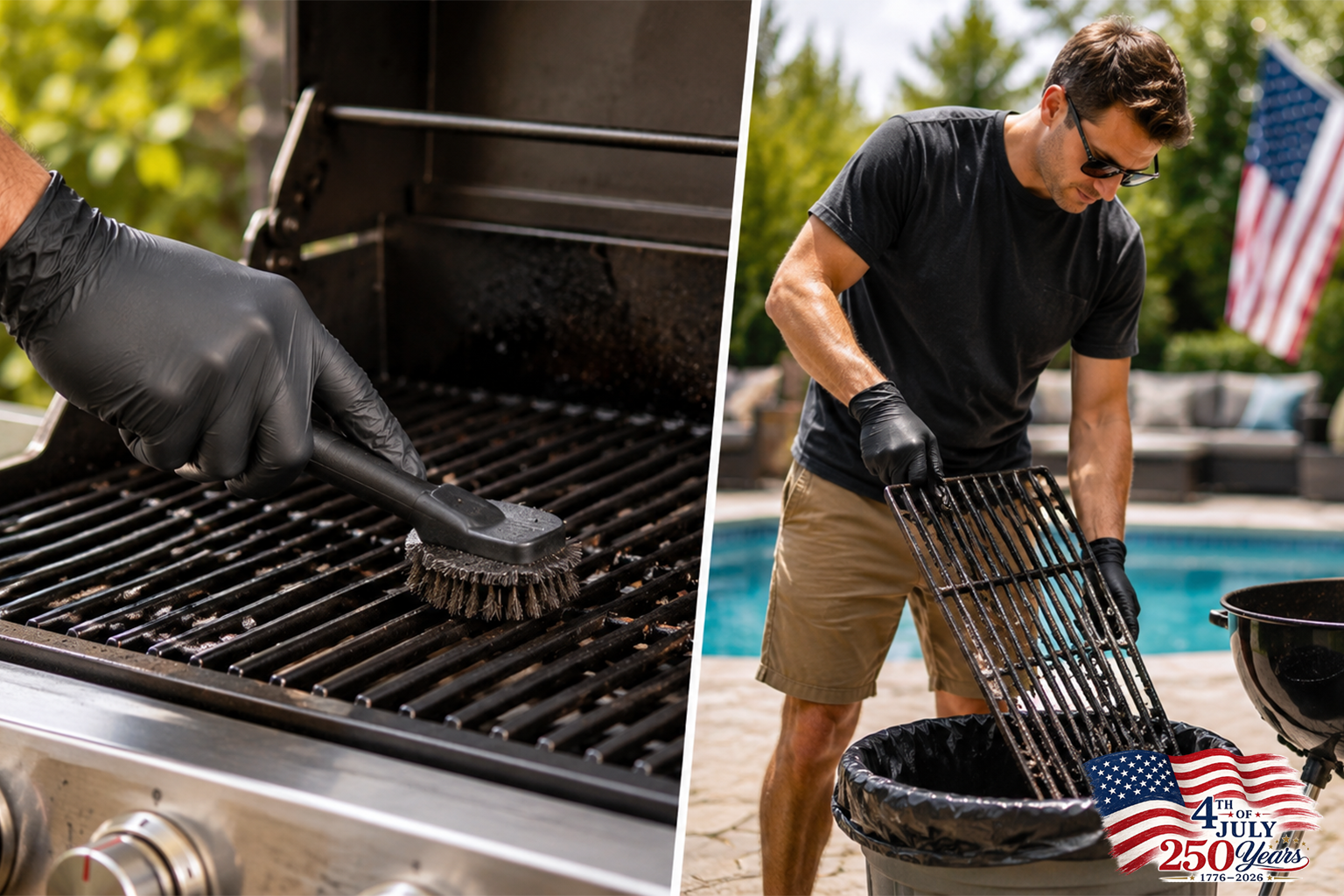
Grill Cleaning Tips Before and After the Holiday
A clean grill performs better than a dirty one in ways that are easy to underestimate until you’re dealing with the consequences. Grease buildup causes flare-ups at the worst moments — when the grill is running hot and fully loaded with food for twenty guests. Old carbon residue on grates transfers bitter, off-flavors to food that good seasoning can’t fully mask. Blocked burner ports on gas grills create uneven heat distribution that produces inconsistently cooked food despite your best technique. Accumulated ash in charcoal grills restricts airflow and makes temperature management harder than it needs to be. The Fourth of July specifically motivates grill cleaning that might otherwise get deferred indefinitely, which is part of why the holiday is worth treating as a deliberate cleaning occasion. A grill that hasn’t been seriously cleaned since last summer is carrying a season’s worth of accumulated grease, carbon, and debris into an event where it’ll run harder and longer than almost any other day of the year. Getting it properly clean before the holiday improves both cooking results and safety. Getting it clean after establishes a baseline that makes the next cleaning — and the next cooking session — easier. Before the Holiday: Deep Cleaning Checklist Pre-holiday cleaning is the more important of the two sessions because it’s the one that directly affects cooking performance and safety on the day itself. Do this at least two or three days before the Fourth rather than the morning of, when you’ll have too many other preparation tasks competing for your attention. Gas Grills: Full Pre-Season Inspection and Clean Gas grill cleaning starts with a systematic inspection rather than immediately scrubbing surfaces, because understanding the grill’s condition determines what cleaning is actually needed. Check and Clean Burner Tubes: Burner ports — the small holes along the burner tubes through which gas exits before ignition — clog with grease, food residue, and occasional insect nesting material over a storage season. Clogged ports create uneven flames, cold spots, and in some cases prevent certain sections of burners from lighting at all. Turn off and disconnect the gas, remove the grates and heat distribution plates or flavor bars to access the burners, and inspect each port. Clear blocked ports with a stainless steel wire or small drill bit of the appropriate diameter. Never use toothpicks or wooden skewers that can break off inside the port. While the burners are accessible, check for rust, corrosion, or physical damage along the burner tubes themselves. Surface rust on cast iron burners is common and mostly cosmetic — clean it with a wire brush and the burner will function normally. Significant corrosion, holes, or structural damage on any burner warrants replacement before cooking on the grill. Clean Flavor Bars and Heat Tents: The metal components sitting between burners and grates accumulate heavily with grease, and this accumulated grease is the primary source of dangerous flare-ups during high-heat cooking. Remove these components and clean them thoroughly. Hardened grease responds well to soaking in hot soapy water for 30 minutes before scrubbing. For particularly heavy buildup, commercial degreasers applied with a brush and allowed to penetrate for 10-15 minutes before rinsing significantly reduce the scrubbing effort required. Clean the Firebox Interior: The grill’s interior walls, bottom, and any collection trays accumulate grease that drips during cooking. Scrape the interior walls down with a putty knife or grill scraper to remove any built-up layers, then follow with a degreaser and wipe-down. The grease collection tray or drip pan beneath the firebox should be emptied completely and cleaned before any holiday cooking session. A full drip tray can overflow during extended high-volume cooking, creating a fire hazard. Scrub the Grates: Grates that cook most frequently are where the most visible buildup exists. Preheat the grill to loosen residue, then scrub with a quality grill brush while grates are hot. For more stubborn buildup, crumpled aluminum foil held with tongs provides aggressive scrubbing action. After scrubbing, wipe grates with a paper towel lightly coated in cooking oil to season the surface and prevent rust during the days before use. Check the Ignition System: Light each burner individually to verify the ignition system fires reliably. A burner that takes multiple attempts to light during normal use needs its igniter cleaned or potentially replaced before a holiday cooking session. Igniter electrodes develop carbon buildup that reduces spark reliability — cleaning with a dry toothbrush removes most surface buildup. Inspect Gas Lines and Connections: Apply a soap and water solution to all hose connections and the regulator. Turn on the gas briefly without lighting the grill and watch for bubbles, which indicate leaks requiring immediate professional service before the grill is used. Do this inspection every season regardless of how the grill performed the previous year, as hoses can develop cracks during winter storage. Charcoal Grills: Ash and Grease Cleanup Charcoal grills accumulate different types of debris than gas grills but require the same thoroughness before a high-demand cooking event. Remove All Old Ash: Ash left in the bottom of a charcoal grill is the primary enemy of good fire management. Ash absorbs moisture, becomes cement-like when wet, restricts the airflow through bottom vents that controls fire temperature, and can reactivate to produce residual smoke that flavors food in unwanted ways. Completely empty the ash catcher and the bottom of the firebox before any serious cooking session. Do this when the ash is thoroughly cold — hot ash can remain a fire hazard for longer than people generally expect. Clean Interior Walls and Lid: The interior surfaces of charcoal grills develop a carbon buildup that eventually flakes off in large pieces onto food below. Scrape interior walls and the inside of the lid with a stiff brush or scraper to remove any loose or flaking carbon. A light layer of baked-on carbon on interior surfaces is normal and actually helpful — it’s the loose, flaking material that needs to come off. Clean the Grates: Same approach as gas grates —