
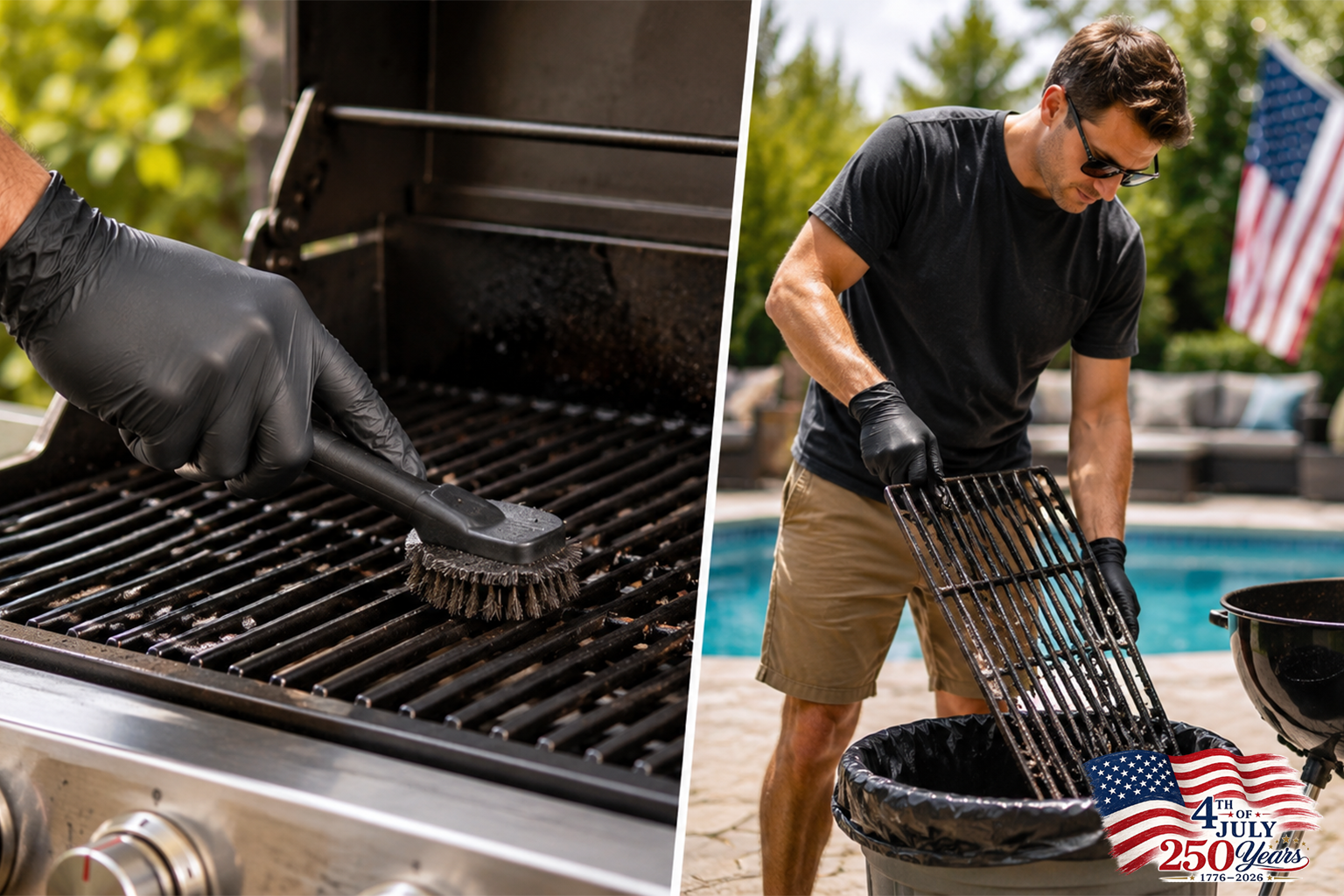
Grill Cleaning Tips Before and After the Holiday
A clean grill performs better than a dirty one in ways that are easy to underestimate until you’re dealing with the consequences. Grease buildup causes flare-ups at the worst moments — when the grill is running hot and fully loaded with food for twenty guests. Old carbon residue on grates transfers bitter, off-flavors to food that good seasoning can’t fully mask. Blocked burner ports on gas grills create uneven heat distribution that produces inconsistently cooked food despite your best technique. Accumulated ash in charcoal grills restricts airflow and makes temperature management harder than it needs to be.
The Fourth of July specifically motivates grill cleaning that might otherwise get deferred indefinitely, which is part of why the holiday is worth treating as a deliberate cleaning occasion. A grill that hasn’t been seriously cleaned since last summer is carrying a season’s worth of accumulated grease, carbon, and debris into an event where it’ll run harder and longer than almost any other day of the year. Getting it properly clean before the holiday improves both cooking results and safety. Getting it clean after establishes a baseline that makes the next cleaning — and the next cooking session — easier.
Before the Holiday: Deep Cleaning Checklist
Pre-holiday cleaning is the more important of the two sessions because it’s the one that directly affects cooking performance and safety on the day itself. Do this at least two or three days before the Fourth rather than the morning of, when you’ll have too many other preparation tasks competing for your attention.
Gas Grills: Full Pre-Season Inspection and Clean
Gas grill cleaning starts with a systematic inspection rather than immediately scrubbing surfaces, because understanding the grill’s condition determines what cleaning is actually needed.
Check and Clean Burner Tubes: Burner ports — the small holes along the burner tubes through which gas exits before ignition — clog with grease, food residue, and occasional insect nesting material over a storage season. Clogged ports create uneven flames, cold spots, and in some cases prevent certain sections of burners from lighting at all. Turn off and disconnect the gas, remove the grates and heat distribution plates or flavor bars to access the burners, and inspect each port. Clear blocked ports with a stainless steel wire or small drill bit of the appropriate diameter. Never use toothpicks or wooden skewers that can break off inside the port.
While the burners are accessible, check for rust, corrosion, or physical damage along the burner tubes themselves. Surface rust on cast iron burners is common and mostly cosmetic — clean it with a wire brush and the burner will function normally. Significant corrosion, holes, or structural damage on any burner warrants replacement before cooking on the grill.
Clean Flavor Bars and Heat Tents: The metal components sitting between burners and grates accumulate heavily with grease, and this accumulated grease is the primary source of dangerous flare-ups during high-heat cooking. Remove these components and clean them thoroughly. Hardened grease responds well to soaking in hot soapy water for 30 minutes before scrubbing. For particularly heavy buildup, commercial degreasers applied with a brush and allowed to penetrate for 10-15 minutes before rinsing significantly reduce the scrubbing effort required.
Clean the Firebox Interior: The grill’s interior walls, bottom, and any collection trays accumulate grease that drips during cooking. Scrape the interior walls down with a putty knife or grill scraper to remove any built-up layers, then follow with a degreaser and wipe-down. The grease collection tray or drip pan beneath the firebox should be emptied completely and cleaned before any holiday cooking session. A full drip tray can overflow during extended high-volume cooking, creating a fire hazard.
Scrub the Grates: Grates that cook most frequently are where the most visible buildup exists. Preheat the grill to loosen residue, then scrub with a quality grill brush while grates are hot. For more stubborn buildup, crumpled aluminum foil held with tongs provides aggressive scrubbing action. After scrubbing, wipe grates with a paper towel lightly coated in cooking oil to season the surface and prevent rust during the days before use.
Check the Ignition System: Light each burner individually to verify the ignition system fires reliably. A burner that takes multiple attempts to light during normal use needs its igniter cleaned or potentially replaced before a holiday cooking session. Igniter electrodes develop carbon buildup that reduces spark reliability — cleaning with a dry toothbrush removes most surface buildup.
Inspect Gas Lines and Connections: Apply a soap and water solution to all hose connections and the regulator. Turn on the gas briefly without lighting the grill and watch for bubbles, which indicate leaks requiring immediate professional service before the grill is used. Do this inspection every season regardless of how the grill performed the previous year, as hoses can develop cracks during winter storage.
Charcoal Grills: Ash and Grease Cleanup
Charcoal grills accumulate different types of debris than gas grills but require the same thoroughness before a high-demand cooking event.
Remove All Old Ash: Ash left in the bottom of a charcoal grill is the primary enemy of good fire management. Ash absorbs moisture, becomes cement-like when wet, restricts the airflow through bottom vents that controls fire temperature, and can reactivate to produce residual smoke that flavors food in unwanted ways. Completely empty the ash catcher and the bottom of the firebox before any serious cooking session. Do this when the ash is thoroughly cold — hot ash can remain a fire hazard for longer than people generally expect.
Clean Interior Walls and Lid: The interior surfaces of charcoal grills develop a carbon buildup that eventually flakes off in large pieces onto food below. Scrape interior walls and the inside of the lid with a stiff brush or scraper to remove any loose or flaking carbon. A light layer of baked-on carbon on interior surfaces is normal and actually helpful — it’s the loose, flaking material that needs to come off.
Clean the Grates: Same approach as gas grates — heat to loosen residue, scrub with a grill brush, wipe clean. Charcoal grate cleaning is generally simpler than gas because the cooking grate is the primary surface requiring attention rather than the multiple components a gas grill contains.
Check Vents: Both the bottom intake vent and the top exhaust vent on a charcoal grill need to open and close freely. Ash and residue can cause vents to stick, preventing the fine airflow control that experienced charcoal grillers use to manage cooking temperature. Clean around vent openings and verify smooth operation before the holiday.
Grate Types and Cleaning Methods
Not all grates clean the same way, and using the wrong cleaning approach for your grate material can damage the cooking surface.
Cast Iron Grates: Cast iron grates should not soak in water, which accelerates rusting. Clean while hot after scrubbing by wiping with oil-dampened paper towels. Apply a thin layer of vegetable oil after each clean to maintain seasoning and prevent rust between uses. Light rust can be scrubbed off with steel wool and followed by re-seasoning. Avoid dish soap, which strips the protective seasoning that builds up over time.
Stainless Steel Grates: Stainless steel tolerates more aggressive cleaning than cast iron, including soap and water soaking for stubborn buildup. Avoid steel wool on stainless, which can leave particles that eventually cause rust spots. Stainless steel grill brushes or nylon brushes are appropriate. Dry thoroughly before storage or use to prevent water spots and surface oxidation.
Porcelain-Coated Grates: Porcelain coating chips more easily than bare cast iron or stainless — avoid metal scrapers or aggressive wire brushing that can penetrate and crack the coating, exposing the metal underneath to rust. Soft bristle brushes and gentler cleaning methods preserve the coating. Cracked or chipped porcelain eventually rusts underneath, and grates with significant coating damage are worth replacing rather than continuing to repair.
Grill Brush Safety: A Necessary Caution
Wire grill brushes have been linked to a specific and serious safety concern that’s worth understanding before using them on grates that will cook food for guests.
The Wire Bristle Problem: Wire bristles can break off from grill brushes, particularly brushes that are old, worn, or made with lower-quality wire. Bristles that fall onto grill grates can then transfer to food, and ingesting a wire bristle can cause serious internal injury. This risk is real and documented — emergency rooms see wire bristle ingestion injuries every summer, primarily around holiday grilling events.
Lower-Risk Alternatives: Replace wire brushes with alternatives that don’t have individual bristles capable of breaking off. Bristle-free grill brushes using coiled wire or welded mesh rather than individual bristles are available at most grilling retailers. Crumpled aluminum foil held with tongs provides effective scrubbing without any bristle risk. Commercial grill cleaning blocks made from pumice-like material work on warm grates without any wire component at all.
When to Replace Your Brush: If you are using a wire bristle brush, inspect it before every use. Any brush showing splayed, missing, or loose bristles should be replaced immediately rather than used one more time. After cleaning grates with any type of brush, run your hand along the grate surface (after it has cooled to a safe temperature) to feel for any wire debris before cooking.
After the Holiday: Cleaning While It’s Manageable
Post-party grill cleaning is tempting to defer until the day’s fatigue subsides, but the longer grease and food residue sit on hot grill surfaces, the more they bake on and the harder they become to remove. A quick clean while the grill is still warm from the cooking session is dramatically easier than cleaning a cold grill the following week.
The Warm-Grill Window: Within 30-60 minutes of finishing cooking, while the grill has cooled to a safe handling temperature but residue is still soft, is the optimal cleaning window. Grates can be scrubbed in a few minutes while warm. The same grates cleaned 24 hours later require significantly more effort for the same result.
Immediate Post-Cooking Steps (Gas)
Burn Off Residue: Turn all burners to high for 10-15 minutes after cooking is completely finished. This burns off residue on grates and flavor bars, converting food debris to carbon ash that brushes off easily. Close the lid during this burn-off to concentrate the heat.
Scrub Grates While Hot: After the burn-off cycle, brush grates with your cleaning tool of choice while they’re still at temperature. The carbon residue that remains after burn-off scrubs off almost effortlessly compared to the same residue on a cold grate.
Empty and Wipe the Drip Tray: The grease collection tray catches the most concentrated accumulation from a full day’s cooking. Empty it while grease is still liquid enough to pour rather than letting it congeal into a solid layer that requires scraping. Wipe the tray with paper towels, dispose of the absorbed grease appropriately (not down the drain), and replace the tray.
Let Cool, Then Wipe Exterior: The grill’s exterior surfaces accumulate grease splatter and fingerprints throughout a long cooking day. Once fully cooled, wipe exterior stainless steel surfaces with a damp cloth and dry immediately to prevent water spotting. Stainless steel cleaner restores shine and provides a light protective coating between uses.
Immediate Post-Cooking Steps (Charcoal)
Close Vents Completely: Closing both bottom and top vents after cooking is finished starves the fire of oxygen and extinguishes remaining coals without wasting them. Coals extinguished this way are often reusable for the next cooking session, which matters if you bought significant charcoal for the holiday and have remainder.
Wait Until Completely Cold: Charcoal ash disposal requires the ash to be fully cold — not just no longer visibly glowing, but actually cold. Coals can retain heat for 24-48 hours. Disposing of insufficiently cooled ash in a trash bag has caused fires. The safest approach is to leave coals undisturbed overnight with all vents closed, then dispose of confirmed-cold ash the following day.
Dispose of Ash Properly: Cold ash goes into a metal container before disposal — ash placed directly in plastic trash bags from improperly cooled coals has caused fires even when the ash appeared cold at surface level. Metal containers or ash cans for this purpose are available at grilling retailers and are worth owning if you grill on charcoal regularly.
Scrub Grates While Warm: Charcoal grate cleaning follows the same logic as gas — scrub while grates retain some warmth and residue is still soft. This is a five-minute task done while the party winds down versus a 20-minute task done the following week.
Setting the Grill Up for Its Next Use
The final step after post-holiday cleaning is preparing the grill for storage or the next cooking session in a way that makes that next use as easy as possible.
Season Grates Before Storage: After cleaning and while grates are still slightly warm, apply a thin, even coating of cooking oil to all grate surfaces. This protective oil layer prevents rust formation during storage and creates a non-stick baseline for the next grilling session. Too much oil creates a sticky residue that becomes gummy during storage — a light wipe rather than a heavy coating is the goal.
Cover the Grill: A quality grill cover protects from rain, moisture, dust, and UV exposure that degrades exterior finishes and accelerates corrosion on metal components. If you don’t have a cover, the post-holiday period after cleaning is the right time to buy one — you’re protecting a clean grill rather than sealing in residue under a cover.
Check Propane Tank Storage: Propane tanks should be stored upright and outside — never in garages, basements, or enclosed spaces where a slow leak could accumulate to dangerous concentrations. Disconnect the tank from the grill between extended periods of non-use, particularly for storage.
Note Any Issues for Follow-Up: If the pre-holiday inspection or the holiday cooking session revealed any issues — an igniter that needs replacement, a burner that performed unevenly, a hinge that needs tightening — note these while they’re fresh and address them before the next cooking session rather than rediscovering them under pressure.
The Real Reason Grill Cleaning Keeps Getting Skipped
Most grill cleaning gets skipped not because people don’t understand it’s important, but because it seems like a large task that gets deferred until there’s a specific occasion forcing it. The Fourth of July becomes that occasion, which is why pre-holiday cleaning consistently gets done while post-holiday cleaning frequently doesn’t.
The most effective approach to grill maintenance is shrinking the individual cleaning tasks to a size where deferral doesn’t feel justifiable. A five-minute grate scrub after every cooking session and an emptied drip tray every few cooking sessions means the pre-holiday deep clean is genuinely quick rather than the multi-hour project it becomes when cleaning has been deferred through an entire season. The holiday is a good forcing function — but building habits that prevent the holiday clean from being a major production in the first place is the goal worth aiming for once the summer season gets into its rhythm.