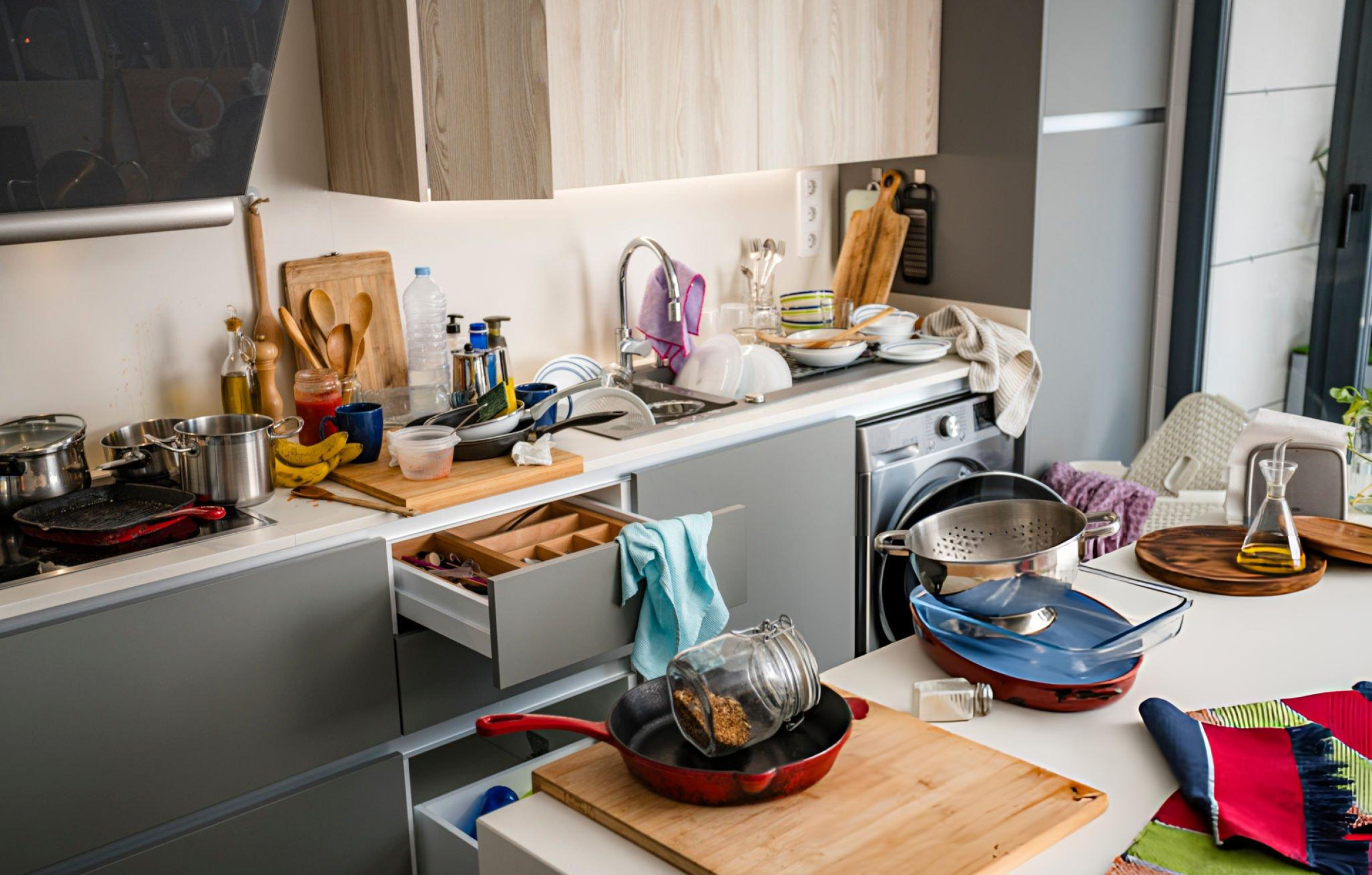
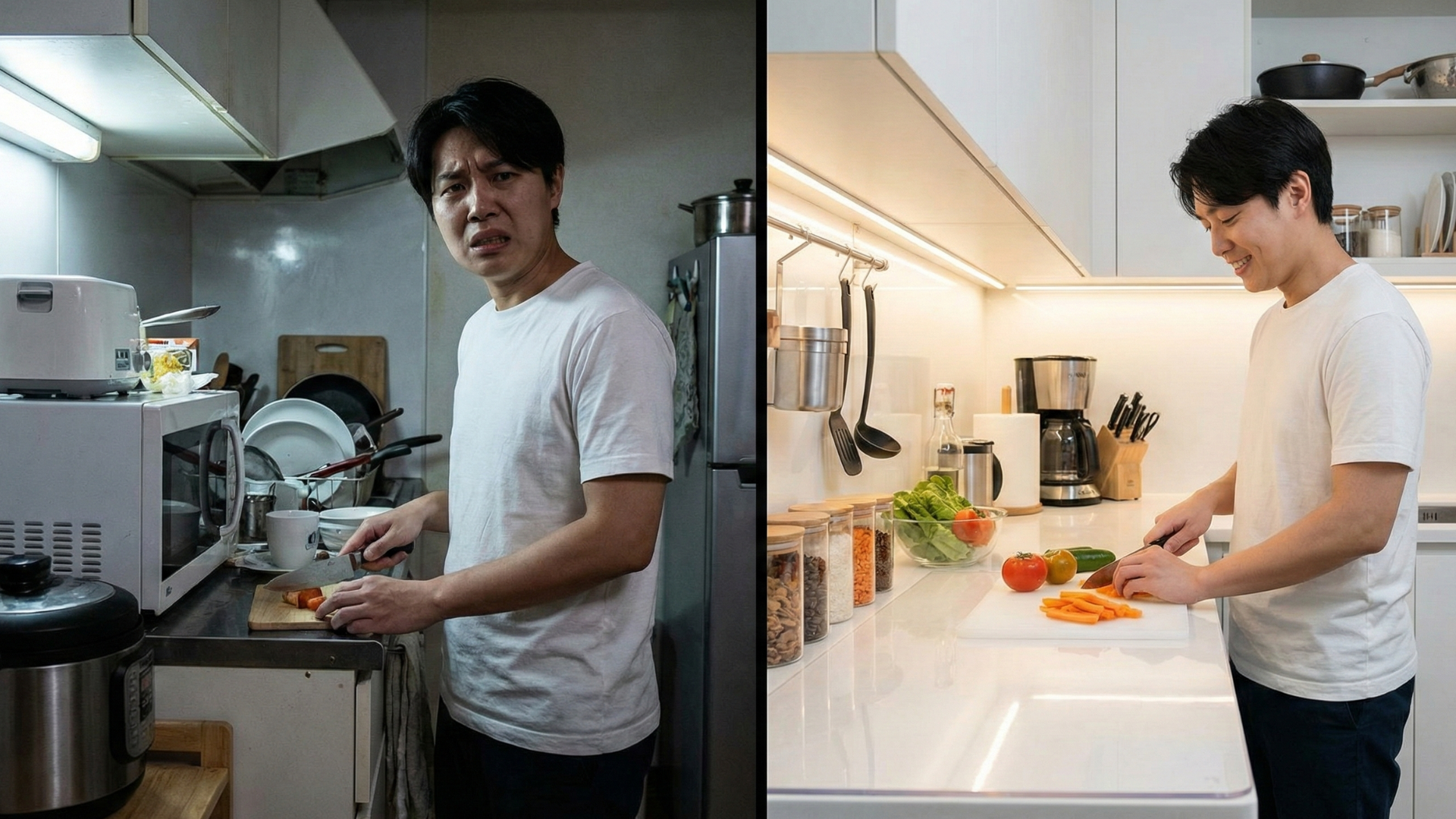
Why Your Kitchen Makes Cooking Harder Than It Should Be
Cooking difficulty often gets attributed to lack of skill or time when the actual problem is a kitchen setup that creates unnecessary obstacles during routine tasks. Poorly arranged work zones, inadequate counter space, inconvenient storage placement, and missing basic tools all add friction to cooking that has nothing to do with recipe complexity or culinary ability. These kitchen design and organization issues accumulate into significant frustration that makes cooking feel harder than the recipes themselves warrant. When preparing dinner requires walking back and forth across the kitchen repeatedly, digging through crowded cabinets for basic items, and working in cramped spaces without room to prep ingredients, the cooking process becomes unnecessarily exhausting regardless of what you’re making. The challenge is recognizing that kitchen setup problems are fixable rather than permanent conditions you must accept. Many cooking frustrations stem from correctable organizational issues, missing equipment, or workflow inefficiencies rather than from cooking being inherently difficult or your abilities being insufficient. Understanding which kitchen factors create unnecessary difficulty helps you identify and fix problems that genuinely impede cooking rather than just trying to cook better in a space working against you. Your Counter Space Doesn’t Actually Function Many kitchens have reasonable total counter area but almost none of it remains usable for actual food preparation because permanent items occupy nearly all available space. Small appliances crowd counters leaving minimal prep space. The coffee maker, toaster, stand mixer, knife block, utensil holder, and various other items consume counter real estate permanently, leaving you perhaps one small area for cutting boards and ingredient prep. Corner spaces go unused because they’re awkward to access and items placed there become semi-permanent obstacles. Counter corners typically collect things that then never move, effectively removing that space from useful circulation. Counter space near the stove gets occupied by decorative items, spice racks, or utensil holders that could be stored elsewhere. The most valuable prep space—right next to where you’re cooking—often isn’t available for staging ingredients because other items live there. Working in remaining small spaces forces overlapping tasks. You chop vegetables on a cutting board, but then have nowhere to put the cutting board when you need counter space for something else. You play a constant shell game moving items around to free up small work areas. The solution isn’t necessarily more counters but rather clearing current counters of items that don’t need permanent placement. Store infrequently used appliances in cabinets or pantries. Use wall-mounted solutions for utensils and knives. Create actual empty counter space where you can work rather than accepting that counters are for storage. Functional counter space means empty space available when you need it, not total counter area that’s perpetually occupied. Everything You Need Is in the Wrong Place Kitchen organization that doesn’t match cooking workflow creates constant unnecessary movement and interruptions during food preparation. Pots and pans stored far from the stove force repeated trips across the kitchen. Every time you need a different pan, you walk away from the cooking area, retrieve the pan, and return—multiplied across every cooking session for years. Spices stored in cabinets above eye level require reaching, searching, and often climbing on step stools to access items you use constantly. Cooking that uses four different spices means four separate interruptions to find and retrieve seasonings you can’t see clearly. Utensils kept in drawers across the kitchen from the stove mean abandoning the cooking area repeatedly for spatulas, tongs, spoons, and other tools needed during active cooking. The constant back-and-forth wastes time and breaks cooking flow. Cutting boards stored under the sink or in a cabinet nowhere near food prep areas create extra steps before you can even start cooking. Something you use in nearly every cooking session shouldn’t require retrieval from an inconvenient location. Oils, vinegars, and frequently used condiments stored in various cabinets rather than grouped near cooking areas force hunting for items mid-recipe when you’re trying to focus on cooking technique and timing. The solution involves moving items to logical locations based on where and how you use them. Store pots near the stove, utensils within reach of cooking areas, spices where you can see and grab them easily, and cutting boards where you do prep work. The specific storage location matters less than matching storage to usage patterns. You’re Missing Basic Equipment That Would Help Many cooking struggles stem from not having fundamental tools that make cooking tasks easier rather than from the tasks being inherently difficult. Sharp knives make dramatic differences in food prep speed and safety. Dull knives require force and create frustration while sharp knives cut effortlessly and precisely. If chopping vegetables feels like a chore, the knife is probably the problem, not your technique. Adequate cutting boards provide stable prep surfaces sized appropriately for the task. Trying to chop ingredients on a cutting board too small for the food creates mess and inefficiency. Having proper-sized boards for different tasks reduces frustration. Bench scrapers or bowl scrapers move chopped ingredients from cutting board to bowl efficiently instead of using knife blades or your hands to gather and transfer food. This simple tool speeds prep work significantly. Kitchen scissors handle many tasks faster than knives—trimming herbs, cutting through packaging, portioning raw chicken, snipping bacon. Not having scissors means using knives inefficiently for tasks scissors handle better. Instant-read thermometer eliminates guessing about meat doneness. Constantly overcooking or undercooking proteins because you’re guessing when they’re done creates frustration that a simple thermometer solves. Mixing bowls in varied sizes provide proper containers for different quantities rather than making do with bowls too small or wastefully large. Having the right size bowl for the task at hand makes mixing and prep work easier. The missing equipment issue isn’t about needing specialty gadgets but rather lacking basic tools that genuinely simplify routine tasks. These fundamental items aren’t expensive but their absence makes cooking harder than necessary. Your Lighting Is Completely Wrong Inadequate or poorly positioned lighting makes every kitchen task more difficult and less safe without you necessarily