kitchen organization

Your Sink Is in the Wrong Spot (And Why It Matters)

Most kitchens place the sink under a window for the view. This positioning ignores how you actually cook and creates workflow problems you’ve adapted to without realizing they’re problems. The sink-under-window convention comes from pre-dishwasher era when washing dishes meant standing at the sink for extended periods. A window view made the tedious task more bearable. Modern kitchens inherited this layout without questioning whether it still makes sense. Your sink location affects cooking efficiency more than almost any other kitchen design choice. Wrong placement adds steps, creates awkward reaches, and forces inefficient movement patterns during food preparation. Here’s why standard sink placement causes problems, where sinks should actually go based on cooking workflow, and what you can do about your existing kitchen without renovating. The Window Wastes Your Best Counter Space Windows occupy prime real estate in kitchens—exterior walls with natural light. Dedicating that space to a sink means your brightest, most pleasant kitchen area gets used for dish washing instead of food preparation. Natural light matters for detailed work like chopping vegetables, reading recipes, or plating food. The window area provides the best natural illumination in the kitchen. Putting the sink there means you’re doing dishes in the best light while prepping food in dimmer interior spaces. This backwards priority wastes the window location on tasks that don’t require good lighting. Counter space beside window-mounted sinks often ends up narrow and awkward. Window placement constraints leave minimal workspace flanking the sink, creating cramped prep areas. The view argument assumes you spend significant time staring out windows while doing dishes. With modern dishwashers, hand-washing time is minimal. You’re not standing at the sink long enough to justify sacrificing prime counter real estate for the view. Better window use would be placing your primary prep area there—cutting board, ingredient staging, detailed work that benefits from natural light. Save the sink for interior wall placement where windows don’t matter. Sink-to-Stove Distance Creates Unnecessary Walking Standard kitchen layouts often place sinks far from stoves because window locations dictate sink placement rather than cooking workflow dictating design. Think about cooking tasks requiring both sink and stove: draining pasta, transferring parboiled vegetables, filling pots with water, rinsing ingredients mid-cooking. Each task involves carrying heavy, hot, or wet items between sink and stove. Distance between these two workstations multiplies throughout cooking. A recipe requiring five trips between sink and stove in a poorly-designed kitchen might need ten steps per trip. That’s fifty extra steps for one meal. Water spills happen during sink-to-stove transfers. Carrying full pots across the kitchen drips water on floors creating slip hazards and mess. Heavy pot handling over distance strains arms and creates dropping risk. A full stockpot weighs significantly. Carrying it ten feet versus three feet matters for safety and effort. Ideal sink-to-stove distance measures three to six feet. This range allows easy transfer without excessive walking while providing enough separation that sink splashes don’t reach the stovetop. Many kitchens exceed this distance by placing sinks on opposite walls or far corners from stoves. The extra steps add up over years of daily cooking. You’re Prepping in the Wrong Location Most people prep food wherever counter space exists, not where prep should logically happen based on cooking workflow. Prep happens between ingredient retrieval (refrigerator) and cooking (stove). The prep area should sit geographically between these two points creating logical left-to-right or right-to-left workflow. Many kitchens force prep in locations requiring backtracking. You grab ingredients from the refrigerator, walk to the sink area to prep, then walk back past the refrigerator to reach the stove. This backwards flow wastes motion. The sink attracts prep work because it’s where you wash vegetables and dispose of scraps. But using the sink as your prep center puts you in the wrong location relative to refrigerator and stove. Ideal prep location sits between refrigerator and stove, with the sink accessible but not central. You grab ingredients, prep them while moving toward the stove, and cook. Linear workflow without backtracking. Current kitchen layouts often create triangular movement patterns—refrigerator to sink to stove and back—instead of efficient linear flow. The triangle adds unnecessary distance to every cooking task. Observe your own cooking movement. If you’re constantly walking back and forth across the kitchen rather than moving in one general direction from ingredient storage to cooking, your layout forces inefficient patterns. The Dishwasher Dictates More Than You Think Dishwasher placement affects kitchen workflow beyond just dish loading. It determines where clean dishes get stored and how post-cooking cleanup happens. Dishwashers installed far from dish storage cabinets create extra steps during unloading. You’re walking across the kitchen repeatedly carrying plates and glasses to their storage locations. Logical dishwasher placement sits adjacent to dish storage cabinets. Open dishwasher, transfer dishes directly to nearby cabinets. Minimal walking during unloading. Many kitchens place dishwashers next to sinks (logical for plumbing) but put dish storage on the opposite side of the kitchen (illogical for workflow). This split creates unnecessary unloading distance. The dishwasher also affects cleanup workflow. Scraping plates and loading the dishwasher works best when the dishwasher sits near where you eat, not necessarily near where you cook. Some kitchens benefit from dishwasher placement between cooking area and dining area—convenient for both cooking cleanup and dish loading from dining table. This middle-ground location serves both functions. Standard kitchen design puts dishwashers beside sinks without considering whether sink location makes sense for overall dish workflow. The dishwasher follows the sink regardless of whether that placement is optimal. Counter Depth Matters More Than Length Kitchens emphasize counter length—how many linear feet of counter space exists. But counter depth determines usability more than length. Standard counter depth measures 24-25 inches from wall to edge. This depth barely accommodates cutting board, ingredient bowls, and working space simultaneously. Deep counters (30+ inches) provide adequate working space for multiple tasks. You can stage ingredients behind your active cutting board without things falling off the back edge. Shallow counters force choosing between tool placement. The cutting board occupies most

The Drawer Organization That Actually Stays Organized

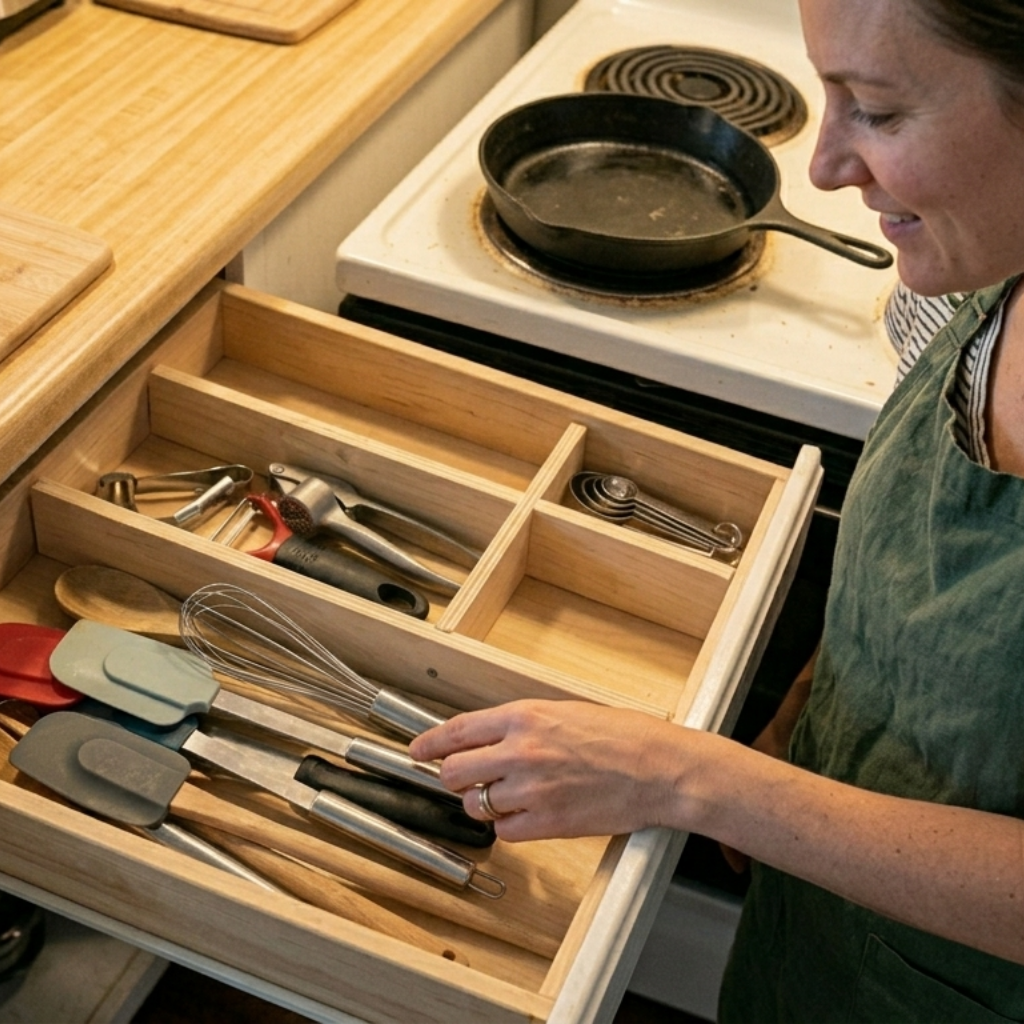
You organize your kitchen drawers. It looks beautiful for three days. Then you need a whisk in a hurry, toss it back imperfectly, and the whole system collapses within a week. The problem isn’t your discipline or commitment. The problem is organizing systems designed for photographs, not daily cooking. They require precision placement and careful maintenance that real cooking doesn’t allow. Drawer organization that actually lasts works with your cooking habits, not against them. It assumes you’ll be rushed, distracted, and unwilling to play Tetris with spatulas while something’s burning on the stove. Here’s why most drawer organization fails, what actually keeps drawers functional long-term, and how to set up systems that survive real kitchen use. Perfect Compartments Create Maintenance Hell Those beautiful drawer organizer systems with precisely-sized slots for every utensil look incredible in before-and-after photos. They fail in actual kitchens because they demand exact placement every time. Custom-fit organizers require identifying which slot belongs to which tool, orienting the tool correctly, and sliding it into its designated space. This works when you’re organizing slowly and deliberately. It fails when you’re cooking three things simultaneously and need to return a spatula quickly. The tighter the fit, the more frustrating the system. That perfectly-sized slot for your fish spatula only accepts the spatula at the correct angle. Put it in slightly rotated and it doesn’t fit. Now you’re fumbling with a greasy spatula while your sauce reduces. Precision systems also break when you add new tools. Buy a second whisk or different-sized spatula and suddenly you’ve got no designated slot. The new item becomes homeless, getting tossed wherever it fits, beginning the drawer’s descent into chaos. Organization that lasts uses zones, not slots. Group similar items together in loose categories without demanding precise placement. Spatulas go in the spatula zone anywhere, not in individually-assigned slots. Wide compartments that hold multiple items of the same type accommodate tools at various angles and positions. You’re dropping items into a zone, not threading them into specific slots. Shallow Organizers For Deep Drawers Guarantee Failure Standard drawer organizers sit shallow in deep drawers, leaving several inches of unused space below. This invites layering, which destroys organization immediately. You buy a utensil organizer that’s two inches deep. Your drawer is six inches deep. That four-inch gap below the organizer becomes tempting storage for overflow items. Initially you resist. Then you acquire a new tool that doesn’t fit in the organizer. “Just temporarily,” you think, sliding it underneath. Then another tool. Then a random kitchen gadget. Within weeks you’ve got a hidden layer of chaos beneath your organized surface. Deep drawers need either organizers that span full depth or intentional use of vertical space with stackable systems. Half-depth organizers in deep drawers are organizational traps. If you’ve got deep drawers, use tall organizers or bins that prevent layering. The goal is making layering physically impossible, not relying on your future self to resist temptation. Alternatively, dedicate deep drawers to large items that actually need the depth: large serving utensils, rolling pins, or bulky kitchen tools. Save shallow drawers for the precision organization that shallow organizers support. Too Many Categories Mean Nothing Has a Home Organizing guides tell you to separate whisks, spatulas, spoons, tongs, peelers, zesters, and measuring spoons into individual compartments. This creates so many categories that placing items correctly becomes a puzzle. Your brain during cooking operates in simplified mode. You’re tracking multiple tasks, monitoring temperatures, and timing various components. Your mental bandwidth for “which compartment does the slotted spoon belong in” is approximately zero. Too many categories increase friction. Is the slotted spoon a spoon or a spatula? Does the silicone scraper go with spatulas or with whisks? These ambiguous items bounce between categories, creating placement inconsistency. Successful organization uses three to five broad categories maximum. “Stirring tools,” “measuring tools,” “cutting tools,” and “miscellaneous” works better than ten specific categories requiring constant decision-making. Broad categories forgive mistakes. Tossing a whisk into the general “stirring tools” zone succeeds even if it lands next to spatulas. Perfect placement isn’t required. You can subdivide within broad categories using visual separation (different colored bins or simple dividers), but the primary organization should be simple enough that rushing doesn’t break the system. Measuring Tools Don’t Belong With Cooking Tools Most drawer organization systems mix measuring cups and spoons with cooking utensils. This creates access conflicts because you use these tools at different times during different tasks. Measuring happens during prep before cooking starts. You’re standing at your prep area measuring ingredients into bowls. Cooking utensils are used at the stove during active cooking. Mixing these tools in the same drawer means accessing the drawer from different locations at different times. Your measuring cup drawer should be near your prep area, not your stove. Separating measuring tools into dedicated drawer near your mixing/prep zone improves workflow. When gathering ingredients, you’re not digging through spatulas to find measuring spoons. This separation also prevents cross-contamination of organizational systems. Cooking utensils get greasy and sauce-covered; they’re cleaned quickly and returned slightly damp. Measuring tools stay cleaner because they’re used during prep, not cooking. Dedicate one small drawer or one large drawer section near your primary prep area exclusively to measuring tools. Everything else goes in cooking utensil drawers near the stove. The Junk Drawer Is Necessary, Not Failure Every kitchen organization guide promises to eliminate your junk drawer. This is unrealistic and counterproductive. The junk drawer serves an important function. Kitchens accumulate miscellaneous items: birthday candles, bag clips, corn holders, specialty tools used quarterly. These items need storage but don’t fit into any logical category. Without a designated miscellaneous drawer, these items infiltrate your organized drawers. The corn holders end up with spatulas. The bag clips migrate to the utensil drawer. Your organization breaks down accommodating items that don’t belong. A dedicated miscellaneous drawer contains chaos in one location rather than letting it spread. Everything else stays organized because the random stuff has somewhere to go. The key is intentionality. Designate

Why Your Kitchen Layout Makes Cooking Harder

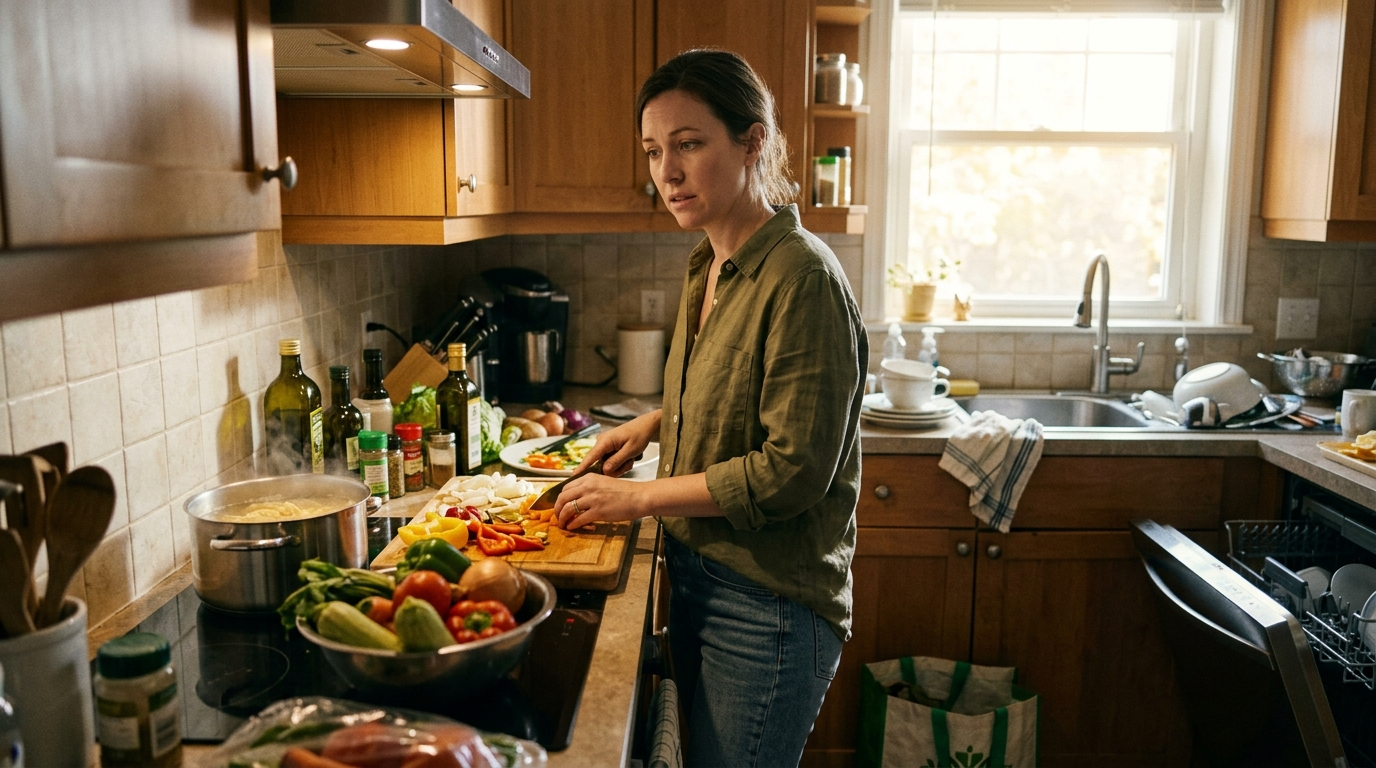
You’ve got decent knives, good pans, working appliances. You follow recipes carefully. Yet cooking still feels awkward and inefficient. The problem might not be your skills or equipment. It might be your kitchen layout forcing you to walk too much, reach too far, and interrupt your workflow constantly. Most home kitchens weren’t designed by people who cook seriously. They were designed to look good in real estate photos and maximize cabinet storage. The result is layouts that create unnecessary steps, dangerous reaches, and workflow interruptions. Here’s what makes cooking harder in poorly-designed kitchens, why standard layouts ignore actual cooking needs, and what you can fix without renovating. The Refrigerator Is Too Far From Everything Walk into most kitchens and the refrigerator sits at one end while the stove sits at the opposite end. This creates exhausting back-and-forth trips every time you cook. Think about a typical cooking sequence. Retrieve vegetables from refrigerator, walk to sink to wash them, walk to cutting board to chop them, walk back to refrigerator for protein, walk to stove to cook. You’ve crossed the kitchen five times before cooking even starts. Professional kitchens cluster refrigeration near prep areas. Home cooks walk marathons because refrigerators get placed based on cabinet layouts and electrical outlet locations, not cooking workflow. Each unnecessary trip adds time and disrupts focus. You’re mentally tracking cooking progress while physically retrieving ingredients across the room. This divided attention leads to mistakes like overcooked onions or forgotten ingredients. The refrigerator-to-prep-to-stove triangle should be tight. Ideal distance totals 12-25 feet for all three legs combined. Many home kitchens exceed this by placing refrigerator far from primary work areas. If you can’t move your refrigerator, adapt your workflow. Stage all ingredients on counter near stove before starting to cook, eliminating mid-cooking refrigerator trips. The Sink Isn’t Where You Actually Prep Standard kitchen design puts the sink under a window for aesthetic reasons. This forces you to prep food wherever counter space exists, which often isn’t near the sink. Washing vegetables at the sink then carrying them across the kitchen to cutting board creates dripping mess. Chopping produces scraps that need disposal, requiring trips back to sink or trash. The sink should sit adjacent to your primary prep area, not isolated in its own zone. Professional cooks keep prep within arm’s reach of water and waste disposal. Many kitchens have ample counter space beside the stove but minimal space beside the sink. This backwards priority means you’re prepping far from water source then walking ingredients to heat source. Deep sinks create ergonomic problems too. Reaching into deep basin to wash large items strains your back. Shallow prep sinks or dual-basin configurations work better for actual cooking tasks. Consider adding a cutting board that fits over your sink if counter space beside sink is limited. This creates temporary prep area directly over water and waste disposal. Your Stove Sits in a Corner or Against a Wall Stoves placed in corners or tight against walls limit access and create dangerous reaching angles over active burners. Corner stoves force you to reach across multiple burners to access back burners. This puts your arm over open flames or hot pots every time you stir something cooking at the back. Wall-mounted stoves without adequate side clearance mean you’re reaching from one direction only. Professional ranges have approach space from multiple sides allowing safer access. The range hood’s positioning matters too. Low hoods help ventilation but reduce visibility and access to back burners. You’re cooking half-blind. Inadequate counter space flanking the stove creates nowhere to set hot pans when removing them from burners. You’re carrying hot cookware across the kitchen searching for landing space. Ideally, stoves have 15-18 inches of counter space on at least one side, preferably both sides. This provides pot-setting space and ingredient staging area within arm’s reach while cooking. If your stove lacks side counter space, add a rolling cart positioned beside it during cooking. This temporary surface provides the landing zone and staging area the permanent layout omits. Cabinet Storage Ignores Cooking Frequency Most kitchens dedicate prime real estate to items used rarely while forcing frequently-used items into inconvenient locations. Pots and pans belong near the stove. Yet many kitchens store them in cabinets across the room or in lower cabinets requiring bending and digging. Meanwhile, fancy serving platters used twice annually occupy prime locations. Spices should live near cooking area. Common kitchen layouts put spice storage far from stove, interrupting cooking flow every time you need to season food. Everyday dishes and glasses should be near dishwasher for easy unloading. Storing them far away adds steps to post-cooking cleanup. The “work triangle” concept (sink-stove-refrigerator) addresses appliance placement but ignores storage. You can have a perfect triangle yet still walk unnecessarily if your storage doesn’t support your workflow. Reorganize cabinets based on use frequency rather than matching dish sets or traditional storage conventions. Daily-use items get prime real-estate. Occasional-use items get less convenient storage. Upper cabinets within arm’s reach should hold items you grab while cooking: oils, vinegars, frequently-used spices, go-to pans. Lower cabinets work for items retrieved during prep: mixing bowls, baking sheets, storage containers. Counter Space Isn’t Continuous Broken counter runs interrupted by appliances or sink create workflow problems requiring shifting food and equipment between disconnected surfaces. You need continuous counter space for multi-step tasks. Kneading bread dough, rolling pasta, or arranging ingredients for complex recipes requires uninterrupted work surface. Many kitchens break counter runs with range placement, creating two separate prep zones instead of one continuous surface. This forces choosing which side to work on rather than spreading out naturally. Small counter segments between appliances become dead zones too small for actual work. That 8-inch gap beside the stove holds dish soap but can’t accommodate cutting board or mixing bowl. Island or peninsula additions help only if they’re positioned within the work triangle. Islands far from primary work area become overflow surfaces that don’t integrate into cooking workflow. Minimum useful counter space measures at

The Mise en Place Myth: Why Prep-Everything-First Doesn’t Always Work

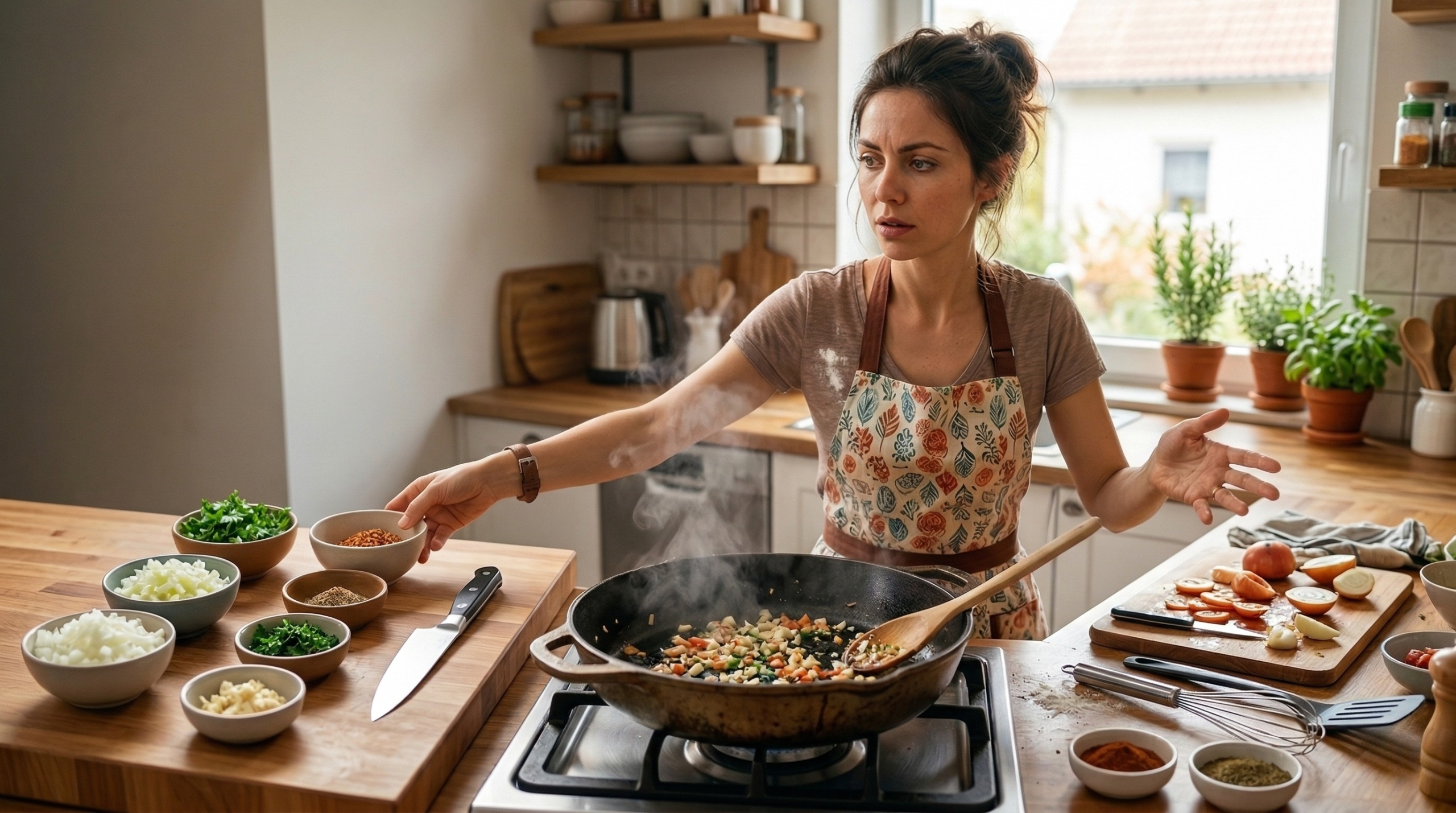
Professional chefs prep everything before they start cooking. You’ve seen it on cooking shows—neat little bowls of chopped vegetables, measured spices, prepped proteins all lined up before heat touches pan. Then you try it at home. You spend 45 minutes chopping, measuring, and organizing. Your counter looks like a bowl store exploded. Half your ingredients sit getting warm or oxidizing while you finish prep. And somehow the actual cooking still feels rushed. The problem isn’t your knife skills. The problem is blindly applying restaurant kitchen logic to home cooking without understanding why restaurants work that way or how your kitchen differs. Here’s the truth about mise en place, when complete pre-prep actually helps versus hurts, and how to adapt the concept for home cooking efficiency. Restaurant Kitchens Aren’t Home Kitchens Restaurants prep everything first because they’re cooking the same dishes repeatedly under time pressure for paying customers who expect fast service. Restaurant line cooks work during service rush cooking identical orders back-to-back. Prepping once lets them execute quickly when orders arrive. They make the same pasta dish 50 times per night—complete prep makes sense. Restaurants have prep cooks whose entire job involves chopping vegetables and measuring ingredients. Line cooks receive already-prepped ingredients. The division of labor spreads prep burden across multiple people. Restaurant mise en place prevents mistakes during rush. When cooking under pressure with tickets piling up, having everything measured prevents forgetting ingredients or adding wrong amounts. Restaurants optimize for speed during service, not efficiency of total labor. They accept longer total prep time because it enables faster cooking when customers are waiting. Your home kitchen operates differently. You’re cooking one or two portions, not fifty. You’re the prep cook and line cook. You’re not racing against customer expectations. Different constraints require different strategies. Downtime During Cooking Is Wasted Prep Time Most recipes include natural waiting periods where you’re not actively doing anything—perfect opportunities for prep work without adding total cooking time. Onions take ten minutes to soften properly. You can chop garlic, measure spices, and prep other vegetables during those ten minutes instead of standing watching onions. Water takes time to boil. While waiting for pasta water, you can grate cheese, chop herbs, or prepare sauce ingredients rather than prepping everything before you start. Meat needs time to brown undisturbed. Flipping chicken too early prevents proper browning. Use that hands-off time productively prepping what comes next. Ovens need preheating time. While the oven reaches temperature, prep your ingredients instead of prepping before you turn the oven on. Rice cookers, slow cookers, and other set-it-and-forget-it equipment create prep windows. Use their cooking time for other preparation instead of front-loading everything. Sequential prep during natural downtime means your total time from starting to eating stays roughly the same, but you’re not creating artificial prep time before cooking begins. Some Ingredients Suffer From Early Prep Certain ingredients degrade when prepped too far in advance, making complete mise en place actively harmful to final dish quality. Cut avocados oxidize and brown within minutes. Prep avocado right before using, not at the start of your prep session. Sliced apples and pears discolor quickly. Chop them last to maintain appearance and prevent browning. Minced garlic loses pungency and develops harsh flavors when sitting. Chop garlic right before it hits the pan for best flavor. Fresh herbs wilt and blacken when chopped early. Prep herbs at the last minute to maintain color and aroma. Salad greens get soggy when dressed too early. Keep components separate until serving time. Some vegetables release moisture when salted and chopped. Prepping too early creates watery mess rather than neat mise. Complete advance prep forces you to compromise ingredient quality. Strategic last-minute prep maintains optimal flavor and texture. Partial Mise Works Better for Home Cooks Instead of all-or-nothing approach, prep strategically based on cooking sequence and ingredient needs. Prep long-cooking components first. If recipe starts with onions cooking for 15 minutes, chop those onions before anything else. Prep quick-cooking ingredients during the onion cooking time. Group ingredients by cooking stage. Prep everything for step one together. Prep step two ingredients while step one cooks. Prep step three during step two. Measure dry ingredients in advance. Spices, flour, and shelf-stable items can sit measured without quality loss. Prep these first if it helps organization. Keep proteins refrigerated until needed. Don’t let chicken or fish sit at room temperature for 30 minutes while you prep vegetables. Prep proteins right before cooking. Wash and dry produce in advance but don’t chop until needed. Clean vegetables store better than chopped vegetables. Do the washing early, the cutting strategically. This hybrid approach gives you organization benefits without quality compromises or artificial waiting time. Your Recipe Determines Your Strategy Different recipes require different prep approaches based on cooking intensity and timing demands. Stir-fries need complete mise. When cooking happens in three minutes over high heat, stopping mid-cooking to chop something means burned food. Everything must be prepped and ready. Braises allow progressive prep. When something simmers for two hours, you have abundant time for prep during cooking. Front-loading makes no sense. Baking often requires complete mise. When ratios and techniques are precise, having everything measured prevents mistakes. Measure before mixing. One-pan meals with sequential cooking work well with progressive prep. Brown meat, remove it, prep vegetables while pan cools slightly, continue cooking. The sequence builds in prep time. Recipes with many components benefit from partial advance prep. If making main dish plus two sides, prepping some elements early prevents last-minute chaos. Read your recipe before deciding prep strategy. Let the cooking method and timing dictate your approach. Mise en Place Is About Readiness, Not Bowls The core concept behind mise en place isn’t having pretty bowls, it’s being ready to execute without scrambling or forgetting things. Mental mise matters more than physical mise. Knowing what ingredients you need and what order they’re added prevents mistakes regardless of when you chop them. Reading the recipe through completely before starting provides mental organization. Understanding the flow prevents

Why Your Kitchen Makes Cooking Harder Than It Should Be

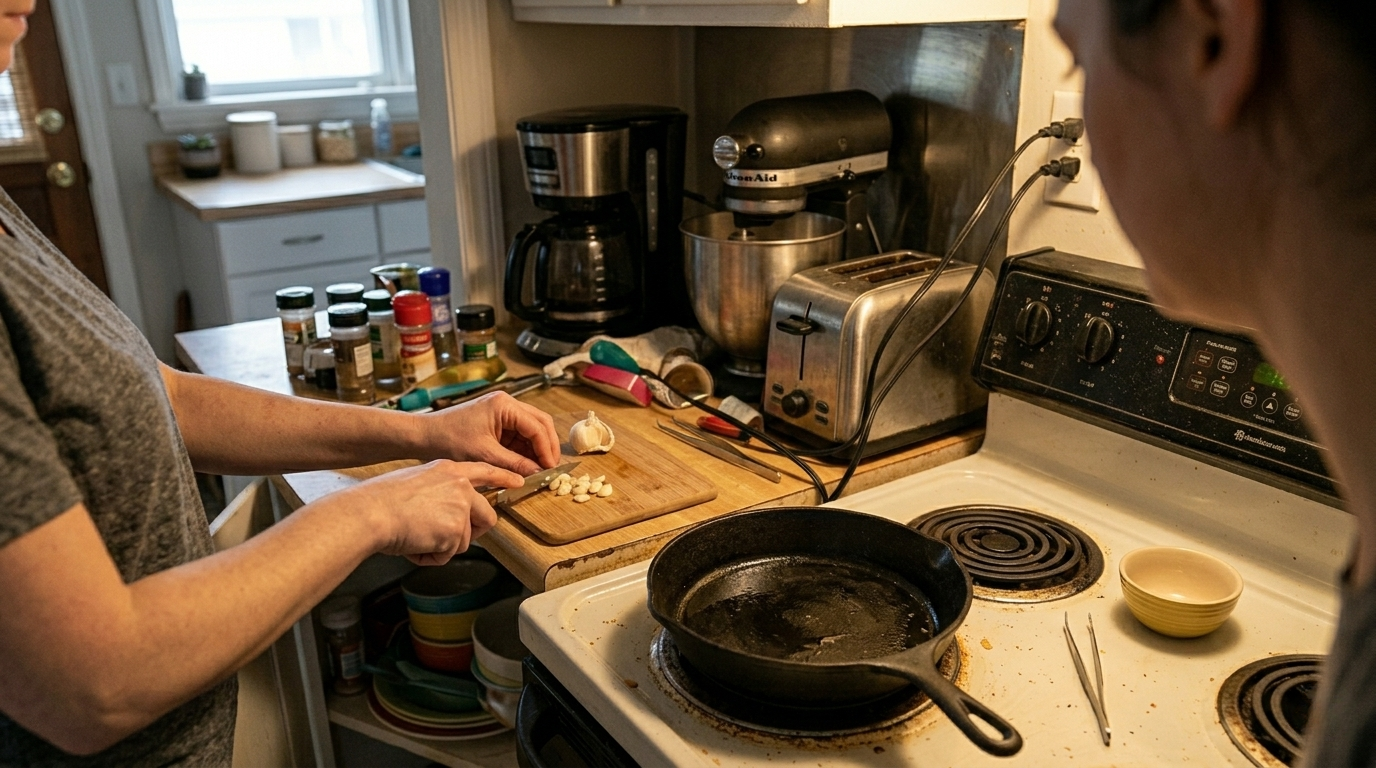
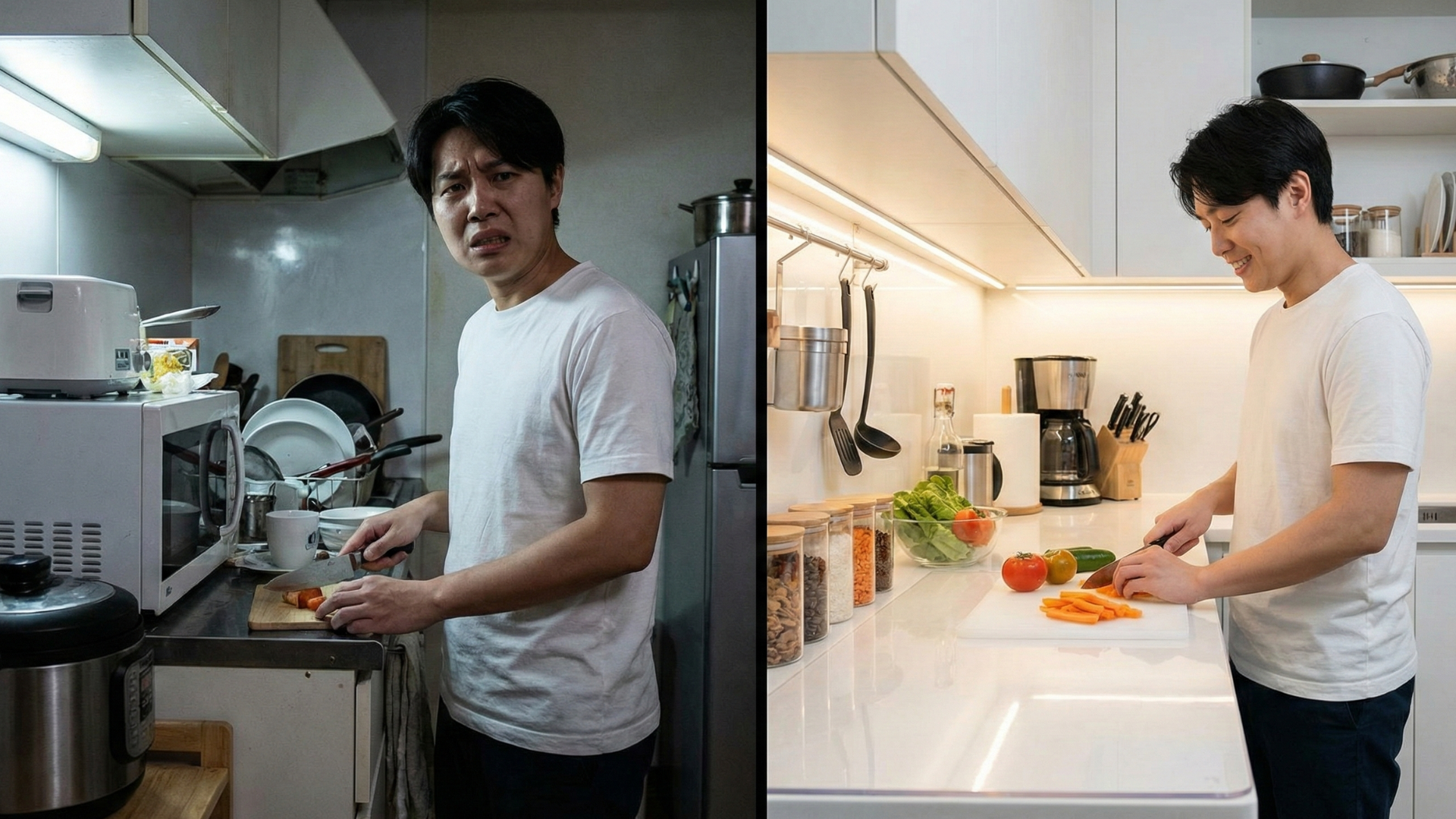
Cooking difficulty often gets attributed to lack of skill or time when the actual problem is a kitchen setup that creates unnecessary obstacles during routine tasks. Poorly arranged work zones, inadequate counter space, inconvenient storage placement, and missing basic tools all add friction to cooking that has nothing to do with recipe complexity or culinary ability. These kitchen design and organization issues accumulate into significant frustration that makes cooking feel harder than the recipes themselves warrant. When preparing dinner requires walking back and forth across the kitchen repeatedly, digging through crowded cabinets for basic items, and working in cramped spaces without room to prep ingredients, the cooking process becomes unnecessarily exhausting regardless of what you’re making. The challenge is recognizing that kitchen setup problems are fixable rather than permanent conditions you must accept. Many cooking frustrations stem from correctable organizational issues, missing equipment, or workflow inefficiencies rather than from cooking being inherently difficult or your abilities being insufficient. Understanding which kitchen factors create unnecessary difficulty helps you identify and fix problems that genuinely impede cooking rather than just trying to cook better in a space working against you. Your Counter Space Doesn’t Actually Function Many kitchens have reasonable total counter area but almost none of it remains usable for actual food preparation because permanent items occupy nearly all available space. Small appliances crowd counters leaving minimal prep space. The coffee maker, toaster, stand mixer, knife block, utensil holder, and various other items consume counter real estate permanently, leaving you perhaps one small area for cutting boards and ingredient prep. Corner spaces go unused because they’re awkward to access and items placed there become semi-permanent obstacles. Counter corners typically collect things that then never move, effectively removing that space from useful circulation. Counter space near the stove gets occupied by decorative items, spice racks, or utensil holders that could be stored elsewhere. The most valuable prep space—right next to where you’re cooking—often isn’t available for staging ingredients because other items live there. Working in remaining small spaces forces overlapping tasks. You chop vegetables on a cutting board, but then have nowhere to put the cutting board when you need counter space for something else. You play a constant shell game moving items around to free up small work areas. The solution isn’t necessarily more counters but rather clearing current counters of items that don’t need permanent placement. Store infrequently used appliances in cabinets or pantries. Use wall-mounted solutions for utensils and knives. Create actual empty counter space where you can work rather than accepting that counters are for storage. Functional counter space means empty space available when you need it, not total counter area that’s perpetually occupied. Everything You Need Is in the Wrong Place Kitchen organization that doesn’t match cooking workflow creates constant unnecessary movement and interruptions during food preparation. Pots and pans stored far from the stove force repeated trips across the kitchen. Every time you need a different pan, you walk away from the cooking area, retrieve the pan, and return—multiplied across every cooking session for years. Spices stored in cabinets above eye level require reaching, searching, and often climbing on step stools to access items you use constantly. Cooking that uses four different spices means four separate interruptions to find and retrieve seasonings you can’t see clearly. Utensils kept in drawers across the kitchen from the stove mean abandoning the cooking area repeatedly for spatulas, tongs, spoons, and other tools needed during active cooking. The constant back-and-forth wastes time and breaks cooking flow. Cutting boards stored under the sink or in a cabinet nowhere near food prep areas create extra steps before you can even start cooking. Something you use in nearly every cooking session shouldn’t require retrieval from an inconvenient location. Oils, vinegars, and frequently used condiments stored in various cabinets rather than grouped near cooking areas force hunting for items mid-recipe when you’re trying to focus on cooking technique and timing. The solution involves moving items to logical locations based on where and how you use them. Store pots near the stove, utensils within reach of cooking areas, spices where you can see and grab them easily, and cutting boards where you do prep work. The specific storage location matters less than matching storage to usage patterns. You’re Missing Basic Equipment That Would Help Many cooking struggles stem from not having fundamental tools that make cooking tasks easier rather than from the tasks being inherently difficult. Sharp knives make dramatic differences in food prep speed and safety. Dull knives require force and create frustration while sharp knives cut effortlessly and precisely. If chopping vegetables feels like a chore, the knife is probably the problem, not your technique. Adequate cutting boards provide stable prep surfaces sized appropriately for the task. Trying to chop ingredients on a cutting board too small for the food creates mess and inefficiency. Having proper-sized boards for different tasks reduces frustration. Bench scrapers or bowl scrapers move chopped ingredients from cutting board to bowl efficiently instead of using knife blades or your hands to gather and transfer food. This simple tool speeds prep work significantly. Kitchen scissors handle many tasks faster than knives—trimming herbs, cutting through packaging, portioning raw chicken, snipping bacon. Not having scissors means using knives inefficiently for tasks scissors handle better. Instant-read thermometer eliminates guessing about meat doneness. Constantly overcooking or undercooking proteins because you’re guessing when they’re done creates frustration that a simple thermometer solves. Mixing bowls in varied sizes provide proper containers for different quantities rather than making do with bowls too small or wastefully large. Having the right size bowl for the task at hand makes mixing and prep work easier. The missing equipment issue isn’t about needing specialty gadgets but rather lacking basic tools that genuinely simplify routine tasks. These fundamental items aren’t expensive but their absence makes cooking harder than necessary. Your Lighting Is Completely Wrong Inadequate or poorly positioned lighting makes every kitchen task more difficult and less safe without you necessarily

Cooking in Small Kitchens: Strategies for Making Limited Space Work

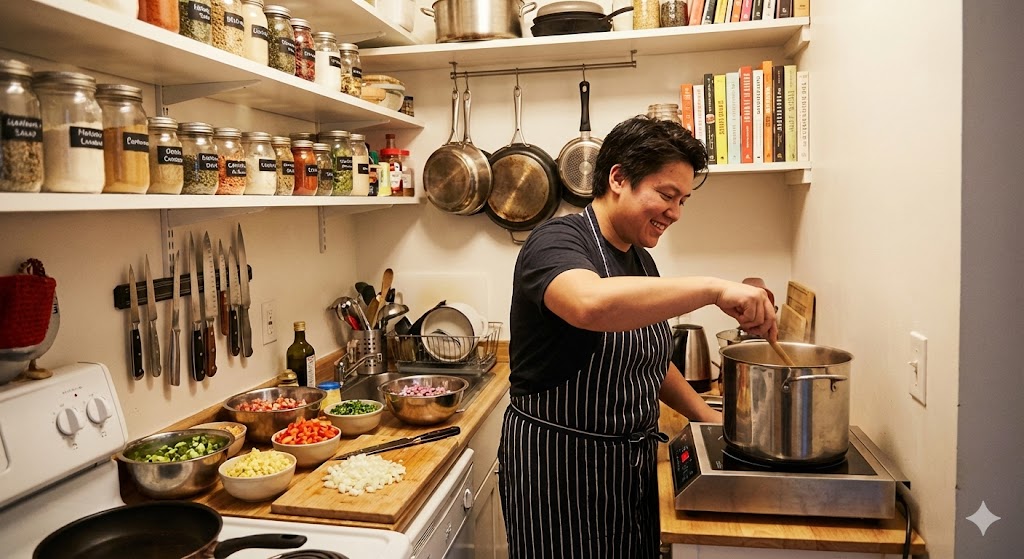
Small kitchens present real challenges that affect daily cooking more than most design issues. Limited counter space means nowhere to set ingredients while prepping. Minimal cabinet storage forces choosing between cookware and food storage. Compact appliances or missing equipment entirely restricts cooking techniques. Single cooks manage, but small kitchens become genuinely difficult when multiple people need to work simultaneously or when preparing complex meals requiring multiple active cooking processes. The constraints are real, not just inconvenient, and they fundamentally shape what you can cook and how efficiently you can work. However, small kitchen limitations don’t prevent good cooking if you adapt your approach to the space rather than fighting against it. Strategic equipment choices, workflow organization, prep timing, and cooking method selection all accommodate space constraints while maintaining cooking capability. The goal isn’t making a small kitchen function like a large one – that’s impossible. Instead, you develop cooking strategies that work within the space you have, accepting some limitations while maximizing what’s actually achievable. Many excellent cooks work in tiny kitchens successfully because they’ve learned to work with their constraints rather than against them. Honest Assessment of Your Actual Cooking Patterns Small kitchen organization starts with understanding what you actually cook rather than what you imagine cooking someday. Most people cook 7-10 dishes regularly that constitute 80% of their home cooking. These core recipes drive your equipment needs more than occasional ambitious projects. If you make pasta dishes, stir-fries, and sheet pan dinners weekly but roast whole chickens twice a year, your space allocation should reflect that reality. Equipment you haven’t used in six months probably doesn’t earn its storage space. Small kitchens can’t accommodate “someday” items. That bread machine gathering dust, the fondue set from a wedding gift, the juicer you used twice – these take space from tools you actually use. Be ruthless about removing equipment that doesn’t serve current cooking patterns. Cooking frequency affects space allocation. Daily coffee drinkers justify countertop coffee makers. Occasional coffee drinkers don’t. If you bake weekly, stand mixers earn their space. Monthly baking doesn’t justify permanent counter real estate for large appliances. The honesty assessment requires distinguishing between aspirational cooking and actual behavior. You might want to be someone who makes fresh pasta weekly, but if you haven’t done it in two years, that pasta roller doesn’t deserve storage space. Build your kitchen around who you are, not who you wish to be. Family size and cooking scale determine equipment sizing. Single people and couples don’t need 12-quart stockpots or full-size food processors. Smaller versions of these tools work fine and consume less storage space. Special dietary needs or restrictions create legitimate equipment requirements that override general minimalism. If you’re gluten-free and make your own bread regularly, those baking tools earn their space. But don’t keep specialty equipment for diets you’re not actually following. Strategic Equipment Selection and Multi-Use Tools Equipment choices matter enormously in small kitchens because every item must justify its space through frequent use or unique capability. One excellent large skillet (10-12 inch) handles more cooking tasks than multiple smaller pans. You can make small portions in a large pan, but you can’t make large portions in a small pan. The large skillet serves as everyday pan, sauté vessel, shallow braising pot, and even oven-to-table serving dish. Dutch ovens provide exceptional versatility – stovetop cooking, oven braising, bread baking, soup making, and even frying in one pot. A 5-6 quart Dutch oven handles most tasks that would otherwise require multiple specialized pots. This single piece of cookware eliminates need for separate stockpots, braising dishes, and casseroles for many cooks. Sheet pans serve multiple roles beyond baking cookies. Roasting vegetables, cooking proteins, making complete sheet pan dinners, holding prepped ingredients during cooking, and catching drips under other cooking vessels all use the same basic sheet pan. Two sheet pans (one half-size, one quarter-size) provide enormous utility without consuming much storage space. Immersion blenders eliminate need for countertop blenders for many tasks. They blend soups directly in the pot, make smoothies in tall containers, and store in a drawer. Full-size blenders are bulky and single-purpose by comparison. Instant-read thermometers replace multiple specialized tools. Instead of timers and guessing, temperature-based cooking ensures proper doneness for meats, baking, candy making, and oil frying. One small thermometer handles all these tasks. Avoid single-use gadgets ruthlessly. Garlic presses, avocado slicers, strawberry hullers, egg separators, and similar specialized tools all perform tasks a knife handles. Each gadget consumes storage space for something you use occasionally at best. Quality over quantity applies especially in small kitchens. One excellent chef’s knife used for everything beats a block of mediocre knives you never use. The good knife earns its space through daily use and capability. The knife block just takes up counter space. Vertical Storage and Space Maximization Small kitchens require using all available space, not just obvious cabinet and counter areas. Wall-mounted magnetic knife strips get knives off counters and out of drawers while keeping them accessible. The vertical wall space holds 5-8 knives in the area a decorative plate would occupy. Hanging pot racks suspended from ceilings or mounted on walls store cookware vertically above counters. This solution works only if you actually use the cookware regularly – hanging pots you rarely touch just creates visual clutter. But for frequently-used pans, vertical hanging beats cabinet storage. Inside cabinet doors offer unused space for mounting racks, hooks, or organizers. Pot lids, measuring cups, small utensils, and cleaning supplies all store on door-mounted organizers, freeing drawer and shelf space. Shelf risers effectively double cabinet space by creating two levels where one existed. Plates, bowls, and canned goods all benefit from riser systems that let you stack items without creating unstable towers. Under-shelf baskets hang from existing shelves to create storage below them. These work well for lightweight items like coffee filters, tea bags, or small containers that would otherwise consume entire shelf space. Drawer dividers and organizers prevent utensil drawers from becoming jumbled messes where nothing is

The Real Reason Your Kitchen Always Looks Messy (It’s Not What You Think)

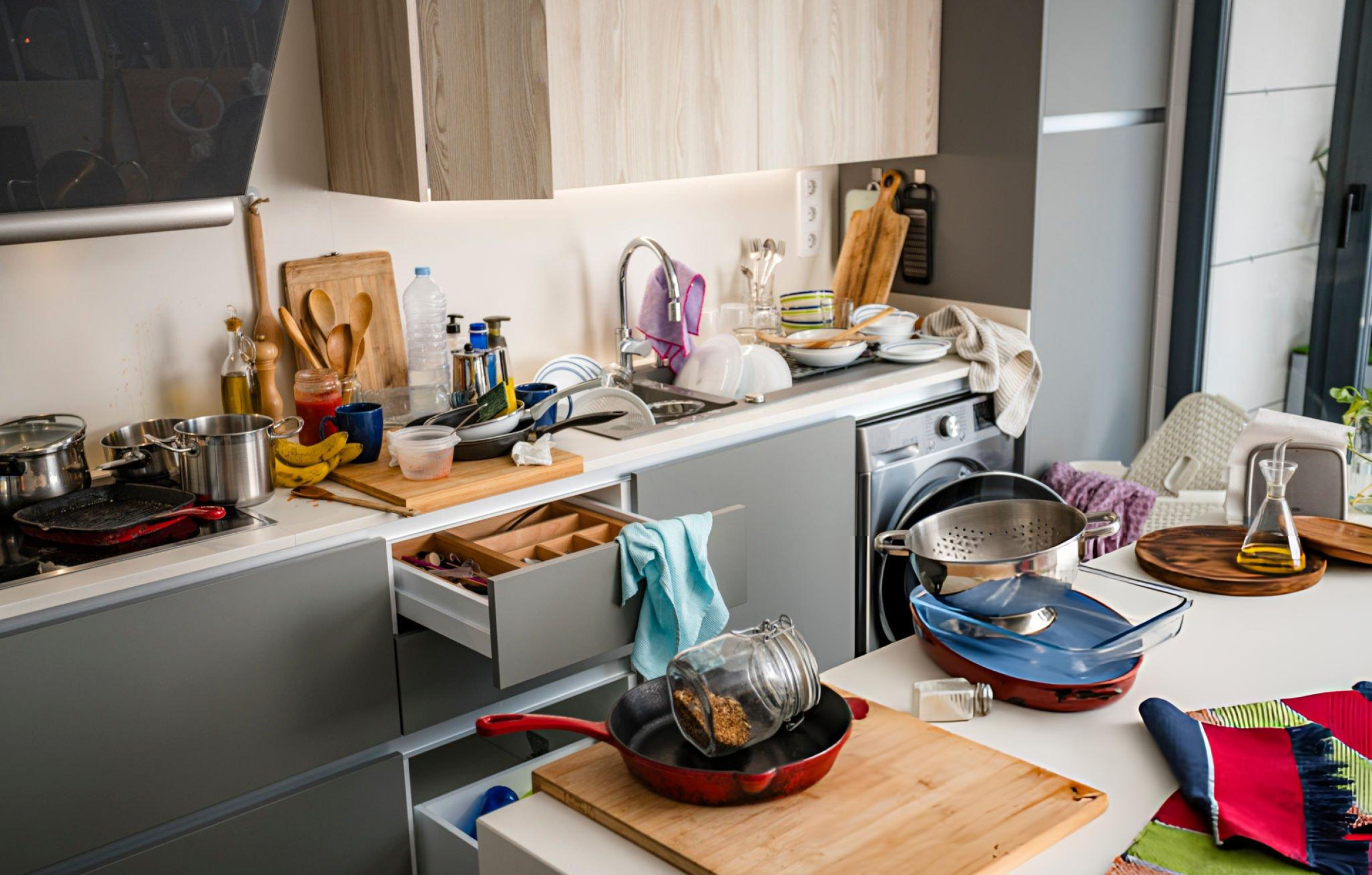
You clean your kitchen every single day. You wipe down counters, put away dishes, and organize things back into their places. Yet somehow, within hours, your kitchen looks cluttered and chaotic again. You blame yourself for being messy or disorganized, but the real problem isn’t your habits at all. The issue is that your kitchen was designed to fail from the start, with fundamental layout and storage problems that make keeping it clean nearly impossible. Most kitchens are designed by people who never actually cook or live in them. Builders, architects, and designers create spaces based on how kitchens should theoretically work rather than how families actually use them. This disconnect creates kitchens that look great in photos but become cluttered disasters in real life. Understanding the true causes of kitchen mess helps you fix the actual problems instead of blaming yourself for normal human behavior. The Counter Space Illusion Your kitchen probably has less usable counter space than you think. Sure, you might have plenty of total square footage, but how much is actually available for daily use? That’s the real question most people never ask until they’re frustrated by constant clutter. Appliances occupy prime counter real estate in most kitchens. The coffee maker, toaster, knife block, utensil holder, and dish drying rack together consume 4-6 feet of counter space that never becomes available for actual cooking or staging. These permanent residents turn expansive counters into narrow strips of usable workspace. Corner spaces look substantial but function poorly for daily tasks. The corners of L-shaped and U-shaped kitchens create dead zones where items get pushed back and forgotten. These areas become dumping grounds for mail, keys, and miscellaneous items because they’re not practical for cooking tasks. Space near the sink stays perpetually occupied by dish soap, sponges, hand soap, and drying dishes. This necessary infrastructure consumes 18-24 inches of counter space that appears available but never actually is. Landing zones near the stove remain off-limits during cooking due to heat and splatter concerns. The 12-18 inches on either side of your cooktop can’t hold anything that might melt, burn, or get ruined by grease. The reality is that kitchens designed with “adequate” counter space based on standard measurements often provide less than half that amount for actual daily use. What looks like 12 feet of counter space functions more like 4-5 feet after permanent items claim their territory. The Cabinet Design Flaw Nobody Talks About Kitchen cabinets are designed to maximize storage capacity, not accessibility. This fundamental flaw means that even kitchens with abundant cabinet space force you to leave items on counters because retrieving them from cabinets becomes too inconvenient for daily use. Deep lower cabinets create black holes where items disappear. The back third of most base cabinets becomes effectively inaccessible without getting on your hands and knees to dig through everything in front. Items stored in these depths eventually get forgotten and replaced, creating redundant purchases and more clutter. Upper cabinets place frequently used items out of comfortable reach. Anything above shoulder height requires stretching or getting a step stool, making these spaces impractical for daily-use items. Yet most kitchen designs place upper cabinets at standard heights that work better for storage than regular access. Corner cabinets represent the worst of both worlds – deep and difficult to access. Even with lazy Susans or pull-out systems, corner cabinets force you to navigate awkward spaces to retrieve items. The result is that primo storage real estate goes underutilized while counters overflow. Fixed shelving prevents customization to your actual storage needs. The standard 12-inch shelf spacing doesn’t accommodate tall bottles, small jars, or the varying heights of actual kitchen items. Wasted vertical space inside cabinets means you can’t fit as much as the cabinet volume suggests. No landing space near cabinets makes unloading and reloading awkward. When you remove items from cabinets, where do you put them? Most kitchens lack surfaces adjacent to storage, forcing you to leave cabinet contents on counters during any reorganization effort. The Kitchen Is Actually Multiple Rooms Pretending to Be One Modern kitchens serve too many purposes to function as single spaces, but they’re designed as if cooking is the only activity that happens there. This mismatch creates inevitable clutter as each function competes for the same surfaces and storage. Command center functions turn kitchens into family communication hubs. Mail, keys, backpacks, permission slips, and calendars all naturally gravitate to the kitchen because that’s where family members gather. No amount of discipline will stop this behavior because it’s logical – the kitchen is the central hub. Homework station needs occupy evening counter space because parents cooking dinner need to supervise children doing homework. Backpacks, textbooks, tablets, and school papers spread across available surfaces during the busiest cooking times. Charging station requirements mean phones, tablets, and laptops cluster near available outlets, typically on counters. Modern families need accessible power in the kitchen for multiple devices, but most kitchens lack enough outlets or dedicated charging locations. Coffee and breakfast bars create morning gathering spots that accumulate mugs, breakfast items, and morning chaos during the busiest prep time before school and work. The coffee station alone generates clutter that compounds other morning kitchen activities. Snack zones for kids create additional clutter hot spots where opened packages, spilled crumbs, and grab-and-go items accumulate. Making snacks easily accessible for children means accepting some level of ongoing mess in those areas. Pet feeding stations add bowls, food containers, and pet supplies to kitchen floor space and lower cabinets. These necessary items rarely have dedicated storage, leading to clutter around feeding areas. The “Landing Strip” Problem Everyone enters the home through or near the kitchen in most house layouts, making it the natural landing zone for everything people carry inside. Groceries, packages, shopping bags, take-out food, and everything else gets dumped on the nearest horizontal surface – your kitchen counter. Lack of mudroom or entry storage means items that should stop at the door continue into the kitchen. Coats,

The F965NF Dual Fuel Range: Gas Precision with Electric Reliability Plus Convenient Storage

The F965NF dual fuel range represents the perfect marriage of gas cooktop performance and electric oven consistency, enhanced by a convenient lower storage drawer that adds valuable organization to your kitchen. This 36-inch range combines the instant heat control that gas burners provide with the even, reliable baking performance of electric ovens, while the integrated storage drawer keeps your most-used cookware accessible and organized. For home cooks who understand that different cooking methods benefit from different heat sources, the F965NF delivers the comprehensive cooking solution that makes daily meal preparation more efficient and enjoyable. The addition of the storage drawer transforms this range from simply a cooking appliance into a complete kitchen organization solution that maximizes both functionality and space efficiency. Understanding Dual Fuel Technology Dual fuel ranges combine gas cooktops with electric ovens to provide the specific advantages of each fuel type where they perform best. This combination isn’t just about having options – it’s about optimizing cooking performance through intelligent design that matches fuel types to appropriate cooking tasks. Gas burners provide instant, visible heat control that responds immediately to adjustments. You can see the flame level and feel confident about temperature changes that happen in real-time, making stovetop cooking more intuitive and precise. Electric ovens maintain steadier temperatures than gas ovens while providing more even heat distribution. The consistent heating is particularly important for baking, where precise temperature control determines success with breads, pastries, and delicate dishes. Professional kitchens have used dual fuel configurations for decades because they understand that stovetop cooking benefits from gas responsiveness while oven cooking demands electric consistency. Home cooks can now access this same optimization. The dual fuel approach eliminates compromises that single-fuel ranges require. You’re not settling for adequate oven performance from a gas range or acceptable stovetop control from an electric range – you get the best of both technologies. Energy efficiency improves with dual fuel configurations because each fuel type operates in applications where it performs most efficiently. Gas provides efficient stovetop heating while electric ovens deliver consistent results with minimal energy waste. Five Sealed Gas Burners for Cooktop Versatility The five sealed gas burner configuration provides the cooking flexibility needed for multi-dish meal preparation while delivering the instant heat control that makes gas cooking so popular among experienced home cooks. Varied BTU outputs across the five burners accommodate different cooking techniques simultaneously. High-output burners excel at rapid boiling and high-heat searing, while lower-output burners provide gentle heat for delicate sauces and slow simmering. Sealed burner design contains spills within the burner area, preventing drips from reaching the range interior where they create cleaning challenges. This practical feature simplifies maintenance while protecting internal components from damage. Even flame distribution ensures consistent heating across cookware bottoms, improving cooking results while reducing hot spots that cause uneven browning or burning. Quality burner design directly impacts cooking success. Instant heat response allows immediate temperature adjustments essential for advanced cooking techniques like sautéing and stir-frying where timing and temperature control determine success. The five-burner layout provides adequate space for multiple cooking tasks without crowding, allowing you to prepare complete meals with proteins, vegetables, starches, and sauces all cooking simultaneously at appropriate temperatures. 3.8 Cubic Foot Electric Oven with Turbo True Convection The spacious electric oven combines generous capacity with Turbo True European Convection technology that improves cooking results while reducing cooking times for many dishes. This combination maximizes both efficiency and performance. Turbo True European Convection places the heating element around the fan rather than using separate elements with a circulation fan. This design creates more uniform heat distribution throughout the oven cavity, resulting in better cooking consistency. Even heat distribution from true convection allows effective use of multiple rack positions simultaneously. Cookies bake evenly on multiple sheets, roasts cook uniformly, and casseroles brown consistently across their entire surface. The 3.8 cubic foot capacity accommodates large roasts, multiple sheet pans, or several dishes cooking simultaneously. This sizing handles holiday meals, dinner parties, and weekly meal prep with adequate space for efficient cooking. Electric heating provides the consistent, steady temperatures that baking demands. Unlike gas ovens where flame cycling can create temperature fluctuations, electric ovens maintain precise temperatures that produce reliable baking results. Reduced cooking times with convection technology save both time and energy while producing superior results. Most recipes can be adapted for convection by reducing temperature or time, improving cooking efficiency. Seven Oven Functions for Comprehensive Cooking The seven distinct oven functions optimize performance for different cooking methods and food types, providing flexibility that accommodates everything from traditional baking to modern cooking techniques. Convection bake combines fan circulation with electric heating to provide even temperatures and reduced cooking times. This function excels for cookies, pastries, and baked goods where consistent results are important. Convection roast optimizes airflow and heating patterns for larger items like roasts, whole chickens, and vegetables. The enhanced air circulation promotes better browning while ensuring thorough, even cooking. Traditional bake provides conventional top and bottom heating for recipes developed for standard ovens. This function works well when you prefer familiar cooking patterns or when recipes specify conventional methods. Broil function delivers intense top heat for browning, melting cheese, or finishing dishes that benefit from surface caramelization. This high-heat function adds versatility for completing dishes. Additional specialized functions may include warming, proofing, or other modes that optimize oven performance for specific tasks, providing comprehensive cooking capabilities in one appliance. The variety of functions means you can optimize cooking conditions for each dish rather than compromising with general-purpose settings, significantly improving cooking results. Lower Storage Drawer for Organization The integrated storage drawer below the oven provides valuable organization space that keeps frequently used cookware accessible while maintaining clean, uncluttered kitchen counters and cabinets. Cookware storage keeps pots, pans, and baking sheets organized in one convenient location near where you use them most. This positioning improves cooking efficiency by reducing movement during meal preparation. Easy access design allows smooth operation even when fully loaded with heavy items. The drawer slides smoothly

Preparing Your Kitchen for Holiday Entertaining: Your Complete Planning Guide

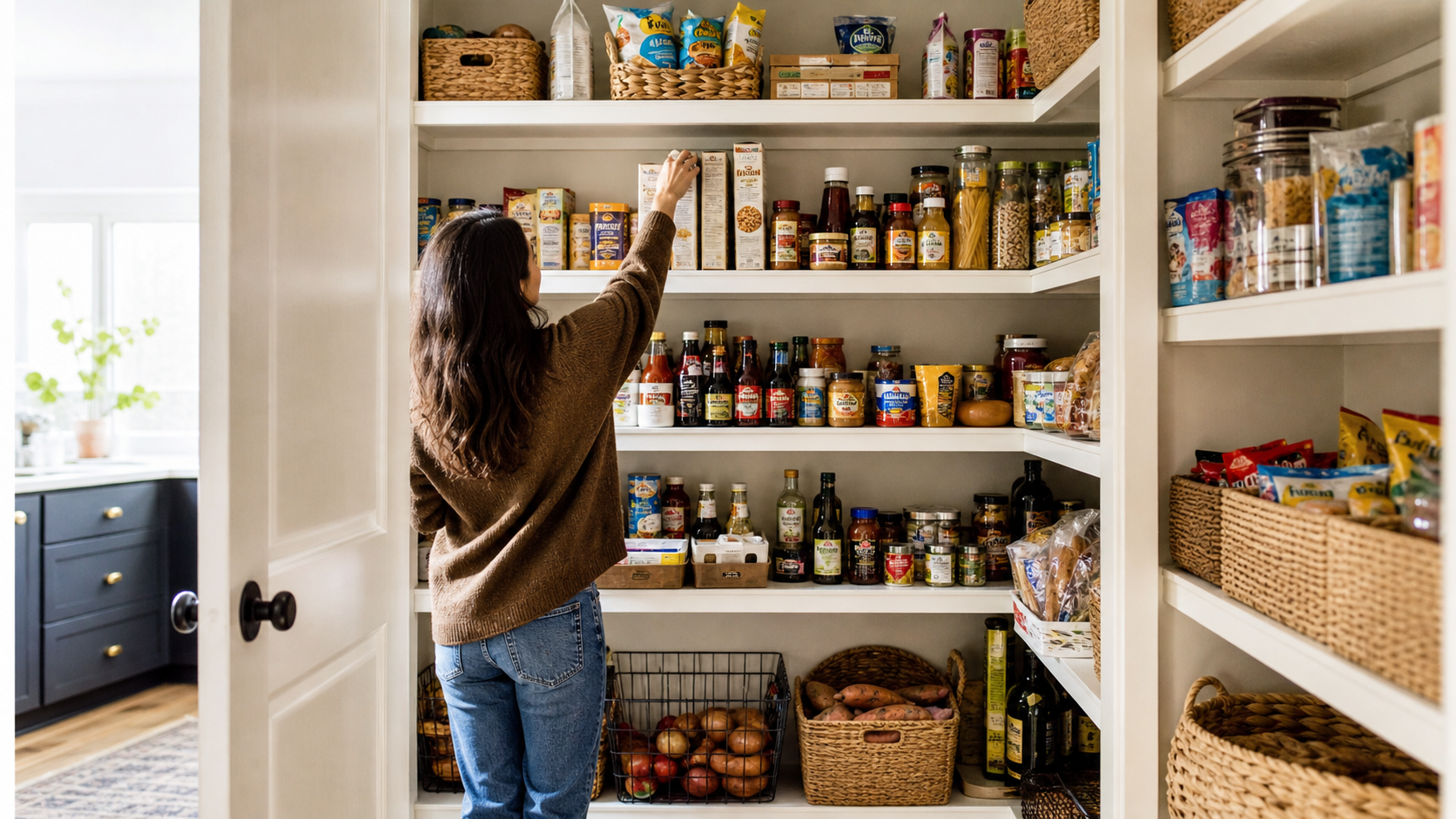
Holiday entertaining brings joy, connection, and often considerable stress as kitchens become command centers for feeding family and friends during the busiest time of year. The difference between enjoyable hosting and overwhelming chaos often comes down to preparation and planning that happens weeks before guests arrive. A well-prepared kitchen allows you to focus on enjoying time with loved ones rather than scrambling to find serving dishes or dealing with equipment failures at crucial moments. Smart holiday kitchen preparation addresses both the practical aspects of cooking large meals and the organizational challenges of managing multiple dishes, timing constraints, and space limitations that holiday cooking creates. Whether you’re hosting Thanksgiving dinner for twelve or preparing treats for neighborhood gatherings, thoughtful preparation transforms potentially stressful situations into smooth, enjoyable experiences that let you be present with your guests. Deep Cleaning and Organization Starting Early Beginning your holiday kitchen preparation with thorough cleaning and organization sets the foundation for smooth holiday cooking while identifying any maintenance issues that need addressing before peak cooking times arrive. Oven cleaning becomes crucial before holiday baking and roasting demands peak performance. Self-cleaning cycles or manual deep cleaning removes buildup that can create smoke or odors during holiday cooking. Complete this task at least two weeks before major cooking begins. Refrigerator purging and cleaning creates space for holiday ingredients and prepared dishes while eliminating forgotten items that waste valuable storage. Remove everything, clean all surfaces, and reorganize with holiday needs in mind. Pantry inventory and organization helps you identify what you have and what you need while creating space for holiday-specific ingredients. Check expiration dates, consolidate partially used items, and create dedicated space for holiday baking supplies. Small appliance testing ensures everything works properly before you need it. Test mixers, food processors, and other equipment you’ll rely on during holiday cooking to identify problems while there’s time to repair or replace. Dishwasher maintenance including cleaning filters and checking spray arms ensures efficient operation when you’ll need it most. A well-maintained dishwasher handles the increased load that holiday entertaining creates. Storage area assessment identifies what serving pieces, platters, and special equipment you have while determining what might need purchasing or borrowing. Finding items weeks early prevents last-minute shopping stress. Creating Your Holiday Cooking Timeline Strategic planning and timeline creation prevent the chaos that occurs when you try to prepare everything at the last minute. Working backward from serving time helps identify what can be done ahead and when each task should happen. Three weeks before involves major shopping for non-perishables, completing any needed equipment purchases, and beginning prep work for items that can be made well ahead and frozen. Two weeks before includes testing new recipes you plan to serve, completing kitchen organization projects, and making detailed shopping lists for perishable ingredients. One week before allows for final grocery shopping for items with longer shelf life, beginning prep work for dishes that can be partially prepared ahead, and confirming final guest counts. Three days before involves shopping for fresh ingredients, beginning prep work for components that can be refrigerated, and setting up serving areas with appropriate dishes and utensils. Two days before includes preparing dishes that taste better after resting, completing as much prep work as possible, and organizing refrigerator space for efficient access during final cooking. The day before allows for maximum advance preparation while leaving only final cooking and reheating for serving day. Completing as much as possible the day before dramatically reduces serving day stress. Smart Shopping Strategies for Holiday Cooking Efficient shopping that anticipates holiday needs while avoiding multiple last-minute trips reduces stress and ensures you have everything needed for successful entertaining. Master shopping lists organized by store section make shopping faster while reducing the chance of forgotten items. Include quantities, specific brands when important, and notes about substitution possibilities. Multiple store strategies balance price, quality, and convenience. Some items are worth buying at specialty stores while others work fine from regular groceries. Early shopping for non-perishables prevents shortages of popular holiday items while spreading costs over several weeks. Buying early also avoids crowded stores during peak shopping times. Fresh ingredient timing ensures optimal quality without requiring multiple shopping trips. Understanding what can be purchased early and what needs last-minute shopping improves planning. Backup planning for potentially unavailable items prevents panic when stores run out of popular ingredients. Having substitution plans ready saves time and stress. Bulk buying for frequently used holiday ingredients often provides better value while ensuring adequate supply. Items like butter, flour, and sugar can be purchased in larger quantities early. Maximizing Kitchen Storage and Workflow Holiday cooking typically involves more dishes, ingredients, and equipment than daily cooking, making strategic use of available space crucial for efficient meal preparation. Refrigerator organization with labeled zones for different meal components prevents confusion while ensuring items are used before spoiling. Designate areas for prepared components, ingredients waiting to be used, and beverages. Freezer space optimization through careful planning allows make-ahead dishes to be stored efficiently. Use stackable containers and label everything clearly with contents and heating instructions. Counter space expansion using folding tables, rolling carts, or cleared surfaces creates additional work areas for prep, cooling, and serving. Temporary solutions work well for short-term holiday needs. Pantry reorganization with holiday items at the front improves access to frequently needed ingredients while preventing waste of time searching through shelves. Serving dish accessibility by moving everyday dishes aside and bringing holiday serving pieces forward makes setup faster while reducing last-minute scrambling. Equipment staging with tools and appliances you’ll need positioned for easy access reduces movement and searching during active cooking times. Make-Ahead Strategies for Stress-Free Hosting Understanding which dishes can be prepared ahead and proper storage techniques allows you to spread work over several days while maintaining food quality and safety. Complete make-ahead dishes including casseroles, desserts, and certain side dishes can be fully prepared and refrigerated or frozen days in advance. Proper labeling with reheating instructions prevents confusion. Partial prep work for items that can’t be completed

Essential Kitchen Tools Every Home Chef Should Own: Building Your Culinary Arsenal

A well-equipped kitchen makes cooking faster, easier, and more enjoyable while allowing you to tackle a wider range of recipes with confidence. While beautiful appliances provide the foundation for cooking success, the right collection of tools and equipment transforms those appliances into complete cooking systems. Understanding which tools are truly essential helps you build a functional kitchen without wasting money on gadgets that end up collecting dust in drawers. The best kitchen tool collections grow over time as your cooking skills and interests develop. Starting with quality essentials provides a solid foundation that serves you well for years while allowing you to add specialized tools as your culinary repertoire expands. Smart tool selection focuses on items that perform multiple functions while maintaining the quality and durability that justify their cost through years of regular use. Quality Knives: Your Most Important Investment Nothing affects your cooking success more dramatically than having the right knives that are properly maintained and sharp. Quality knives make food preparation faster, safer, and more enjoyable while lasting for decades with proper care. Chef’s knife represents the single most important tool in any kitchen, handling about 80% of cutting tasks from chopping vegetables to slicing meat. An 8-inch blade works well for most home cooks, providing adequate length for larger items while remaining maneuverable for detailed work. Paring knife handles detailed tasks like peeling, trimming, and precise cutting that would be awkward with larger knives. A 3-4 inch blade provides the control needed for intricate work while being comfortable to hold during extended use. Serrated bread knife cuts through crusty breads, tomatoes, and other items with tough exteriors and soft interiors without crushing them. The saw-tooth edge maintains effectiveness even when the knife isn’t perfectly sharp. Quality matters more than quantity when building your knife collection. Three excellent knives serve you better than a dozen mediocre ones that won’t hold edges or feel comfortable during use. Proper storage protects knife edges while keeping them safely accessible. Magnetic strips, knife blocks, or in-drawer organizers all work well when they prevent blades from contacting other objects that can dull edges. Regular maintenance including proper cleaning, occasional sharpening, and appropriate storage ensures your knife investment provides decades of excellent performance. Cutting Boards: Protecting Counters and Knife Edges Quality cutting boards protect your countertops while providing stable, food-safe surfaces for all your cutting tasks. Having multiple boards in different sizes and materials optimizes both food safety and convenience. Wood cutting boards provide excellent cutting surfaces that are gentle on knife edges while being naturally antimicrobial when properly maintained. Hardwoods like maple, walnut, or cherry work particularly well for general use. Plastic cutting boards offer easy cleaning and dishwasher safety while being affordable enough to maintain separate boards for different food types. Color-coding prevents cross-contamination between raw meats and ready-to-eat foods. Multiple sizes accommodate different tasks efficiently. Large boards provide ample space for big cutting jobs, while smaller boards work better for quick tasks and take up less space during cleanup. Non-slip features like rubber feet or textured surfaces prevent boards from sliding during use, improving both safety and efficiency. Damp towels placed under boards also provide effective slip prevention. Proper maintenance including regular cleaning, occasional oiling for wood boards, and replacement when boards develop deep grooves extends their useful life while maintaining food safety. Dedicated boards for different food types prevent flavor transfer and reduce cross-contamination risks. Many cooks maintain separate boards for raw meat, vegetables, and bread to ensure food safety. Mixing and Prep Bowls: Kitchen Workhorses A good set of mixing bowls serves countless functions from mixing ingredients to storing prepped items and serving finished dishes. Having various sizes in durable materials provides flexibility for different tasks. Stainless steel bowls offer durability, easy cleaning, and versatility for both mixing and cooking tasks. They’re lightweight, stackable, and won’t retain odors or stains from previous uses. Glass bowls allow you to see contents while being microwave-safe and dishwasher-friendly. Tempered glass provides durability while maintaining attractive appearance that works for both prep and serving. Nesting sets save storage space while providing size variety for different tasks. A good set includes bowls ranging from small (1-2 cups) to extra-large (5+ quarts) for comprehensive coverage. Non-slip bases improve stability during mixing tasks, preventing bowls from spinning or sliding across counters during vigorous mixing or whisking activities. Lids for storage transform mixing bowls into food storage containers, reducing the need for separate storage vessels while streamlining kitchen organization. Multiple sets allow simultaneous prep work for complex recipes requiring many components. Having adequate bowls prevents constant washing between prep steps. Measuring Tools for Consistent Results Accurate measurement is crucial for baking success and recipe consistency. Quality measuring tools that are easy to read and use make following recipes simpler while improving your cooking results. Dry measuring cups in nested sets provide standard measurements from 1/4 cup to 1 cup. Metal or sturdy plastic cups with comfortable handles make measuring dry ingredients quick and accurate. Liquid measuring cups with clear markings and pour spouts handle wet ingredients efficiently. Having multiple sizes (1 cup, 2 cup, and 4 cup) accommodates different recipe requirements. Measuring spoons in complete sets from 1/8 teaspoon to 1 tablespoon handle small-quantity measurements for seasonings and other ingredients used in smaller amounts. Kitchen scale provides precision that volume measurements can’t match, particularly important for baking where exact measurements significantly affect results. Digital scales with tare functions offer the most convenience. Clear markings that remain legible after repeated washing ensure long-term usability. Etched or molded measurements last longer than printed markings that can wear off. Easy storage through nesting or ring-connected sets keeps complete measurement sets together and accessible when needed. Essential Cooking Utensils The right cooking utensils make food preparation and cooking more efficient while protecting your cookware from damage. Building a collection of versatile, durable utensils eliminates frustration and improves cooking success. Wooden spoons and spatulas provide gentle stirring and scraping that won’t damage non-stick surfaces while handling high heat safely. Wood