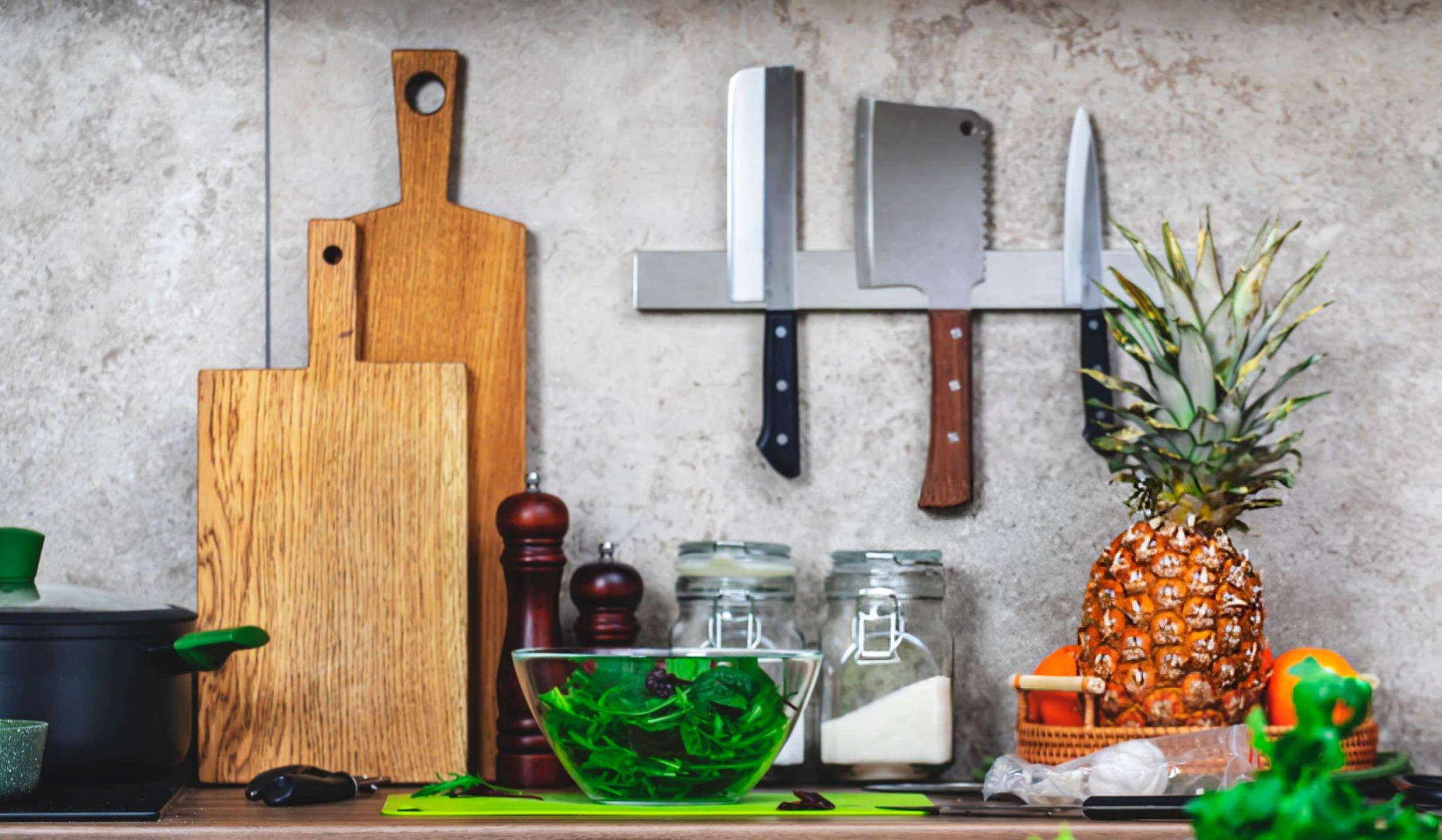
kitchen setup

The Drawer Organization That Actually Stays Organized

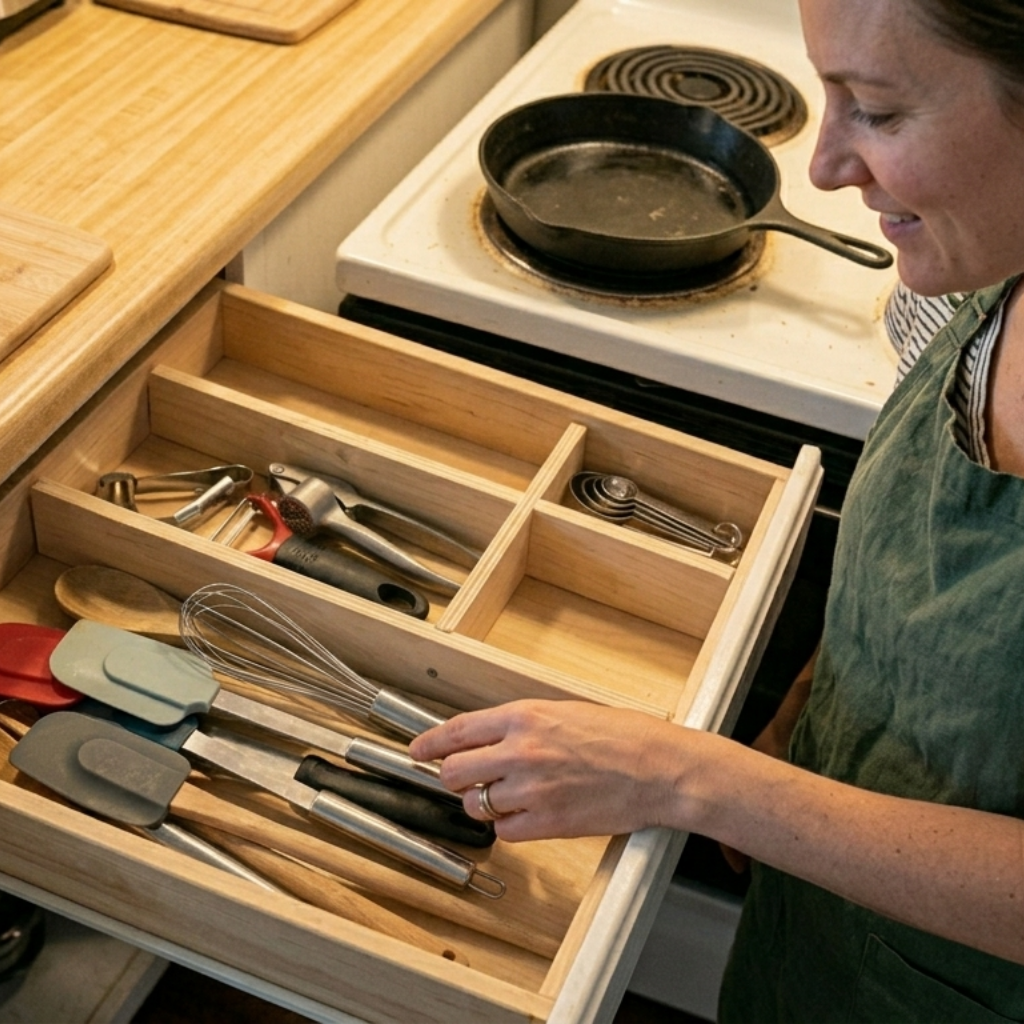
You organize your kitchen drawers. It looks beautiful for three days. Then you need a whisk in a hurry, toss it back imperfectly, and the whole system collapses within a week. The problem isn’t your discipline or commitment. The problem is organizing systems designed for photographs, not daily cooking. They require precision placement and careful maintenance that real cooking doesn’t allow. Drawer organization that actually lasts works with your cooking habits, not against them. It assumes you’ll be rushed, distracted, and unwilling to play Tetris with spatulas while something’s burning on the stove. Here’s why most drawer organization fails, what actually keeps drawers functional long-term, and how to set up systems that survive real kitchen use. Perfect Compartments Create Maintenance Hell Those beautiful drawer organizer systems with precisely-sized slots for every utensil look incredible in before-and-after photos. They fail in actual kitchens because they demand exact placement every time. Custom-fit organizers require identifying which slot belongs to which tool, orienting the tool correctly, and sliding it into its designated space. This works when you’re organizing slowly and deliberately. It fails when you’re cooking three things simultaneously and need to return a spatula quickly. The tighter the fit, the more frustrating the system. That perfectly-sized slot for your fish spatula only accepts the spatula at the correct angle. Put it in slightly rotated and it doesn’t fit. Now you’re fumbling with a greasy spatula while your sauce reduces. Precision systems also break when you add new tools. Buy a second whisk or different-sized spatula and suddenly you’ve got no designated slot. The new item becomes homeless, getting tossed wherever it fits, beginning the drawer’s descent into chaos. Organization that lasts uses zones, not slots. Group similar items together in loose categories without demanding precise placement. Spatulas go in the spatula zone anywhere, not in individually-assigned slots. Wide compartments that hold multiple items of the same type accommodate tools at various angles and positions. You’re dropping items into a zone, not threading them into specific slots. Shallow Organizers For Deep Drawers Guarantee Failure Standard drawer organizers sit shallow in deep drawers, leaving several inches of unused space below. This invites layering, which destroys organization immediately. You buy a utensil organizer that’s two inches deep. Your drawer is six inches deep. That four-inch gap below the organizer becomes tempting storage for overflow items. Initially you resist. Then you acquire a new tool that doesn’t fit in the organizer. “Just temporarily,” you think, sliding it underneath. Then another tool. Then a random kitchen gadget. Within weeks you’ve got a hidden layer of chaos beneath your organized surface. Deep drawers need either organizers that span full depth or intentional use of vertical space with stackable systems. Half-depth organizers in deep drawers are organizational traps. If you’ve got deep drawers, use tall organizers or bins that prevent layering. The goal is making layering physically impossible, not relying on your future self to resist temptation. Alternatively, dedicate deep drawers to large items that actually need the depth: large serving utensils, rolling pins, or bulky kitchen tools. Save shallow drawers for the precision organization that shallow organizers support. Too Many Categories Mean Nothing Has a Home Organizing guides tell you to separate whisks, spatulas, spoons, tongs, peelers, zesters, and measuring spoons into individual compartments. This creates so many categories that placing items correctly becomes a puzzle. Your brain during cooking operates in simplified mode. You’re tracking multiple tasks, monitoring temperatures, and timing various components. Your mental bandwidth for “which compartment does the slotted spoon belong in” is approximately zero. Too many categories increase friction. Is the slotted spoon a spoon or a spatula? Does the silicone scraper go with spatulas or with whisks? These ambiguous items bounce between categories, creating placement inconsistency. Successful organization uses three to five broad categories maximum. “Stirring tools,” “measuring tools,” “cutting tools,” and “miscellaneous” works better than ten specific categories requiring constant decision-making. Broad categories forgive mistakes. Tossing a whisk into the general “stirring tools” zone succeeds even if it lands next to spatulas. Perfect placement isn’t required. You can subdivide within broad categories using visual separation (different colored bins or simple dividers), but the primary organization should be simple enough that rushing doesn’t break the system. Measuring Tools Don’t Belong With Cooking Tools Most drawer organization systems mix measuring cups and spoons with cooking utensils. This creates access conflicts because you use these tools at different times during different tasks. Measuring happens during prep before cooking starts. You’re standing at your prep area measuring ingredients into bowls. Cooking utensils are used at the stove during active cooking. Mixing these tools in the same drawer means accessing the drawer from different locations at different times. Your measuring cup drawer should be near your prep area, not your stove. Separating measuring tools into dedicated drawer near your mixing/prep zone improves workflow. When gathering ingredients, you’re not digging through spatulas to find measuring spoons. This separation also prevents cross-contamination of organizational systems. Cooking utensils get greasy and sauce-covered; they’re cleaned quickly and returned slightly damp. Measuring tools stay cleaner because they’re used during prep, not cooking. Dedicate one small drawer or one large drawer section near your primary prep area exclusively to measuring tools. Everything else goes in cooking utensil drawers near the stove. The Junk Drawer Is Necessary, Not Failure Every kitchen organization guide promises to eliminate your junk drawer. This is unrealistic and counterproductive. The junk drawer serves an important function. Kitchens accumulate miscellaneous items: birthday candles, bag clips, corn holders, specialty tools used quarterly. These items need storage but don’t fit into any logical category. Without a designated miscellaneous drawer, these items infiltrate your organized drawers. The corn holders end up with spatulas. The bag clips migrate to the utensil drawer. Your organization breaks down accommodating items that don’t belong. A dedicated miscellaneous drawer contains chaos in one location rather than letting it spread. Everything else stays organized because the random stuff has somewhere to go. The key is intentionality. Designate
Why Your Kitchen Layout Makes Cooking Harder

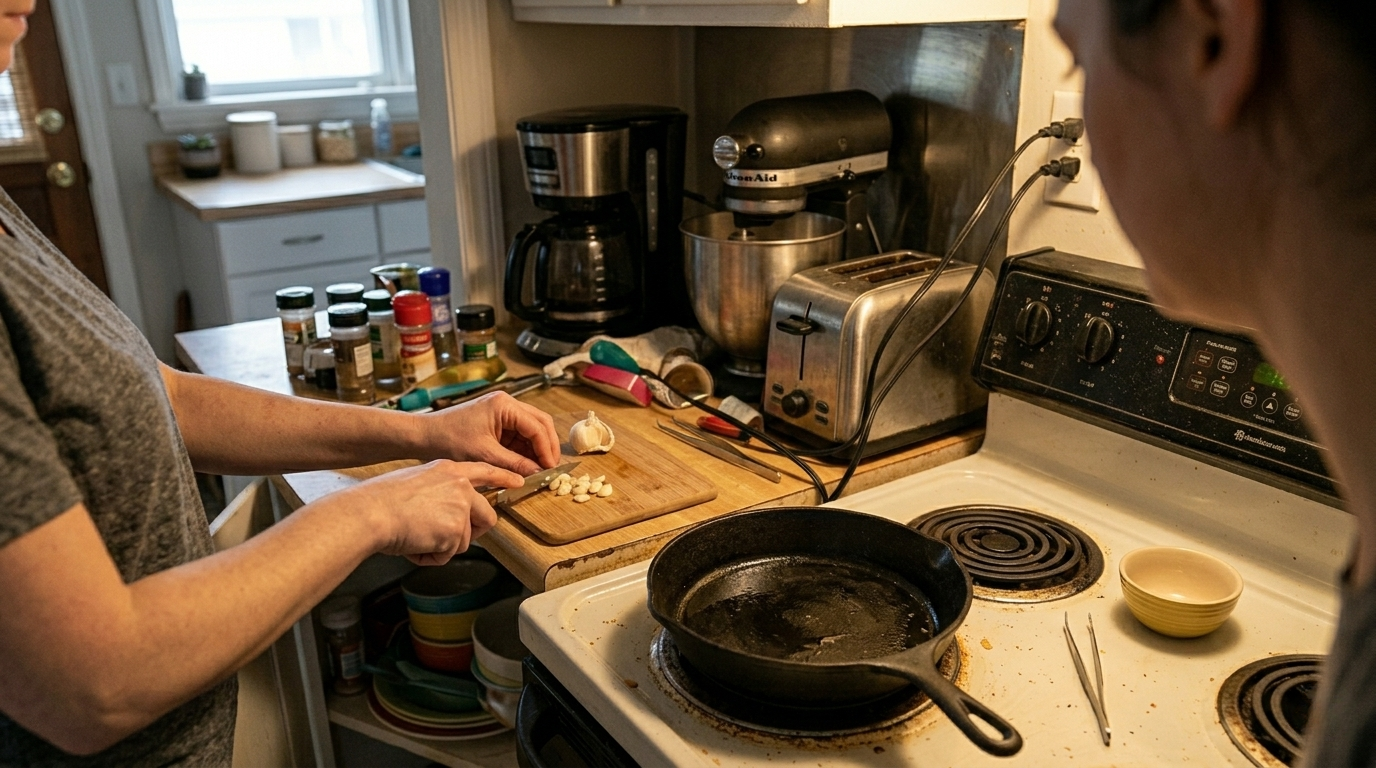
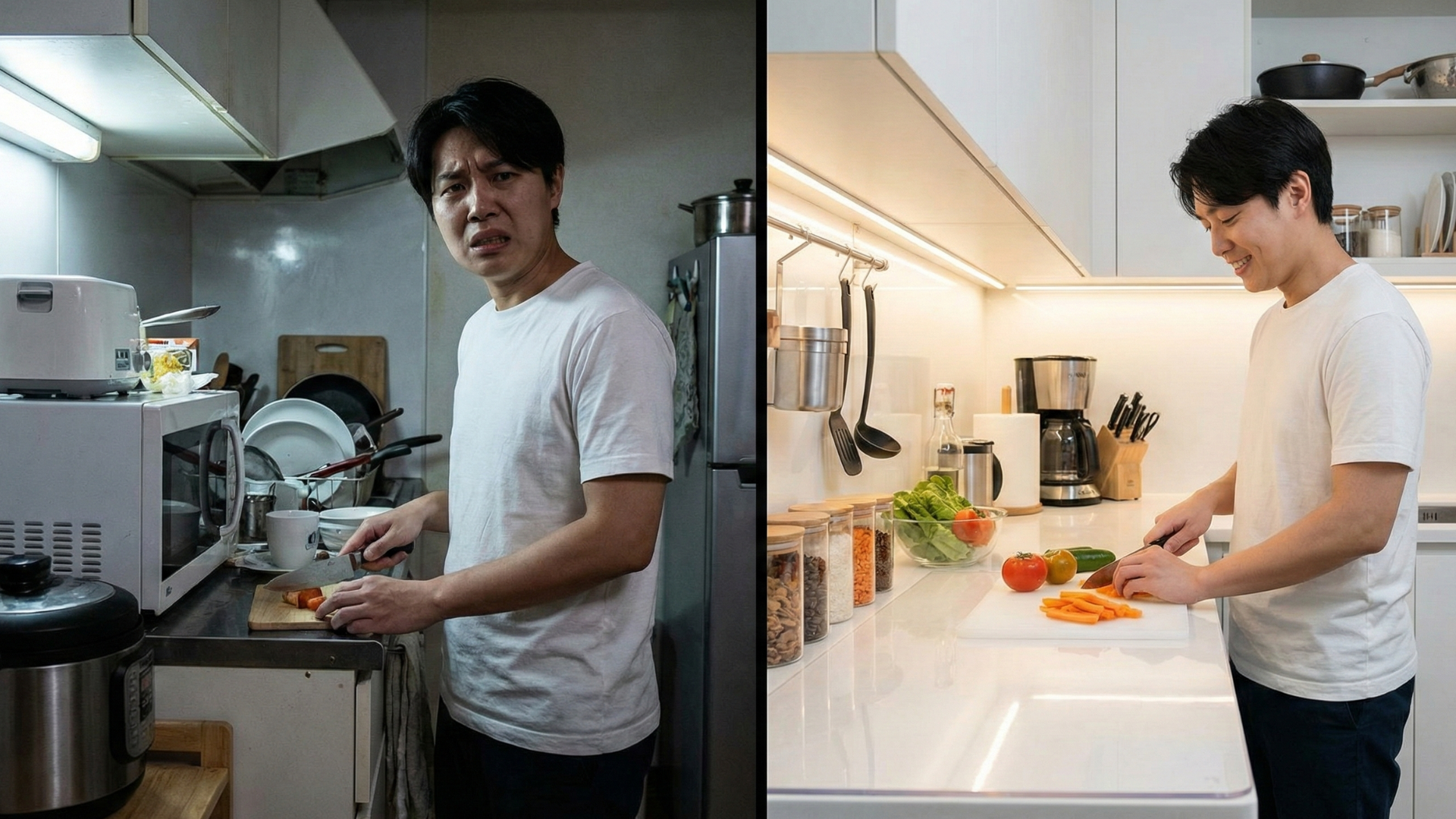
You’ve got decent knives, good pans, working appliances. You follow recipes carefully. Yet cooking still feels awkward and inefficient. The problem might not be your skills or equipment. It might be your kitchen layout forcing you to walk too much, reach too far, and interrupt your workflow constantly. Most home kitchens weren’t designed by people who cook seriously. They were designed to look good in real estate photos and maximize cabinet storage. The result is layouts that create unnecessary steps, dangerous reaches, and workflow interruptions. Here’s what makes cooking harder in poorly-designed kitchens, why standard layouts ignore actual cooking needs, and what you can fix without renovating. The Refrigerator Is Too Far From Everything Walk into most kitchens and the refrigerator sits at one end while the stove sits at the opposite end. This creates exhausting back-and-forth trips every time you cook. Think about a typical cooking sequence. Retrieve vegetables from refrigerator, walk to sink to wash them, walk to cutting board to chop them, walk back to refrigerator for protein, walk to stove to cook. You’ve crossed the kitchen five times before cooking even starts. Professional kitchens cluster refrigeration near prep areas. Home cooks walk marathons because refrigerators get placed based on cabinet layouts and electrical outlet locations, not cooking workflow. Each unnecessary trip adds time and disrupts focus. You’re mentally tracking cooking progress while physically retrieving ingredients across the room. This divided attention leads to mistakes like overcooked onions or forgotten ingredients. The refrigerator-to-prep-to-stove triangle should be tight. Ideal distance totals 12-25 feet for all three legs combined. Many home kitchens exceed this by placing refrigerator far from primary work areas. If you can’t move your refrigerator, adapt your workflow. Stage all ingredients on counter near stove before starting to cook, eliminating mid-cooking refrigerator trips. The Sink Isn’t Where You Actually Prep Standard kitchen design puts the sink under a window for aesthetic reasons. This forces you to prep food wherever counter space exists, which often isn’t near the sink. Washing vegetables at the sink then carrying them across the kitchen to cutting board creates dripping mess. Chopping produces scraps that need disposal, requiring trips back to sink or trash. The sink should sit adjacent to your primary prep area, not isolated in its own zone. Professional cooks keep prep within arm’s reach of water and waste disposal. Many kitchens have ample counter space beside the stove but minimal space beside the sink. This backwards priority means you’re prepping far from water source then walking ingredients to heat source. Deep sinks create ergonomic problems too. Reaching into deep basin to wash large items strains your back. Shallow prep sinks or dual-basin configurations work better for actual cooking tasks. Consider adding a cutting board that fits over your sink if counter space beside sink is limited. This creates temporary prep area directly over water and waste disposal. Your Stove Sits in a Corner or Against a Wall Stoves placed in corners or tight against walls limit access and create dangerous reaching angles over active burners. Corner stoves force you to reach across multiple burners to access back burners. This puts your arm over open flames or hot pots every time you stir something cooking at the back. Wall-mounted stoves without adequate side clearance mean you’re reaching from one direction only. Professional ranges have approach space from multiple sides allowing safer access. The range hood’s positioning matters too. Low hoods help ventilation but reduce visibility and access to back burners. You’re cooking half-blind. Inadequate counter space flanking the stove creates nowhere to set hot pans when removing them from burners. You’re carrying hot cookware across the kitchen searching for landing space. Ideally, stoves have 15-18 inches of counter space on at least one side, preferably both sides. This provides pot-setting space and ingredient staging area within arm’s reach while cooking. If your stove lacks side counter space, add a rolling cart positioned beside it during cooking. This temporary surface provides the landing zone and staging area the permanent layout omits. Cabinet Storage Ignores Cooking Frequency Most kitchens dedicate prime real estate to items used rarely while forcing frequently-used items into inconvenient locations. Pots and pans belong near the stove. Yet many kitchens store them in cabinets across the room or in lower cabinets requiring bending and digging. Meanwhile, fancy serving platters used twice annually occupy prime locations. Spices should live near cooking area. Common kitchen layouts put spice storage far from stove, interrupting cooking flow every time you need to season food. Everyday dishes and glasses should be near dishwasher for easy unloading. Storing them far away adds steps to post-cooking cleanup. The “work triangle” concept (sink-stove-refrigerator) addresses appliance placement but ignores storage. You can have a perfect triangle yet still walk unnecessarily if your storage doesn’t support your workflow. Reorganize cabinets based on use frequency rather than matching dish sets or traditional storage conventions. Daily-use items get prime real-estate. Occasional-use items get less convenient storage. Upper cabinets within arm’s reach should hold items you grab while cooking: oils, vinegars, frequently-used spices, go-to pans. Lower cabinets work for items retrieved during prep: mixing bowls, baking sheets, storage containers. Counter Space Isn’t Continuous Broken counter runs interrupted by appliances or sink create workflow problems requiring shifting food and equipment between disconnected surfaces. You need continuous counter space for multi-step tasks. Kneading bread dough, rolling pasta, or arranging ingredients for complex recipes requires uninterrupted work surface. Many kitchens break counter runs with range placement, creating two separate prep zones instead of one continuous surface. This forces choosing which side to work on rather than spreading out naturally. Small counter segments between appliances become dead zones too small for actual work. That 8-inch gap beside the stove holds dish soap but can’t accommodate cutting board or mixing bowl. Island or peninsula additions help only if they’re positioned within the work triangle. Islands far from primary work area become overflow surfaces that don’t integrate into cooking workflow. Minimum useful counter space measures at

Why Your Kitchen Makes Cooking Harder Than It Should Be

Cooking difficulty often gets attributed to lack of skill or time when the actual problem is a kitchen setup that creates unnecessary obstacles during routine tasks. Poorly arranged work zones, inadequate counter space, inconvenient storage placement, and missing basic tools all add friction to cooking that has nothing to do with recipe complexity or culinary ability. These kitchen design and organization issues accumulate into significant frustration that makes cooking feel harder than the recipes themselves warrant. When preparing dinner requires walking back and forth across the kitchen repeatedly, digging through crowded cabinets for basic items, and working in cramped spaces without room to prep ingredients, the cooking process becomes unnecessarily exhausting regardless of what you’re making. The challenge is recognizing that kitchen setup problems are fixable rather than permanent conditions you must accept. Many cooking frustrations stem from correctable organizational issues, missing equipment, or workflow inefficiencies rather than from cooking being inherently difficult or your abilities being insufficient. Understanding which kitchen factors create unnecessary difficulty helps you identify and fix problems that genuinely impede cooking rather than just trying to cook better in a space working against you. Your Counter Space Doesn’t Actually Function Many kitchens have reasonable total counter area but almost none of it remains usable for actual food preparation because permanent items occupy nearly all available space. Small appliances crowd counters leaving minimal prep space. The coffee maker, toaster, stand mixer, knife block, utensil holder, and various other items consume counter real estate permanently, leaving you perhaps one small area for cutting boards and ingredient prep. Corner spaces go unused because they’re awkward to access and items placed there become semi-permanent obstacles. Counter corners typically collect things that then never move, effectively removing that space from useful circulation. Counter space near the stove gets occupied by decorative items, spice racks, or utensil holders that could be stored elsewhere. The most valuable prep space—right next to where you’re cooking—often isn’t available for staging ingredients because other items live there. Working in remaining small spaces forces overlapping tasks. You chop vegetables on a cutting board, but then have nowhere to put the cutting board when you need counter space for something else. You play a constant shell game moving items around to free up small work areas. The solution isn’t necessarily more counters but rather clearing current counters of items that don’t need permanent placement. Store infrequently used appliances in cabinets or pantries. Use wall-mounted solutions for utensils and knives. Create actual empty counter space where you can work rather than accepting that counters are for storage. Functional counter space means empty space available when you need it, not total counter area that’s perpetually occupied. Everything You Need Is in the Wrong Place Kitchen organization that doesn’t match cooking workflow creates constant unnecessary movement and interruptions during food preparation. Pots and pans stored far from the stove force repeated trips across the kitchen. Every time you need a different pan, you walk away from the cooking area, retrieve the pan, and return—multiplied across every cooking session for years. Spices stored in cabinets above eye level require reaching, searching, and often climbing on step stools to access items you use constantly. Cooking that uses four different spices means four separate interruptions to find and retrieve seasonings you can’t see clearly. Utensils kept in drawers across the kitchen from the stove mean abandoning the cooking area repeatedly for spatulas, tongs, spoons, and other tools needed during active cooking. The constant back-and-forth wastes time and breaks cooking flow. Cutting boards stored under the sink or in a cabinet nowhere near food prep areas create extra steps before you can even start cooking. Something you use in nearly every cooking session shouldn’t require retrieval from an inconvenient location. Oils, vinegars, and frequently used condiments stored in various cabinets rather than grouped near cooking areas force hunting for items mid-recipe when you’re trying to focus on cooking technique and timing. The solution involves moving items to logical locations based on where and how you use them. Store pots near the stove, utensils within reach of cooking areas, spices where you can see and grab them easily, and cutting boards where you do prep work. The specific storage location matters less than matching storage to usage patterns. You’re Missing Basic Equipment That Would Help Many cooking struggles stem from not having fundamental tools that make cooking tasks easier rather than from the tasks being inherently difficult. Sharp knives make dramatic differences in food prep speed and safety. Dull knives require force and create frustration while sharp knives cut effortlessly and precisely. If chopping vegetables feels like a chore, the knife is probably the problem, not your technique. Adequate cutting boards provide stable prep surfaces sized appropriately for the task. Trying to chop ingredients on a cutting board too small for the food creates mess and inefficiency. Having proper-sized boards for different tasks reduces frustration. Bench scrapers or bowl scrapers move chopped ingredients from cutting board to bowl efficiently instead of using knife blades or your hands to gather and transfer food. This simple tool speeds prep work significantly. Kitchen scissors handle many tasks faster than knives—trimming herbs, cutting through packaging, portioning raw chicken, snipping bacon. Not having scissors means using knives inefficiently for tasks scissors handle better. Instant-read thermometer eliminates guessing about meat doneness. Constantly overcooking or undercooking proteins because you’re guessing when they’re done creates frustration that a simple thermometer solves. Mixing bowls in varied sizes provide proper containers for different quantities rather than making do with bowls too small or wastefully large. Having the right size bowl for the task at hand makes mixing and prep work easier. The missing equipment issue isn’t about needing specialty gadgets but rather lacking basic tools that genuinely simplify routine tasks. These fundamental items aren’t expensive but their absence makes cooking harder than necessary. Your Lighting Is Completely Wrong Inadequate or poorly positioned lighting makes every kitchen task more difficult and less safe without you necessarily

Essential Kitchen Tools Every Home Chef Should Own: Building Your Culinary Arsenal

A well-equipped kitchen doesn’t require every gadget on the market, but having the right essential tools can transform your cooking experience from frustrating to enjoyable. The difference between struggling through meal preparation and cooking with confidence often comes down to having quality tools that make techniques easier, safer, and more precise. Understanding which tools provide the most value helps you build a kitchen arsenal that supports your culinary growth while avoiding unnecessary clutter. Smart tool selection focuses on versatile items that serve multiple purposes rather than single-use gadgets that quickly become drawer clutter. The best kitchen tools are those you’ll reach for repeatedly, tools that make fundamental cooking techniques more accessible and enjoyable. Building your collection gradually with quality pieces provides better long-term value than buying complete sets of mediocre tools that may disappoint. The Foundation: Quality Knives Great cooking starts with great knives, and no other kitchen tools have as much impact on your daily cooking experience. Quality knives make food preparation faster, safer, and more precise while lasting for decades with proper care. Chef’s knife represents the most important tool in any kitchen, handling 80% of cutting tasks from chopping vegetables to slicing meat. An 8-10 inch chef’s knife with a comfortable handle and sharp, high-carbon steel blade serves as your primary cutting tool for most cooking tasks. Paring knife handles detailed work like peeling, trimming, and precision cutting that larger knives can’t manage effectively. A 3-4 inch paring knife with a comfortable grip allows delicate work while maintaining control and accuracy. Serrated knife cuts through foods with tough exteriors and soft interiors without crushing or tearing. A quality serrated knife handles bread, tomatoes, and other challenging items that would be damaged by straight-edge knives. Knife sharpening tools maintain your knives’ performance over time, making them safer and more effective to use. A honing steel for regular maintenance and a sharpening system for periodic edge restoration keep knives performing optimally. Proper knife storage protects blade edges while keeping knives safely accessible. Magnetic strips, knife blocks, or in-drawer knife organizers prevent damage while ensuring kitchen safety. Quality knife characteristics include high-carbon steel blades that hold edges well, comfortable handles that fit your grip, and full-tang construction that provides balance and durability. Cutting Boards: Your Workspace Foundation Cutting boards provide the foundation for all knife work, affecting both food safety and knife performance. Having appropriate cutting boards for different tasks prevents cross-contamination while protecting your knives and countertops. Wood cutting boards offer natural antimicrobial properties while being gentle on knife edges. Hardwoods like maple or walnut provide durability while developing character over time with proper care and maintenance. Plastic cutting boards allow for easy sanitizing in dishwashers while being affordable enough to maintain separate boards for different food types. Color-coded plastic boards help prevent cross-contamination between raw meats and ready-to-eat foods. Size considerations ensure adequate workspace for different cutting tasks. Large boards provide room for chopping multiple vegetables, while smaller boards work well for quick tasks or when counter space is limited. Maintenance requirements vary between materials but all cutting boards need regular cleaning and periodic deep sanitizing to maintain food safety. Understanding proper care extends board life while ensuring hygiene. Stability features like rubber feet or non-slip surfaces prevent dangerous movement during use. Secure cutting boards improve safety while allowing more confident, efficient knife work. Measuring Tools for Precision and Consistency Accurate measuring ensures consistent cooking results while helping you follow recipes successfully and develop your own cooking skills through reliable feedback. Measuring cups for dry ingredients should be flat-topped for accurate leveling, with clearly marked measurements that won’t wear off over time. Stainless steel or durable plastic cups provide long-lasting accuracy. Liquid measuring cups with pour spouts and clear measurement markings allow accurate liquid measurement while minimizing spills. Glass measuring cups resist staining while being microwave-safe for heating ingredients. Measuring spoons handle small quantities of spices, extracts, and other ingredients that can significantly impact recipe outcomes. Quality measuring spoons have clearly marked measurements and comfortable handles. Kitchen scale provides the most accurate ingredient measurement, particularly important for baking where precision affects results significantly. Digital scales with tare functions allow easy measurement of multiple ingredients in one container. Instant-read thermometer ensures food safety while preventing overcooking of proteins. Digital thermometers provide quick, accurate readings that help achieve perfect cooking results. Essential Cookware for Versatile Cooking Quality cookware forms the foundation of effective cooking, with a few versatile pieces handling most cooking tasks better than large sets of mediocre pots and pans. Large skillet or sauté pan handles most stovetop cooking from searing proteins to cooking vegetables. A 10-12 inch skillet with sloped sides provides versatility while fitting most cooking needs. Heavy-bottomed saucepan distributes heat evenly for sauce-making, cooking grains, and other liquid-based cooking tasks. A 2-3 quart saucepan handles most family cooking needs while being manageable in size. Dutch oven or heavy pot serves multiple purposes from braising and stewing to bread baking and deep frying. Cast iron or enameled cast iron provides excellent heat retention and versatility. Sheet pans enable roasting vegetables, baking cookies, and countless other cooking tasks. Heavy-duty aluminum sheet pans with raised edges provide durability while conducting heat evenly. Stockpot accommodates large-batch cooking like soups, stocks, and pasta for families or meal prep. An 8-12 quart capacity handles most home cooking needs without being unwieldy. Mixing and Preparation Tools Efficient food preparation requires tools that make mixing, combining, and processing ingredients easier and more effective. Mixing bowls in various sizes handle everything from whisking eggs to tossing salads. Stainless steel bowls are durable and versatile, while glass bowls allow visual monitoring of mixing progress. Wooden spoons provide gentle stirring that won’t scratch cookware while being heat-resistant for stovetop cooking. Multiple wooden spoons prevent flavor transfer between different dishes. Rubber spatulas scrape bowls clean while folding ingredients gently. Heat-resistant silicone spatulas work for both cold preparation and hot cooking applications. Whisks incorporate air into mixtures while breaking up lumps in sauces. Different whisk sizes handle