
practical kitchen

Your Kitchen Is Too Clean (And Why That Slows You Down)

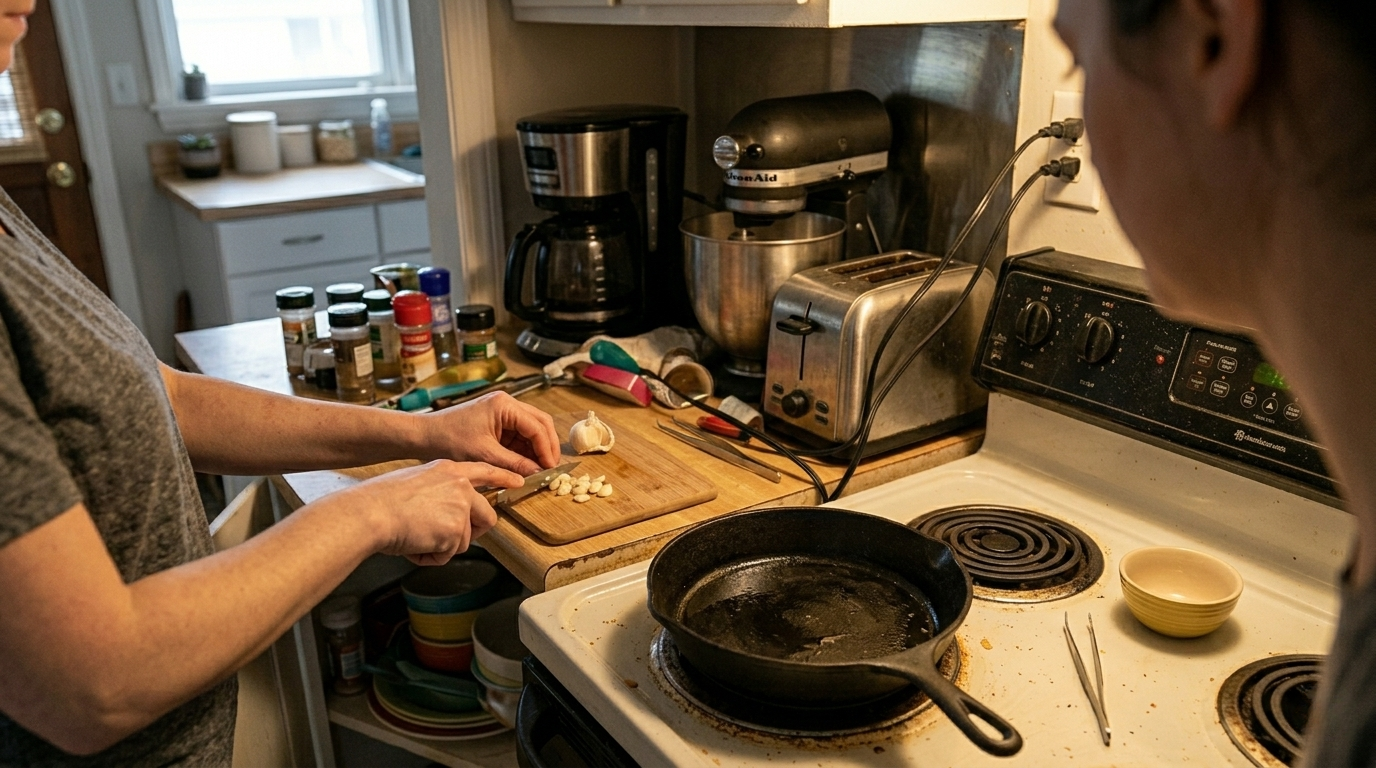
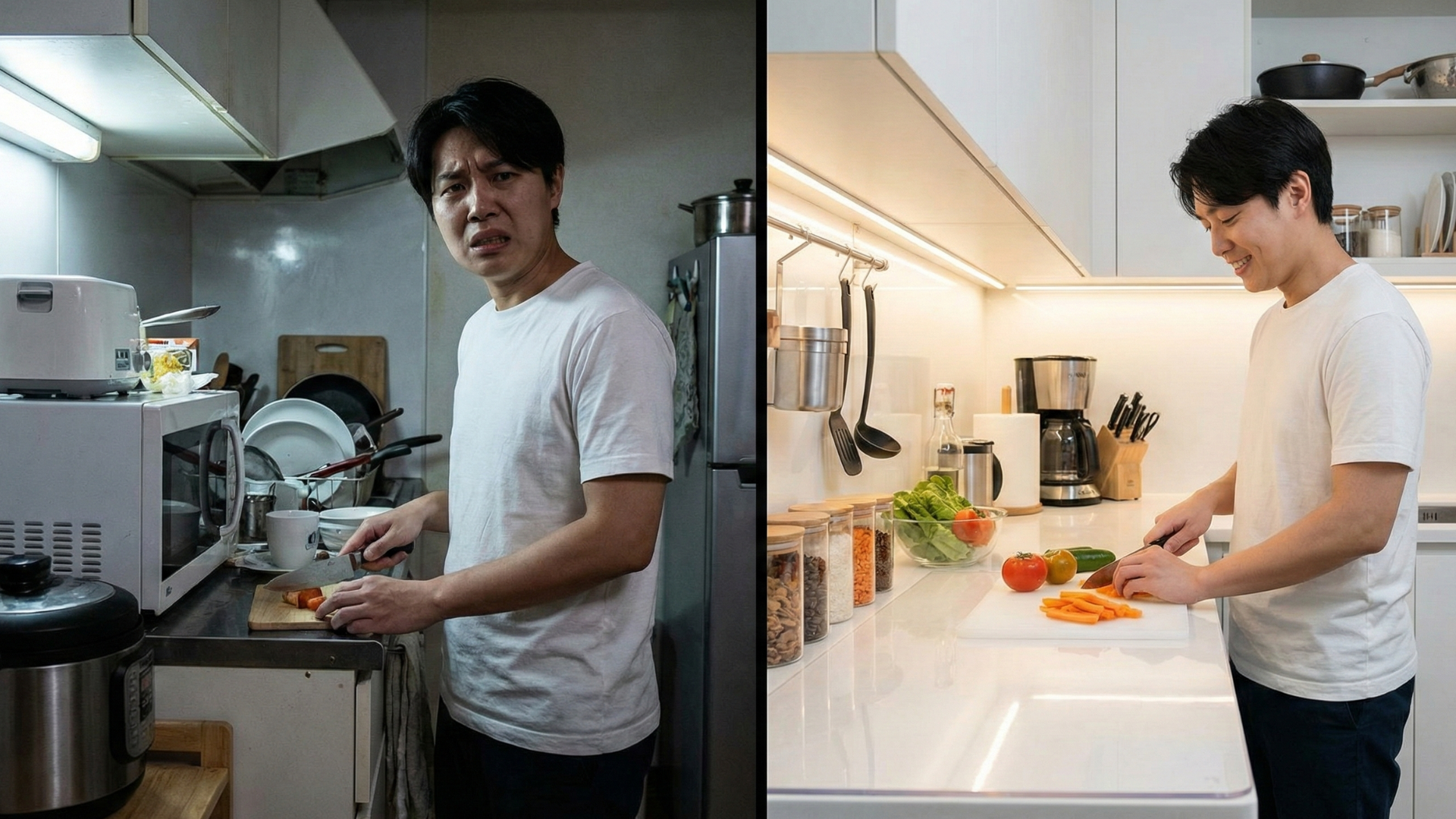
Spotless kitchens look beautiful in magazines. They’re also slower to cook in than kitchens with some working mess. The Instagram-perfect kitchen with empty counters, hidden appliances, and no visible ingredients creates friction at every cooking step. You’re constantly retrieving items from storage, clearing space to work, and putting things away mid-process to maintain the aesthetic. Working kitchens have visible tools, accessible ingredients, and surfaces that tolerate temporary mess during active cooking. This doesn’t mean filth or neglect. It means distinguishing between cooking mess and actual dirt, and understanding which cleanliness standards help cooking versus which ones slow it down. Here’s why excessive tidiness creates inefficiency, which mess is actually productive, and how to maintain a kitchen that’s clean enough without being so pristine it’s dysfunctional. Empty Counters Force Constant Retrieval The design aesthetic of clear counters looks stunning. It’s terrible for cooking efficiency. Countertop appliances stored in cabinets require retrieval before each use. Pulling out the blender, finding the lid, setting it up, and returning it afterward adds five minutes to every smoothie. Multiply this across multiple appliances and meals. Frequently-used items deserve counter space. Coffee maker, toaster, knife block, cutting board, and oil bottle sitting out eliminate dozens of retrieve-and-return cycles weekly. The aesthetic argument prioritizes looking at the kitchen over using the kitchen. If you cook daily, optimize for function over appearance. Guests spend minutes looking at your kitchen. You spend hours working in it. Cabinet storage for everyday items creates decision fatigue. Where did I put the pepper grinder? Which drawer has the spatulas? Visible storage eliminates these micro-decisions dozens of times daily. Different items have different storage thresholds. Stand mixer used weekly deserves counter space. Waffle iron used monthly belongs in the cabinet. The distinction is use frequency, not appearance. Empty counters serve people who cook rarely and photograph often. Working cooks need accessible tools. Cleaning While Cooking Interrupts Workflow The advice to “clean as you go” sounds efficient. It’s actually disruptive to cooking flow. Stopping mid-recipe to wash a bowl breaks concentration and momentum. You’re tracking multiple timings, temperatures, and tasks. Interrupting this mental juggling for cleanup fragments attention. Cooking requires sustained focus through multiple overlapping tasks. Pausing to wipe counters or wash dishes interrupts the cooking rhythm creating missed timings and forgotten steps. Better approach: contain mess during cooking, clean after eating. Stack used bowls in the sink. Wipe major spills that create hazards. Leave everything else until food is plated and served. The clean-as-you-go mandate assumes cooking is linear with natural pauses. Real cooking involves simultaneous management of multiple components. Cleaning interrupts this parallelism. Exception: clean during genuine downtime. While something simmers for twenty minutes, washing a few dishes makes sense. But stopping pasta-making to clean the counter actively harms cooking flow. Your kitchen can tolerate some mess for the hour you’re actively cooking. Prioritize cooking well over maintaining pristine surfaces during the process. Visible Spills Aren’t Dirty Tomato sauce splattered on the stovetop during cooking isn’t dirt. It’s evidence of cooking in progress. The obsession with immediately wiping every drip creates constant interruption. You’re stirring sauce, some splatters, you stop stirring to wipe it. Meanwhile the sauce burns because you’re cleaning instead of cooking. Splatter during cooking is temporary mess, not permanent filth. It wipes easily after cooking finishes. Stopping cooking to clean cooking mess is backwards priority. Distinguish between contamination and clutter. Raw chicken juice needs immediate cleanup preventing cross-contamination. Splattered marinara just needs wiping eventually. Cooking generates temporary mess. This is normal and acceptable. The mess serves as workspace evidence, not failure to maintain standards. Clean the splatter after the meal. While food rests or during post-dinner cleanup, wipe everything down. The splatter isn’t getting worse sitting there for thirty minutes while you finish cooking. Stop interrupting cooking to maintain aesthetics. The kitchen can look messy while you cook. That’s what kitchens do. Dish Washing Mid-Recipe Breaks Focus Recipes often instruct “wash bowl and reuse.” This sounds efficient but fragments the cooking process. Stopping to wash a bowl means leaving the stove, scrubbing the dish, drying it, and returning to cooking. This takes three to five minutes. During those minutes, something on the stove needs attention you’re not providing. Using extra bowls is more efficient than stopping to wash. Yes, you’ll wash more dishes later. But washing five bowls consecutively takes less total time than washing one bowl five separate times with interruptions between. The extra dish argument prioritizes minimal dishwashing over efficient cooking. This backwards priority sacrifices cooking quality to save one bowl. Most kitchens own enough bowls and utensils for one meal without washing mid-recipe. If you’re stopping to wash because you’ve run out of bowls, you need more bowls, not better cleaning habits. Cook first, clean after. Don’t let cleaning interrupt cooking. The dishes wait. The food on the stove doesn’t. Ingredient Containers Stay Out During Cooking Putting ingredients away between uses adds steps without benefit during active cooking. You use olive oil five times during one meal. Retrieving it from the cabinet and returning it five times adds ten trips. Leaving it on the counter during cooking eliminates unnecessary movement. The container sitting out for thirty minutes doesn’t suffer. Oil doesn’t degrade from brief counter exposure. Neither do spices, flour, or other cooking ingredients. After cooking finishes, return everything at once. One trip putting five items away beats five trips putting one item away repeatedly. This applies to tools too. The spatula used for three different cooking steps stays out until the meal completes. Washing and storing between each use is pointless efficiency theater. Kitchen efficiency favors batch actions over constant tidying. Retrieve everything needed at the start, use as needed, return everything at the end. Stop the retrieve-use-return-retrieve cycle mid-cooking. Cutting Board Cleaning Between Tasks Is Excessive Food safety guidelines create excessive cutting board washing requirements for home cooking. The warning against cross-contamination leads to washing the board between every ingredient. This creates constant interruption and generates unnecessary water and soap use. Reasonable approach:
The Pantry Organization That Stays Organized (Without Clear Containers)

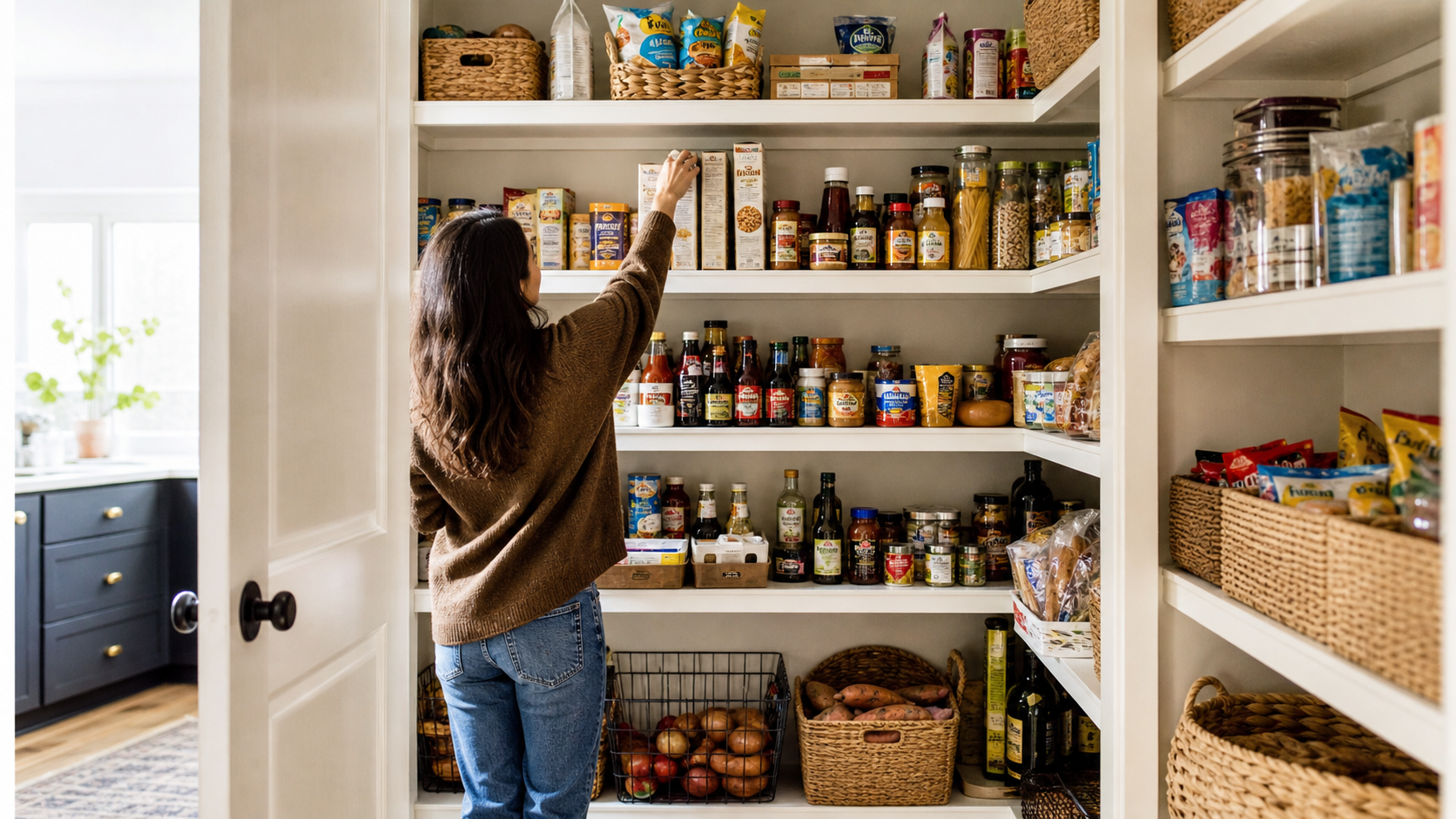
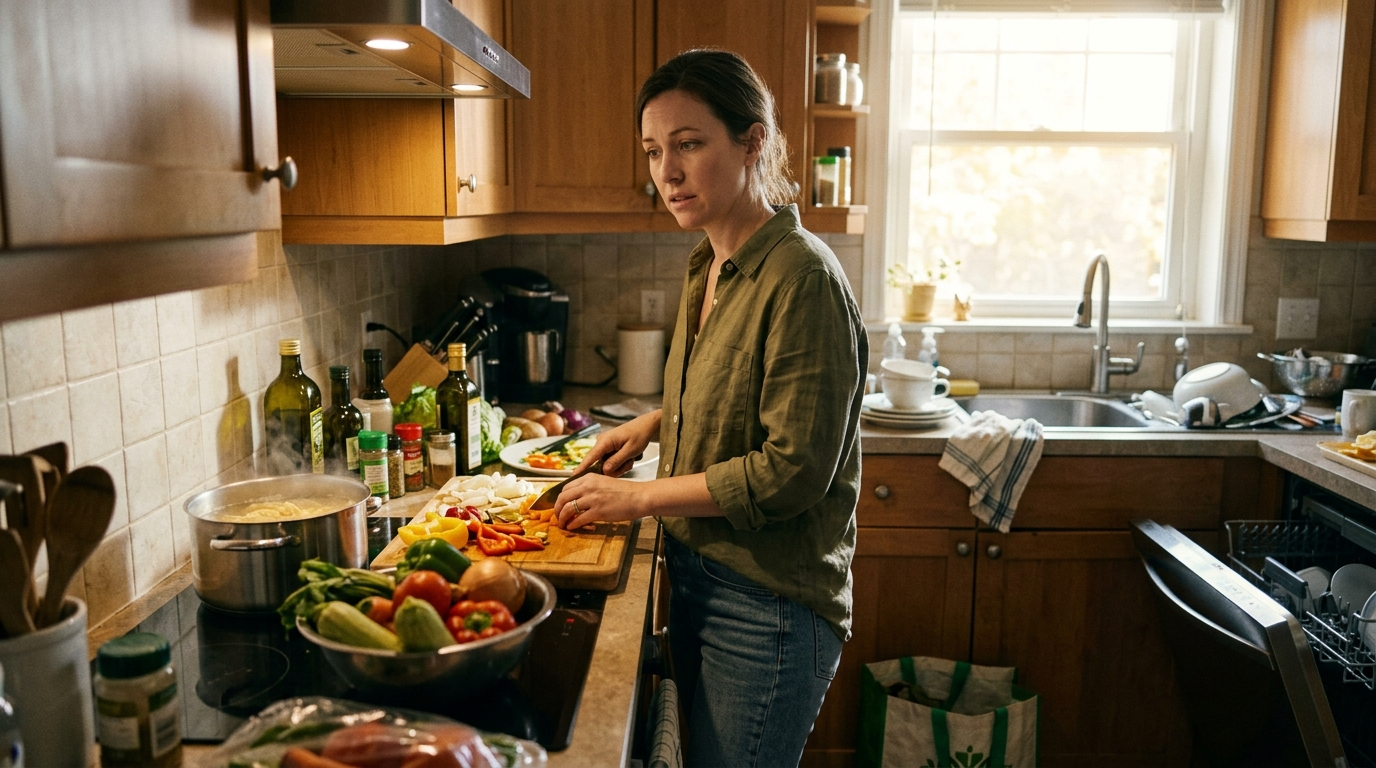
Pinterest pantries look like product photography. Everything decanted into matching clear containers. Perfect labels. Color-coordinated. Zero chance you’ll maintain it past the first grocery run. Those elaborate pantry systems fail because they fight against how you actually use food. They add steps between grocery bags and cooking. They require constant maintenance and perfect discipline. They assume you buy the same items in the same quantities every single week. Real pantry organization works with your habits, not against them. It accommodates irregular shopping, varied package sizes, and cooking patterns that change weekly. It stays organized through actual use rather than falling apart the moment reality hits. Here’s why Instagram pantries fail, what actually keeps pantries functional long-term, and how to organize food storage without buying fifty matching containers. Decanting Everything Creates More Work The aesthetic pantry photos show flour, sugar, pasta, and rice transferred from original packaging into clear containers. This looks beautiful and functions terribly. Transferring food adds steps. Instead of opening package and using contents, you’re opening package, pouring contents into container, labeling container, and discarding package. This happens for every shelf-stable item you buy. You’ll do this enthusiastically for the first shopping trip. By the third trip, half the items stay in original packaging while the other half live in containers. Now you’ve got inconsistent storage making items harder to locate. Package information matters. Cooking instructions, expiration dates, ingredient lists, and nutritional information live on original packaging. Transfer food to containers and you’re searching for discarded boxes every time you need cooking temps or allergen information. Container sizing creates problems. That flour container holds exactly one standard bag. Buy a different brand or size and it doesn’t fit. Now you’ve got partial bags plus containers creating more chaos than original packaging alone. Most people don’t use food fast enough to justify decanting. If you’re buying flour monthly, keeping it in the bag works fine. Decanting makes sense only when buying enormous bulk quantities needing portioning into smaller working amounts. The clear container aesthetic fights against practical food storage. Save your money and cabinet space. Perfect Labels Are Maintenance Hell Elaborate labeling systems require updating labels constantly as you swap between different brands, flavors, and sizes throughout the year. That beautiful chalkboard label saying “pasta” works until you’ve got three pasta shapes stored together. Now you need labels specifying penne, rigatoni, and fusilli. But next month you buy different shapes and need new labels. Printed labels from label makers look perfect initially but become outdated immediately. Product changes, you buy different varieties, labels no longer match contents. Peeling off labels and replacing them becomes a chore you’ll skip. Expiration date tracking on labels assumes you’ll update them. Write purchase dates or expiration dates on containers and you’re committing to maintenance every shopping trip. Miss one update and your system becomes unreliable. Label clarity matters more than label beauty. If you can see the contents through original packaging or clear bags, you don’t need labels. Only label truly ambiguous items where visual identification fails. The time spent labeling and updating labels exceeds the time saved from having labels. Most pantry items are visually identifiable without text labels screaming their identity. Zone Organization Beats Container Organization Instead of matching containers, organize by how you actually cook. Group items used together regardless of what containers they live in. Baking zone contains flour, sugar, baking powder, baking soda, vanilla, chocolate chips—everything you grab when baking. Doesn’t matter if they’re in original packaging, bags, or mismatched containers. They’re together when needed. Pasta zone holds pasta shapes, pasta sauce, canned tomatoes, Italian seasonings. Asian cooking zone groups soy sauce, rice vinegar, sesame oil, rice. Mexican cooking zone contains tortillas, beans, salsa ingredients, taco seasonings. Zone organization works with how you think while cooking. You’re not thinking “I need something from the ‘grains’ category.” You’re thinking “I’m making stir-fry.” Grouping Asian ingredients together supports this thought process. Zones accommodate varied packaging without looking chaotic. Bottles, boxes, bags, and cans sitting together make sense when they’re all part of taco night even if they don’t match aesthetically. Adjusting zones happens naturally as your cooking evolves. Start making more Indian food and create an Indian zone. Stop baking regularly and the baking zone shrinks. Zones adapt to your changing habits without requiring new containers. The zone approach focuses on function over form. It’s less photographable but more usable. Visibility Matters More Than Uniformity You’ll use what you can see. Hidden food gets forgotten and wasted regardless of how perfectly organized the hiding system is. Deep shelves create visibility problems. Items at the back disappear behind front items. Out of sight means out of mind and eventual expiration. Single-row depth prevents hiding. Shallow shelves where everything sits in one row guarantee visibility. Every item remains visible without moving other items. Risers and tiered organizers work when deep shelves can’t be avoided. Stair-step arrangement brings back items forward making them visible despite shelf depth. Clear front containers help only if you can actually see their contents. Containers buried behind other containers provide no visibility advantage over opaque packaging. Vertical space matters for visibility. Tall items block short items. Store tall items toward the back or sides, short items toward the front where you can see them over taller neighbors. The most organized pantry with perfect containers still fails if you can’t see what you have. Visibility prevents buying duplicates of items already owned and ensures food gets used before expiring. Inventory Systems Nobody Maintains Pantry inventory lists promise to track what you have and what needs restocking. In reality, nobody updates them consistently enough to remain accurate. The inventory list works perfectly until the first time you grab something without updating the list. Once the list becomes even slightly inaccurate, trusting it becomes impossible. Multiple household members doom inventory systems. You track items carefully. Your partner grabs pasta without noting it. The list says you have pasta. You don’t have pasta. The system has failed. Scanning apps and smart

Your Sink Is in the Wrong Spot (And Why It Matters)

Most kitchens place the sink under a window for the view. This positioning ignores how you actually cook and creates workflow problems you’ve adapted to without realizing they’re problems. The sink-under-window convention comes from pre-dishwasher era when washing dishes meant standing at the sink for extended periods. A window view made the tedious task more bearable. Modern kitchens inherited this layout without questioning whether it still makes sense. Your sink location affects cooking efficiency more than almost any other kitchen design choice. Wrong placement adds steps, creates awkward reaches, and forces inefficient movement patterns during food preparation. Here’s why standard sink placement causes problems, where sinks should actually go based on cooking workflow, and what you can do about your existing kitchen without renovating. The Window Wastes Your Best Counter Space Windows occupy prime real estate in kitchens—exterior walls with natural light. Dedicating that space to a sink means your brightest, most pleasant kitchen area gets used for dish washing instead of food preparation. Natural light matters for detailed work like chopping vegetables, reading recipes, or plating food. The window area provides the best natural illumination in the kitchen. Putting the sink there means you’re doing dishes in the best light while prepping food in dimmer interior spaces. This backwards priority wastes the window location on tasks that don’t require good lighting. Counter space beside window-mounted sinks often ends up narrow and awkward. Window placement constraints leave minimal workspace flanking the sink, creating cramped prep areas. The view argument assumes you spend significant time staring out windows while doing dishes. With modern dishwashers, hand-washing time is minimal. You’re not standing at the sink long enough to justify sacrificing prime counter real estate for the view. Better window use would be placing your primary prep area there—cutting board, ingredient staging, detailed work that benefits from natural light. Save the sink for interior wall placement where windows don’t matter. Sink-to-Stove Distance Creates Unnecessary Walking Standard kitchen layouts often place sinks far from stoves because window locations dictate sink placement rather than cooking workflow dictating design. Think about cooking tasks requiring both sink and stove: draining pasta, transferring parboiled vegetables, filling pots with water, rinsing ingredients mid-cooking. Each task involves carrying heavy, hot, or wet items between sink and stove. Distance between these two workstations multiplies throughout cooking. A recipe requiring five trips between sink and stove in a poorly-designed kitchen might need ten steps per trip. That’s fifty extra steps for one meal. Water spills happen during sink-to-stove transfers. Carrying full pots across the kitchen drips water on floors creating slip hazards and mess. Heavy pot handling over distance strains arms and creates dropping risk. A full stockpot weighs significantly. Carrying it ten feet versus three feet matters for safety and effort. Ideal sink-to-stove distance measures three to six feet. This range allows easy transfer without excessive walking while providing enough separation that sink splashes don’t reach the stovetop. Many kitchens exceed this distance by placing sinks on opposite walls or far corners from stoves. The extra steps add up over years of daily cooking. You’re Prepping in the Wrong Location Most people prep food wherever counter space exists, not where prep should logically happen based on cooking workflow. Prep happens between ingredient retrieval (refrigerator) and cooking (stove). The prep area should sit geographically between these two points creating logical left-to-right or right-to-left workflow. Many kitchens force prep in locations requiring backtracking. You grab ingredients from the refrigerator, walk to the sink area to prep, then walk back past the refrigerator to reach the stove. This backwards flow wastes motion. The sink attracts prep work because it’s where you wash vegetables and dispose of scraps. But using the sink as your prep center puts you in the wrong location relative to refrigerator and stove. Ideal prep location sits between refrigerator and stove, with the sink accessible but not central. You grab ingredients, prep them while moving toward the stove, and cook. Linear workflow without backtracking. Current kitchen layouts often create triangular movement patterns—refrigerator to sink to stove and back—instead of efficient linear flow. The triangle adds unnecessary distance to every cooking task. Observe your own cooking movement. If you’re constantly walking back and forth across the kitchen rather than moving in one general direction from ingredient storage to cooking, your layout forces inefficient patterns. The Dishwasher Dictates More Than You Think Dishwasher placement affects kitchen workflow beyond just dish loading. It determines where clean dishes get stored and how post-cooking cleanup happens. Dishwashers installed far from dish storage cabinets create extra steps during unloading. You’re walking across the kitchen repeatedly carrying plates and glasses to their storage locations. Logical dishwasher placement sits adjacent to dish storage cabinets. Open dishwasher, transfer dishes directly to nearby cabinets. Minimal walking during unloading. Many kitchens place dishwashers next to sinks (logical for plumbing) but put dish storage on the opposite side of the kitchen (illogical for workflow). This split creates unnecessary unloading distance. The dishwasher also affects cleanup workflow. Scraping plates and loading the dishwasher works best when the dishwasher sits near where you eat, not necessarily near where you cook. Some kitchens benefit from dishwasher placement between cooking area and dining area—convenient for both cooking cleanup and dish loading from dining table. This middle-ground location serves both functions. Standard kitchen design puts dishwashers beside sinks without considering whether sink location makes sense for overall dish workflow. The dishwasher follows the sink regardless of whether that placement is optimal. Counter Depth Matters More Than Length Kitchens emphasize counter length—how many linear feet of counter space exists. But counter depth determines usability more than length. Standard counter depth measures 24-25 inches from wall to edge. This depth barely accommodates cutting board, ingredient bowls, and working space simultaneously. Deep counters (30+ inches) provide adequate working space for multiple tasks. You can stage ingredients behind your active cutting board without things falling off the back edge. Shallow counters force choosing between tool placement. The cutting board occupies most

Why Your Kitchen Layout Makes Cooking Harder

You’ve got decent knives, good pans, working appliances. You follow recipes carefully. Yet cooking still feels awkward and inefficient. The problem might not be your skills or equipment. It might be your kitchen layout forcing you to walk too much, reach too far, and interrupt your workflow constantly. Most home kitchens weren’t designed by people who cook seriously. They were designed to look good in real estate photos and maximize cabinet storage. The result is layouts that create unnecessary steps, dangerous reaches, and workflow interruptions. Here’s what makes cooking harder in poorly-designed kitchens, why standard layouts ignore actual cooking needs, and what you can fix without renovating. The Refrigerator Is Too Far From Everything Walk into most kitchens and the refrigerator sits at one end while the stove sits at the opposite end. This creates exhausting back-and-forth trips every time you cook. Think about a typical cooking sequence. Retrieve vegetables from refrigerator, walk to sink to wash them, walk to cutting board to chop them, walk back to refrigerator for protein, walk to stove to cook. You’ve crossed the kitchen five times before cooking even starts. Professional kitchens cluster refrigeration near prep areas. Home cooks walk marathons because refrigerators get placed based on cabinet layouts and electrical outlet locations, not cooking workflow. Each unnecessary trip adds time and disrupts focus. You’re mentally tracking cooking progress while physically retrieving ingredients across the room. This divided attention leads to mistakes like overcooked onions or forgotten ingredients. The refrigerator-to-prep-to-stove triangle should be tight. Ideal distance totals 12-25 feet for all three legs combined. Many home kitchens exceed this by placing refrigerator far from primary work areas. If you can’t move your refrigerator, adapt your workflow. Stage all ingredients on counter near stove before starting to cook, eliminating mid-cooking refrigerator trips. The Sink Isn’t Where You Actually Prep Standard kitchen design puts the sink under a window for aesthetic reasons. This forces you to prep food wherever counter space exists, which often isn’t near the sink. Washing vegetables at the sink then carrying them across the kitchen to cutting board creates dripping mess. Chopping produces scraps that need disposal, requiring trips back to sink or trash. The sink should sit adjacent to your primary prep area, not isolated in its own zone. Professional cooks keep prep within arm’s reach of water and waste disposal. Many kitchens have ample counter space beside the stove but minimal space beside the sink. This backwards priority means you’re prepping far from water source then walking ingredients to heat source. Deep sinks create ergonomic problems too. Reaching into deep basin to wash large items strains your back. Shallow prep sinks or dual-basin configurations work better for actual cooking tasks. Consider adding a cutting board that fits over your sink if counter space beside sink is limited. This creates temporary prep area directly over water and waste disposal. Your Stove Sits in a Corner or Against a Wall Stoves placed in corners or tight against walls limit access and create dangerous reaching angles over active burners. Corner stoves force you to reach across multiple burners to access back burners. This puts your arm over open flames or hot pots every time you stir something cooking at the back. Wall-mounted stoves without adequate side clearance mean you’re reaching from one direction only. Professional ranges have approach space from multiple sides allowing safer access. The range hood’s positioning matters too. Low hoods help ventilation but reduce visibility and access to back burners. You’re cooking half-blind. Inadequate counter space flanking the stove creates nowhere to set hot pans when removing them from burners. You’re carrying hot cookware across the kitchen searching for landing space. Ideally, stoves have 15-18 inches of counter space on at least one side, preferably both sides. This provides pot-setting space and ingredient staging area within arm’s reach while cooking. If your stove lacks side counter space, add a rolling cart positioned beside it during cooking. This temporary surface provides the landing zone and staging area the permanent layout omits. Cabinet Storage Ignores Cooking Frequency Most kitchens dedicate prime real estate to items used rarely while forcing frequently-used items into inconvenient locations. Pots and pans belong near the stove. Yet many kitchens store them in cabinets across the room or in lower cabinets requiring bending and digging. Meanwhile, fancy serving platters used twice annually occupy prime locations. Spices should live near cooking area. Common kitchen layouts put spice storage far from stove, interrupting cooking flow every time you need to season food. Everyday dishes and glasses should be near dishwasher for easy unloading. Storing them far away adds steps to post-cooking cleanup. The “work triangle” concept (sink-stove-refrigerator) addresses appliance placement but ignores storage. You can have a perfect triangle yet still walk unnecessarily if your storage doesn’t support your workflow. Reorganize cabinets based on use frequency rather than matching dish sets or traditional storage conventions. Daily-use items get prime real-estate. Occasional-use items get less convenient storage. Upper cabinets within arm’s reach should hold items you grab while cooking: oils, vinegars, frequently-used spices, go-to pans. Lower cabinets work for items retrieved during prep: mixing bowls, baking sheets, storage containers. Counter Space Isn’t Continuous Broken counter runs interrupted by appliances or sink create workflow problems requiring shifting food and equipment between disconnected surfaces. You need continuous counter space for multi-step tasks. Kneading bread dough, rolling pasta, or arranging ingredients for complex recipes requires uninterrupted work surface. Many kitchens break counter runs with range placement, creating two separate prep zones instead of one continuous surface. This forces choosing which side to work on rather than spreading out naturally. Small counter segments between appliances become dead zones too small for actual work. That 8-inch gap beside the stove holds dish soap but can’t accommodate cutting board or mixing bowl. Island or peninsula additions help only if they’re positioned within the work triangle. Islands far from primary work area become overflow surfaces that don’t integrate into cooking workflow. Minimum useful counter space measures at

Why Your Kitchen Makes Cooking Harder Than It Should Be

Cooking difficulty often gets attributed to lack of skill or time when the actual problem is a kitchen setup that creates unnecessary obstacles during routine tasks. Poorly arranged work zones, inadequate counter space, inconvenient storage placement, and missing basic tools all add friction to cooking that has nothing to do with recipe complexity or culinary ability. These kitchen design and organization issues accumulate into significant frustration that makes cooking feel harder than the recipes themselves warrant. When preparing dinner requires walking back and forth across the kitchen repeatedly, digging through crowded cabinets for basic items, and working in cramped spaces without room to prep ingredients, the cooking process becomes unnecessarily exhausting regardless of what you’re making. The challenge is recognizing that kitchen setup problems are fixable rather than permanent conditions you must accept. Many cooking frustrations stem from correctable organizational issues, missing equipment, or workflow inefficiencies rather than from cooking being inherently difficult or your abilities being insufficient. Understanding which kitchen factors create unnecessary difficulty helps you identify and fix problems that genuinely impede cooking rather than just trying to cook better in a space working against you. Your Counter Space Doesn’t Actually Function Many kitchens have reasonable total counter area but almost none of it remains usable for actual food preparation because permanent items occupy nearly all available space. Small appliances crowd counters leaving minimal prep space. The coffee maker, toaster, stand mixer, knife block, utensil holder, and various other items consume counter real estate permanently, leaving you perhaps one small area for cutting boards and ingredient prep. Corner spaces go unused because they’re awkward to access and items placed there become semi-permanent obstacles. Counter corners typically collect things that then never move, effectively removing that space from useful circulation. Counter space near the stove gets occupied by decorative items, spice racks, or utensil holders that could be stored elsewhere. The most valuable prep space—right next to where you’re cooking—often isn’t available for staging ingredients because other items live there. Working in remaining small spaces forces overlapping tasks. You chop vegetables on a cutting board, but then have nowhere to put the cutting board when you need counter space for something else. You play a constant shell game moving items around to free up small work areas. The solution isn’t necessarily more counters but rather clearing current counters of items that don’t need permanent placement. Store infrequently used appliances in cabinets or pantries. Use wall-mounted solutions for utensils and knives. Create actual empty counter space where you can work rather than accepting that counters are for storage. Functional counter space means empty space available when you need it, not total counter area that’s perpetually occupied. Everything You Need Is in the Wrong Place Kitchen organization that doesn’t match cooking workflow creates constant unnecessary movement and interruptions during food preparation. Pots and pans stored far from the stove force repeated trips across the kitchen. Every time you need a different pan, you walk away from the cooking area, retrieve the pan, and return—multiplied across every cooking session for years. Spices stored in cabinets above eye level require reaching, searching, and often climbing on step stools to access items you use constantly. Cooking that uses four different spices means four separate interruptions to find and retrieve seasonings you can’t see clearly. Utensils kept in drawers across the kitchen from the stove mean abandoning the cooking area repeatedly for spatulas, tongs, spoons, and other tools needed during active cooking. The constant back-and-forth wastes time and breaks cooking flow. Cutting boards stored under the sink or in a cabinet nowhere near food prep areas create extra steps before you can even start cooking. Something you use in nearly every cooking session shouldn’t require retrieval from an inconvenient location. Oils, vinegars, and frequently used condiments stored in various cabinets rather than grouped near cooking areas force hunting for items mid-recipe when you’re trying to focus on cooking technique and timing. The solution involves moving items to logical locations based on where and how you use them. Store pots near the stove, utensils within reach of cooking areas, spices where you can see and grab them easily, and cutting boards where you do prep work. The specific storage location matters less than matching storage to usage patterns. You’re Missing Basic Equipment That Would Help Many cooking struggles stem from not having fundamental tools that make cooking tasks easier rather than from the tasks being inherently difficult. Sharp knives make dramatic differences in food prep speed and safety. Dull knives require force and create frustration while sharp knives cut effortlessly and precisely. If chopping vegetables feels like a chore, the knife is probably the problem, not your technique. Adequate cutting boards provide stable prep surfaces sized appropriately for the task. Trying to chop ingredients on a cutting board too small for the food creates mess and inefficiency. Having proper-sized boards for different tasks reduces frustration. Bench scrapers or bowl scrapers move chopped ingredients from cutting board to bowl efficiently instead of using knife blades or your hands to gather and transfer food. This simple tool speeds prep work significantly. Kitchen scissors handle many tasks faster than knives—trimming herbs, cutting through packaging, portioning raw chicken, snipping bacon. Not having scissors means using knives inefficiently for tasks scissors handle better. Instant-read thermometer eliminates guessing about meat doneness. Constantly overcooking or undercooking proteins because you’re guessing when they’re done creates frustration that a simple thermometer solves. Mixing bowls in varied sizes provide proper containers for different quantities rather than making do with bowls too small or wastefully large. Having the right size bowl for the task at hand makes mixing and prep work easier. The missing equipment issue isn’t about needing specialty gadgets but rather lacking basic tools that genuinely simplify routine tasks. These fundamental items aren’t expensive but their absence makes cooking harder than necessary. Your Lighting Is Completely Wrong Inadequate or poorly positioned lighting makes every kitchen task more difficult and less safe without you necessarily