
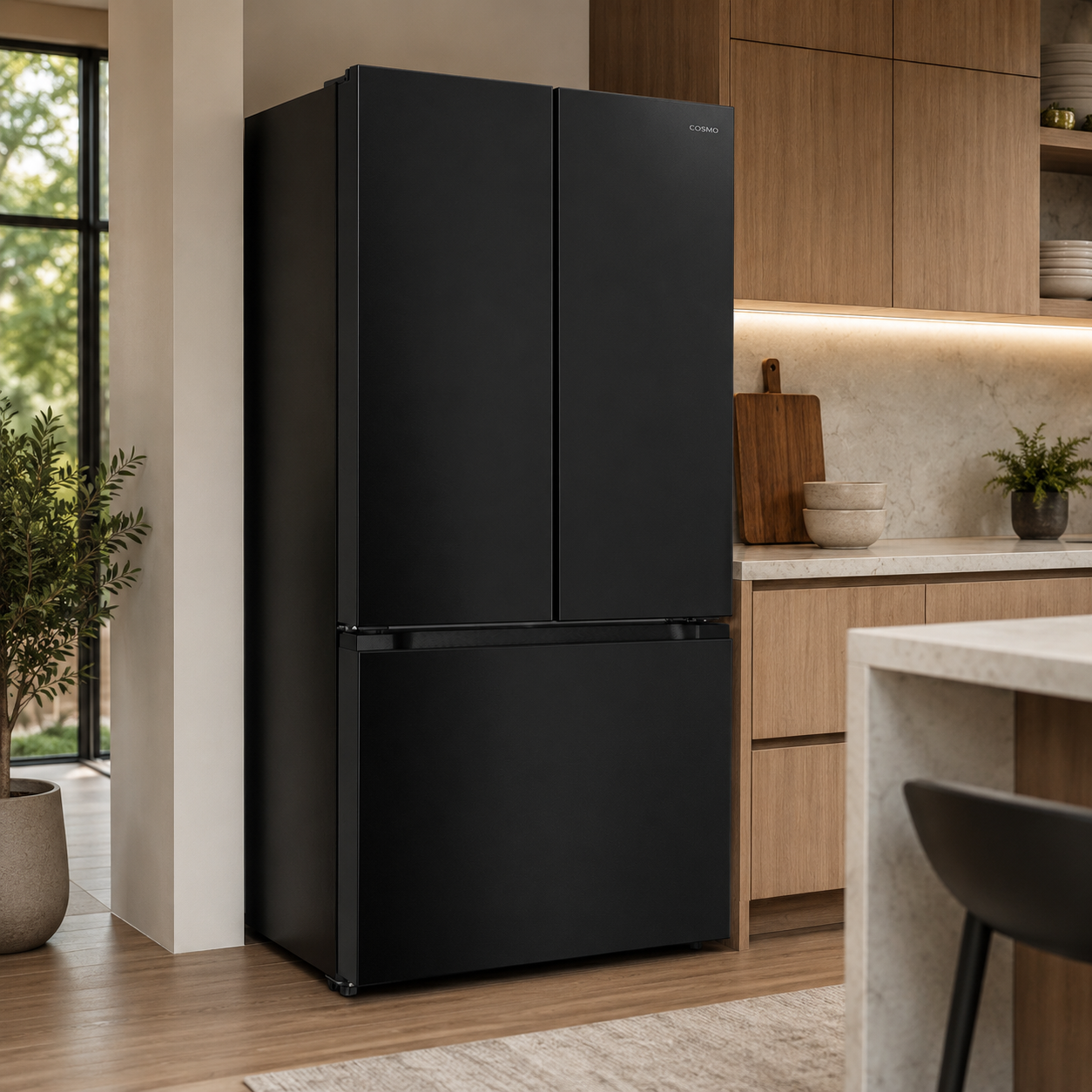
The COS-RFFV283RBK: 27.4 Cu. Ft. French Door Refrigerator in Matte Black
French door refrigerators with internal water dispensers maintain seamless exterior aesthetics while providing filtered water access inside the refrigerator compartment. The COS-RFFV283RBK stores 27.4 cubic feet across upper French door refrigerator and lower freezer drawer. Matte black finish, recessed handles, and hidden hinges create contemporary appearance while digital controls, LED lighting, and crescent ice maker handle functionality. Here’s what this refrigerator delivers for kitchens wanting substantial storage capacity with modern matte black aesthetics and internal water dispensing. 27.4 Cubic Feet Total Capacity Substantial storage splits between 18.6 cubic feet fresh food capacity and 8.8 cubic feet freezer capacity accommodating family grocery needs across both compartments. Fresh food capacity of 18.6 cubic feet provides generous refrigerator space. The volume handles weekly grocery shopping for families without running out of refrigerator room mid-week. Freezer capacity of 8.8 cubic feet offers adequate frozen storage. The dedicated freezer drawer holds frozen meals, ice cream, frozen vegetables, and bulk frozen items. French door configuration positions refrigerator at eye level with freezer below. You access refrigerated items most frequently, so placing them at comfortable height reduces bending. Wide shelves from side-by-side door opening accommodate large platters, pizza boxes, and sheet cakes that don’t fit in traditional narrow refrigerators. The 27.4 cubic feet total capacity provides substantial storage suitable for families requiring significant refrigerator and freezer space in single appliance. Matte Black Fingerprint-Resistant Finish Contemporary non-reflective black exterior resists fingerprints and smudges creating low-maintenance surface that maintains appearance without constant cleaning. Matte black construction provides dark finish without glossy shine. The surface creates sophisticated contemporary appearance coordinating with modern kitchen design trends. Fingerprint resistance exceeds traditional stainless steel. The matte surface shows smudges and fingerprints significantly less than polished metal or glossy black finishes. Smudge resistance from specialized finish reduces daily cleaning maintenance. The surface tolerates hand contact without showing every touch. Design coordination with black appliance trends allows matching refrigerator to black ranges, dishwashers, or microwaves. The cohesive appearance creates unified kitchen aesthetic. The matte black finish provides contemporary appearance with practical fingerprint and smudge resistance reducing cleaning frequency compared to traditional finishes. Internal Water Dispenser Water dispenser located inside refrigerator compartment maintains clean exterior appearance while providing filtered water access without opening doors to external dispenser. Internal placement keeps refrigerator exterior seamless without protruding dispenser disrupting door surface. The clean front creates streamlined contemporary appearance. Accessing water requires opening refrigerator door. This differs from external dispensers accessible without door opening but maintains aesthetic simplicity. Filtered water from built-in system (specific filtration type not mentioned but typical refrigerator filters reduce chlorine taste and common contaminants) improves water taste compared to straight tap water. Filter replacement (schedule and filter type not specified but typically 6-month replacement intervals) maintains water quality. Regular filter changes ensure consistent filtration performance. The internal water dispenser provides filtered water access while maintaining seamless exterior appearance without external dispenser components. Recessed Door Handles and Hidden Hinges Flush-mounted handles and concealed hinge hardware create streamlined profile without protruding elements disrupting clean refrigerator appearance. Recessed handles sit flush with door surface rather than protruding outward. The design provides grip access without handles extending into kitchen space. Space-saving from recessed handles benefits kitchens with tight clearances. Traditional protruding handles require additional clearance space that recessed designs eliminate. Hidden hinge mechanism conceals door mounting hardware. The hinges attach internally creating smooth exterior profile without visible hardware. Contemporary aesthetic from flush handles and hidden hinges creates modern appliance appearance emphasizing clean lines and minimal visual disruption. The recessed handles and hidden hinges provide streamlined appearance reducing visual and physical protrusion while maintaining door operation functionality. Slide-Out Freezer Drawer with Crescent Ice Maker Pull-out drawer configuration provides top-down freezer view and organization while built-in ice maker produces crescent-shaped ice with removable storage bin. Slide-out freezer drawer extends fully providing complete freezer access. The drawer configuration shows all contents from above eliminating searching through stacked items on shelves. Organization ease from drawer format allows arranging items in visible layers. You see everything without moving items blocking other items. Crescent ice maker produces curved ice pieces. The crescent shape (also called half-moon ice) prevents clumping and dispenses easily compared to full cube shapes. Removable ice bin allows carrying ice to serving areas or emptying for cleaning. The bin lifts out without tools for convenient access. Automatic ice production eliminates manual ice tray filling. The ice maker continuously produces ice refilling the bin as ice gets used. The slide-out freezer drawer with crescent ice maker provides accessible frozen storage and continuous ice supply in convenient removable bin. Adjustable Shelves and Enclosed Crisper Drawers Customizable interior organization through movable shelf positions and humidity-controlled produce storage accommodates varied food sizes and extends vegetable freshness. Adjustable fresh food shelves reposition vertically accommodating tall items. The flexibility adapts refrigerator interior to changing storage needs. Shelf repositioning allows creating space for birthday cakes, large pitchers, or tall bottles. Move shelves up or down as needed rather than working around fixed positions. Door bins provide convenient storage for condiments, bottles, and smaller containers. The bins keep frequently-accessed items within easy reach. Fully enclosed crisper drawers maintain humidity for produce storage. The enclosed design prevents moisture escape helping fruits and vegetables stay fresh longer. Separate crisper compartments allow organizing produce by type. Store vegetables requiring higher humidity separate from fruits preferring lower humidity. The adjustable shelves and enclosed crisper drawers provide storage flexibility and produce preservation through customizable organization and humidity control. Digital Touch Controls and LED Lighting Electronic temperature management and energy-efficient illumination provide precise climate control and clear interior visibility through modern control and lighting systems. Digital touch controls allow setting exact refrigerator and freezer temperatures independently. The electronic interface provides precise temperature adjustment. Separate temperature zones for refrigerator and freezer compartments maintain each section at optimal temperature for its contents. Independent control prevents compromising one zone to adjust the other. Display visibility from digital readout shows current temperature settings confirming refrigerator maintains desired climate. LED lighting throughout fresh food and freezer sections illuminates contents clearly.