food storage

The Pantry Organization That Stays Organized (Without Clear Containers)

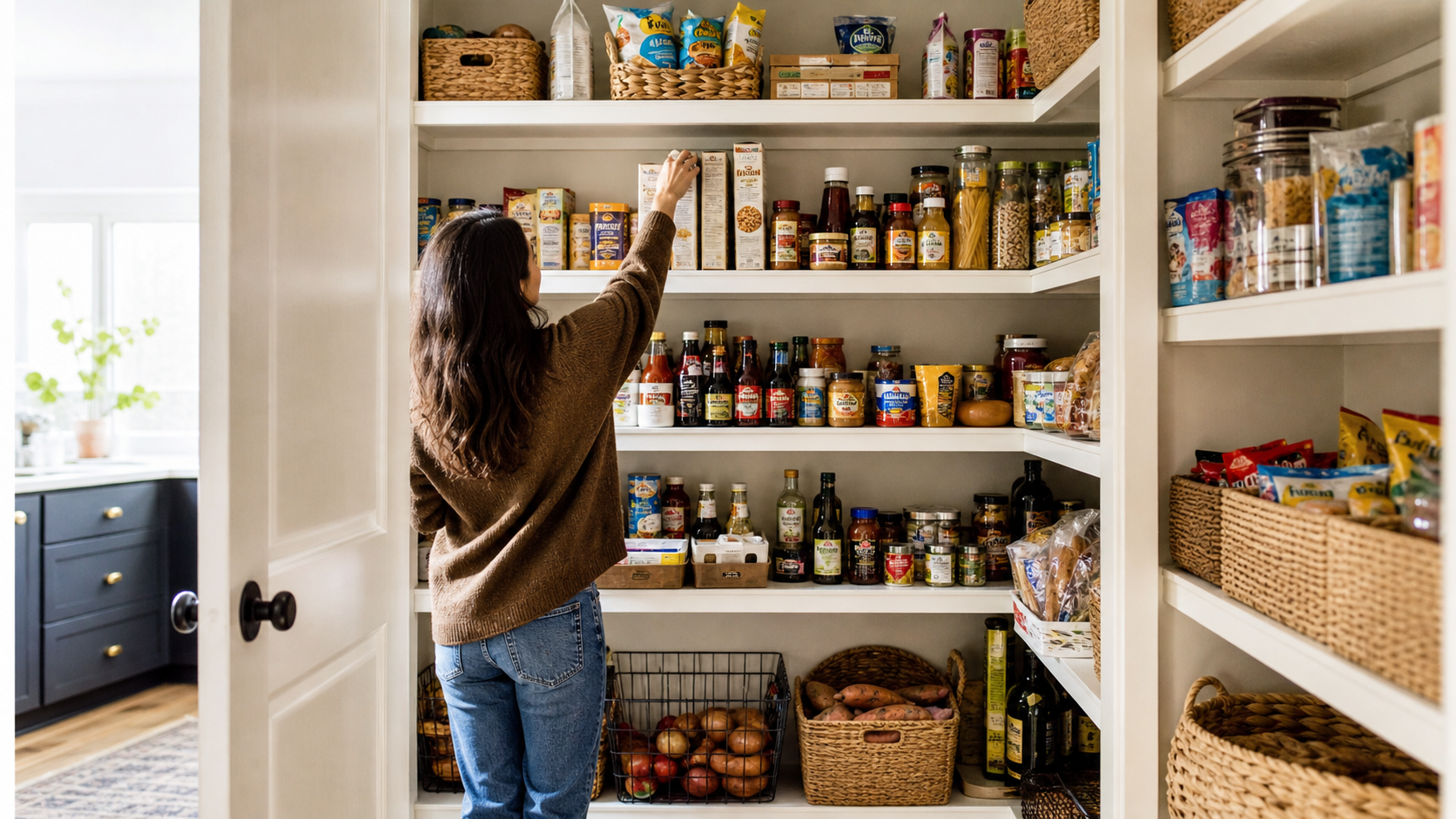
Pinterest pantries look like product photography. Everything decanted into matching clear containers. Perfect labels. Color-coordinated. Zero chance you’ll maintain it past the first grocery run. Those elaborate pantry systems fail because they fight against how you actually use food. They add steps between grocery bags and cooking. They require constant maintenance and perfect discipline. They assume you buy the same items in the same quantities every single week. Real pantry organization works with your habits, not against them. It accommodates irregular shopping, varied package sizes, and cooking patterns that change weekly. It stays organized through actual use rather than falling apart the moment reality hits. Here’s why Instagram pantries fail, what actually keeps pantries functional long-term, and how to organize food storage without buying fifty matching containers. Decanting Everything Creates More Work The aesthetic pantry photos show flour, sugar, pasta, and rice transferred from original packaging into clear containers. This looks beautiful and functions terribly. Transferring food adds steps. Instead of opening package and using contents, you’re opening package, pouring contents into container, labeling container, and discarding package. This happens for every shelf-stable item you buy. You’ll do this enthusiastically for the first shopping trip. By the third trip, half the items stay in original packaging while the other half live in containers. Now you’ve got inconsistent storage making items harder to locate. Package information matters. Cooking instructions, expiration dates, ingredient lists, and nutritional information live on original packaging. Transfer food to containers and you’re searching for discarded boxes every time you need cooking temps or allergen information. Container sizing creates problems. That flour container holds exactly one standard bag. Buy a different brand or size and it doesn’t fit. Now you’ve got partial bags plus containers creating more chaos than original packaging alone. Most people don’t use food fast enough to justify decanting. If you’re buying flour monthly, keeping it in the bag works fine. Decanting makes sense only when buying enormous bulk quantities needing portioning into smaller working amounts. The clear container aesthetic fights against practical food storage. Save your money and cabinet space. Perfect Labels Are Maintenance Hell Elaborate labeling systems require updating labels constantly as you swap between different brands, flavors, and sizes throughout the year. That beautiful chalkboard label saying “pasta” works until you’ve got three pasta shapes stored together. Now you need labels specifying penne, rigatoni, and fusilli. But next month you buy different shapes and need new labels. Printed labels from label makers look perfect initially but become outdated immediately. Product changes, you buy different varieties, labels no longer match contents. Peeling off labels and replacing them becomes a chore you’ll skip. Expiration date tracking on labels assumes you’ll update them. Write purchase dates or expiration dates on containers and you’re committing to maintenance every shopping trip. Miss one update and your system becomes unreliable. Label clarity matters more than label beauty. If you can see the contents through original packaging or clear bags, you don’t need labels. Only label truly ambiguous items where visual identification fails. The time spent labeling and updating labels exceeds the time saved from having labels. Most pantry items are visually identifiable without text labels screaming their identity. Zone Organization Beats Container Organization Instead of matching containers, organize by how you actually cook. Group items used together regardless of what containers they live in. Baking zone contains flour, sugar, baking powder, baking soda, vanilla, chocolate chips—everything you grab when baking. Doesn’t matter if they’re in original packaging, bags, or mismatched containers. They’re together when needed. Pasta zone holds pasta shapes, pasta sauce, canned tomatoes, Italian seasonings. Asian cooking zone groups soy sauce, rice vinegar, sesame oil, rice. Mexican cooking zone contains tortillas, beans, salsa ingredients, taco seasonings. Zone organization works with how you think while cooking. You’re not thinking “I need something from the ‘grains’ category.” You’re thinking “I’m making stir-fry.” Grouping Asian ingredients together supports this thought process. Zones accommodate varied packaging without looking chaotic. Bottles, boxes, bags, and cans sitting together make sense when they’re all part of taco night even if they don’t match aesthetically. Adjusting zones happens naturally as your cooking evolves. Start making more Indian food and create an Indian zone. Stop baking regularly and the baking zone shrinks. Zones adapt to your changing habits without requiring new containers. The zone approach focuses on function over form. It’s less photographable but more usable. Visibility Matters More Than Uniformity You’ll use what you can see. Hidden food gets forgotten and wasted regardless of how perfectly organized the hiding system is. Deep shelves create visibility problems. Items at the back disappear behind front items. Out of sight means out of mind and eventual expiration. Single-row depth prevents hiding. Shallow shelves where everything sits in one row guarantee visibility. Every item remains visible without moving other items. Risers and tiered organizers work when deep shelves can’t be avoided. Stair-step arrangement brings back items forward making them visible despite shelf depth. Clear front containers help only if you can actually see their contents. Containers buried behind other containers provide no visibility advantage over opaque packaging. Vertical space matters for visibility. Tall items block short items. Store tall items toward the back or sides, short items toward the front where you can see them over taller neighbors. The most organized pantry with perfect containers still fails if you can’t see what you have. Visibility prevents buying duplicates of items already owned and ensures food gets used before expiring. Inventory Systems Nobody Maintains Pantry inventory lists promise to track what you have and what needs restocking. In reality, nobody updates them consistently enough to remain accurate. The inventory list works perfectly until the first time you grab something without updating the list. Once the list becomes even slightly inaccurate, trusting it becomes impossible. Multiple household members doom inventory systems. You track items carefully. Your partner grabs pasta without noting it. The list says you have pasta. You don’t have pasta. The system has failed. Scanning apps and smart

The COS-FDR223GWSS French Door Refrigerator: 22.4 Cu. Ft. with Water Dispenser

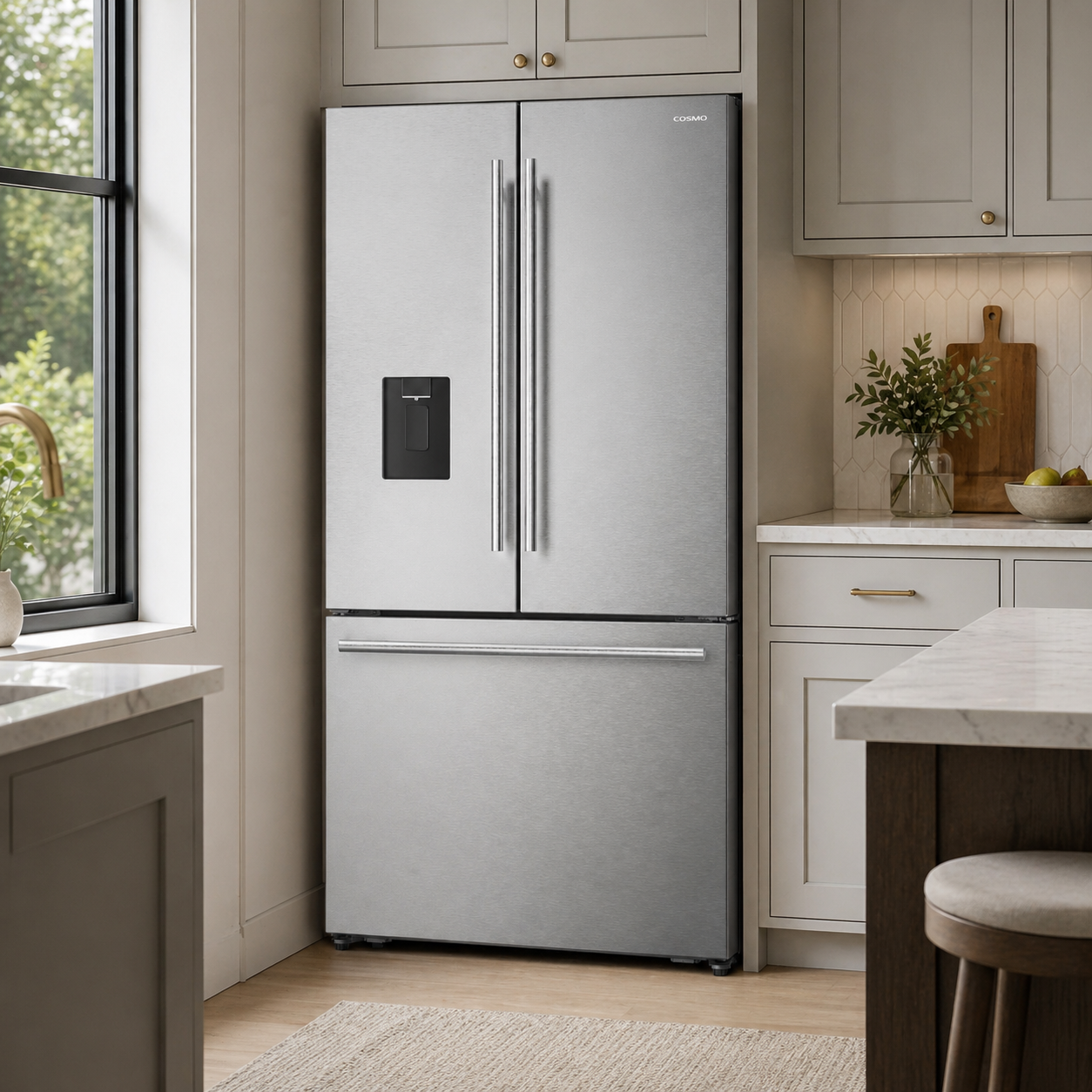
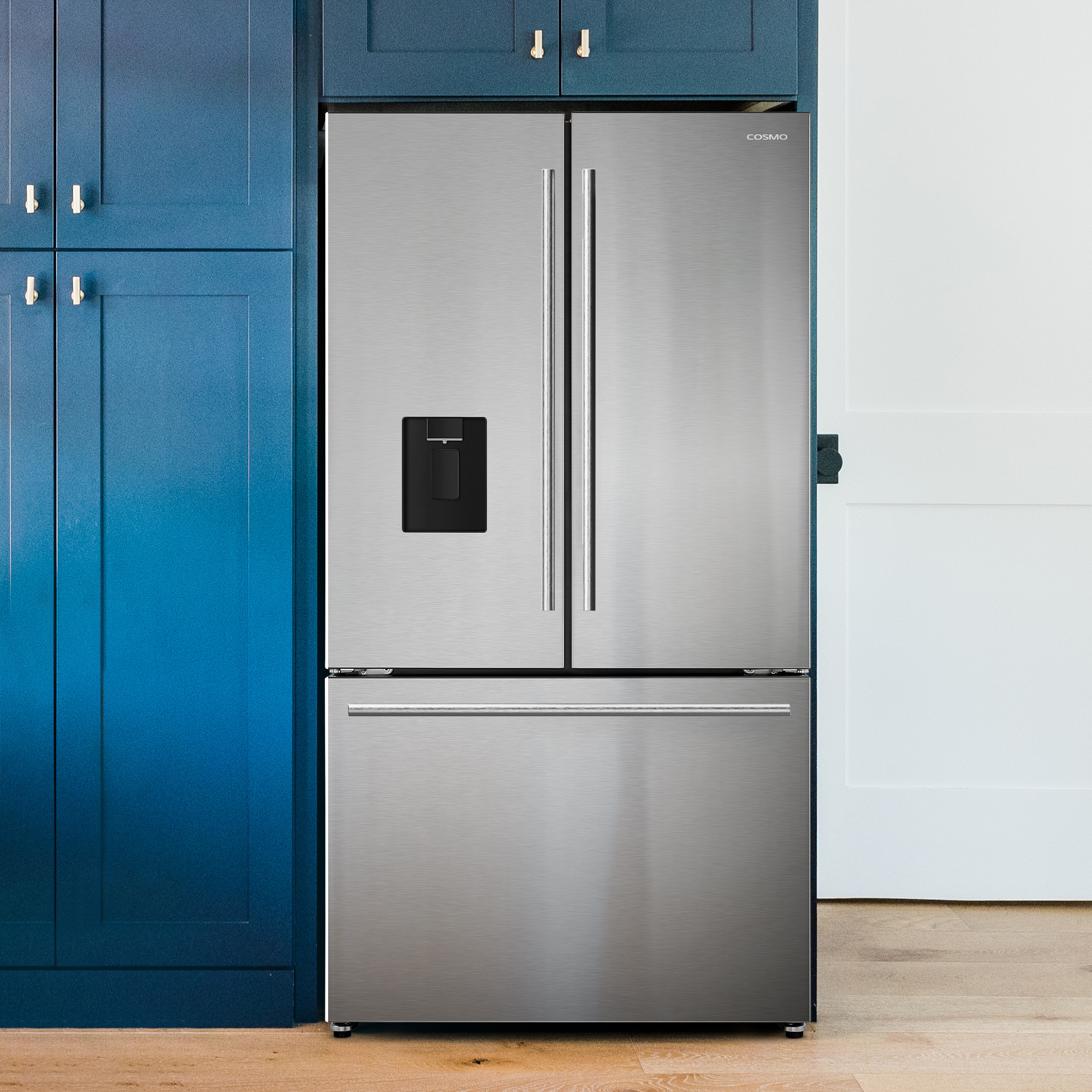
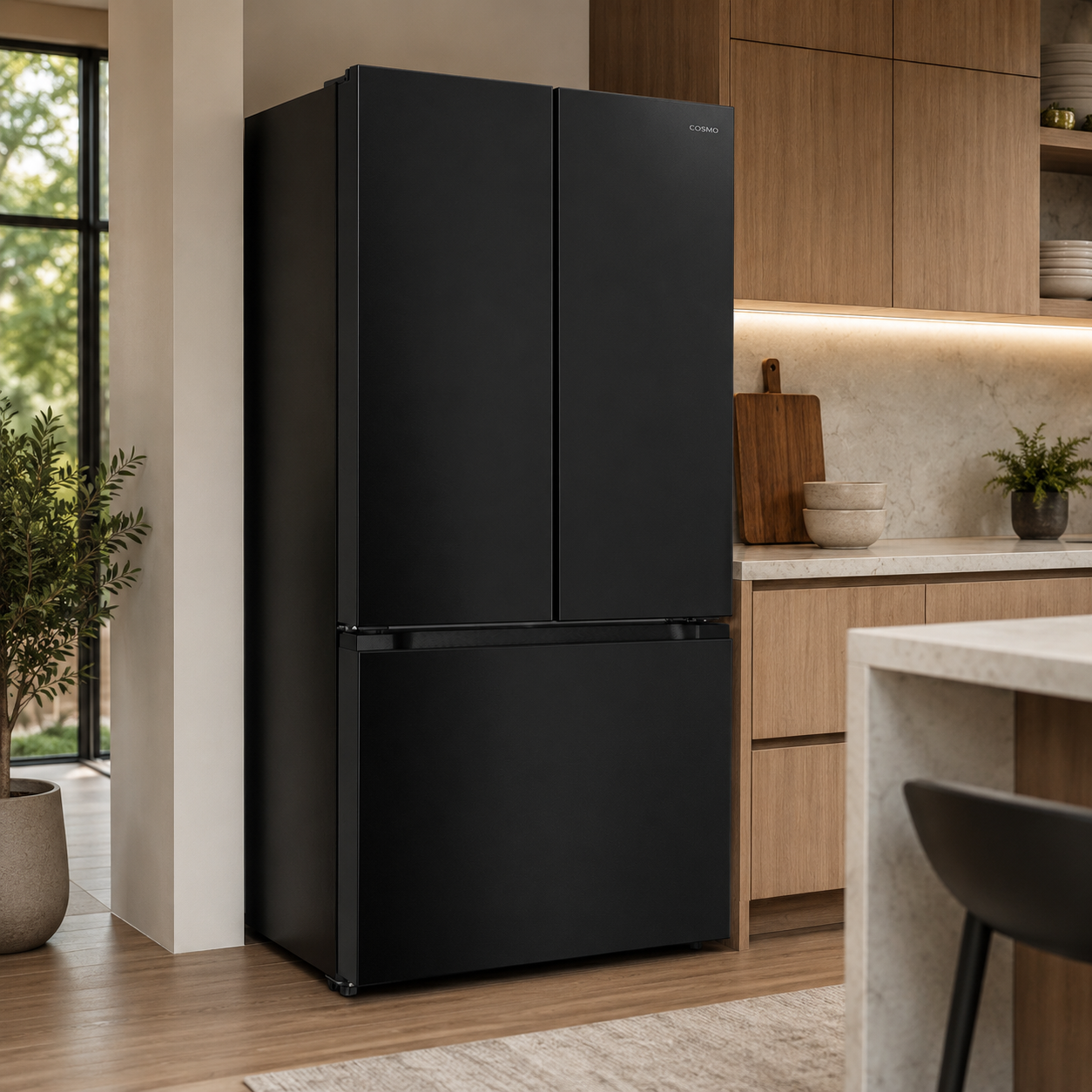
French door refrigerators with water dispensers solve the reaching-across-the-kitchen problem every time you want cold water. Built-in water access eliminates pitcher refilling and provides filtered water on demand. The COS-FDR223GWSS stores 22.4 cubic feet of food in French door configuration with upper refrigerator and lower freezer layout. Electronic temperature controls, LED lighting, and soft-close doors handle the details while you handle groceries. Here’s what this refrigerator delivers for households wanting water dispenser convenience without sacrificing storage capacity. 22.4 Cubic Feet French Door Configuration French doors open side-by-side providing refrigerator access without swinging a wide single door into your kitchen. The configuration works better in tight spaces than traditional single-door models. Capacity of 22.4 cubic feet handles typical household food storage. The volume suits families buying groceries weekly without running out of space mid-week. French door layout positions refrigerator at eye level with freezer below. You access refrigerated items most frequently, so placing them at comfortable height reduces bending. Wide shelves from side-by-side door opening accommodate large platters, pizza boxes, and sheet cakes that don’t fit in traditional narrow refrigerators. Full-width shelves maximize storage flexibility. Lower freezer drawer slides out providing top-down freezer view. The drawer configuration shows frozen items better than traditional freezer shelves. The French door configuration provides comfortable access to refrigerated items while maximizing shelf width for large items. Built-In Water Dispenser External water dispenser mounted in refrigerator door provides filtered cold water without opening the door. Fill glasses, water bottles, or cooking pots directly from dispenser. Water access convenience eliminates refrigerator-stored pitchers taking up shelf space. The built-in filtration and dispensing replaces multiple-step pitcher filling and filtering. Filtered water from built-in system (specific filtration type not mentioned but typical refrigerator filters reduce chlorine taste and common contaminants) improves water taste compared to straight tap water. Dispenser location on door exterior allows accessing water without opening refrigerator. The closed-door dispensing maintains internal temperature better than opening doors for water access. Filter replacement (schedule and filter type not specified but typically 6-month replacement intervals) maintains water quality. Regular filter changes ensure consistent filtration performance. The built-in water dispenser provides convenient filtered water access without pitcher storage or refrigerator door opening. Automatic Ice Maker Built-in ice production eliminates tray filling and freezing creating continuous ice supply for daily use without manual ice-making effort. Automatic ice maker produces ice continuously refilling storage bin as ice gets used. The automatic operation means ice is always available when needed. Ice storage capacity (specific bin size not mentioned) holds sufficient ice for typical daily household use. Larger gatherings may require advance ice production or supplemental ice. Ice production rate (specific pounds per day not mentioned but typical residential ice makers produce 3-8 pounds daily) replenishes used ice automatically. The production keeps up with moderate daily ice consumption. Ice maker operation requires water line connection to refrigerator. Professional installation ensures proper water supply hookup and leak prevention. The automatic ice maker provides continuous ice production eliminating manual ice tray filling and freezing. Electronic Temperature Controls Digital temperature management allows precise refrigerator and freezer temperature settings maintaining optimal food storage conditions through electronic monitoring. Electronic controls provide separate temperature settings for refrigerator and freezer compartments. Independent control maintains each section at ideal temperature for its contents. Digital display shows current temperature settings. The visual feedback confirms refrigerator maintains set temperature. Temperature adjustment through electronic buttons allows fine-tuning storage conditions. Adjust temperatures based on food types or seasonal needs. Consistent temperature maintenance from electronic systems preserves food quality better than mechanical thermostats. Electronic controls prevent temperature fluctuations that accelerate food spoilage. The electronic temperature controls provide precise climate management through digital adjustment maintaining optimal storage conditions in both compartments. LED Lighting and Soft-Close Doors Energy-efficient interior lighting illuminates refrigerator contents, while soft-close door mechanism prevents slamming and ensures proper sealing. LED lighting throughout refrigerator interior provides bright illumination without heat generation. LEDs last longer and use less energy than traditional incandescent bulbs. Light placement (specific locations not detailed but typically top and side lighting) illuminates shelves and drawers clearly. Good lighting helps locate items quickly reducing door-open time. Soft-close door mechanism gently pulls doors closed in final inches of closing. The assisted closing prevents door slamming and ensures doors seal properly. Proper door sealing from soft-close mechanism maintains internal temperature. Partially-open doors waste energy and allow warm air infiltration. The LED lighting and soft-close doors provide practical features improving visibility and ensuring proper door closure. Controllable Door Alarm Audible alert notifies when refrigerator doors remain open preventing temperature loss from extended door-open periods. Door alarm activates when doors stay open beyond set duration (specific time threshold not mentioned but typically 1-2 minutes). The alert reminds you to close doors preventing food spoilage. Alarm control allows adjusting sensitivity or turning alarm off when needed. The controllable feature prevents nuisance alarms during extended food loading or cleaning. Temperature protection from alarm prevents warm air infiltration during inadvertent door-open situations. The reminder helps maintain consistent internal temperature. The controllable door alarm provides temperature protection through audible reminder when doors remain open too long. Adjustable Storage and Spill-Proof Shelves Customizable interior organization accommodates varied food sizes through adjustable bins and shelves, while spill-proof glass shelves contain leaks preventing mess spread. Adjustable door bins (specific configuration not detailed) allow repositioning bin heights matching bottle and container sizes. The flexibility accommodates different product heights. Adjustable shelves provide vertical flexibility moving shelf positions based on tall items or storage needs. The customization adapts refrigerator interior to your groceries. Spill-proof glass shelves contain liquid spills preventing drips to lower shelves. The contained spills simplify cleanup limiting mess to single shelf. Durable glass shelf construction supports heavy items without flexing. The sturdy shelves handle loaded casserole dishes and full storage containers. The adjustable storage and spill-proof shelves provide organization flexibility while containing messes for easier cleanup. Making the Right Choice for Your Kitchen The COS-FDR223GWSS works for households wanting French door refrigerator with water dispenser convenience and automatic ice making in 22.4 cubic feet capacity.

Leftovers: What Actually Matters for Food Safety

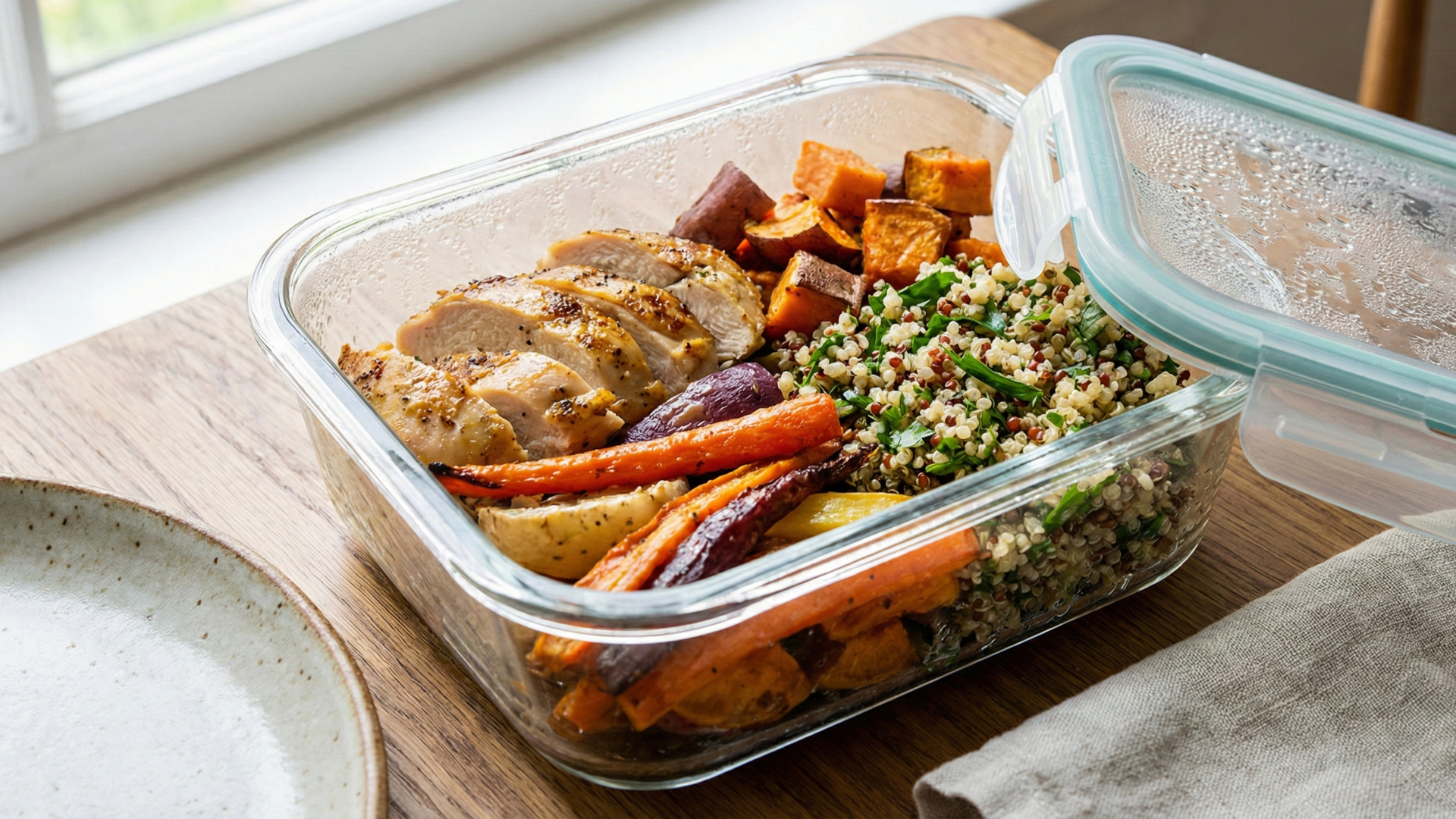
Food safety guidelines about leftovers read like legal disclaimers written by lawyers afraid of lawsuits. Discard after three days. Cool within two hours. Reheat to 165°F. Never leave at room temperature. Some of this advice matters. Much of it is excessive caution designed to protect institutions serving vulnerable populations, not guidance for healthy adults eating home-cooked food. Understanding what actually causes foodborne illness from leftovers lets you make informed decisions instead of following arbitrary rules that waste perfectly good food or create unnecessary anxiety. Here’s what actually matters for leftover safety, what’s overblown caution, and how to store and reheat leftovers without making yourself sick or throwing away edible food. The Two-Hour Rule Is About Temperature, Not Time The standard advice says food left at room temperature for more than two hours becomes unsafe. This oversimplifies what’s actually happening. Bacteria multiply rapidly between 40°F and 140°F—the “danger zone.” Food sitting in this temperature range gives bacteria time to reproduce to potentially dangerous levels. But “two hours” assumes worst-case scenarios: high bacterial load on the food initially, warm room temperature, and vulnerable populations eating it. For most situations with most foods, this timeline is conservative. Hot food cooling on the counter doesn’t spend two full hours in the danger zone. It starts at 180°F or higher and cools through the danger zone gradually. The time actually spent between 40°F and 140°F might be 30-45 minutes, not two hours. Room temperature also matters. Food cooling in a 65°F kitchen behaves differently than food cooling in an 80°F kitchen. Cooler rooms mean faster passage through the danger zone. The type of food affects risk too. High-acid foods like tomato sauce resist bacterial growth better than low-acid foods like rice. Dry foods pose less risk than moist foods. For home cooking eaten by healthy adults, letting dinner cool on the stove for an hour before refrigerating won’t kill you. Institutional guidelines assume cafeterias serving immunocompromised populations—different risk profile than your Tuesday night chicken. Use judgment. If dinner sat out for three hours on a hot summer evening, maybe skip the leftovers. If it cooled for 90 minutes in a cool kitchen and you’re healthy, you’re probably fine. The Three-Day Discard Rule Ignores Your Senses Standard guidance says discard refrigerated leftovers after three to four days regardless of how they look, smell, or taste. This is absurdly wasteful. Three to four days is conservative estimate covering worst-case scenarios with high-risk foods. Many leftovers last a week or more without safety issues. Your nose and eyes detect spoilage effectively. Off smells, visible mold, slimy texture, or color changes indicate spoilage. If leftovers look and smell normal after five days, they’re likely fine. Different foods have different shelf lives. Properly stored cooked grains can last a week. Leafy green salads wilt and become unappetizing after a day but aren’t necessarily unsafe. High-acid tomato sauce lasts longer than cream-based sauce. Storage method dramatically affects longevity. Food in airtight containers lasts longer than food loosely covered. Food stored in shallow containers cools faster and lasts longer than food in deep containers. The three-day rule exists because institutions need blanket policies. They can’t trust cafeteria workers to use judgment about individual containers. Home cooks can and should use their senses. If you’re immunocompromised, pregnant, or feeding young children or elderly people, conservative timelines make sense. Healthy adults can extend timelines for low-risk foods that pass the smell and visual test. Reheating to 165°F Is Overkill for Most Leftovers Food safety guidelines say reheat all leftovers to 165°F. This temperature kills bacteria reliably, but it also turns many foods into dry, overcooked mush. 165°F is the temperature that kills harmful bacteria instantly. Lower temperatures also kill bacteria—they just need more time. Holding food at 145°F for several minutes achieves similar safety to instant 165°F. Reheating guidelines come from institutional settings serving food that might have been mishandled. Commercial kitchens can’t know how long food sat at unsafe temperatures, so they mandate kill-step temperatures. At home, you know your food’s history. If you cooked chicken to safe temperature initially, cooled it properly, and stored it correctly, reheating it to 165°F is redundant. You’re not killing new bacteria—you’re just drying out your chicken. Reheating until steaming hot (around 140-150°F) suffices for most leftovers eaten by healthy adults. This temperature makes food palatable while still heating it adequately. Some foods justify higher reheating temperatures: anything with questionable storage history, foods that sat out too long, or foods being served to vulnerable populations. But last night’s properly-stored pasta doesn’t need blast-furnace reheating. Texture and enjoyment matter. Reheating salmon to 165°F creates dry, chalky fish. Reheating to 140°F keeps it moist while still being perfectly safe given proper initial cooking and storage. Rice Deserves Special Attention, But Not Paranoia The internet is terrified of leftover rice. Articles warn about Bacillus cereus spores surviving cooking and producing toxins in stored rice. This risk is real but overstated. Yes, rice can harbor B. cereus spores that survive cooking. Yes, these spores can germinate and produce toxins if rice sits at room temperature too long. No, this doesn’t mean leftover rice is a death sentence. The actual risk factor is letting cooked rice sit at room temperature for extended periods. Rice sitting out for hours (like at a buffet) allows bacteria to multiply and produce heat-stable toxins that reheating won’t destroy. Properly handled rice poses minimal risk. Cool it quickly after cooking (spread it out rather than leaving it in a deep pot), refrigerate it within an hour or two, and store it in the fridge for up to four to five days. Reheating rice thoroughly kills bacteria (though not pre-formed toxins, which is why proper storage matters). Fried rice, rice pudding, or reheated rice are all safe if the rice was stored correctly. The paranoia around rice exceeds the actual danger. Millions of people eat leftover rice daily without incident. The few cases of B. cereus poisoning usually involve rice sitting at room temperature for many hours—not

The Real Reason Leftovers Never Taste as Good

The disappointment of reheated leftovers is nearly universal, yet the specific reasons why yesterday’s delicious dinner becomes today’s mediocre lunch rarely get explained beyond vague references to “freshness.” The reality involves multiple overlapping factors—moisture loss, fat solidification, starch retrogradation, flavor compound volatilization, and texture changes during cooling and reheating—that collectively degrade food quality in predictable ways. Understanding these processes explains why some foods reheat acceptably while others become completely different dishes, why certain reheating methods work better than others, and why the microwave in particular seems to ruin everything it touches. The leftover problem isn’t just about food getting old but about specific chemical and physical changes that happen during storage and reheating that recipes and cooking methods don’t account for. Recognizing what actually happens to food during refrigeration and reheating helps you make better decisions about what’s worth saving, how to store it, and how to reheat it in ways that minimize quality loss. Some leftover disappointment is inevitable, but much of it stems from storage and reheating approaches that accelerate degradation rather than preserving quality as well as possible. Moisture Migrates in Ways That Ruin Texture Water movement during cooling and storage fundamentally changes food texture in ways that reheating cannot reverse. Crispy coatings absorb moisture from the food they surround during refrigeration. Fried chicken skin starts crispy because it’s dry and the fat has rendered out. Refrigeration causes moisture from the meat to migrate into the coating while fat solidifies, turning crispy coating into soggy rubbery material. Reheating cannot restore the original dry crispy texture because the coating has absorbed moisture. Bread products stale through moisture redistribution rather than drying out. Fresh bread has moisture distributed throughout. During storage, moisture migrates from the interior crumb to the exterior crust and evaporates, leaving dry bread with tough crust. The staling process happens even in sealed containers because moisture moves within the bread itself. Pasta continues absorbing sauce liquid after cooking. Fresh pasta with sauce has distinct pasta and sauce components. Refrigerated pasta absorbs sauce moisture, becoming mushy while the sauce becomes dry and separated. The pasta’s starch structure changes as it absorbs liquid, creating different texture that reheating doesn’t fix. Lettuce and fresh vegetables in mixed dishes release water that makes everything else soggy. Salads with dressing, sandwiches with tomatoes, wraps with fresh vegetables—all deteriorate as vegetables release moisture into surrounding components during storage. Steam condensation in storage containers drips back onto food creating sogginess. Hot food placed in containers creates steam. As the container cools, steam condenses on the lid and drips back onto the food, adding surface moisture that makes crispy foods soggy and changes texture of everything. The moisture migration problem means foods with textural contrast—crispy with tender, dry with saucy—lose that contrast during storage in ways reheating cannot restore. Fats Solidify and Separate Fat behavior during cooling creates texture and appearance problems that make leftovers unappetizing even when flavor remains acceptable. Rendered fat solidifies during refrigeration, creating waxy texture and white appearance. Soups, stews, and braises with fat content develop solid white fat layers that look and feel unappetizing. While this fat melts again when reheated, the visual impact and initial texture when cold are off-putting. Emulsified sauces break during cooling and reheating. Creamy sauces, pan sauces, vinaigrettes, and gravies often separate into fat and water components during refrigeration. The emulsion that created smooth texture breaks down, creating separated greasy appearance and texture. Cheese texture changes dramatically after melting and cooling. Fresh melted cheese on pizza or pasta is smooth and stretchy. Cooled and reheated cheese becomes rubbery, greasy, and separated with fat pooling separately from protein. The protein structure changes during the first heating and doesn’t return to original state. Congealed fat coats your mouth differently than liquid fat. Even when reheated, previously congealed fat often doesn’t fully integrate back into the dish, creating greasy mouthfeel rather than the rich satisfaction of freshly cooked fat. Fat solidification on the surface creates barriers preventing even reheating. The solid fat layer on top of soup or stew prevents heat from penetrating evenly, requiring stirring and additional heating time while other parts overcook. These fat-related changes are partially reversible through proper reheating but often leave textural and appearance issues that didn’t exist in the fresh dish. Starches Retrograde and Crystallize Starch retrogradation—the process where cooked starches reorganize into crystalline structures during cooling—fundamentally changes texture in ways reheating only partially reverses. Rice becomes hard and dry through starch crystallization. Freshly cooked rice has soft individual grains with moisture distributed throughout. Refrigerated rice develops hard, separate grains as starch molecules reorganize and expel water. Reheating softens somewhat but rarely returns rice to original texture. Potatoes turn mealy and grainy after refrigeration. Cooked potatoes have smooth creamy texture when fresh. Cold storage causes starch retrogradation that creates gritty texture and changes the mouthfeel completely. Mashed potatoes become gluey and pasty while roasted potatoes lose their fluffy interior. Pasta texture degrades as starches reorganize. Fresh cooked pasta has tender texture with slight resistance. Refrigerated pasta becomes either mushy from absorbing moisture or hard and rubbery from starch changes, depending on storage conditions. Bread staling is primarily starch retrogradation rather than moisture loss. The crumb becomes firm and dry as starch molecules reorganize into crystalline structures. Toasting can temporarily reverse some staling through heat, but refrigeration accelerates the process dramatically. Sauce thickeners change during cooling. Cornstarch and flour-thickened sauces often become thicker and more gelatinous during refrigeration as starches continue absorbing liquid and organizing. Reheating might thin them again but the texture often remains different. The starch changes are chemical reorganization at molecular level. Reheating provides energy to partially reverse these changes but cannot fully restore original structure, explaining why reheated starches never quite match fresh versions. Volatile Flavor Compounds Escape Flavor compounds that create aromatic appeal in fresh food evaporate or degrade during storage, leaving behind blander versions of the original dish. Aromatic compounds are volatile by nature and escape over time. The herbs, spices, and aromatic vegetables that

The COS-RFFV183RS French Door Refrigerator: Compact French Door Design with Full-Size Features

The COS-RFFV183RS proves that compact sizing doesn’t require compromising on features or functionality. This 30-inch French door refrigerator brings the convenience and style of French door design to kitchens where space is at a premium, delivering 17.5 cubic feet of storage capacity along with modern features like electronic temperature controls, LED lighting, and a built-in ice maker. For apartments, condos, or smaller homes where every inch counts, this refrigerator provides the features families need in a footprint that actually fits. French door refrigerators have become the preferred style for many homeowners because they provide superior organization and accessibility compared to traditional designs. The COS-RFFV183RS brings these benefits to space-conscious buyers who previously had to choose between French door convenience and fitting their available space. This refrigerator proves you can have both. French Door Design in a Space-Saving 30-Inch Width The compact 30-inch width makes the COS-RFFV183RS ideal for kitchens where standard 36-inch refrigerators would overwhelm the available space or disrupt workflow. This sizing opens up French door convenience for apartment dwellers, condo owners, and anyone dealing with space constraints. Space efficiency becomes crucial in smaller kitchens where every inch affects overall functionality and comfort. A properly sized refrigerator allows for adequate counter space, storage, and traffic flow that oversized appliances would compromise. French door accessibility puts fresh food at eye level where you can see everything easily without bending or searching through stacked items. The double door design provides wide-open access that makes loading groceries and organizing food much simpler than single-door models. Reduced door swing requirements mean French doors work better in compact kitchens where a single wide door might interfere with adjacent cabinets, appliances, or traffic patterns. You can open just one door for quick access, minimizing the space needed. Bottom freezer configuration keeps frozen items organized in convenient drawers rather than requiring you to dig through chest-style freezers or reach into deep shelves. This layout matches how most families actually use their refrigerators, accessing fresh food much more frequently than frozen. Visual proportion improves when refrigerator sizing matches kitchen scale. The 30-inch width provides substantial capacity without overwhelming smaller kitchens or making spaces feel cramped and uncomfortable. 17.5 Cubic Feet of Smart Storage Capacity Despite its compact width, the COS-RFFV183RS provides 17.5 cubic feet of storage that accommodates the needs of small to medium-sized families while fitting efficiently in limited space. Smart interior design maximizes usable capacity within the available footprint. Fresh food prioritization dedicates the majority of capacity to refrigerator space where families store items they access most frequently. This allocation matches real-world usage patterns while providing adequate freezer space for essential frozen items. Adjustable shelving allows customization of interior layout based on your specific storage needs and food buying habits. You can reconfigure shelves to accommodate tall items, wide platters, or bulk purchases as needed. Door storage maximizes vertical space with multiple bins that hold condiments, beverages, and frequently accessed items. This organization keeps the main shelves clear for larger items while providing convenient access to everyday essentials. Crisper drawers help maintain optimal humidity for fruits and vegetables, keeping produce fresh longer while reducing waste. Proper produce storage extends grocery budget value while supporting healthy eating. Freezer organization through drawer design prevents items from getting lost in the back of deep shelves. You can see what you have at a glance, reducing food waste while making meal planning more efficient. The capacity efficiently handles weekly grocery shopping for couples or small families while accommodating occasional larger purchases and entertaining needs without feeling cramped or inadequate. Electronic Temperature Controls for Precision Digital temperature controls provide accurate management of both refrigerator and freezer compartments, ensuring optimal food safety and freshness while allowing easy adjustments based on seasonal needs or storage requirements. Precise temperature settings help maintain consistent conditions that keep food fresher longer while preventing freezer burn or refrigerator temperatures that are too warm for food safety. Electronic controls respond more accurately than mechanical thermostats. Separate compartment control allows independent temperature optimization for refrigerator and freezer sections. You can adjust one compartment without affecting the other, providing flexibility for different storage needs. Easy adjustment makes temperature changes simple when you need to accommodate different food types or seasonal temperature variations. Clear controls encourage appropriate temperature management that protects food quality. Consistent temperature maintenance improves food safety while extending the freshness of perishable items. Electronic systems maintain steady temperatures even during frequent door openings that can cause fluctuations in mechanically controlled units. Energy efficiency improves through precise temperature control that doesn’t overshoot or undershoot target temperatures. This accuracy reduces energy waste while maintaining optimal food storage conditions. LED Lighting Throughout the Interior Bright LED lights illuminate every corner of the refrigerator interior, making it easy to find items quickly while using minimal energy compared to traditional incandescent lighting systems. The comprehensive lighting coverage improves both functionality and energy efficiency. Even illumination eliminates dark corners and shadows where items can hide or where it’s difficult to assess food freshness. Complete visibility helps you use food before it spoils while making meal planning more efficient. Energy-efficient operation of LED technology reduces electricity consumption while providing superior light quality that lasts much longer than conventional bulbs. This efficiency contributes to lower operating costs over the refrigerator’s lifetime. Long lifespan means fewer bulb replacements and reduced maintenance over time. Quality LED lights can operate for many years under normal use, eliminating the frequent bulb changes that traditional lighting requires. Cool operation prevents LED lights from adding unwanted heat to the refrigerator interior, helping maintain consistent temperatures while reducing the cooling system’s workload. Superior light quality helps you accurately assess food condition and expiration dates, supporting better food safety practices while reducing waste from items that spoil unnoticed. Built-In Automatic Ice Maker The integrated ice maker produces ice automatically and stores it conveniently within the freezer compartment, ensuring you always have ice available for beverages, entertaining, or emergency cooling needs without the inconvenience of ice cube trays. Continuous production means you don’t

Safe Food Storage Practices: Keeping Your Kitchen and Food Fresh and Safe

Proper food storage is essential for maintaining food safety, preventing spoilage, and reducing food waste. In the kitchen, where food is often prepared and consumed, implementing safe storage practices can help keep your meals fresh and your family healthy. In this blog post, we’ll explore key tips and practices for safe food storage in your kitchen. Why Safe Food Storage Matters Safe food storage helps: Tips for Safe Food Storage Implementing safe food storage practices in your kitchen is essential for maintaining food quality and safety. By understanding temperature guidelines, properly storing different types of foods, and following other best practices, you can ensure your meals are fresh, nutritious, and safe for consumption. Make these practices a part of your daily routine to keep your kitchen running smoothly and reduce the risk of foodborne illnesses.

French Door Refrigerators: Why COS-FDR223GWSS is a Must-Have for Modern Kitchens

A refrigerator is one of the most important appliances in any kitchen. It’s not just about keeping food fresh; it’s about convenience, efficiency, and style. Among the many options available, French door refrigerators stand out as a top choice for modern kitchens. Their sleek design, spacious interiors, and innovative features make them a must-have. The COS-FDR223GWSS from Cosmo Appliances is an efficient French door refrigerator designed to enhance the functionality and aesthetics of your kitchen. Let’s explore why this model is a game-changer and why you should consider upgrading to it. What Makes French Door Refrigerators Special? French door refrigerators combine the best aspects of side-by-side and bottom freezer designs. Here’s why they are so popular: Key Features of the COS-FDR223GWSS The COS-FDR223GWSS French door refrigerator is packed with innovative features that set it apart from the competition. Here’s what makes it an excellent choice: Counter-Depth Design: 36-inch French door refrigerator blends seamlessly into modern kitchens. Spacious Capacity: Total of 22.4 cu. ft. (15.5 cu. ft. for fresh food, 6.9 cu. ft. for frozen items). Digital Touch Controls: Easy-to-reach temperature controls for precise adjustments in both compartments. Durable Shelving: Easy-to-clean shelves simplify maintenance. Slide-Out Freezer Drawer: Efficient organization of frozen foods. Bright LED Lighting: Ensures clear visibility of all stored items. Fingerprint-Resistant Finish: Stainless steel exterior resists smudges and fingerprints for a pristine look. Automated Ice Maker: Conveniently located in the freezer drawer. Storage Solutions: Door bins for condiments and smaller bottles, plus crisper drawers to keep produce fresher longer. Door Alarm: Gently beeps when doors are left ajar to promote energy efficiency. Soft-Close Mechanism: Gentle closing for both refrigerator and freezer doors. Why the COS-FDR223GWSS is a Must-Have for Modern Kitchens 1. Perfect Blend of Style and Functionality With its premium stainless steel exterior and sophisticated design, the COS-FDR223GWSS complements many modern kitchen aesthetics. The French door layout enhances accessibility and efficiency. 2. Maximized Storage and Organization The versatile shelving options and spacious compartments ensure that you can store a variety of items without clutter. Whether you’re stocking up on fresh produce or meal-prepping for the week, this refrigerator has the space you need. 3. Ideal for Families and Entertainers For households that love to cook or entertain, this refrigerator provides ample storage for large grocery hauls and platters. The wide doors allow you to see everything at a glance, making meal planning and preparation easier. 4. Long-Term Freshness and Preservation With its cooling system and drawers, your food stays fresher for longer, reducing waste and ensuring that ingredients maintain their optimal quality. 5. Smart Investment for Energy Savings The COS-FDR223GWSS is designed to be energy-efficient, helping you cut down on electricity costs without compromising performance. The COS-FDR223GWSS French door refrigerator is more than just an appliance—it’s a modern kitchen essential. Its sleek design, spacious storage, advanced cooling technology, and energy efficiency make it an outstanding choice for homeowners who want both functionality and style. If you’re looking to upgrade your kitchen with a refrigerator that meets the demands of a busy household while enhancing the overall aesthetic, the COS-FDR223GWSS is the perfect investment. Experience the convenience and luxury of a high-end French door refrigerator today!