
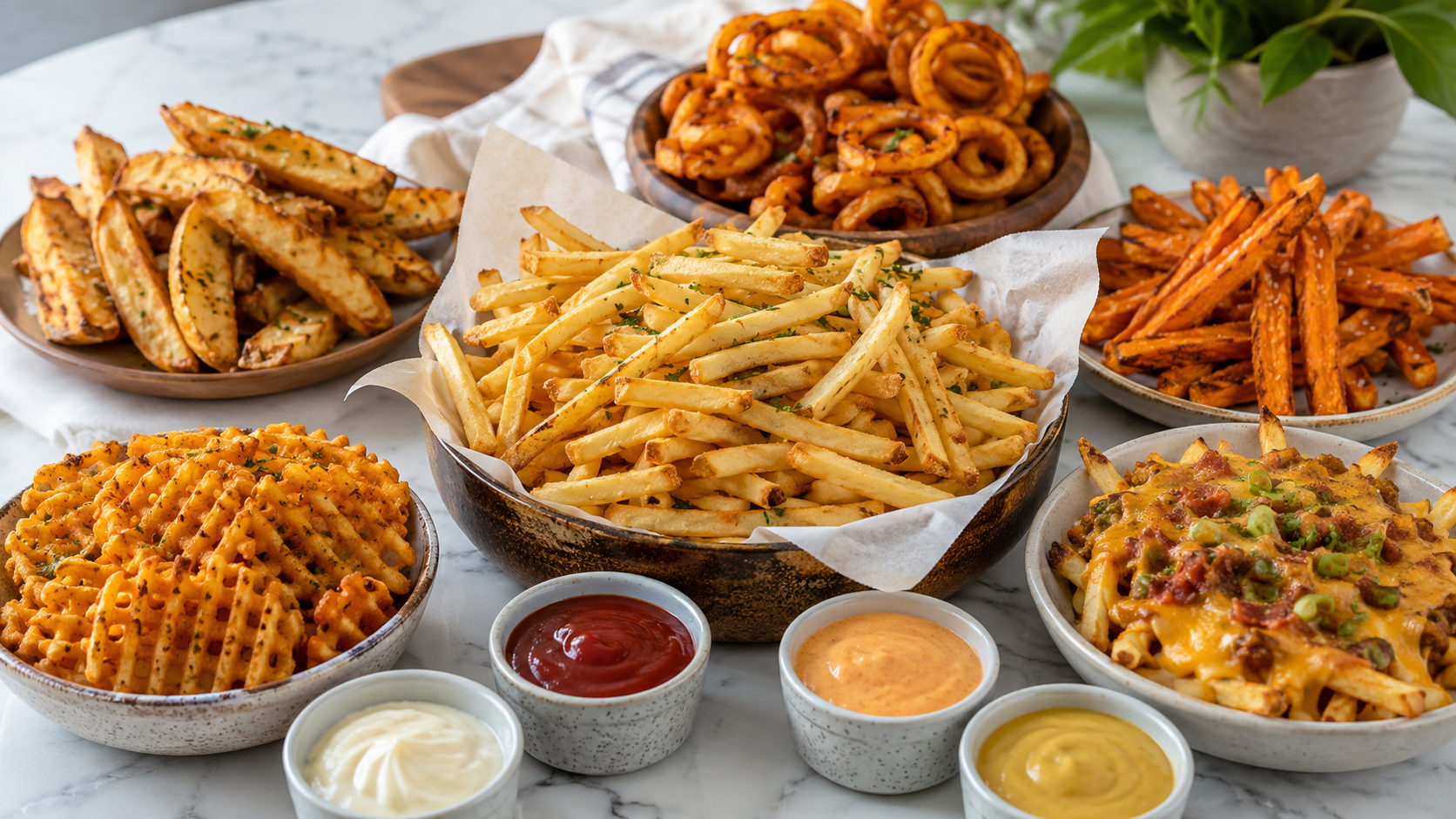
air fryer french fries

National French Fry Day | Every Fry Style Worth Making in Your Air Fryer

French fries are one of those foods that everyone has a strong opinion about and almost nobody agrees on. Some people are committed to thin and crispy. Others want thick steak fries with soft interiors. Waffle fries, curly fries, sweet potato fries, seasoned fries, loaded fries, the fry universe is significantly larger than any single restaurant’s menu suggests, and National French Fry Day on July 13th is the most legitimate excuse of the year to explore as much of it as possible from your own kitchen. The air fryer is why homemade fries are finally worth making regularly. Before air fryers became a standard kitchen appliance, homemade fries required either deep frying, which works brilliantly but involves managing a pot of hot oil, significant cleanup, and a kitchen that smells like a fast food restaurant for the rest of the day, or oven frying, which produces results that are simultaneously softer and less flavorful than either deep fried or air fried alternatives. The air fryer’s circulating high-heat air removes surface moisture from potato surfaces rapidly and continuously, creating the dry, crispy exterior that defines a good fry without the oil volume that deep frying requires. The result is genuinely crispy fries in 15-20 minutes with a tablespoon of oil rather than a quart, and cleanup that takes two minutes. This guide covers every significant fry style worth celebrating on National French Fry Day, classic thin fries, thick-cut steak fries, seasoned variations, sweet potato fries, loaded fry builds, and the dipping sauces that make all of them better. Everything goes through the air fryer. Everything is genuinely good. The Science of a Good Air Fryer Fry Before the recipes, understanding what makes an air fryer fry work, and what makes them fail, saves you from the most common mistakes that produce disappointing results. The Starch Removal Step: Raw potato surfaces are coated in starch that, if left on during cooking, creates a gummy layer that prevents proper crisping. Soaking cut fries in cold water for 20-30 minutes (or up to several hours in the refrigerator) pulls this surface starch out of the potato. After soaking, the water will be visibly cloudy with starch. Rinse the fries and dry them thoroughly — this step is non-negotiable for genuinely crispy results. Skipping it produces fries that are soft rather than crispy on the exterior regardless of cooking time or temperature. The Drying Step Is as Important as the Soak: After soaking, moisture on the fry surface needs to be removed before cooking. Pat fries dry with paper towels or a clean kitchen towel, pressing firmly to remove as much surface moisture as possible. Some cooks spread soaked fries on a clean towel and let them air dry for 10-15 minutes after patting. The drier the surface going into the air fryer, the crispier the exterior coming out. Oil Quantity: A thin, even coating of oil across all fry surfaces is what you’re after — enough to conduct heat and promote browning but not so much that fries become greasy. One tablespoon of neutral oil for a single-serving batch (one large potato) is approximately right. Toss thoroughly so every surface has contact with oil rather than some fries being well-coated and others dry. Single Layer is Non-Negotiable: Fries stacked on top of each other in the air fryer basket steam rather than crisp — the stacked surfaces don’t get direct hot air contact. A single layer with some space between pieces is what produces consistent crispiness. For larger batches, cook in multiple rounds rather than crowding the basket. Trying to rush a large batch into one crowded round produces uniformly mediocre fries rather than excellent fries that take a few extra minutes. Shaking Frequency: Shaking the basket every 5 minutes throughout cooking ensures all fry surfaces get direct air exposure rather than the bottom surfaces getting overcooked while the top ones remain underdone. For thin fries, shake every 4-5 minutes. For thicker cuts, every 5-7 minutes. Temperature and Time Variables: Higher temperatures (400-410°F) produce crispier exteriors faster. Lower temperatures (375-380°F) cook interiors more thoroughly before the exterior gets too dark — better for thicker cuts. Most standard-cut fries do well starting at 380°F for the first half of cooking, then increasing to 400°F for the final 5-7 minutes to develop maximum crispiness. Classic Thin Fries The baseline. Everything else is a variation on this standard — getting thin fries right in the air fryer is the foundational skill. Ingredients: 2 large russet potatoes, 1 tbsp neutral oil (vegetable, avocado, or canola), 1 tsp salt, ½ tsp black pepper. Method: Peel potatoes or leave skins on depending on preference — skin-on fries have more texture and flavor. Cut into ¼-inch thick sticks, keeping thickness as consistent as possible for even cooking. Soak in cold water for 20-30 minutes. Drain, rinse, and pat completely dry. Toss with oil, salt, and pepper. Air fry at 380°F for 8 minutes, shake, increase to 400°F and cook for another 8-10 minutes shaking every 4 minutes until golden and crispy. Taste and season with additional salt immediately out of the fryer — salt adheres better to hot fries. What Makes These Work: Russet potatoes have the right starch and moisture content for classic fries. Their high starch content means they crisp effectively on the outside while staying fluffy inside. Waxy potatoes like Yukon Golds produce a different result — denser interiors and less dramatic exterior crispiness — that suits wedges better than thin fries. Thick-Cut Steak Fries Steak fries require more patience than thin fries but reward it with substantial, satisfying bites that hold toppings better and have a more dramatic contrast between crispy exterior and fluffy interior. Ingredients: 2 large russet potatoes, 1.5 tbsp oil, 1 tsp salt, ½ tsp garlic powder, ½ tsp paprika, black pepper. Method: Cut potatoes into ¾-inch to 1-inch thick sticks — significantly thicker than classic fries. Soak in cold water for 30-45 minutes. Drain, rinse, and dry very thoroughly. Toss with oil
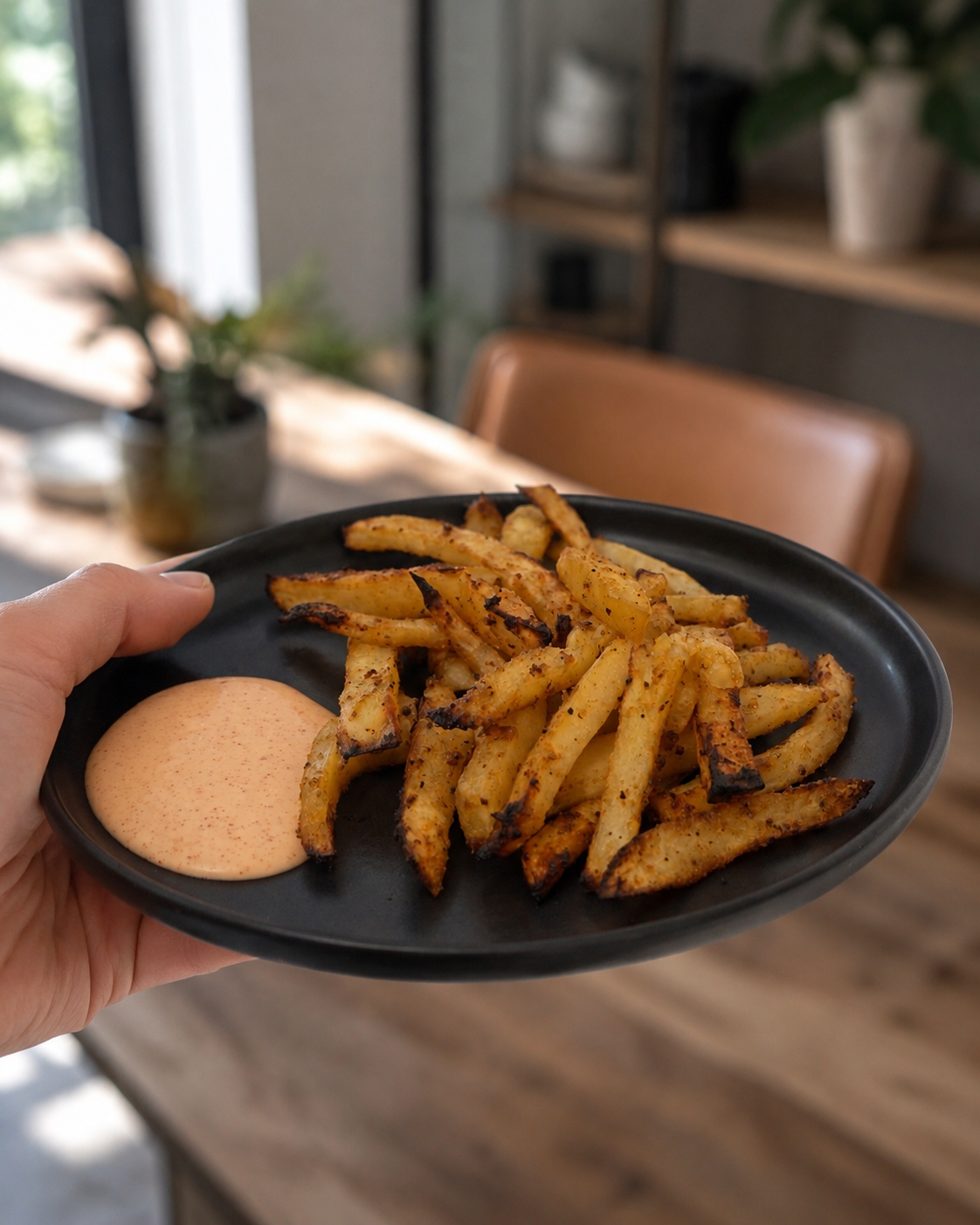
Air Fryer French Fries: Crispy Homemade Fries

Homemade french fries in the air fryer deliver crispy exteriors and fluffy interiors without deep frying oil. Soaking removes excess starch creating better texture while seasoning adds flavor beyond basic salt. Traditional deep-fried potatoes require hot oil and careful temperature management. Air fryer fries use circulating hot air producing similar crispness with significantly less oil and simpler preparation. Here’s how to make crispy french fries in your air fryer using potato prep techniques that improve texture and seasoning combinations that add flavor depth. What You’ll Need Ingredients: Equipment: Step-by-Step Instructions Step 1: Prepare the Potatoes Rinse the potatoes under cold water. This removes surface dirt and makes peeling easier. Peel all four potatoes using a vegetable peeler or paring knife. Rinsing before peeling prevents dirt from transferring to the peeled surface. Place peeled potatoes on cutting board. Slice each potato lengthwise into 1/4-inch thick strips. Consistent thickness ensures even cooking. Cut strips to similar lengths when possible. Uniform sizing creates fries that finish cooking simultaneously. Step 2: Soak to Remove Starch Place sliced potatoes in large bowl. Cover completely with cold water. Soak for 15 minutes. This step removes excess surface starch that prevents crisping. The starch creates gummy texture if not removed. The water will turn cloudy as starch releases. This cloudiness confirms the soaking is working. After 15 minutes, drain water completely. Remove potato strips from bowl. Step 3: Dry Thoroughly Place drained potato strips on cutting board. Pat completely dry using paper towels. Thorough drying is critical for crispness. Wet potatoes steam rather than crisp in the air fryer. Remove all visible moisture. Let strips air dry for a few minutes if still damp after patting. Completely dry potatoes produce the crispiest results. Step 4: Season the Fries Place dried potato strips in clean mixing bowl. Drizzle with olive oil. Use enough to lightly coat all strips when mixed. Toss potatoes with oil until evenly coated. Each strip should have thin oil coating without pooling in the bowl. Add salt, black pepper, onion powder, garlic powder, and paprika to the bowl. Toss again mixing seasonings thoroughly with oiled potatoes. The oil helps seasonings stick to potato surfaces. Dry seasonings on wet potatoes slide off during cooking. Mix until seasonings distribute evenly across all fries. Each fry should show visible seasoning coverage. Step 5: Preheat the Air Fryer Set air fryer to 400°F. Preheat for 5 minutes. Preheating ensures consistent cooking temperature from the start. Cold air fryers take longer to crisp the exterior. While air fryer preheats, arrange seasoned fries on baking sheet or in air fryer basket. Spread them in single layer with space between each fry. Crowding creates steaming instead of crisping. Air circulation around each fry is essential for texture. Step 6: Air Fry the Potatoes Place fries in preheated air fryer. Set timer for 20 minutes at 400°F. At the 10-minute mark, open air fryer. Shake basket or toss fries gently with tongs to redistribute them. This mid-cooking shake ensures even browning on all sides. Fries touching the basket brown faster than those on top. Return basket to air fryer and continue cooking the remaining 10 minutes. Check at 18 minutes if your air fryer runs hot. Fries are done when golden brown and crispy on edges. Step 7: Rest and Serve Remove cooked fries from air fryer. Let rest 2-3 minutes before serving. Resting allows steam to escape and exterior to crisp further. Fries fresh from the fryer are too hot to eat immediately anyway. Sprinkle with lemon pepper seasoning after cooking if desired. The citrus brightness complements the savory seasonings. Step 8: Plate and Enjoy Add your favorite dipping sauce to serving plate. Ketchup, aioli, ranch, or special sauce all work. Arrange hot fries on plate. Serve immediately while crispy and hot. Why Soaking Matters Soaking potatoes in cold water removes surface starch that interferes with crisping. Excess starch creates gummy exterior texture instead of crispy coating. The starch also causes fries to stick together during cooking. Removing it helps fries cook individually rather than clumping. Fifteen minutes provides adequate soaking time. Longer soaking doesn’t improve results significantly. Skip soaking only if time doesn’t allow. Unsoaked fries still cook but won’t achieve the same crispness level. Potato Variety Selection Russet potatoes work best for fries. Their high starch content and low moisture create fluffy interiors with crispy exteriors. Yukon gold potatoes provide slightly creamier texture with good crisping. They contain more moisture than russets but still produce quality fries. Red potatoes and fingerlings don’t fry as well. Their waxy texture and high moisture create softer fries without the ideal crispy-fluffy contrast. Russets remain the gold standard for homemade fries. Their texture and starch content are optimal for air frying. Seasoning Variations The base seasoning blend uses onion powder, garlic powder, paprika, salt, and pepper. This combination provides savory depth beyond plain salt. Adjust ratios based on preference. More paprika adds smokiness. Extra garlic powder increases savory punch. Try different spice combinations: Cajun seasoning for heat, Italian herbs for aromatic flavor, or ranch seasoning powder for tangy taste. Add parmesan cheese after cooking for cheesy fries. Grated cheese added during cooking burns in the high heat. Fresh herbs work as finishing touch. Chopped parsley or chives added after cooking provide fresh flavor without burning. Achieving Maximum Crispness Several factors affect fry crispness: thorough drying after soaking, adequate oil coating, proper spacing in basket, and mid-cooking shake. Don’t skip the drying step. Wet potatoes create steam preventing crispy exterior formation. Use enough oil to coat but not drench. Too little oil produces dry fries. Too much makes them greasy. Single layer spacing is non-negotiable. Stacked fries steam each other preventing browning and crisping. The 10-minute shake redistributes fries ensuring all surfaces get air fryer basket contact for even browning. Serving Suggestions Classic pairing: serve fries with burgers, sandwiches, or as appetizer with multiple dipping sauces. Make loaded fries by topping with cheese, bacon bits, and sour cream after cooking. Return to air