
National French Fry Day | Every Fry Style Worth Making in Your Air Fryer
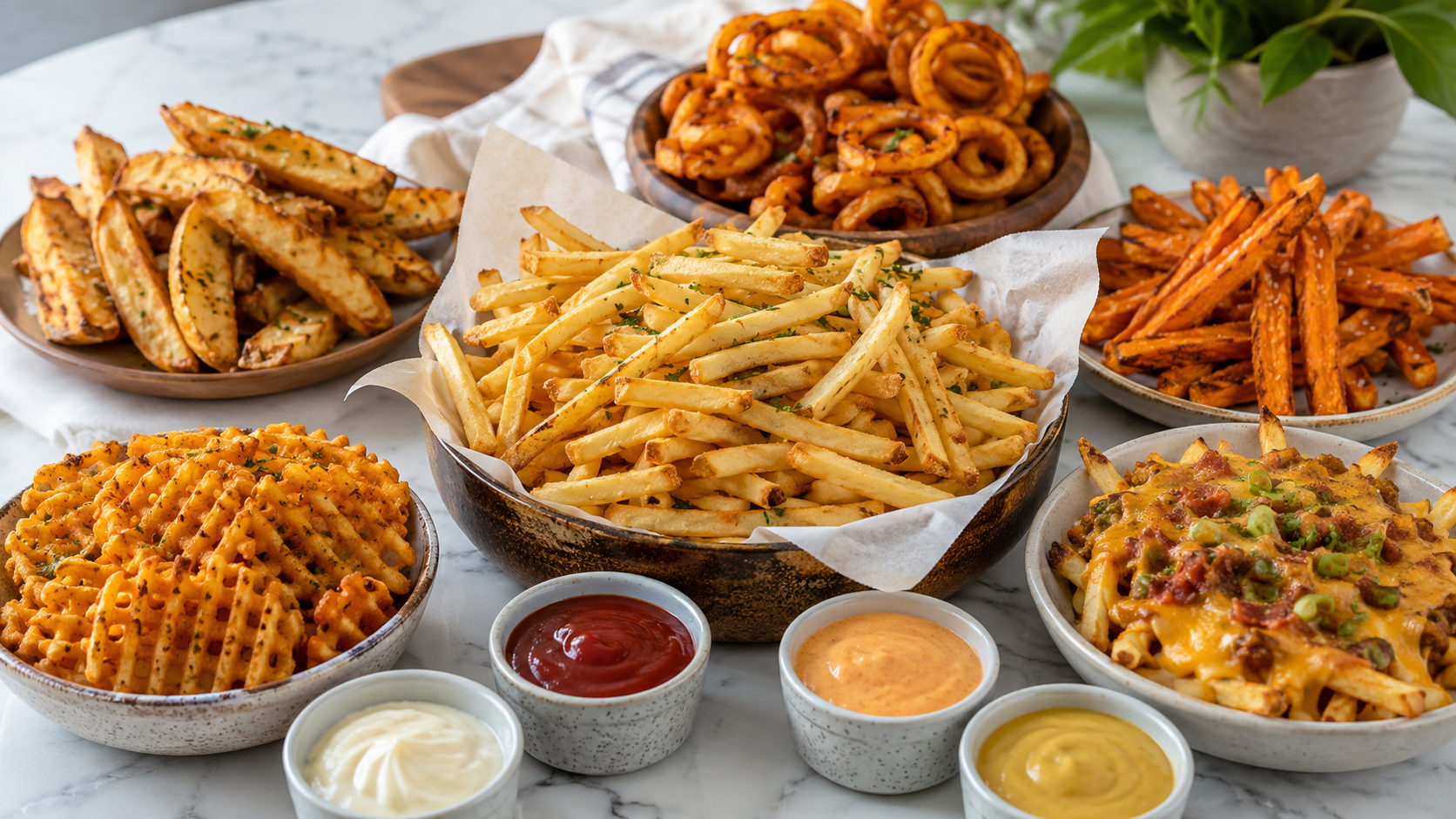
French fries are one of those foods that everyone has a strong opinion about and almost nobody agrees on. Some people are committed to thin and crispy. Others want thick steak fries with soft interiors. Waffle fries, curly fries, sweet potato fries, seasoned fries, loaded fries, the fry universe is significantly larger than any single restaurant’s menu suggests, and National French Fry Day on July 13th is the most legitimate excuse of the year to explore as much of it as possible from your own kitchen.
The air fryer is why homemade fries are finally worth making regularly. Before air fryers became a standard kitchen appliance, homemade fries required either deep frying, which works brilliantly but involves managing a pot of hot oil, significant cleanup, and a kitchen that smells like a fast food restaurant for the rest of the day, or oven frying, which produces results that are simultaneously softer and less flavorful than either deep fried or air fried alternatives. The air fryer’s circulating high-heat air removes surface moisture from potato surfaces rapidly and continuously, creating the dry, crispy exterior that defines a good fry without the oil volume that deep frying requires. The result is genuinely crispy fries in 15-20 minutes with a tablespoon of oil rather than a quart, and cleanup that takes two minutes.
This guide covers every significant fry style worth celebrating on National French Fry Day, classic thin fries, thick-cut steak fries, seasoned variations, sweet potato fries, loaded fry builds, and the dipping sauces that make all of them better. Everything goes through the air fryer. Everything is genuinely good.
The Science of a Good Air Fryer Fry
Before the recipes, understanding what makes an air fryer fry work, and what makes them fail, saves you from the most common mistakes that produce disappointing results.
The Starch Removal Step: Raw potato surfaces are coated in starch that, if left on during cooking, creates a gummy layer that prevents proper crisping. Soaking cut fries in cold water for 20-30 minutes (or up to several hours in the refrigerator) pulls this surface starch out of the potato. After soaking, the water will be visibly cloudy with starch. Rinse the fries and dry them thoroughly — this step is non-negotiable for genuinely crispy results. Skipping it produces fries that are soft rather than crispy on the exterior regardless of cooking time or temperature.
The Drying Step Is as Important as the Soak: After soaking, moisture on the fry surface needs to be removed before cooking. Pat fries dry with paper towels or a clean kitchen towel, pressing firmly to remove as much surface moisture as possible. Some cooks spread soaked fries on a clean towel and let them air dry for 10-15 minutes after patting. The drier the surface going into the air fryer, the crispier the exterior coming out.
Oil Quantity: A thin, even coating of oil across all fry surfaces is what you’re after — enough to conduct heat and promote browning but not so much that fries become greasy. One tablespoon of neutral oil for a single-serving batch (one large potato) is approximately right. Toss thoroughly so every surface has contact with oil rather than some fries being well-coated and others dry.
Single Layer is Non-Negotiable: Fries stacked on top of each other in the air fryer basket steam rather than crisp — the stacked surfaces don’t get direct hot air contact. A single layer with some space between pieces is what produces consistent crispiness. For larger batches, cook in multiple rounds rather than crowding the basket. Trying to rush a large batch into one crowded round produces uniformly mediocre fries rather than excellent fries that take a few extra minutes.
Shaking Frequency: Shaking the basket every 5 minutes throughout cooking ensures all fry surfaces get direct air exposure rather than the bottom surfaces getting overcooked while the top ones remain underdone. For thin fries, shake every 4-5 minutes. For thicker cuts, every 5-7 minutes.
Temperature and Time Variables: Higher temperatures (400-410°F) produce crispier exteriors faster. Lower temperatures (375-380°F) cook interiors more thoroughly before the exterior gets too dark — better for thicker cuts. Most standard-cut fries do well starting at 380°F for the first half of cooking, then increasing to 400°F for the final 5-7 minutes to develop maximum crispiness.
Classic Thin Fries
The baseline. Everything else is a variation on this standard — getting thin fries right in the air fryer is the foundational skill.
Ingredients: 2 large russet potatoes, 1 tbsp neutral oil (vegetable, avocado, or canola), 1 tsp salt, ½ tsp black pepper.
Method: Peel potatoes or leave skins on depending on preference — skin-on fries have more texture and flavor. Cut into ¼-inch thick sticks, keeping thickness as consistent as possible for even cooking. Soak in cold water for 20-30 minutes. Drain, rinse, and pat completely dry. Toss with oil, salt, and pepper. Air fry at 380°F for 8 minutes, shake, increase to 400°F and cook for another 8-10 minutes shaking every 4 minutes until golden and crispy. Taste and season with additional salt immediately out of the fryer — salt adheres better to hot fries.
What Makes These Work: Russet potatoes have the right starch and moisture content for classic fries. Their high starch content means they crisp effectively on the outside while staying fluffy inside. Waxy potatoes like Yukon Golds produce a different result — denser interiors and less dramatic exterior crispiness — that suits wedges better than thin fries.
Thick-Cut Steak Fries
Steak fries require more patience than thin fries but reward it with substantial, satisfying bites that hold toppings better and have a more dramatic contrast between crispy exterior and fluffy interior.
Ingredients: 2 large russet potatoes, 1.5 tbsp oil, 1 tsp salt, ½ tsp garlic powder, ½ tsp paprika, black pepper.
Method: Cut potatoes into ¾-inch to 1-inch thick sticks — significantly thicker than classic fries. Soak in cold water for 30-45 minutes. Drain, rinse, and dry very thoroughly. Toss with oil and seasonings. Air fry at 375°F for 12 minutes, shake, then 380°F for another 8-10 minutes, shaking every 5 minutes, until deep golden and crispy throughout. Interior should be completely soft when tested with a fork through the cut end. Total cook time typically 20-25 minutes for steak fries versus 16-18 for classic thin.
Seasoned Fries
The seasoning variations are where fry personality emerges. Each seasoning blend creates a distinctly different eating experience from the same base potato and technique.
Cajun Fries: 1 tsp paprika, ½ tsp cayenne, ½ tsp garlic powder, ½ tsp onion powder, ½ tsp oregano, ½ tsp thyme, salt and pepper. Mix the dry seasoning blend and toss with oiled, dried fries before air frying. The spice blend should be visible on all fry surfaces.
Garlic Parmesan Fries: Air fry classic thin fries to completion. Immediately toss hot fries with 2 tbsp finely grated parmesan, 1 tsp garlic powder, and 1 tbsp finely chopped fresh parsley. The parmesan melts slightly onto the hot fry surface and adheres as it cools. This is one of the most satisfying fry variations and consistently the fastest to disappear.
Salt and Vinegar Fries: Soak cut fries in a mixture of cold water and ½ cup white vinegar for 30 minutes rather than plain cold water. The vinegar penetrates the potato slightly during soaking and produces a subtle tang throughout the fry that a post-cooking vinegar spritz can’t replicate as effectively. Finish with flaky sea salt immediately out of the fryer.
Old Bay Fries: Old Bay seasoning applied generously to oiled fries before cooking. The celery salt and spice blend in Old Bay develops particularly well under the air fryer’s high heat. Serve with malt vinegar and tartar sauce — this fry leans into its seafood-adjacent seasoning heritage.
Truffle Fries: Standard thin fries cooked to completion, then immediately tossed with a drizzle of truffle oil (¼ teaspoon — truffle oil is potent), flaky sea salt, and finely grated parmesan. Truffle fries are the elevated version that justifies the air fryer for anyone who’s been on the fence about the appliance.
Smoked Paprika and Cumin Fries: ½ tsp smoked paprika, ½ tsp cumin, ¼ tsp garlic powder, ¼ tsp chili powder, salt. Applied before cooking and produces a warm, earthy fry with subtle smokiness that works particularly well with chipotle mayo dipping sauce.
Sweet Potato Fries
Sweet potato fries occupy a slightly different category from standard potato fries — the higher sugar content means they brown faster and can go from perfect to too dark quickly, and their higher moisture content requires extra attention to drying before cooking.
Ingredients: 2 medium sweet potatoes, 1 tbsp oil, 1 tsp cornstarch, ½ tsp cinnamon (optional), ½ tsp salt, pinch of cayenne.
Method: Cut sweet potatoes into ¼-inch sticks — thinner than you might cut russets since sweet potato fries crisp better when thinner. Dry thoroughly with paper towels — soaking isn’t essential for sweet potatoes but thorough drying is critical. Toss with oil first, then add cornstarch and toss again. The cornstarch coating creates a crispier exterior than oil alone on sweet potato fries, which have a tendency toward softness. Air fry at 375°F (lower than standard fries to prevent burning) for 10-12 minutes, shaking every 4 minutes, then assess — sweet potato fries are done when edges are slightly crispy and interiors are completely tender.
The Cornstarch Secret: Sweet potato fries without cornstarch tend to be soft rather than crispy. The cornstarch creates a thin coating on the exterior that crisps under the air fryer’s heat in a way that the potato surface alone doesn’t achieve as reliably. One teaspoon of cornstarch per medium sweet potato is the right ratio.
Waffle Fries
Waffle fries require a mandoline with a waffle/crinkle blade to cut the characteristic grid pattern — a specific piece of equipment worth owning if waffle fries are your preferred format, as the ridges dramatically increase surface area for crispiness and sauce holding.
Ingredients: 2 russet potatoes, mandoline with waffle blade, 1 tbsp oil, salt, preferred seasoning.
Method: Cut potatoes on the mandoline’s waffle setting, rotating 90 degrees between each slice to create the grid pattern. Soak and dry as with standard fries. The increased surface area means waffle fries can cook slightly faster than standard-cut fries of similar thickness — check at the 12-minute mark. Air fry at 390°F for 12-15 minutes shaking every 4 minutes until crispy across all the ridged surfaces.
Curly Fries
Curly fries require a spiralizer — another specific piece of equipment that earns its space if curly fries are worth making to you. The spiral cut’s increased surface area produces maximum crispiness.
Ingredients: 2 russet potatoes, spiralizer, 1 tbsp oil, 1 tsp seasoned salt, ½ tsp paprika, ½ tsp garlic powder, ¼ tsp cayenne.
Method: Spiralize potatoes on the appropriate blade setting. The long spirals need to be cut into manageable lengths — 4-6 inch sections work in most air fryer baskets. Soak briefly (10-15 minutes is adequate for the thinner spiral cut), dry thoroughly, and toss with oil and seasoning. Air fry at 390°F for 10-12 minutes shaking frequently. Curly fries cook faster than standard cuts due to their thinness — watch carefully in the last few minutes to prevent over-browning.
Loaded Fries: The Build Guide
Loaded fries transform a side dish into a main event and represent peak National French Fry Day energy. The air fryer produces the crispy base that loaded fry toppings require — a soft fry collapses under toppings, while a properly crispy air fryer fry holds its structure through the loading process.
Classic Loaded Fries: Crispy air fryer fries topped with shredded cheddar returned to the air fryer at 350°F for 2 minutes to melt, then finished with sour cream, crispy bacon bits, and sliced green onions. The sequence matters — melt cheese first, then add cold toppings rather than trying to heat everything simultaneously.
Chili Cheese Fries: Air fryer fries topped with warm canned chili (seasoned with garlic powder and cumin while heating in a small pan), shredded Monterey jack cheese, diced white onion, and jalapeño slices. The chili should be thick enough not to make the fries immediately soggy — drain any excess liquid from canned chili before using.
Buffalo Chicken Fries: Crispy fries topped with shredded rotisserie chicken tossed in buffalo sauce, blue cheese crumbles, and celery slices. The buffalo sauce’s acidity against the crispy fry produces the kind of contrast that makes loaded fries more satisfying than the sum of their components.
Nacho Fries: Fries topped with queso sauce (either homemade or good quality jarred), pickled jalapeños, pico de gallo, sour cream, and guacamole. This is the most crowd-pleasing loaded fry format for groups — it hits the nacho flavor profile with the fry as vessel rather than chip.
Truffle Parmesan Loaded Fries: The elevated version — thin air fryer fries tossed with truffle oil and parmesan, topped with a soft-fried egg and fresh chives. The broken egg yolk functions as an additional sauce that coats fries as you eat through the dish.
The Dipping Sauce Roster
National French Fry Day deserves more than one dipping option. Making two or three sauces creates a tasting experience rather than a side dish and takes about ten minutes total.
Garlic Aioli: 3 tbsp mayonnaise, 1 clove garlic minced and mashed to a paste with salt, 1 tsp lemon juice, pinch of paprika. Stir to combine. Refrigerate for 15 minutes before serving to allow garlic flavor to develop. The standard against which all other aiolis are measured.
Spicy Sriracha Mayo: 3 tbsp mayonnaise, 1 tbsp sriracha, ½ tsp lime juice, pinch of garlic powder. The ratio of mayo to sriracha is adjustable based on heat preference — 2:1 is medium heat, 1:1 is seriously spicy.
Chipotle Dipping Sauce: 3 tbsp mayonnaise, 1 chipotle pepper in adobo sauce finely minced, ½ tsp adobo sauce from the can, ½ tsp lime juice, salt. Smoky, slightly sweet, and moderately spicy — particularly suited to Cajun and smoked paprika fries.
Truffle Ketchup: 4 tbsp ketchup, ¼ tsp truffle oil, pinch of salt. The truffle oil elevates the most basic fry condiment into something that feels intentional without requiring any additional ingredients beyond what most people have.
Beer Cheese Dip: Melt 1 cup shredded sharp cheddar into ¼ cup warm beer with 1 tbsp butter, ½ tsp mustard powder, pinch of cayenne, stirring continuously until smooth. Serve warm. The best accompaniment for steak fries and the sauce most likely to be requested again.
Honey Mustard: 2 tbsp dijon mustard, 1 tbsp honey, 1 tbsp mayonnaise, ½ tsp apple cider vinegar. The classic balance of sharp, sweet, and creamy that works across every fry style and appeals to every palate.
Celebrating National French Fry Day Right
The easiest way to mark the holiday properly is to run a fry tasting — make two or three different fry styles in succession and put them out with several sauces. The air fryer’s speed means a second or third batch is ready within 15-20 minutes of the first, and because each batch is small, the food stays hot and crispy throughout rather than sitting and softening while you make more. This format works for solo celebration (genuinely enjoyable — there are worse ways to spend a Monday), for a casual household event, or as the appetizer spread for whatever else is happening that evening.
The Cosmo air fryer’s consistent high-heat performance across multiple successive batches is what makes a fry tasting practical rather than exhausting. Starting a new batch, walking away, hearing the beep, and returning to genuinely crispy fries every time — without managing oil temperature, without extensive cleanup between batches, and without the oven taking 45 minutes including preheat — is the reason the air fryer has become the natural home for fry cooking that doesn’t involve a deep fryer. National French Fry Day is the occasion that justifies exploring what it can actually do across the full range of fry styles, and the results are worth celebrating properly.