
refrigerator storage

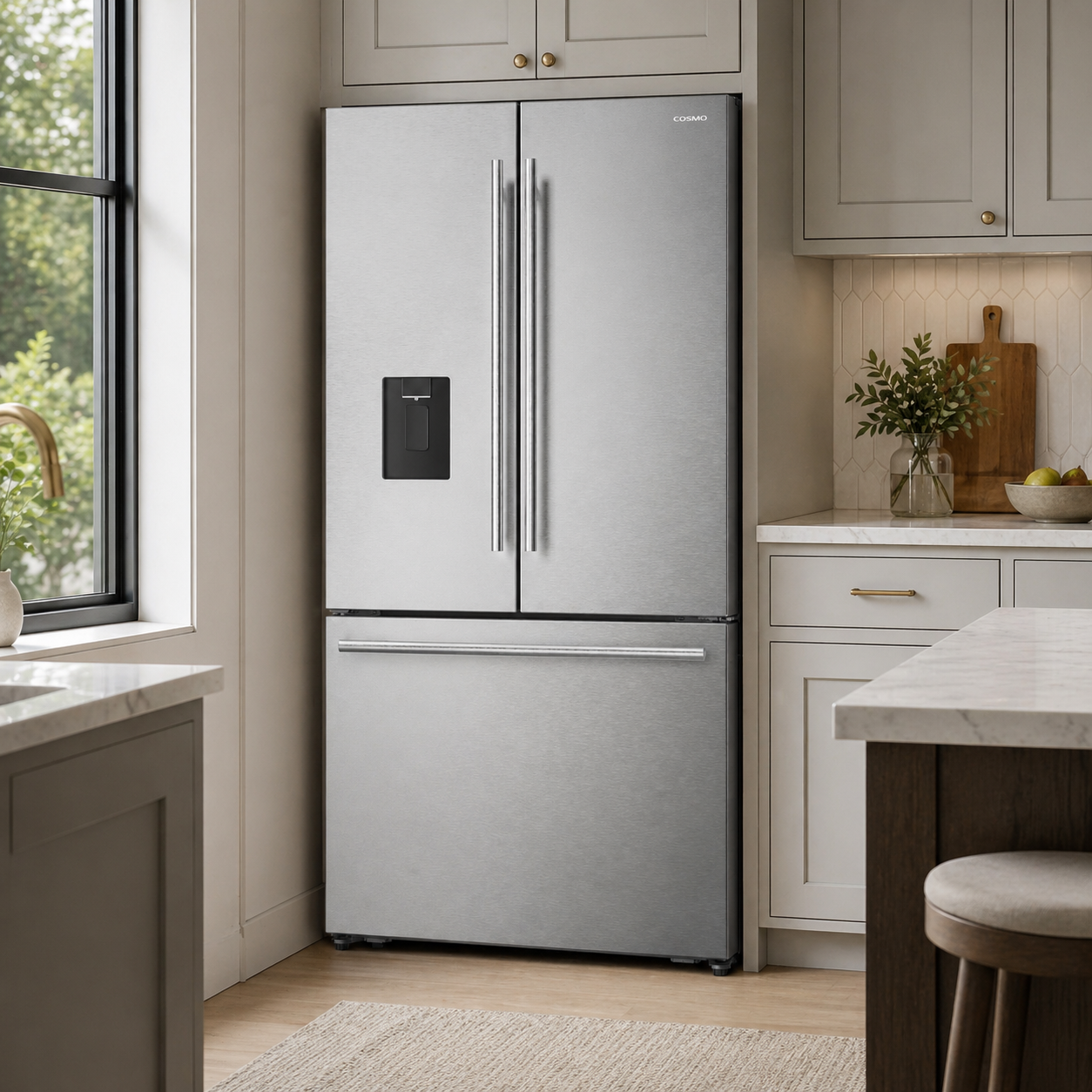
The COS-FDR223GWSS French Door Refrigerator: 22.4 Cu. Ft. with Water Dispenser

French door refrigerators with water dispensers solve the reaching-across-the-kitchen problem every time you want cold water. Built-in water access eliminates pitcher refilling and provides filtered water on demand. The COS-FDR223GWSS stores 22.4 cubic feet of food in French door configuration with upper refrigerator and lower freezer layout. Electronic temperature controls, LED lighting, and soft-close doors handle the details while you handle groceries. Here’s what this refrigerator delivers for households wanting water dispenser convenience without sacrificing storage capacity. 22.4 Cubic Feet French Door Configuration French doors open side-by-side providing refrigerator access without swinging a wide single door into your kitchen. The configuration works better in tight spaces than traditional single-door models. Capacity of 22.4 cubic feet handles typical household food storage. The volume suits families buying groceries weekly without running out of space mid-week. French door layout positions refrigerator at eye level with freezer below. You access refrigerated items most frequently, so placing them at comfortable height reduces bending. Wide shelves from side-by-side door opening accommodate large platters, pizza boxes, and sheet cakes that don’t fit in traditional narrow refrigerators. Full-width shelves maximize storage flexibility. Lower freezer drawer slides out providing top-down freezer view. The drawer configuration shows frozen items better than traditional freezer shelves. The French door configuration provides comfortable access to refrigerated items while maximizing shelf width for large items. Built-In Water Dispenser External water dispenser mounted in refrigerator door provides filtered cold water without opening the door. Fill glasses, water bottles, or cooking pots directly from dispenser. Water access convenience eliminates refrigerator-stored pitchers taking up shelf space. The built-in filtration and dispensing replaces multiple-step pitcher filling and filtering. Filtered water from built-in system (specific filtration type not mentioned but typical refrigerator filters reduce chlorine taste and common contaminants) improves water taste compared to straight tap water. Dispenser location on door exterior allows accessing water without opening refrigerator. The closed-door dispensing maintains internal temperature better than opening doors for water access. Filter replacement (schedule and filter type not specified but typically 6-month replacement intervals) maintains water quality. Regular filter changes ensure consistent filtration performance. The built-in water dispenser provides convenient filtered water access without pitcher storage or refrigerator door opening. Automatic Ice Maker Built-in ice production eliminates tray filling and freezing creating continuous ice supply for daily use without manual ice-making effort. Automatic ice maker produces ice continuously refilling storage bin as ice gets used. The automatic operation means ice is always available when needed. Ice storage capacity (specific bin size not mentioned) holds sufficient ice for typical daily household use. Larger gatherings may require advance ice production or supplemental ice. Ice production rate (specific pounds per day not mentioned but typical residential ice makers produce 3-8 pounds daily) replenishes used ice automatically. The production keeps up with moderate daily ice consumption. Ice maker operation requires water line connection to refrigerator. Professional installation ensures proper water supply hookup and leak prevention. The automatic ice maker provides continuous ice production eliminating manual ice tray filling and freezing. Electronic Temperature Controls Digital temperature management allows precise refrigerator and freezer temperature settings maintaining optimal food storage conditions through electronic monitoring. Electronic controls provide separate temperature settings for refrigerator and freezer compartments. Independent control maintains each section at ideal temperature for its contents. Digital display shows current temperature settings. The visual feedback confirms refrigerator maintains set temperature. Temperature adjustment through electronic buttons allows fine-tuning storage conditions. Adjust temperatures based on food types or seasonal needs. Consistent temperature maintenance from electronic systems preserves food quality better than mechanical thermostats. Electronic controls prevent temperature fluctuations that accelerate food spoilage. The electronic temperature controls provide precise climate management through digital adjustment maintaining optimal storage conditions in both compartments. LED Lighting and Soft-Close Doors Energy-efficient interior lighting illuminates refrigerator contents, while soft-close door mechanism prevents slamming and ensures proper sealing. LED lighting throughout refrigerator interior provides bright illumination without heat generation. LEDs last longer and use less energy than traditional incandescent bulbs. Light placement (specific locations not detailed but typically top and side lighting) illuminates shelves and drawers clearly. Good lighting helps locate items quickly reducing door-open time. Soft-close door mechanism gently pulls doors closed in final inches of closing. The assisted closing prevents door slamming and ensures doors seal properly. Proper door sealing from soft-close mechanism maintains internal temperature. Partially-open doors waste energy and allow warm air infiltration. The LED lighting and soft-close doors provide practical features improving visibility and ensuring proper door closure. Controllable Door Alarm Audible alert notifies when refrigerator doors remain open preventing temperature loss from extended door-open periods. Door alarm activates when doors stay open beyond set duration (specific time threshold not mentioned but typically 1-2 minutes). The alert reminds you to close doors preventing food spoilage. Alarm control allows adjusting sensitivity or turning alarm off when needed. The controllable feature prevents nuisance alarms during extended food loading or cleaning. Temperature protection from alarm prevents warm air infiltration during inadvertent door-open situations. The reminder helps maintain consistent internal temperature. The controllable door alarm provides temperature protection through audible reminder when doors remain open too long. Adjustable Storage and Spill-Proof Shelves Customizable interior organization accommodates varied food sizes through adjustable bins and shelves, while spill-proof glass shelves contain leaks preventing mess spread. Adjustable door bins (specific configuration not detailed) allow repositioning bin heights matching bottle and container sizes. The flexibility accommodates different product heights. Adjustable shelves provide vertical flexibility moving shelf positions based on tall items or storage needs. The customization adapts refrigerator interior to your groceries. Spill-proof glass shelves contain liquid spills preventing drips to lower shelves. The contained spills simplify cleanup limiting mess to single shelf. Durable glass shelf construction supports heavy items without flexing. The sturdy shelves handle loaded casserole dishes and full storage containers. The adjustable storage and spill-proof shelves provide organization flexibility while containing messes for easier cleanup. Making the Right Choice for Your Kitchen The COS-FDR223GWSS works for households wanting French door refrigerator with water dispenser convenience and automatic ice making in 22.4 cubic feet capacity.

Leftovers: What Actually Matters for Food Safety

Food safety guidelines about leftovers read like legal disclaimers written by lawyers afraid of lawsuits. Discard after three days. Cool within two hours. Reheat to 165°F. Never leave at room temperature. Some of this advice matters. Much of it is excessive caution designed to protect institutions serving vulnerable populations, not guidance for healthy adults eating home-cooked food. Understanding what actually causes foodborne illness from leftovers lets you make informed decisions instead of following arbitrary rules that waste perfectly good food or create unnecessary anxiety. Here’s what actually matters for leftover safety, what’s overblown caution, and how to store and reheat leftovers without making yourself sick or throwing away edible food. The Two-Hour Rule Is About Temperature, Not Time The standard advice says food left at room temperature for more than two hours becomes unsafe. This oversimplifies what’s actually happening. Bacteria multiply rapidly between 40°F and 140°F—the “danger zone.” Food sitting in this temperature range gives bacteria time to reproduce to potentially dangerous levels. But “two hours” assumes worst-case scenarios: high bacterial load on the food initially, warm room temperature, and vulnerable populations eating it. For most situations with most foods, this timeline is conservative. Hot food cooling on the counter doesn’t spend two full hours in the danger zone. It starts at 180°F or higher and cools through the danger zone gradually. The time actually spent between 40°F and 140°F might be 30-45 minutes, not two hours. Room temperature also matters. Food cooling in a 65°F kitchen behaves differently than food cooling in an 80°F kitchen. Cooler rooms mean faster passage through the danger zone. The type of food affects risk too. High-acid foods like tomato sauce resist bacterial growth better than low-acid foods like rice. Dry foods pose less risk than moist foods. For home cooking eaten by healthy adults, letting dinner cool on the stove for an hour before refrigerating won’t kill you. Institutional guidelines assume cafeterias serving immunocompromised populations—different risk profile than your Tuesday night chicken. Use judgment. If dinner sat out for three hours on a hot summer evening, maybe skip the leftovers. If it cooled for 90 minutes in a cool kitchen and you’re healthy, you’re probably fine. The Three-Day Discard Rule Ignores Your Senses Standard guidance says discard refrigerated leftovers after three to four days regardless of how they look, smell, or taste. This is absurdly wasteful. Three to four days is conservative estimate covering worst-case scenarios with high-risk foods. Many leftovers last a week or more without safety issues. Your nose and eyes detect spoilage effectively. Off smells, visible mold, slimy texture, or color changes indicate spoilage. If leftovers look and smell normal after five days, they’re likely fine. Different foods have different shelf lives. Properly stored cooked grains can last a week. Leafy green salads wilt and become unappetizing after a day but aren’t necessarily unsafe. High-acid tomato sauce lasts longer than cream-based sauce. Storage method dramatically affects longevity. Food in airtight containers lasts longer than food loosely covered. Food stored in shallow containers cools faster and lasts longer than food in deep containers. The three-day rule exists because institutions need blanket policies. They can’t trust cafeteria workers to use judgment about individual containers. Home cooks can and should use their senses. If you’re immunocompromised, pregnant, or feeding young children or elderly people, conservative timelines make sense. Healthy adults can extend timelines for low-risk foods that pass the smell and visual test. Reheating to 165°F Is Overkill for Most Leftovers Food safety guidelines say reheat all leftovers to 165°F. This temperature kills bacteria reliably, but it also turns many foods into dry, overcooked mush. 165°F is the temperature that kills harmful bacteria instantly. Lower temperatures also kill bacteria—they just need more time. Holding food at 145°F for several minutes achieves similar safety to instant 165°F. Reheating guidelines come from institutional settings serving food that might have been mishandled. Commercial kitchens can’t know how long food sat at unsafe temperatures, so they mandate kill-step temperatures. At home, you know your food’s history. If you cooked chicken to safe temperature initially, cooled it properly, and stored it correctly, reheating it to 165°F is redundant. You’re not killing new bacteria—you’re just drying out your chicken. Reheating until steaming hot (around 140-150°F) suffices for most leftovers eaten by healthy adults. This temperature makes food palatable while still heating it adequately. Some foods justify higher reheating temperatures: anything with questionable storage history, foods that sat out too long, or foods being served to vulnerable populations. But last night’s properly-stored pasta doesn’t need blast-furnace reheating. Texture and enjoyment matter. Reheating salmon to 165°F creates dry, chalky fish. Reheating to 140°F keeps it moist while still being perfectly safe given proper initial cooking and storage. Rice Deserves Special Attention, But Not Paranoia The internet is terrified of leftover rice. Articles warn about Bacillus cereus spores surviving cooking and producing toxins in stored rice. This risk is real but overstated. Yes, rice can harbor B. cereus spores that survive cooking. Yes, these spores can germinate and produce toxins if rice sits at room temperature too long. No, this doesn’t mean leftover rice is a death sentence. The actual risk factor is letting cooked rice sit at room temperature for extended periods. Rice sitting out for hours (like at a buffet) allows bacteria to multiply and produce heat-stable toxins that reheating won’t destroy. Properly handled rice poses minimal risk. Cool it quickly after cooking (spread it out rather than leaving it in a deep pot), refrigerate it within an hour or two, and store it in the fridge for up to four to five days. Reheating rice thoroughly kills bacteria (though not pre-formed toxins, which is why proper storage matters). Fried rice, rice pudding, or reheated rice are all safe if the rice was stored correctly. The paranoia around rice exceeds the actual danger. Millions of people eat leftover rice daily without incident. The few cases of B. cereus poisoning usually involve rice sitting at room temperature for many hours—not

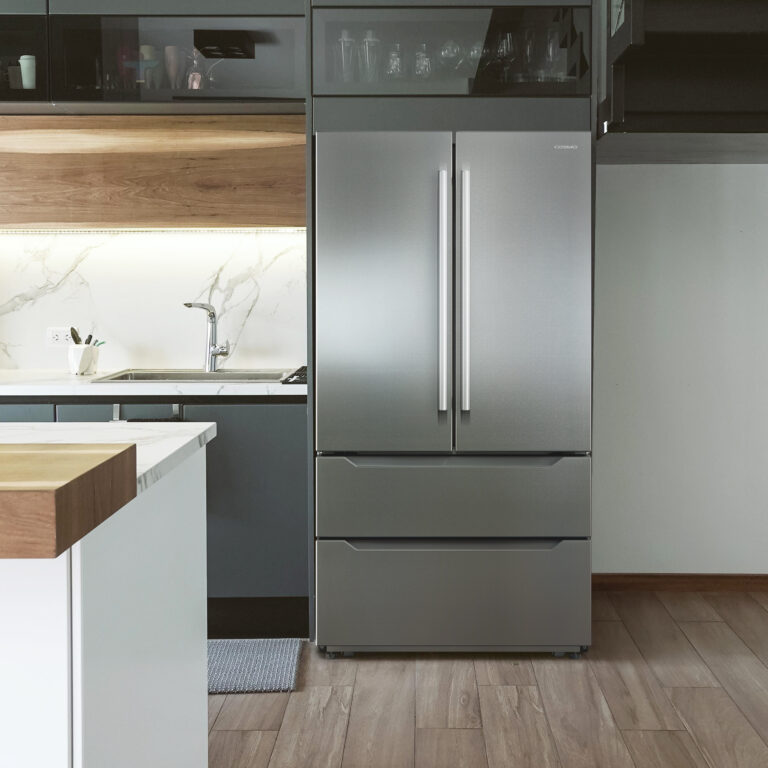
The COS-FDR225RHSS French Door Refrigerator: Modern Storage Solutions for Today’s Families

Choosing the right refrigerator for your family can make a huge difference in how your kitchen functions day to day. The COS-FDR225RHSS French door refrigerator brings together smart design, practical storage solutions, and energy efficiency in one attractive package. With 22.5 cubic feet of storage space and features designed for busy households, this refrigerator handles everything from weekly grocery hauls to holiday meal prep with ease. French door refrigerators have become incredibly popular because they offer the best combination of convenience and functionality. The COS-FDR225RHSS takes this proven design and adds features that make daily kitchen tasks simpler and more efficient. From the fingerprint-resistant stainless steel finish to the built-in ice maker, every detail is designed with real families in mind. Why French Door Design Makes Sense French door refrigerators put fresh food at eye level where you can see everything easily. This design means you’re not bending down to dig through produce drawers or searching through shelves to find what you need. The wide opening created by the double doors gives you full access to the refrigerator interior, making it easier to store large platters, wide containers, and awkwardly shaped items. The bottom freezer design keeps frozen foods organized in convenient pull-out drawers. These drawers slide out fully, giving you access to items at the back without having to move everything in front. You can organize frozen foods by category or frequency of use, making meal planning and preparation much more efficient. The door configuration also means you only open one side at a time for most tasks, which helps maintain temperature and saves energy. When you’re grabbing milk for your morning coffee or checking what’s available for lunch, you only expose half the refrigerator to room temperature air. Wide shelves accommodate pizza boxes, party platters, and large containers that won’t fit in traditional side-by-side models. This flexibility becomes particularly valuable during holidays or when entertaining guests. Smart Storage Features That Actually Work The COS-FDR225RHSS includes adjustable door bins and shelves that let you customize storage based on your family’s needs. Tall bottles, condiment jars, and various container sizes all find their place with the flexible shelving system. You can reconfigure the interior as your storage needs change. Two slide-out freezer drawers make organizing frozen foods simple and logical. You might use the upper drawer for everyday items like frozen vegetables and ice cream, while dedicating the lower drawer to bulk purchases and longer-term storage items. The clear fronts let you see contents without opening the drawers. Spill-proof glass shelves contain accidents and make cleanup easy. When something spills or leaks, it stays on one shelf rather than dripping through multiple levels. The glass shelves also look clean and modern while being easy to wipe down. The crisper drawers help keep fruits and vegetables fresh longer by maintaining proper humidity levels. Separate drawers let you store different types of produce in their ideal conditions, reducing waste and keeping your grocery budget in check. Door storage maximizes every inch of available space. Multiple door bins hold everything from condiments to beverages, keeping frequently used items within easy reach while freeing up main shelf space for larger items. Built-In Ice Maker Convenience Having a built-in ice maker eliminates the need for ice cube trays and ensures you always have ice available for drinks, entertaining, or cooling injuries. The automatic ice maker produces ice continuously and stores it in a convenient bin within the freezer. The removable 12-cube ice tray gives you flexibility for special occasions when you need extra ice quickly. You can fill multiple trays and have them ready in the freezer, then transfer the ice to the main storage bin when frozen. The included ice scoop stores right in the freezer compartment, so you always know where to find it. Having a dedicated scoop also keeps your ice more sanitary than using glasses or other utensils to serve ice. Ice production runs automatically, so you don’t need to remember to refill trays or monitor ice levels constantly. The system produces ice as needed and stores it until you’re ready to use it. Energy Efficiency That Saves Money The COS-FDR225RHSS carries an ENERGY STAR rating, which means it meets strict energy efficiency guidelines set by the Environmental Protection Agency. This certification translates to real savings on your electricity bills over the refrigerator’s lifetime. Modern insulation and sealing technology keep cold air inside where it belongs. Better insulation means the compressor doesn’t have to work as hard to maintain proper temperatures, reducing energy consumption and extending the appliance’s lifespan. LED lighting throughout the interior uses much less energy than traditional incandescent bulbs while providing better illumination. LED lights also last much longer and generate less heat, which helps maintain consistent temperatures inside the refrigerator. The efficient design pays for itself over time through reduced utility costs. When you consider that refrigerators run 24 hours a day, even small efficiency improvements add up to significant savings over many years of use. User-Friendly Electronic Controls Digital temperature controls give you precise control over both refrigerator and freezer temperatures. Electronic controls maintain more consistent temperatures than mechanical thermostats, which helps keep food fresher longer and reduces energy waste. The easy-to-reach control location means you can adjust temperatures without moving items or reaching into the back of the refrigerator. Clear displays show current settings so you always know what temperatures you’re maintaining. Separate controls for refrigerator and freezer compartments let you optimize each section independently. You might lower freezer temperatures when storing ice cream or adjust refrigerator temperatures based on how full the compartment is. The electronic system responds more quickly to temperature changes than mechanical controls, helping maintain food safety and quality even when you’re loading groceries or during power fluctuations. Fingerprint-Resistant Finish The fingerprint-resistant stainless steel finish keeps your refrigerator looking clean and professional even with daily use. Traditional stainless steel shows every fingerprint and smudge, requiring constant cleaning to maintain its appearance. This special finish reduces the appearance of fingerprints, water