
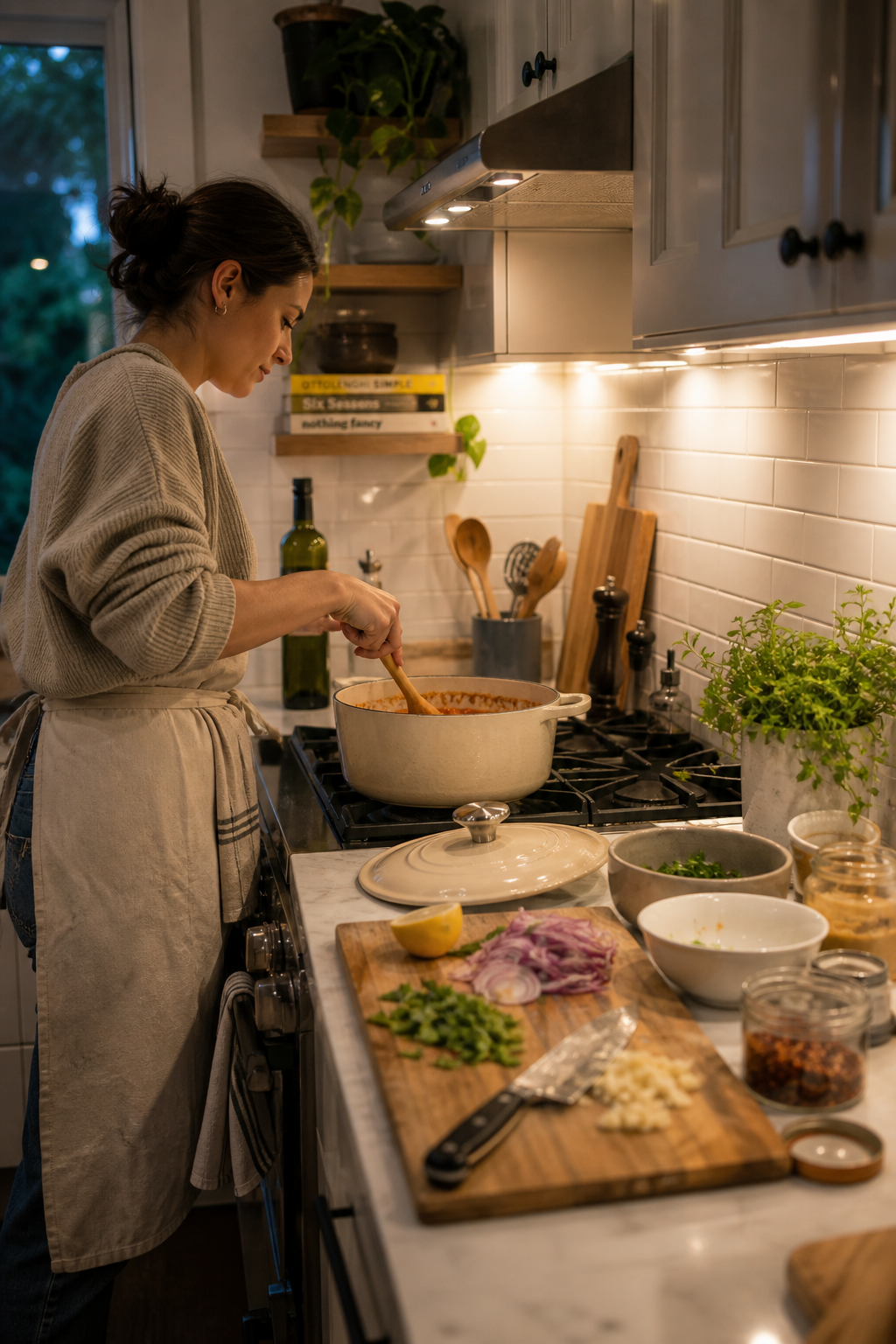
Why Your Kitchen Lighting Is Making Cooking Harder
You’re chopping vegetables in your own shadow. The stove sits in darkness while overhead lights glare into your eyes. You can’t tell if chicken is browned or burned because the lighting angle hides the surface.
Most kitchen lighting prioritizes general room illumination over task-specific visibility. Overhead fixtures light the room but cast shadows exactly where you work. Ambient lighting looks pleasant but doesn’t help you see knife work, stovetop cooking, or food prep details.
Good kitchen lighting puts light where you’re actually working—on the cutting board, into the pots, across the counter surface. This requires different fixtures, different placement, and different thinking than standard room lighting provides.
Here’s why standard kitchen lighting fails at supporting cooking tasks, where light actually needs to go, and how to fix lighting problems without rewiring your entire kitchen.
Overhead Lights Create Shadows Where You Work
Central ceiling fixtures illuminate the room. They don’t illuminate your work surfaces because your body blocks the light.
Standing at the counter with overhead lighting puts you between the light source and the work surface. Your body casts shadow directly onto the cutting board, mixing bowl, or whatever you’re working on.
The taller you are, the worse this problem becomes. Tall cooks create larger shadows. Short cooks working at standard counter height face similar issues from overhead fixtures.
Overhead lighting works for walking through the kitchen or viewing the room. It fails completely for detailed work requiring visibility.
This explains why you can’t see knife work clearly despite having “plenty of light” in the kitchen. The light exists but doesn’t reach where you need it.
Overhead fixtures should provide ambient lighting only. They cannot and should not be your primary task lighting.
Under-Cabinet Lighting Is Non-Negotiable
Under-cabinet lights mounted beneath upper cabinets shine directly onto counter work surfaces eliminating shadows your body creates.
The fixtures sit in front of you at cabinet height pointing downward. This angle puts light exactly where knife work, mixing, and counter prep happen.
LED strip lights installed under cabinets provide continuous lighting across counter length. The strips are thin, inexpensive, and easy to install with adhesive backing and plug-in power.
Puck lights create spotlight pools of light. These work better for focused task areas than general counter lighting. Use multiple pucks for even coverage.
Under-cabinet lighting transforms counter work visibility. The difference between chopping with and without under-cabinet lights is night and day.
This isn’t luxury lighting. It’s functional task lighting that actually supports cooking work. Kitchens without under-cabinet lighting are fundamentally underlit for prep work regardless of how many overhead fixtures exist.
Your Stove Lives in Darkness
Most kitchens position the stove without dedicated lighting. The range hood light is often the only illumination directly above cooking.
Overhead fixtures can’t light inside pots. The pot rim creates shadow hiding the food you’re actually cooking. You’re guessing about browning, simmering, or doneness because you can’t see clearly.
Range hood lights help but often provide weak illumination. Many hood lights are dim, poorly angled, or blocked by the hood itself.
Poor stove lighting causes overcooking and undercooking. You can’t monitor visual doneness cues when you can’t see the food properly.
Searing steak requires watching color change. Making caramel demands seeing exact amber shade. Scrambling eggs needs visibility of moisture level. All of these depend on adequate lighting directly above and into cookware.
If you’re tilting pots toward ambient light to see inside them, your stove lighting is inadequate.
Upgrade range hood bulbs to brightest compatible LED options. Add supplemental lighting aimed at the stovetop if hood lighting remains insufficient.
Task Lighting Needs to Be Bright
Ambient lighting aims for pleasant atmosphere. Task lighting needs to be substantially brighter for detailed work.
The lumens required for reading a recipe, checking knife work, or inspecting food for doneness exceed comfortable ambient lighting levels by significant margins.
Many kitchens use uniform lighting throughout attempting to create cohesive look. This compromises task areas that need concentrated bright light.
Under-cabinet LED strips should produce 300-500 lumens per foot of counter. Lower output creates insufficient lighting for detailed work.
Brightness matters more for task lighting than ambient lighting. You can’t compensate for dim task lights by adding more ambient light. They serve different purposes.
Don’t rely on ambient lighting to support detailed work. Install dedicated task lighting that’s substantially brighter than room lighting.
Color Temperature Affects Food Appearance
Light color temperature measured in Kelvin dramatically changes how food looks during cooking.
Warm light (2700-3000K) creates yellow/orange cast. Food appears warmer and more appealing but color accuracy suffers. Judging browning becomes difficult under warm lighting.
Cool light (5000-6500K) produces blue/white illumination showing colors more accurately. This helps assess doneness, browning, and ingredient freshness more reliably.
Neutral light (3500-4000K) balances accuracy and warmth. This middle ground works well for kitchens needing both function and atmosphere.
Most kitchen lighting skews warm because it’s considered more flattering and inviting. This aesthetic choice compromises cooking functionality.
Consider cooler temperature bulbs for task lighting even if ambient lighting stays warm. The mixed temperatures serve different purposes without conflicting.
Use 4000-5000K bulbs in under-cabinet lighting and range hoods for accurate color rendering during cooking tasks.
Dimmer Switches Create Problems
Dimmers allow adjusting light levels for ambiance. They also create situations where task lighting becomes inadequate.
Someone dims the lights for dinner mood. Later you start cooking in that dimmed lighting without thinking to brighten it. Now you’re working in insufficient light.
Dimmers on task lighting are particularly problematic. Under-cabinet lights and hood lights should operate at full brightness always. These aren’t mood lights—they’re work lights.
Ambient lighting can and should be dimmable. Task lighting should not. Separate the controls so dimming ambient lights doesn’t affect work area lighting.
If your task lights share circuits with dimmable ambient lights, you’re compromising functionality for aesthetic control.
Install task lighting on dedicated circuits without dimmer switches. Leave dimming capability for ambient fixtures only.
Natural Light Isn’t Reliable
Kitchens with windows get praised for natural light. This light varies dramatically by time of day, weather, and season making it unreliable for task lighting.
Morning cooking happens in darkness or low light before sunrise. Evening cooking after sunset offers no natural light. Winter afternoons provide weak gray light.
Relying on natural light means lighting conditions change constantly. Your visibility depends on time and weather rather than consistent illumination.
Direct sunlight creates glare problems. Working facing a bright window makes it difficult to see work surface details due to the contrast.
Natural light is pleasant and should be maximized. But it cannot replace artificial task lighting because it’s inconsistent.
Design kitchen lighting assuming no natural light is available. Natural light becomes bonus illumination, not primary lighting.
Install adequate artificial task lighting even in kitchens with excellent windows. You’ll need it for evening cooking, early morning prep, and dark winter days.
Pendant Lights Look Good but Don’t Help
Decorative pendant lights over islands or peninsulas create focal points. They rarely provide useful task lighting.
Pendants hang too high to light counter surfaces effectively. They illuminate the air between fixture and counter rather than the work surface itself.
The aesthetic appeal of pendants makes them popular but their lighting contribution is minimal for cooking tasks.
Pendant lights work as decorative elements and ambient lighting. Don’t mistake them for task lighting.
If you have pendants over prep areas, add under-cabinet or under-island lighting for actual work visibility. The pendants provide atmosphere; the task lighting provides function.
Choose pendant placement and style for appearance. Choose under-cabinet and focused lighting for actual cooking support.
Lighting the Sink and Dishwasher Areas
Dishwashing and sink work require dedicated lighting often overlooked in kitchen design.
Overhead lights illuminate sink area from above creating shadows inside the sink basin. You’re washing dishes in your own shadow.
Under-cabinet lights help if upper cabinets exist above the sink. Many sinks sit beneath windows without cabinet lighting creating visibility problems.
Dishwasher loading and unloading happens in whatever ambient light exists. Seeing into the dishwasher to place items properly requires light aimed into the appliance.
Consider small focused lights above sink areas without upper cabinets. These could be recessed lights positioned to shine into the sink basin.
Adequate lighting at the sink prevents broken dishes from poor visibility and makes cleanup more efficient.
Pantry and Cabinet Interiors
Opening cabinets or pantries reveals dark interiors even when room lighting is adequate. You’re searching through shelves in shadow.
Battery-powered LED lights with motion sensors solve this problem inexpensively. These stick-on lights automatically illuminate when cabinet doors open.
Pantry lighting particularly matters for deep shelves where overhead room light doesn’t penetrate. Finding ingredients shouldn’t require flashlights.
These auxiliary lights seem minor but they reduce frustration and speed ingredient retrieval significantly.
Adequate interior lighting in storage areas supports cooking workflow by making ingredient access faster and more reliable.
The Lighting Hierarchy That Actually Works
Effective kitchen lighting uses layers with different purposes and different controls.
Ambient lighting provides general room illumination. These are dimmable overhead fixtures creating pleasant atmosphere without supporting cooking tasks directly.
Task lighting illuminates specific work areas: under-cabinet lights for counters, range hood lights for stovetop, focused lights for sink. These operate at full brightness always.
Accent lighting highlights features or creates visual interest: toe kick lighting, interior cabinet lighting, or decorative elements. These are optional and atmospheric.
Each layer serves different purposes and operates independently. Dimming ambient lights doesn’t affect task lighting brightness.
This hierarchy ensures adequate lighting for cooking work regardless of ambient lighting level or time of day.
Practical Fixes Without Rewiring
Major lighting renovation requires electrician work and significant cost. Many improvements don’t.
Plug-in LED strip lights with adhesive backing install under cabinets in minutes. These provide transformative task lighting without electrical work.
Upgrade existing bulbs to higher-lumen LEDs in range hoods and existing fixtures. Better bulbs in current fixtures improve lighting substantially.
Add battery-powered motion sensor lights to cabinets, pantries, and under-island areas. These install with adhesive mounting and require no wiring.
Use floor or counter lamps to add light to dark corners or areas lacking dedicated fixtures. These aren’t permanent solutions but they work.
Swap warm bulbs for neutral or cool temperature bulbs in task lighting fixtures. Color temperature changes improve visibility without installation work.
Strategic bulb upgrades, plug-in under-cabinet lights, and battery-powered motion sensors solve most kitchen lighting problems for under $200 and zero electrician fees.
What Actually Matters for Kitchen Lighting
Good kitchen lighting puts bright, color-accurate light directly onto work surfaces where you’re actually cooking.
Under-cabinet lighting is essential, not optional. It eliminates the shadow problem that overhead fixtures create.
Task lighting should be brighter and cooler temperature than ambient lighting. These lights serve function, not atmosphere.
Separate controls for task and ambient lighting allow dimming atmosphere without compromising work visibility.
Natural light is wonderful but unreliable. Adequate artificial task lighting is mandatory regardless of window placement.
Your kitchen might have plenty of light overall while still being poorly lit for cooking tasks. The light needs to be in the right places with right intensity and right color temperature to actually support the work happening there. Stop cooking in your own shadow. Add under-cabinet lights, upgrade hood lighting, and separate task lights from dimmable ambient fixtures. The visibility improvement transforms how efficiently and accurately you cook.