
From Fridge to Table: Smart Ways to Keep Ingredients Fresh
Most of us have been there. You buy a beautiful bunch of cilantro on Sunday, and by Wednesday it has turned into a damp, dark green puddle at the back of the crisper. The berries that looked perfect at the store are fuzzy before you get around to them.
The good news is that fresh ingredients rarely fail because of bad luck. They fail because of a few predictable things: temperature, moisture, airflow, and the gases some produce gives off as it ripens. Here is how to manage all four.
Start With the Right Temperature
Everything else depends on this. Bacteria multiply quickly once food sits above 40°F, so the USDA recommends keeping the refrigerator at 40°F or below and the freezer at 0°F. Many people never actually check. The built-in dial or display may say one thing while the shelf where your milk sits says another.
Put an inexpensive appliance thermometer on a middle shelf and check it once a month. If it reads warmer than 40°F, adjust the setting and check again the next day. A fridge that runs a few degrees warm shortens the life of everything inside it, especially dairy, leafy greens, and fresh herbs.
Habits matter too. Every time the door opens, warm kitchen air rushes in, so decide what you need before you open it and close it fully each time.
Know Which Zone Does What
A refrigerator is not one uniform cold box. Different areas run at slightly different temperatures, and using them on purpose is one of the easiest freshness upgrades there is.
Upper shelves are the most stable and are best for ready-to-eat foods: leftovers, yogurt, deli items, and drinks.
Lower shelves tend to be the coldest, which makes them the right home for raw meat, poultry, and fish. Keep them in sealed containers or on a rimmed tray so nothing drips onto the produce or leftovers below or beside them.
Door bins are the warmest and most variable area, because they swing in temperature every time the door opens. Condiments, jams, and juices handle that fine. Milk and eggs do not, however convenient the little egg tray looks.
Crisper drawers are built to hold produce, and they work best when they are actually used for that, kept separate from everything else.
Give Produce Its Own Space
The crisper drawer exists for a reason. Fruits and vegetables release moisture and, in some cases, ethylene gas, and they do better when they are not competing with raw meat juices, strong odors, or a crowd of other items.
Ethylene is the part most people have never heard of. Some produce gives it off as it ripens, including apples, bananas, avocados, peaches, pears, and tomatoes. Other items are sensitive to it, including leafy greens, broccoli, cucumbers, and carrots, and they yellow, soften, or turn bitter faster when stored next to the gas producers. If your lettuce keeps wilting early, the apple beside it may be part of the story.
A simple rule works well. Keep ethylene producers apart from sensitive produce, either by using separate drawers or by leaving some space between them. Also, do not overpack the drawer. Cold air needs room to move, and tightly crammed produce can trap moisture and spoil faster.
Treat Different Ingredients Differently
A few specific habits make a noticeable difference.
Leafy greens. Moisture is the enemy of salad greens, and so is a sealed bag full of condensation. Wash them only when you are ready to use them, or dry them thoroughly in a salad spinner if you prefer to prep ahead. Store them in a container lined with a paper towel to absorb extra moisture.
Fresh herbs. Tender herbs such as cilantro, parsley, and mint last longer when treated like a bouquet. Trim the stems, stand them in a jar with an inch of water, and loosely cover the tops. Basil is the exception, since it blackens in the cold and does better on the counter in water.
Berries. Resist rinsing them when you get home. Extra water speeds up mold. Keep them dry in a breathable container, and rinse only the amount you plan to eat.
Tomatoes, onions, potatoes, and garlic. These generally belong outside the fridge. Cold temperatures dull the flavor and texture of tomatoes, and potatoes can turn gritty and overly sweet. Store them in a cool, dark, ventilated spot instead.
Meat and fish. Use fresh poultry, ground meat, and fish within a day or two, or freeze them in meal-sized portions right away.
Use What You Have, in the Right Order
Even perfect storage cannot save food that gets forgotten. The most reliable habit is one grocery stores have used for decades: first in, first out. When you unpack groceries, move older items to the front and put new ones behind them. The yogurt that expires Friday should be the first thing you see when you open the door.
A “use first” shelf makes this even easier. Put anything that needs to be eaten soon, such as half an onion or a container of cooked chicken, in one clear spot, and look there before you plan dinner or buy more groceries.
Dating helps too. A strip of masking tape and a marker take ten seconds. Leftovers are generally safe for three to four days in the refrigerator, and anything you will not finish by then should go into the freezer.
Let Your Refrigerator Help
Habits do most of the work, but the refrigerator itself can make good habits easier or harder. Shelves that adjust, drawers that are actually separate from the main compartment, and controls that let you set an exact temperature all matter more than they sound on a spec sheet.
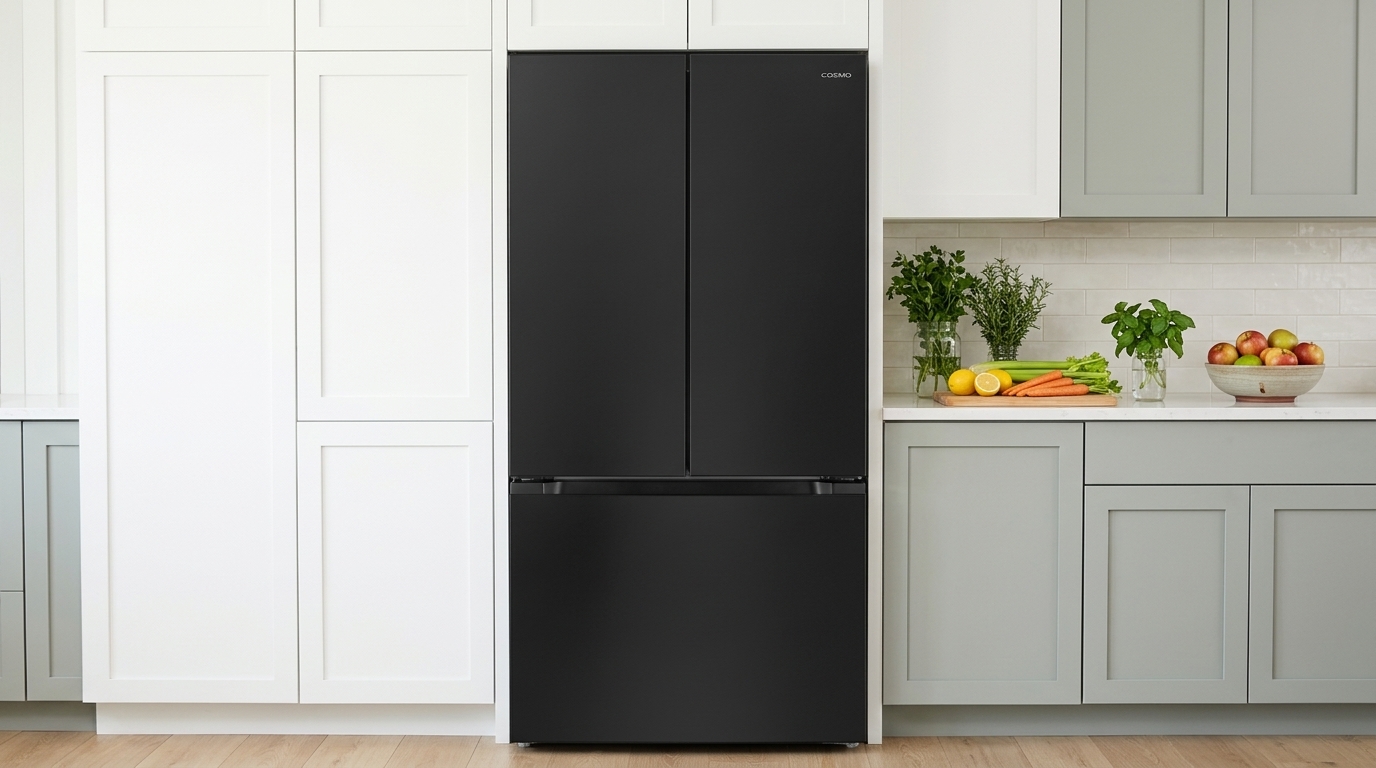
Cosmo’s COS-RFFV283RBK, a 27.4 cu. ft. French door refrigerator from the Vista Collection, is a good example of a design built around those everyday needs. It offers 18.6 cu. ft. of fresh food space above 8.8 cu. ft. of freezer capacity, which gives a household enough room to keep produce, leftovers, and weekly groceries from crowding each other. That matters for freshness, since an overpacked fridge cannot circulate cold air evenly.
The fully enclosed crisper drawers give fruits and vegetables a space of their own, away from raw proteins and open containers, which supports the separation described above. Adjustable fresh food shelves can be moved to fit a tall bottle, a stockpot, or a big salad container, so you are not forced to stack things on top of each other just to close the door. Door bins take condiments and smaller bottles, keeping the main shelves open for the foods that need steadier cold.
Digital touch controls for both the fresh food and freezer sections make it simple to set a precise temperature rather than guessing at a dial, which pairs well with that monthly thermometer check. A door alarm beeps if a door is left ajar, which catches the kind of small mistake that can quietly warm a whole refrigerator overnight. Energy-efficient LED lighting in both sections makes it easier to see what you have, and food you can see is food you are more likely to use.
The freezer deserves attention too. Its slide-out drawer keeps frozen portions visible instead of buried, and the matte black finish resists fingerprints and smudges.
If you are considering it, check the measurements first: the unit stands about 70.1 inches high, 35.9 inches wide, and 33.6 inches deep, and it needs a 36-inch cutout. It is ENERGY STAR rated, with a listed annual energy use of 630 kWh.
Prep Smart, Cook Easy
Once your ingredients are staying fresh, a little weekend prep turns them into easy meals. Chop sturdy vegetables like carrots, celery, and peppers and keep them in airtight containers. With Thanksgiving just two weeks away, an organized fridge that is free of forgotten leftovers gives you room to focus on the meal instead of the clutter.
The Takeaway
Keeping ingredients fresh is mostly about small, repeatable choices. Check your temperature. Give produce its own space and keep ethylene producers away from sensitive items. Store each ingredient the way it actually likes to be stored. Use older food first, and label what you cannot finish. Then choose a refrigerator that supports those habits with flexible shelving, enclosed crisper drawers, and controls you can trust.
Do that consistently, and the trip from fridge to table gets shorter, simpler, and a lot less wasteful. Your groceries will taste better, your budget will stretch further, and dinner will feel a little less like a race against the clock.