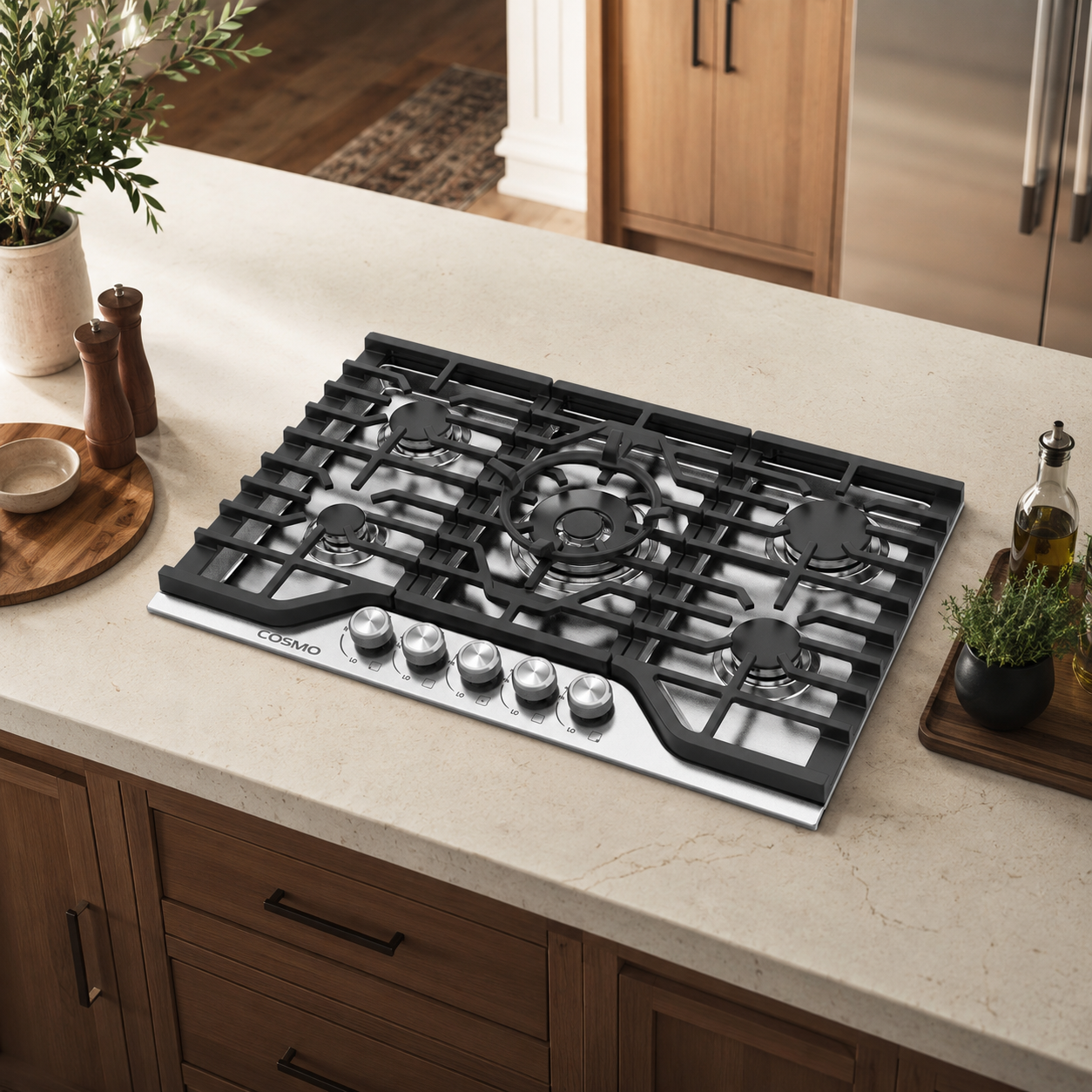
The COS-DIC366 Gas Cooktop: 36-Inch Drop-In with Six Italian-Made Sealed Burners
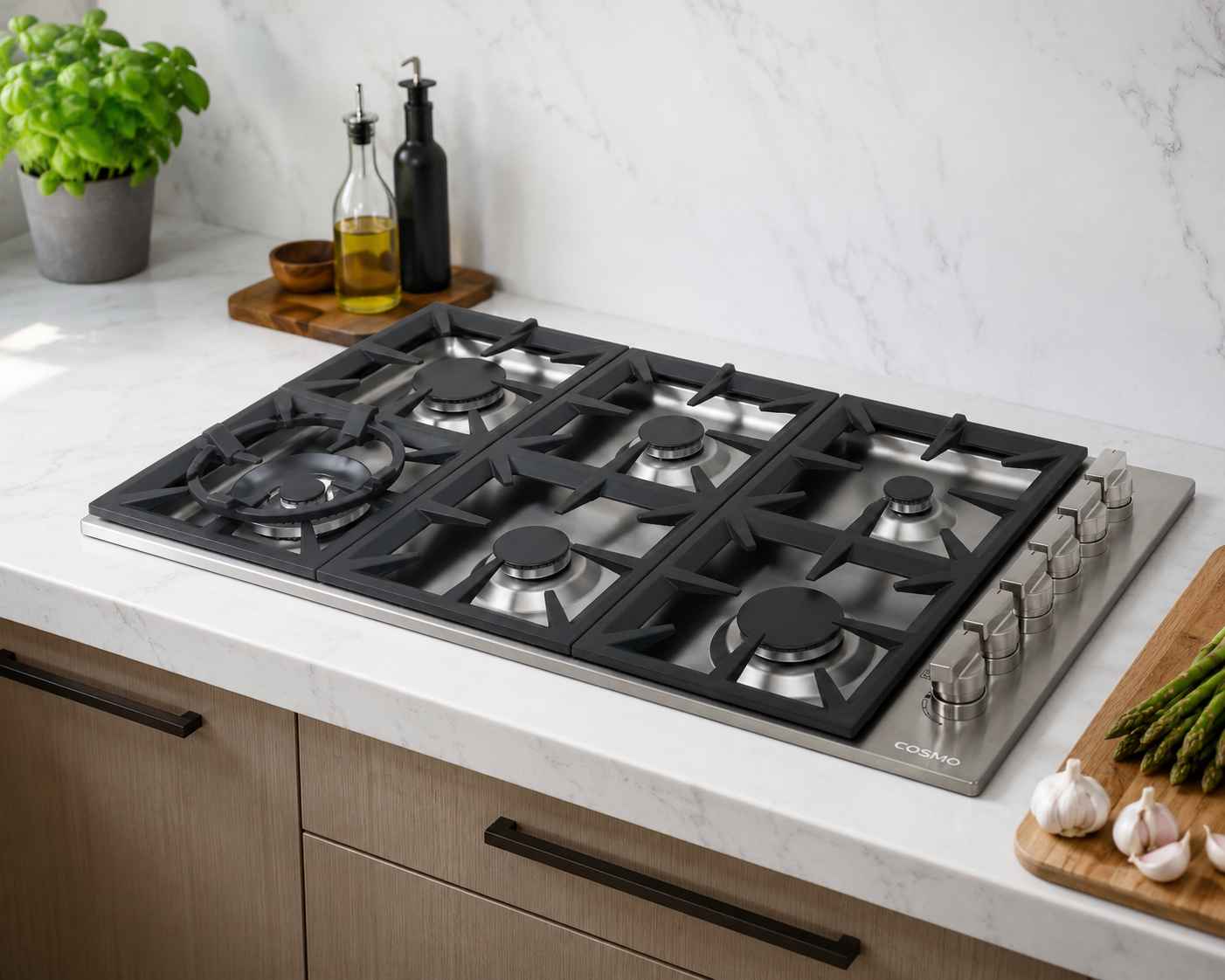
Drop-in gas cooktops that pair serious burner quality with a clean design approach are harder to find than the market’s volume of options suggests. The COS-DIC366 positions itself through a specific combination: six sealed Italian-made gas burners across a 36-inch stainless steel surface, with controls mounted on the side rather than the front, and cast iron grates spanning the full cooktop width. The side control placement is the detail that defines this cooktop’s aesthetic, the surface reads as an almost uninterrupted field of grates and burners, without the control knob band across the front that most cooktops use. This matters particularly for kitchen island installations where the cooktop is viewed from multiple angles simultaneously, and for modern kitchen designs where a cleaner surface line above the countertop is a genuine design priority. The Italian-made burner specification reflects the same sourcing decision found in several Cosmo ranges and the DIC304, a commitment to burner quality through manufacturing heritage rather than just specification numbers. Six burners across 36 inches provides the simultaneous cooking capacity that serious meal preparation demands without the 48-inch footprint of the largest configurations, fitting standard 36-inch countertop openings and pairing naturally with 36-inch range hoods. LP conversion capability makes the cooktop available to homes using liquid propane rather than natural gas, and the metal constructed knobs and stainless steel surface complete a build that prioritizes durability alongside the design clarity that the side-control approach achieves. The Side Control Distinction Most drop-in cooktops position all control knobs across the front edge, creating a consistent product language that’s familiar and functional. The COS-DIC366’s side-mounted controls represent a deliberate departure that produces specific aesthetic and practical outcomes worth understanding. Surface Continuity: Moving controls to the side allows the cooktop’s main surface to present as an uninterrupted plane of grates and burners from front to back. Viewing the cooktop from above, the angle most visible during cooking and most prominent in kitchen photography, the absence of a front control band creates a cleaner, more considered appearance than front-control designs achieve. For kitchen design where countertop aesthetics are a genuine priority, this difference is meaningful. Island Installation Advantage: Kitchen island cooktops are viewed from all four sides, from the front, from the sides, and across the surface during cooking. Standard front-mounted controls work ergonomically when the cook faces the front, but they interrupt the sight line from other angles. Side controls allow anyone approaching the island from the front to see an unbroken surface before reaching the controls on the side, creating a more intentional appearance from all viewing angles simultaneously. Reach and Operation: Side controls require reaching slightly to the side rather than straight forward to adjust burners. For most cooking situations this is a non-issue and becomes entirely natural within the first week of cooking on the unit. The adjustment in reach habit is minor and quickly becomes automatic, while the visual benefit of the cleaner surface persists throughout ownership. Design Versatility: The side-control configuration suits both contemporary and transitional kitchen designs where visual continuity across countertop surfaces is valued. It works particularly well when the cooktop’s stainless surface is meant to integrate with adjacent countertop materials, granite, quartz, or marble, without the control band creating a visual break at the front edge. Italian-Made Sealed Burners The six burners in the COS-DIC366 carry the Italian-made designation that appears across Cosmo’s premium gas cooktop and range offerings — a specification with practical implications for cooking performance that go beyond the brand origin. Manufacturing Precision: Italian gas burner production, particularly for the residential and commercial cooking appliance market, has developed through decades of precision engineering focused specifically on flame consistency, low-end stability, and reliable ignition across thousands of use cycles. The manufacturing tolerances in Italian-made burners typically exceed those of mass-market alternatives, producing more consistent flame patterns and more reliable performance throughout the burner’s operational life. Flame Quality Across the Range: The cooking difference that Italian burner quality produces is most noticeable at the extremes of the operating range — at minimum output where stable, even low flames are required for delicate simmering, and at maximum output where consistent, even flame distribution across the full burner crown matters for high-heat cooking. Both extremes benefit from the tighter manufacturing tolerances that quality Italian burner production delivers compared to less precisely made alternatives. Six-Burner Configuration: Distributing six Italian-made burners across 36 inches provides a burner arrangement that covers the full range of simultaneous cooking needs — high-heat tasks on the power burners, medium-heat general cooking on mid-range burners, and gentle simmering on the lower-output positions. Having six zones available means no waiting for burners, no juggling between tasks, and no compromise on heat level for any given dish while other components cook simultaneously. Sealed Construction: All six burners use sealed design, preventing cooking spills from reaching internal burner components. The sealed surface keeps mess on the stainless steel cooktop surface where wiping it up is straightforward, rather than allowing liquids to reach internal gas ports and components where they cause corrosion and clogging over time. For a six-burner cooktop where multiple spills during active meal preparation are the norm, sealed construction’s maintenance advantage compounds significantly over the cooktop’s lifespan. Cast Iron Grates The heavy-duty cast iron grates spanning the COS-DIC366’s full 36-inch surface provide the structural and thermal foundation that serious gas cooktop cooking requires. Continuous Grate Surface: A single connected grate system across all six burners allows sliding heavy cookware between positions without lifting — a practical advantage that accumulates into genuine daily convenience for anyone using large stockpots, heavy cast iron pans, or oversized cookware that would be awkward to lift and reposition. Moving a full pasta pot from the high-heat boiling position to a lower-heat holding position requires no lifting, reducing spill risk and physical strain. Thermal Mass and Stability: Cast iron’s substantial thermal mass absorbs heat from burner flames and distributes it more evenly to cookware bases than lighter grate materials manage. This thermal buffer moderates the temperature fluctuations that