
Kitchen Upgrades That Actually Matter (and the Ones That Don’t)
Kitchen renovation advice tends toward either extreme budget constraints or luxury indulgence, leaving most homeowners wondering which improvements actually enhance daily cooking and living versus which ones look impressive but contribute little to function. The gap between marketed kitchen features and genuinely useful upgrades creates confusion when you’re trying to spend money wisely on improvements that will serve you for years. Understanding which kitchen changes deliver real value—through better workflow, reduced frustration, or improved cooking capability—helps you invest in upgrades that matter rather than trendy features that sound appealing but don’t change how your kitchen actually works.
The challenge is separating marketing narratives from lived experience. Some upgrades that seem practical turn out frustrating, while others that appear unnecessary prove invaluable once you experience them. The difference often comes down to how you actually use your kitchen rather than how you imagine using it or how magazines suggest you should use it.
Upgrades Worth Every Dollar
Adequate and Well-Placed Lighting
Kitchen lighting ranks among the most impactful upgrades because insufficient or poorly positioned lighting makes every kitchen task more difficult and less safe. Most kitchens rely too heavily on a single overhead fixture that casts shadows exactly where you’re working.
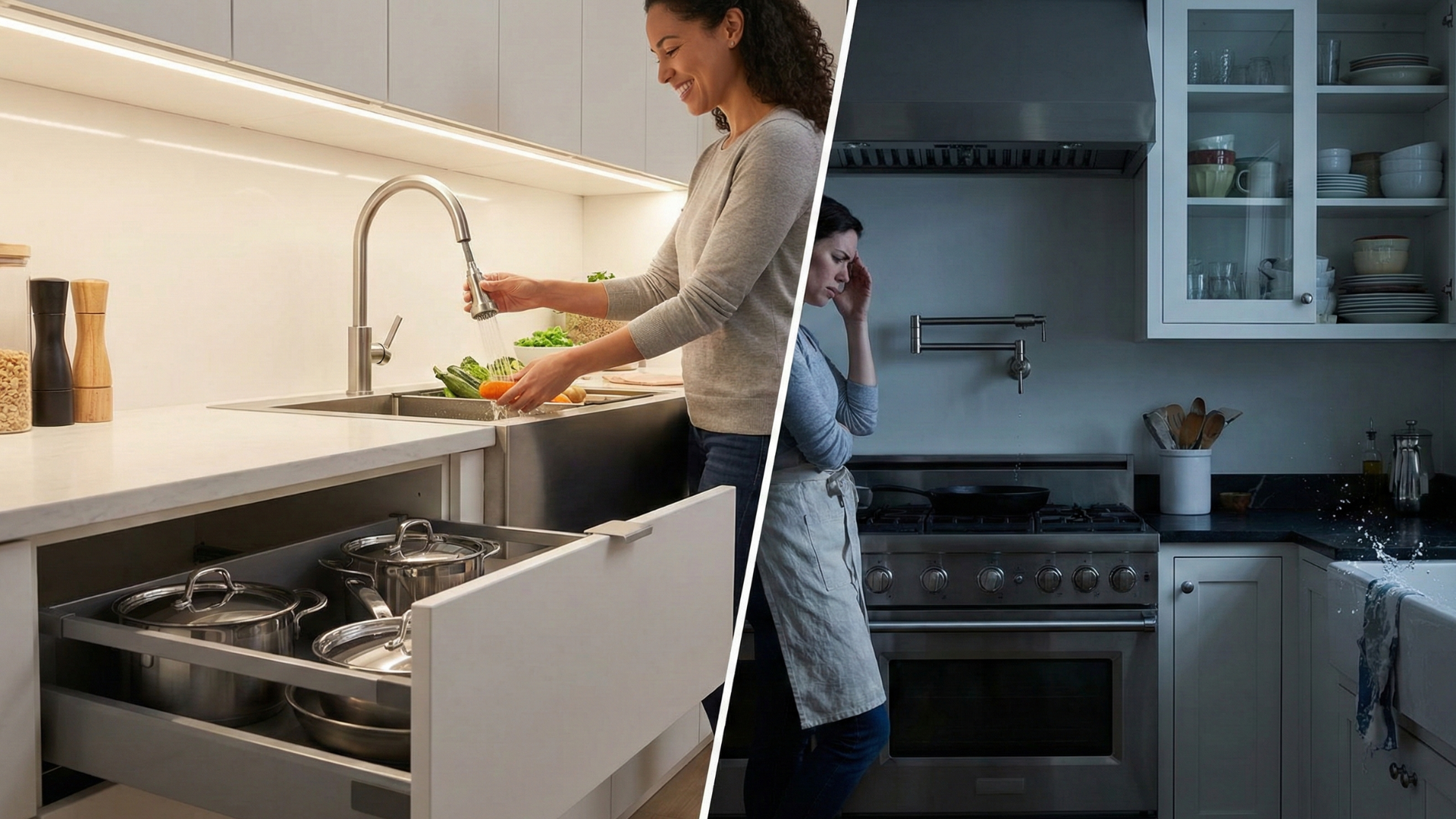
Under-cabinet lighting transforms food preparation by illuminating countertops where you actually work. The difference between chopping vegetables in shadow versus in direct light affects both safety and efficiency dramatically. LED strip lights installed under wall cabinets cost relatively little but change how your kitchen functions every single day.
Task lighting over the sink makes dishwashing and food prep at the sink far easier. A pendant or recessed light positioned directly over the sink area eliminates the shadows created when your body blocks overhead lighting.
Overhead lighting should be layered rather than relying on a single central fixture. Multiple recessed lights, a pendant over the island, or track lighting that can be directed creates even illumination without harsh shadows.
Dimmer switches add flexibility by allowing bright light when needed for detailed tasks and softer lighting for casual kitchen use or entertaining. The ability to adjust lighting intensity makes the kitchen more comfortable throughout the day.
The lighting upgrade provides value every single time you use your kitchen. Unlike features you use occasionally, lighting affects every meal, every cleanup, every kitchen task.
Better Faucet and Sink Configuration
The faucet and sink get used constantly, making quality improvements here worthwhile investments that reduce daily frustration and improve kitchen workflow.
Pull-down or pull-out faucet sprayers provide flexibility that standard faucets don’t offer. Rinsing large pots, washing vegetables, cleaning the sink itself—all become easier when you can direct water flow exactly where needed.
Higher faucet clearance accommodates large pots under the spout without awkward tilting. If you’ve ever struggled to fill a tall stockpot or water pitcher under a low faucet, adequate clearance eliminates that constant annoyance.
Quality faucet construction means the faucet continues working smoothly for years without developing drips, loose handles, or spray pattern problems. Cheap faucets fail within a few years while quality faucets last decades.
Deeper sinks hold more dishes and large cookware without overflowing onto the counter. An extra two or three inches of depth makes a surprising difference in sink utility.
Single-basin versus divided sinks depends on your actual usage. If you regularly need to soak large sheet pans or roasting pans, a single large basin serves you better than a divided sink where nothing fits properly.
The sink and faucet upgrade improves kitchen function multiple times daily. These aren’t glamorous improvements, but they affect your kitchen experience constantly.
Functional Storage Solutions
Basic cabinets with empty space and fixed shelves waste storage capacity and create frustration when you need specific items buried in back corners. Thoughtful storage upgrades make the kitchen far more functional.
Pull-out shelves in lower cabinets bring items from the back within reach without crawling on the floor and moving everything else. The ability to pull out the entire shelf transforms how you access pots, pans, and small appliances.
Deep drawer dividers for utensils, tools, and gadgets prevent the tangled mess that develops in standard drawers. Organized storage means finding what you need immediately rather than digging through chaos.
Pull-out trash and recycling bins hide waste containers while keeping them easily accessible. Built-in waste solutions eliminate floor clutter from freestanding bins while making disposal convenient during cooking.
Vertical storage for baking sheets, cutting boards, and trays utilizes cabinet space efficiently instead of stacking these items horizontally where you need to remove six things to reach the one you want.
Corner cabinet solutions like lazy Susans or pull-out systems make corner spaces usable rather than letting them become black holes where items disappear forever.
Drawer organizers for spices keep bottles visible and accessible rather than crowded on shelves where you can’t see what you have. Being able to find spices quickly improves cooking flow.
Storage improvements reduce daily frustration and make cooking more enjoyable by ensuring everything has a logical place where you can find and access it easily.
Quality Ventilation
Proper range hood ventilation removes smoke, steam, grease, and cooking odors before they permeate your home. Inadequate ventilation means cooking smells linger for hours and grease accumulates on surfaces throughout the kitchen.
Adequate CFM (cubic feet per minute) for your cooking style ensures the hood can actually clear the air. Undersized hoods run constantly without effectively removing cooking byproducts.
Ducted ventilation to the outside works dramatically better than recirculating hoods with charcoal filters. Truly removing air from the kitchen eliminates odors rather than just filtering and returning them.
Proper hood sizing covers the cooktop width completely. A 30-inch hood over a 36-inch cooktop cannot capture all the smoke and steam from the outer burners.
Quiet operation at usable fan speeds makes the difference between actually using your hood versus avoiding it because the noise is unbearable. Good hoods provide strong ventilation without sounding like jet engines.
The ventilation upgrade pays dividends during any cooking that generates smoke, steam, or strong odors. If you cook regularly, proper ventilation improves your kitchen environment substantially.
Upgrades That Sound Good But Disappoint
Farmhouse Sinks
Exposed-front farmhouse sinks look impressive in photos but create practical problems that standard under-mount sinks don’t have.
Water splashing against your clothing happens constantly because you stand right against the exposed sink front. The lack of counter overhang means water drips down the cabinet face and onto you rather than being contained.
Difficult installation requires cabinet modifications that complicate sink replacement later. You can’t just swap out a farmhouse sink for a different model as easily as replacing standard sinks.
Heavy weight of large farmhouse sinks requires structural cabinet support that standard cabinets don’t provide. The installation cost and complexity exceeds standard sink installation significantly.
Cabinet moisture damage develops from water running down the exposed sink front onto cabinets below. The design inherently directs water toward cabinet surfaces.
Limited accessories fit properly because the sink shape and exposed installation don’t accommodate standard sink grids, cutting boards, or drying racks designed for conventional sinks.
Cleaning the exposed front adds another surface to maintain beyond just the sink interior. The front face shows water spots and requires regular wiping.
The aesthetic appeal doesn’t compensate for the functional compromises if you actually use your sink heavily for cooking and cleanup.
Pot Fillers Over the Stove
Wall-mounted pot fillers sound convenient until you consider how rarely they’re actually useful and the problems they introduce.
Limited actual use occurs because you still need to carry the filled pot from the cooktop to the sink when draining. The pot filler only eliminates one trip—filling the pot—but you still make the trip back with a heavy pot of hot water.
Installation cost and complexity requires running water lines to the wall behind your cooktop, adding significant expense for a feature you’ll rarely use.
Dripping issues develop over time because any faucet that’s not used regularly tends to develop drips and mineral deposits. A pot filler that sits unused most of the time often starts dripping.
Cleaning pasta or vegetables still requires the sink for draining, meaning you make trips to the sink anyway regardless of where you fill pots.
Counter-depth clearance sometimes creates problems where the pot filler interferes with cookware on back burners or doesn’t swing far enough to reach all burner positions.
The pot filler sounds practical but serves such a narrow function that most people rarely use them after the novelty wears off.
Glass Front Cabinets Throughout
Glass cabinet doors look sophisticated in design magazines but create maintenance and storage challenges in real kitchens used for actual cooking.
Constant visibility requires keeping cabinet contents perfectly organized and attractive at all times. You can’t just shove items in cabinets—everything is always on display.
Dust and fingerprints on glass show immediately, adding another surface requiring regular cleaning beyond the already demanding kitchen maintenance.
Limited storage flexibility results because everything visible must look good, preventing you from storing mismatched containers, less attractive items, or anything you don’t want displayed.
Glassware and dishware must coordinate aesthetically because mixed collections look chaotic behind glass doors. Your cabinet contents become decorative displays rather than functional storage.
The maintenance burden and storage limitations usually outweigh the aesthetic benefit, especially if you cook regularly and need functional storage more than display space.
Appliance Garages
Corner appliance garages designed to hide small appliances sound practical but often become inconvenient dead space.
Awkward access makes retrieving appliances from back corners frustrating. The garage design means reaching into a corner cabinet—exactly the type of space that’s already difficult to use.
Limited capacity restricts what actually fits. Most appliance garages accommodate only two or three small appliances, hardly solving the small appliance storage problem.
Wasted counter space results because the garage occupies prime counter real estate while holding items you use infrequently. That counter space would be more valuable for food prep.
Better alternatives include storing frequently used appliances on the counter where they’re actually accessible and putting infrequently used items in standard cabinets or pantries.
The appliance garage concept appeals more than the reality of how people actually use their kitchens.
Upgrades That Depend on Your Situation
Double Ovens
Double ovens make sense for some households but represent wasted capacity and expense for others.
High-volume holiday cooking benefits substantially from double ovens when you’re preparing multiple dishes requiring different temperatures simultaneously. If you regularly host large gatherings, the second oven is genuinely useful.
Daily cooking for most households doesn’t require two ovens. The second oven sits unused most of the year except during holidays, making it expensive capacity for occasional use.
Better alternatives might include a larger single oven that accommodates multiple dishes or a combination of standard oven plus toaster oven for small tasks.
Evaluate your actual cooking patterns honestly before committing to double ovens. If you only need both ovens a few times per year, the expense and space might not justify the limited use.
Wine Refrigerators
Dedicated wine storage makes sense for wine collectors but not for casual wine drinkers.
Serious wine collections requiring temperature control justify dedicated refrigeration. If you’re storing wine long-term and care about proper aging conditions, wine refrigerators serve a real purpose.
Casual wine consumption doesn’t require specialized storage. If you buy wine for near-term consumption, regular refrigeration or room temperature storage works fine.
Expensive dedicated equipment for wine you’ll drink within weeks or months represents questionable value when that space and budget could improve more practical kitchen functions.
Consider your actual wine habits—collecting versus consuming—before adding specialized wine storage.
Smart Kitchen Technology
Connected appliances and voice-controlled features sound futuristic but often add complexity without genuine benefit.
Limited practical advantage comes from preheating ovens remotely when you still need to be home to put food in. The connectivity doesn’t save meaningful time or effort.
Reliability concerns emerge because software requires updates, apps get discontinued, and technology becomes obsolete while the appliance itself remains functional. Your 15-year-old “dumb” refrigerator still works, but will your smart fridge’s app still function in 15 years?
Added complexity creates more points of failure. When appliances fail, you want the problem to be mechanical and fixable rather than software-based and potentially obsolete.
Basic reliable operation matters more than connectivity features for most kitchen tasks. An oven that heats accurately and consistently provides more value than one that connects to your phone but has uneven temperature.
The Fundamental Principle
The most valuable upgrades improve daily function rather than adding features you’ll use occasionally or never. Every kitchen task benefits from good lighting, adequate storage, quality plumbing fixtures, and proper ventilation. Not every kitchen benefits from farmhouse sinks, pot fillers, or smart technology.
Think about your kitchen workflow honestly. What frustrates you regularly? What makes cooking or cleaning more difficult than necessary? Those friction points guide where improvements will actually matter.
Don’t upgrade based on trends or impressive-sounding features. Upgrade based on how you actually use your kitchen and what genuinely makes those regular tasks easier, safer, or more pleasant.
The kitchen serves you through countless meals and years of use. Invest in improvements that enhance that daily service rather than features that look good but don’t change how the kitchen actually works.