
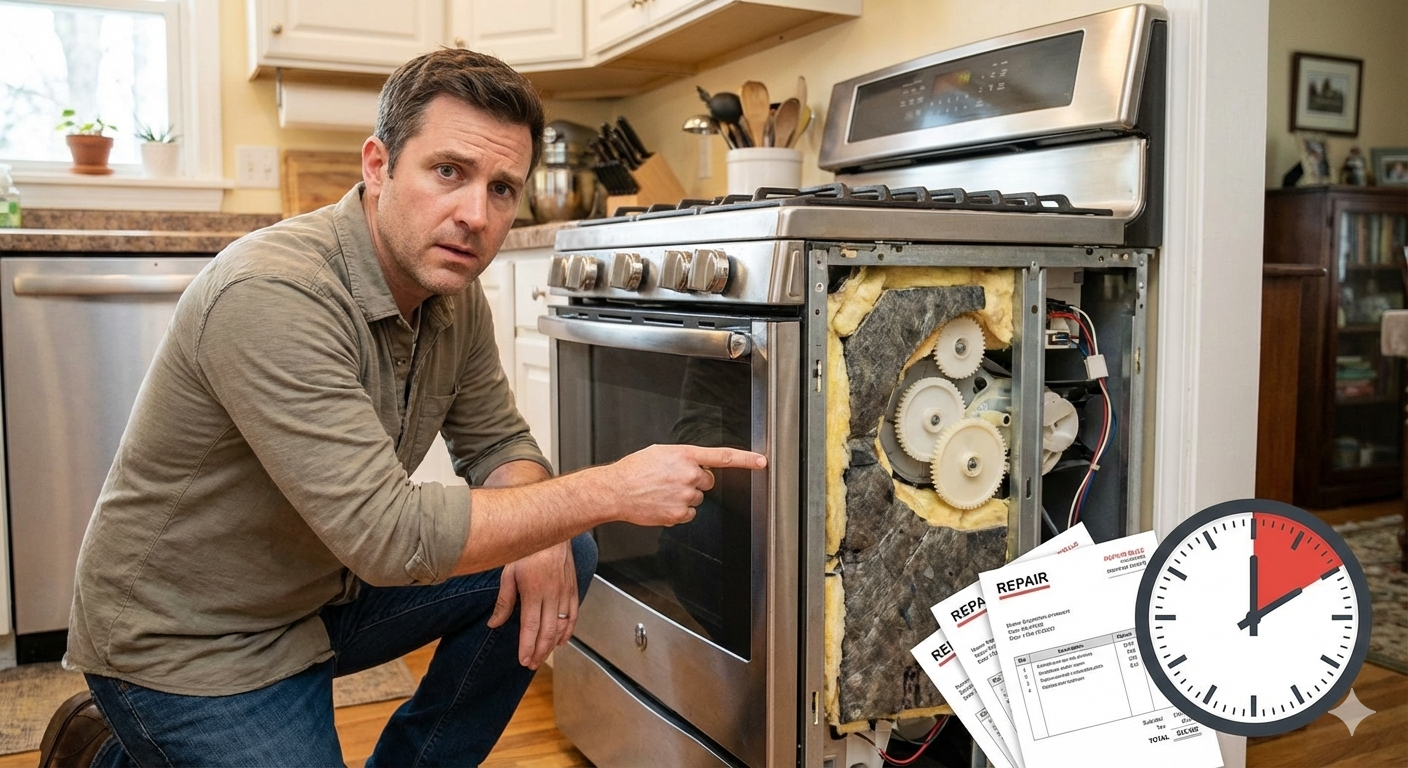
appliance lifespan

The Real Cost of Cheap Kitchen Appliances: What Actually Breaks and When

Budget kitchen appliances promise significant savings compared to premium brands, with identical-looking stainless steel finishes and similar feature lists at half the price. The temptation to save thousands across a full kitchen suite is strong, particularly when renovations already strain budgets. However, understanding what differentiates cheap appliances from quality options helps you make informed tradeoffs rather than discovering expensive mistakes after installation. The gap isn’t primarily about features or aesthetics – it’s about component quality, engineering decisions, and longevity that only become apparent through years of use. The appliance industry operates across multiple tiers, from true budget brands sold primarily online to mid-range options available at big box stores to premium brands carried by specialty dealers. Each tier makes different engineering and manufacturing choices that fundamentally affect reliability and lifespan. Knowing where manufacturers cut costs helps you identify which compromises matter for your usage patterns and which represent acceptable tradeoffs for the savings achieved. Where Cost-Cutting Actually Happens Manufacturers reduce prices through specific engineering and materials decisions that aren’t obvious from spec sheets or showroom appearances. Compressor Quality in Refrigerators: The compressor represents a refrigerator’s heart, running constantly to maintain temperatures. Premium brands use compressors designed for 15-20 years of continuous operation with substantial safety margins. Budget brands often specify compressors engineered for 7-10 year lifespans with minimal tolerances. Both work identically when new, but the budget compressor faces higher failure rates as it ages, particularly in hot climates or when installed in tight spaces with poor ventilation. Dishwasher Pump Construction: Quality dishwashers use stainless steel pump housings and impellers that resist corrosion from detergents and hard water. Budget models substitute plastic components that degrade over time, becoming brittle and eventually cracking. The dishwasher works fine for 3-5 years until plastic pump components fail, requiring repairs that often cost nearly as much as the original appliance. Range Burner Materials: Gas range burners in premium models use brass or heavy-gauge stainless steel that maintains precise tolerances through thousands of heating cycles. Budget ranges use thinner materials or aluminum alloys that warp with repeated heating, eventually causing uneven flames or gas leaks. The range cooks identically when new, but performance degrades noticeably after several years of regular use. Oven Insulation Thickness: Quality ranges include 2-3 inches of high-density insulation surrounding oven cavities. This insulation maintains consistent temperatures while keeping exterior surfaces cool. Budget models use 1 inch or less of lower-density insulation, causing heat loss that makes ovens work harder to maintain temperature while making cabinet surfaces warm enough to potentially damage finishes over time. Control Board Components: Modern appliances rely on electronic control boards managing functions previously handled mechanically. Premium brands use commercial-grade capacitors, relays, and circuit boards designed for humid, high-temperature environments. Budget brands use consumer-grade components that fail more frequently in the harsh conditions kitchen appliances face. Control board failures often require complete replacement at costs of several hundred dollars. Wire Gauge and Connections: Internal wiring quality affects reliability significantly but remains completely invisible to buyers. Heavier gauge wire with quality connectors maintains reliable electrical flow through years of thermal cycling. Minimum-spec wire with cheaper connectors develops resistance over time, creating heat that accelerates component failure. This cost-cutting appears nowhere in specifications but dramatically affects lifespan. The Three-Year Cliff Most Buyers Don’t Anticipate Understanding failure patterns helps you plan for appliance lifecycles rather than being surprised by unexpected replacements. Year One Performance: Essentially all appliances work properly during the first year regardless of quality tier. Manufacturing defects appear quickly and typically get covered under warranty. Budget and premium appliances perform identically during this honeymoon period, creating the false impression that they’re equivalent. Years Two Through Four: This period reveals the first meaningful differences. Budget appliance failure rates climb significantly as components designed for minimal lifespans begin wearing out. Seals harden, motors develop bearing noise, electronic controls start glitching. Many of these issues aren’t catastrophic failures but annoying problems that degrade user experience. Years Five Through Seven: Budget appliances face rapidly accelerating failure rates. Major components like compressors, pumps, and heating elements fail frequently. Repairs often cost 40-60% of replacement prices, creating difficult decisions about whether to repair or replace. Premium appliances remain mostly reliable during this period, though they’re beginning to show their age. Year Eight and Beyond: Few budget appliances remain functional past 8-10 years without multiple major repairs. Premium appliances commonly reach 12-15 years before requiring replacement, often longer with proper maintenance. This longevity difference means premium appliances cost less per year of service despite higher purchase prices. When Budget Appliances Make Sense Budget appliances aren’t universally bad choices. Specific situations justify accepting shorter lifespans for immediate savings. Rental Properties: Landlords replacing appliances in rental units face different calculus than homeowners. Tenants may damage appliances regardless of quality, and rapid turnover means appliances might get replaced during unit renovations before they fail naturally. Budget appliances that last 5-7 years serve rental properties adequately while preserving capital for other investments. Temporary Housing: People living somewhere temporarily – college apartments, short-term job assignments, starter homes they plan to sell within a few years – benefit from budget appliances. If you’ll move before the appliance fails, you’ve captured the full value of the lower purchase price without experiencing the shortened lifespan. Very Light Use: Second homes used occasionally, in-law suites occupied part-time, or vacation properties with seasonal use don’t stress appliances the way daily family cooking does. Operating hours matter more than calendar years for appliance longevity. Light use can extend budget appliance lifespans significantly. Constrained Budgets: Sometimes budgets simply don’t accommodate quality appliances across an entire kitchen. In these situations, prioritizing matters. Invest in quality for appliances you use most (typically range and refrigerator) while accepting budget options for less-critical items (like dishwashers if you rarely run them). The Repair Economics That Change Everything Understanding repair costs versus replacement costs helps you make rational decisions when appliances fail rather than emotional choices based on frustration. Service Call Minimums: Appliance repair companies typically charge $100-150 just to diagnose problems,
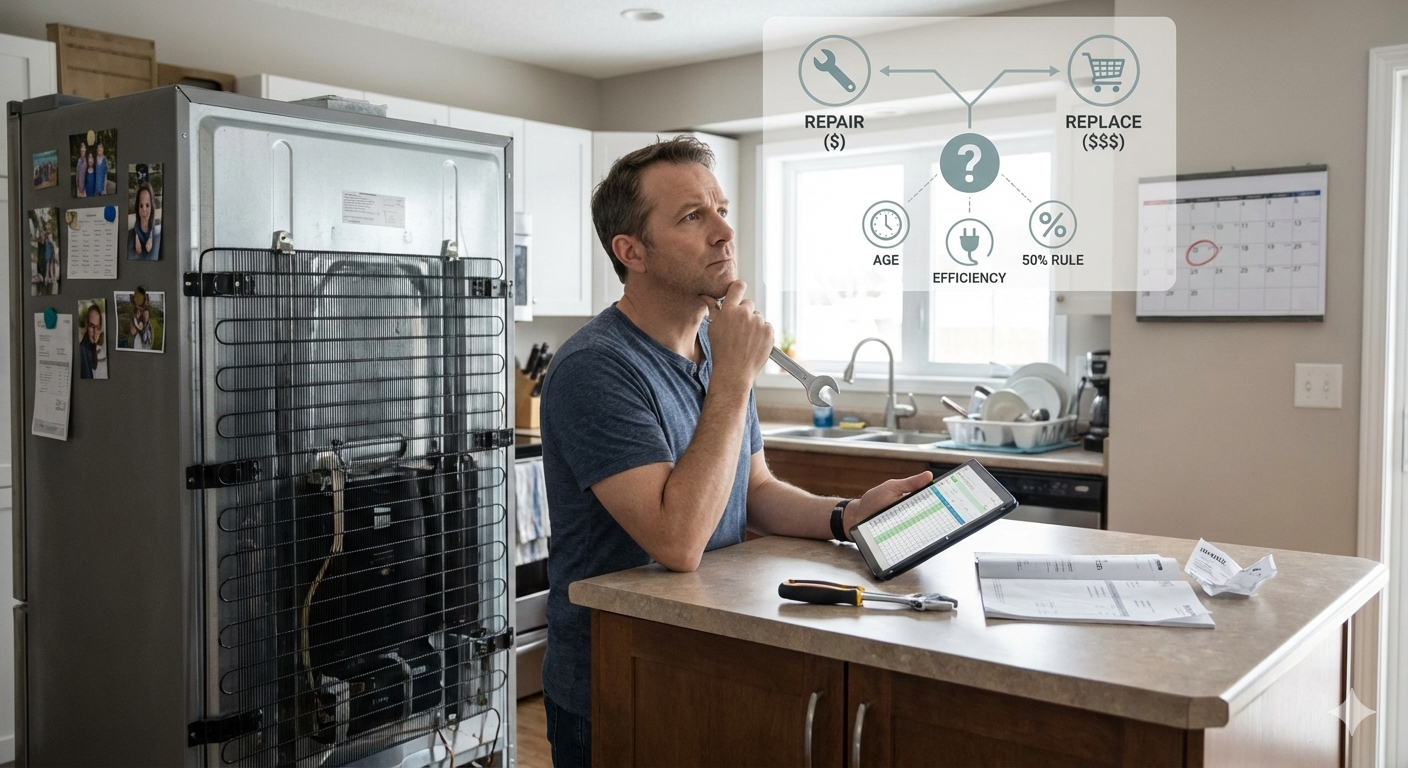
When to Repair vs. Replace Kitchen Appliances: Making Smart Decisions About Your Kitchen Equipment

Kitchen appliances eventually fail. Range burners stop lighting, dishwashers start leaking, refrigerators quit cooling, and ovens heat inconsistently. When appliances malfunction, you face a decision: pay for repairs or replace the unit entirely. This choice affects your budget immediately and influences kitchen functionality for years. The decision isn’t always obvious because repair costs, appliance age, energy efficiency changes, and replacement prices all factor into what makes financial sense. Understanding when repair makes sense versus when replacement is smarter helps you avoid wasting money on fixing appliances that will fail again soon while also preventing unnecessary replacement of equipment that could serve reliably for years more with simple fixes. The repair-versus-replace decision requires evaluating several factors simultaneously rather than applying simple rules. Appliance age matters, but a ten-year-old refrigerator might justify repair while a seven-year-old dishwasher doesn’t, depending on what’s broken and repair costs. The specific failure type influences the decision – some problems signal imminent complete failure while others are isolated issues. Repair cost as a percentage of replacement cost provides useful guidance, but this ratio alone doesn’t account for how much longer the appliance will function after repair. Energy efficiency improvements in newer models sometimes justify replacement even when repairs are relatively inexpensive. Making smart decisions requires understanding these factors and how they interact rather than following rigid formulas. The 50% Rule and Its Limitations The commonly cited 50% rule suggests replacing appliances when repair costs exceed half the replacement price. While this guideline provides a starting point, it oversimplifies complex decisions. The rule captures important economic reality – spending 60% of replacement cost to repair an aging appliance rarely makes sense when you could get a new unit with warranty for just 40% more. This principle is sound for straightforward cases. However, the rule ignores appliance age and remaining useful life. A two-year-old refrigerator might justify a repair costing 60% of replacement because you’re likely getting 10+ more years. That same repair cost on a 12-year-old refrigerator makes less sense because you’re probably getting only a few more years before another major component fails. The calculation also depends on accurate replacement cost assessment. Cheap replacement options might suggest not repairing, but if you’d actually buy a higher-quality replacement, the 50% threshold changes significantly. Compare repair costs to what you’d actually spend on replacement, not the cheapest available option. Energy efficiency improvements complicate the calculation further. An expensive repair on an old, inefficient refrigerator might cost less upfront than replacement but more over time through higher electricity bills. The 50% rule doesn’t account for operating cost differences. Warranty coverage on repairs versus new appliances matters. A $400 repair might come with a 90-day parts warranty, while a $900 replacement includes a full warranty. The replacement provides more protection for the additional cost. Use the 50% rule as initial screening rather than definitive answer. If repair costs are under 30% of replacement, repair usually makes sense. Over 70%, replacement is typically smarter. Between 30-70%, other factors become decisive. Age and Expected Remaining Life Appliance age fundamentally affects repair decisions because it indicates how much useful life remains even after successful repairs. Typical appliance lifespans provide context for age-based decisions. Refrigerators average 10-15 years, dishwashers 8-12 years, ranges 13-15 years, microwaves 8-10 years. These averages help gauge whether an appliance is early, middle, or late in its expected service life. Early-life repairs (within first 3-5 years) usually justify fixing unless the problem indicates fundamental design flaws. You’re repairing an appliance that should provide many more years of service. Manufacturing defects sometimes appear early, but most appliances work reliably through early years if they survive initial break-in. Mid-life repairs require more careful evaluation. An eight-year-old dishwasher might have 4-6 years of remaining life if repaired successfully, making repair reasonable for moderate costs. The appliance has proven reliable enough to reach middle age, suggesting decent quality. Late-life repairs on appliances approaching or exceeding typical lifespan rarely make sense unless costs are minimal. A 14-year-old refrigerator, even if repaired successfully, likely faces other component failures soon. You’re putting money into an appliance nearing the end regardless of this specific repair. Multiple previous repairs accelerate the replacement decision timeline. An appliance requiring its third significant repair in two years is telling you something about its overall condition. Each repair buys less time before the next failure. The age consideration interacts with repair cost. A $300 repair on a three-year-old appliance is smarter than the same repair on a twelve-year-old unit, even though the repair cost is identical. Nature and Severity of the Problem What specifically has failed significantly influences whether repair makes sense because some problems indicate broader deterioration. Compressor failure in refrigerators represents major mechanical breakdown. While compressors can be replaced, this failure often signals that the appliance has experienced conditions or manufacturing issues that will cause other components to fail. Compressor replacement costs are high and remaining life expectancy after repair is uncertain. Control board failures are increasingly common in modern appliances with extensive electronics. These repairs can be expensive, but if the mechanical components remain sound, successful control board replacement often provides years more service. The appliance’s mechanical parts are what determine longevity – electronics are just the brain controlling them. Leaking issues in dishwashers and washing machines vary in seriousness. Small seal failures are straightforward fixes with good prognosis. Tub cracks or major structural leaks indicate problems that may not be economically repairable and suggest replacing rather than attempting major reconstruction. Burner ignition problems on gas ranges are typically simple, inexpensive fixes. These failures don’t indicate broader deterioration – often just dirty igniters or simple component wear. Repairing makes sense at almost any appliance age. Oven heating element failures are straightforward replacements on electric ranges. These are wear items expected to fail occasionally. Replace elements without considering broader appliance replacement unless other problems exist concurrently. Door seal failures and hinge problems are minor repairs that rarely justify replacement. These components wear from use but don’t indicate appliance core deterioration. Multiple

Kitchen Appliance Lifespan and Replacement Planning: Know When to Repair or Replace

Understanding when your kitchen appliances are approaching the end of their useful life helps you plan replacements strategically rather than dealing with emergency breakdowns that force hasty decisions. Each type of kitchen appliance has typical lifespan expectations, and recognizing the warning signs of declining performance allows you to budget for replacements while avoiding the inconvenience and expense of sudden failures. Smart appliance replacement planning can save money while ensuring your kitchen continues functioning smoothly for your family’s daily needs. Most homeowners replace kitchen appliances reactively after they break down completely, often at the worst possible times and with limited options for research and comparison shopping. Taking a more strategic approach to appliance replacement allows you to take advantage of sales, coordinate with other home improvements, and choose appliances that better meet your current needs rather than simply replacing what you had before. Understanding Typical Appliance Lifespans Different kitchen appliances have varying expected lifespans based on their complexity, usage patterns, and construction quality. Understanding these general timelines helps you anticipate replacement needs and plan accordingly rather than being surprised by sudden failures. Refrigerators typically last 10-15 years with proper maintenance, though high-quality models can often operate effectively for 20 years or more. The compressor, door seals, and ice maker components usually show signs of wear first, while the basic cooling function often continues working long after other features begin failing. Ranges and cooktops generally provide 15-20 years of reliable service, with gas models often lasting longer than electric versions. The heating elements, igniters, and control systems tend to require attention before the overall appliance needs replacement, making partial repairs often worthwhile. Dishwashers usually need replacement after 8-12 years of regular use, though premium models with quality construction can last significantly longer. The pump, door seals, and control electronics typically fail before the basic washing mechanism, but repair costs often approach replacement costs for older units. Microwaves have relatively short lifespans of 8-10 years due to their complex electronics and frequent use. The magnetron and control board failures are common as units age, and repair costs usually exceed the value of older microwaves. Range hoods can last 15-20 years or more with proper maintenance, as their relatively simple mechanical systems resist wear better than complex appliances. Motor replacement and filter maintenance can extend their useful life significantly. Wall ovens typically provide 15-20 years of service, similar to ranges, with heating elements and control systems being the most common failure points that may justify repair rather than replacement. Warning Signs That Replacement Time Is Approaching Recognizing early warning signs of appliance decline allows you to plan replacements before complete failures occur, giving you time to research options and take advantage of favorable pricing rather than making emergency purchases. Increasing repair frequency often indicates that an appliance is entering its final years of useful life. When you’re calling for service multiple times per year or when repair costs start approaching 50% of replacement cost, replacement usually makes more financial sense. Performance degradation that affects daily use suggests approaching end of life even when the appliance still functions. Refrigerators that struggle to maintain temperature, dishwashers that leave dishes dirty, or ovens with uneven heating may be signaling time for replacement. Energy efficiency decline becomes noticeable as appliances age and components wear. Older appliances often consume significantly more energy than when new, making replacement worthwhile for both environmental and economic reasons. Noise increases often indicate wearing mechanical components that will likely lead to failure. While some noise issues can be repaired, persistent or worsening sounds usually suggest broader mechanical problems. Visible wear and damage like rust, cracking, or broken components often indicate that other, less visible problems are developing. When exterior condition deteriorates significantly, internal components are likely experiencing similar aging. Safety concerns should trigger immediate replacement consideration. Gas leaks, electrical problems, or mechanical failures that could cause injury or property damage require immediate attention and often justify replacement over repair. Repair Versus Replace Decision Making The decision to repair or replace aging appliances involves multiple factors beyond simple cost comparison. Understanding when repairs make sense helps you avoid throwing money at appliances that will likely fail again soon. The 50% rule provides a general guideline: if repair costs exceed 50% of replacement cost, replacement usually makes more financial sense, especially for appliances over halfway through their expected lifespan. Age considerations become crucial in repair decisions. Appliances in their final third of expected lifespan rarely justify expensive repairs, while newer appliances with single component failures often benefit from repair. Availability of parts affects repair feasibility for older appliances. Discontinued models may face limited parts availability or high costs that make repair impractical compared to replacement with modern alternatives. Energy efficiency improvements in newer models can justify replacement even when repairs are possible. Modern appliances often use 20-50% less energy than models from 10-15 years ago, providing ongoing savings that help justify replacement costs. Warranty considerations influence repair decisions for newer appliances. Units still under warranty should almost always be repaired rather than replaced, while out-of-warranty units require more careful cost analysis. Technology improvements in newer models may provide features that significantly improve convenience or performance compared to repairing older technology that lacks modern capabilities. Strategic Replacement Planning Planning appliance replacements strategically rather than reactively provides numerous advantages in terms of cost, convenience, and overall kitchen functionality. Budget planning allows you to spread replacement costs over time rather than facing large unexpected expenses. Setting aside funds regularly for appliance replacement makes major purchases more manageable when the time comes. Coordinated replacement can provide advantages when multiple appliances need attention around the same time. Package deals, coordinated styling, and single installation visits can reduce overall costs while ensuring design compatibility. Seasonal timing can provide significant cost savings through sales cycles and promotional periods. Many appliances go on sale during specific times of year, and avoiding emergency purchases allows you to take advantage of these savings. Kitchen renovation coordination allows appliance replacement to coincide with other improvements, potentially