
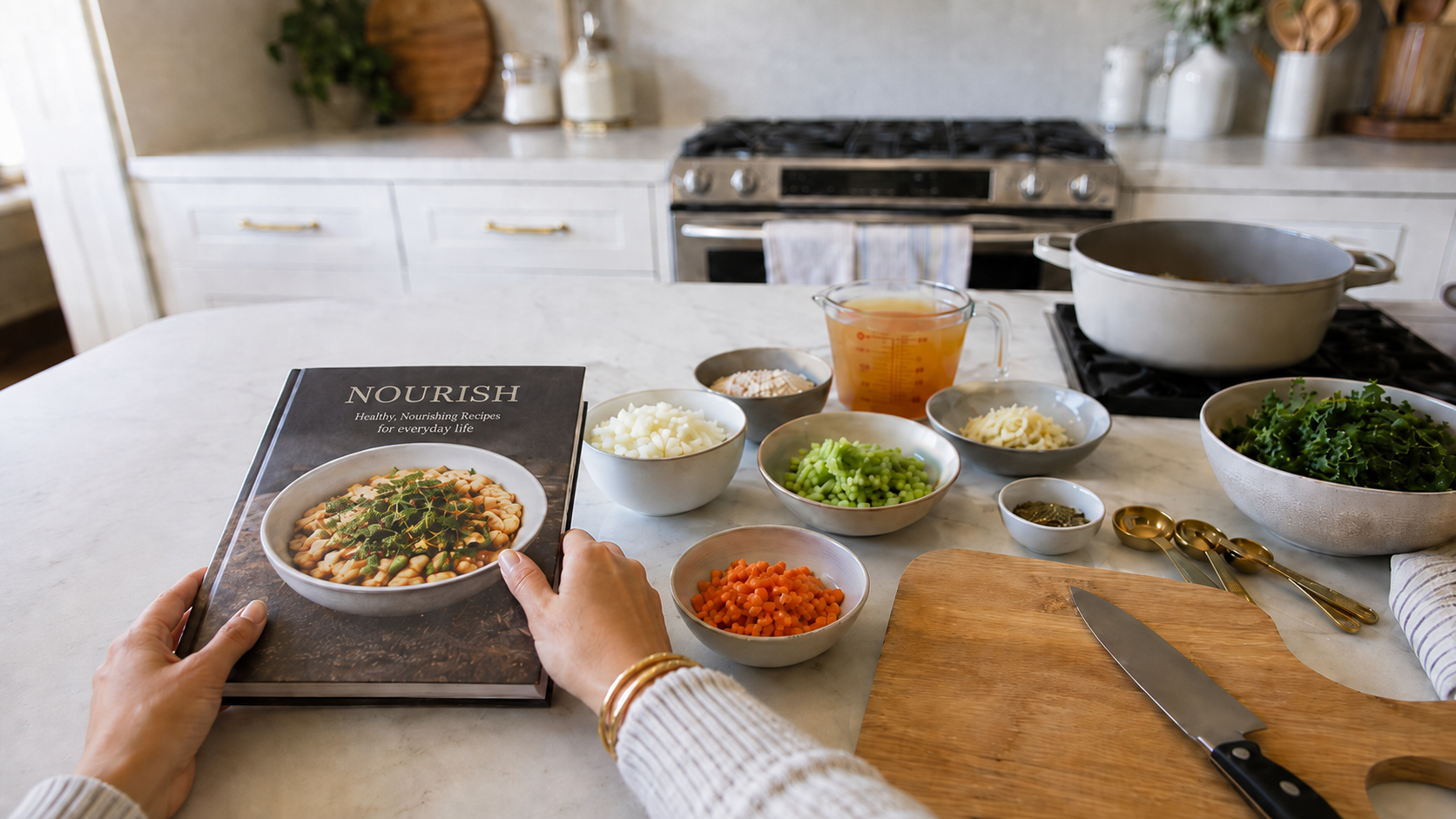
mise en place

How to Read a Recipe Like a Cook Instead of a Beginner

Most people read recipes the way they read assembly instructions — sequentially, starting at the top, following each step as they encounter it, and discovering problems only when they’re already in the middle of cooking. This approach works often enough that people don’t realize it’s the source of most cooking frustrations: the sauce that scorches while you’re still chopping the garlic that should have gone in two steps ago, the butter that needs to be at room temperature and isn’t because nobody told you until step four, the dish that requires marinating overnight for a recipe you decided to make at 6pm for dinner at 7pm. Experienced cooks read recipes differently — not because they’re more disciplined or more talented, but because they’ve learned through enough kitchen failures that the recipe contains information you need before you start cooking, not just while you’re cooking. Reading a recipe like a cook means extracting that information in advance, translating the recipe’s language into actual technique, and understanding what the recipe assumes you already know — because recipes assume quite a lot. The gap between a beginner’s recipe read and an experienced cook’s recipe read isn’t primarily about skill. It’s about a systematic approach to extracting information that the recipe contains but doesn’t always present in the most useful order. Once you understand this approach, your success rate with new recipes improves immediately, before you’ve learned a single new cooking technique. Step One: Read the Entire Recipe Before You Do Anything Else This is the most consistently repeated piece of cooking advice and the most consistently ignored. It sounds obvious. It isn’t practiced. And the consequences of skipping it are responsible for a significant percentage of all home cooking frustrations. Why You Need the Full Picture First: Recipes are written linearly but cooking is not. A step in the middle of a recipe often has implications for something that needs to happen before you start cooking. A marinade that needs 24 hours. A dough that requires a 2-hour rise. A sauce that needs to reduce for 45 minutes while you simultaneously prepare three other components. A specific type of pan that the recipe assumes you own. Butter that needs to be softened to room temperature — a process that takes 30-60 minutes and can’t be rushed without compromising the recipe. None of these requirements are secrets — they’re all in the recipe. But if you discover them when you reach the relevant step, you’ve already missed the window to address them properly. Reading the entire recipe first gives you the opportunity to identify every constraint before any of them become problems. What to Look For in the Full Read: As you read through a recipe for the first time, you’re specifically looking for time commitments that need to start before the cooking session begins, ingredient preparation that takes longer than the recipe’s structure implies, temperature requirements for ingredients that require advance action, equipment requirements you might not have, and steps that produce components needing to be done simultaneously that the recipe’s linear structure doesn’t make obvious. Step Two: Decode Recipe Language Recipes are written in a specific vocabulary that has precise meanings professionals understand and beginners often guess at. These guesses are frequently wrong in ways that affect the dish. “Finely diced” versus “roughly chopped”: These aren’t interchangeable variations on “cut it up.” Size directly affects how quickly an ingredient cooks and how it integrates into the dish. Finely diced onion (⅛ inch) cooks in 3-4 minutes and virtually disappears into a sauce. Roughly chopped onion (¾ inch) takes 8-10 minutes to soften and remains visually present. Using roughly chopped onion in a recipe calling for finely diced produces a dish with different texture, cooking time, and visual appearance than intended. “Until fragrant”: This means until the ingredient releases its aromatic compounds into the surrounding air — you should actually be able to smell it. For garlic in oil, this is typically 30-60 seconds. For dry spices toasted in a pan, 60-90 seconds. “Until fragrant” is a sensory cue, not a time instruction, and it’s telling you to use your nose rather than your watch. “Fold” versus “stir” versus “mix”: These three words describe fundamentally different actions. Stirring circulates ingredients uniformly and is used for most general combining. Mixing is more vigorous than stirring and ensures complete combination. Folding is a specific technique for incorporating delicate ingredients — typically whipped cream, beaten egg whites, or similar — without deflating the air that makes them functional. A recipe that says “fold in the egg whites” and receives vigorous stirring instead will produce a flat, dense result where a light one was intended. “Season to taste”: This phrase assumes you know what the dish should taste like and have calibrated enough to know how much salt, acid, or pepper gets it there. For beginners, “season to taste” often means adding a small amount of salt and calling it done. For experienced cooks, it means tasting repeatedly and adjusting deliberately — salt to bring out flavor, acid (lemon juice or vinegar) to brighten it, pepper for complexity — until the dish tastes the way it should. This step is not optional embellishment. It’s often what separates a good dish from a flat one. “Rest”: When a recipe tells you to rest a protein, it means let it sit undisturbed for a specified time before cutting. This is not a patience exercise — it’s a functional step. During cooking, muscle fibers contract and push liquid toward the center. Resting allows those fibers to relax and reabsorb the liquid. A rested steak retains its juices when cut. An unrested steak releases them immediately onto the cutting board. The difference is visible and significant. “Al dente”: An Italian phrase meaning “to the tooth,” describing pasta cooked until it’s tender but retains a slight firmness when bitten through — not raw, not soft. The recipe isn’t being imprecise when it says al dente instead of giving a specific texture

The Mise en Place Myth: Why Prep-Everything-First Doesn’t Always Work

Professional chefs prep everything before they start cooking. You’ve seen it on cooking shows—neat little bowls of chopped vegetables, measured spices, prepped proteins all lined up before heat touches pan. Then you try it at home. You spend 45 minutes chopping, measuring, and organizing. Your counter looks like a bowl store exploded. Half your ingredients sit getting warm or oxidizing while you finish prep. And somehow the actual cooking still feels rushed. The problem isn’t your knife skills. The problem is blindly applying restaurant kitchen logic to home cooking without understanding why restaurants work that way or how your kitchen differs. Here’s the truth about mise en place, when complete pre-prep actually helps versus hurts, and how to adapt the concept for home cooking efficiency. Restaurant Kitchens Aren’t Home Kitchens Restaurants prep everything first because they’re cooking the same dishes repeatedly under time pressure for paying customers who expect fast service. Restaurant line cooks work during service rush cooking identical orders back-to-back. Prepping once lets them execute quickly when orders arrive. They make the same pasta dish 50 times per night—complete prep makes sense. Restaurants have prep cooks whose entire job involves chopping vegetables and measuring ingredients. Line cooks receive already-prepped ingredients. The division of labor spreads prep burden across multiple people. Restaurant mise en place prevents mistakes during rush. When cooking under pressure with tickets piling up, having everything measured prevents forgetting ingredients or adding wrong amounts. Restaurants optimize for speed during service, not efficiency of total labor. They accept longer total prep time because it enables faster cooking when customers are waiting. Your home kitchen operates differently. You’re cooking one or two portions, not fifty. You’re the prep cook and line cook. You’re not racing against customer expectations. Different constraints require different strategies. Downtime During Cooking Is Wasted Prep Time Most recipes include natural waiting periods where you’re not actively doing anything—perfect opportunities for prep work without adding total cooking time. Onions take ten minutes to soften properly. You can chop garlic, measure spices, and prep other vegetables during those ten minutes instead of standing watching onions. Water takes time to boil. While waiting for pasta water, you can grate cheese, chop herbs, or prepare sauce ingredients rather than prepping everything before you start. Meat needs time to brown undisturbed. Flipping chicken too early prevents proper browning. Use that hands-off time productively prepping what comes next. Ovens need preheating time. While the oven reaches temperature, prep your ingredients instead of prepping before you turn the oven on. Rice cookers, slow cookers, and other set-it-and-forget-it equipment create prep windows. Use their cooking time for other preparation instead of front-loading everything. Sequential prep during natural downtime means your total time from starting to eating stays roughly the same, but you’re not creating artificial prep time before cooking begins. Some Ingredients Suffer From Early Prep Certain ingredients degrade when prepped too far in advance, making complete mise en place actively harmful to final dish quality. Cut avocados oxidize and brown within minutes. Prep avocado right before using, not at the start of your prep session. Sliced apples and pears discolor quickly. Chop them last to maintain appearance and prevent browning. Minced garlic loses pungency and develops harsh flavors when sitting. Chop garlic right before it hits the pan for best flavor. Fresh herbs wilt and blacken when chopped early. Prep herbs at the last minute to maintain color and aroma. Salad greens get soggy when dressed too early. Keep components separate until serving time. Some vegetables release moisture when salted and chopped. Prepping too early creates watery mess rather than neat mise. Complete advance prep forces you to compromise ingredient quality. Strategic last-minute prep maintains optimal flavor and texture. Partial Mise Works Better for Home Cooks Instead of all-or-nothing approach, prep strategically based on cooking sequence and ingredient needs. Prep long-cooking components first. If recipe starts with onions cooking for 15 minutes, chop those onions before anything else. Prep quick-cooking ingredients during the onion cooking time. Group ingredients by cooking stage. Prep everything for step one together. Prep step two ingredients while step one cooks. Prep step three during step two. Measure dry ingredients in advance. Spices, flour, and shelf-stable items can sit measured without quality loss. Prep these first if it helps organization. Keep proteins refrigerated until needed. Don’t let chicken or fish sit at room temperature for 30 minutes while you prep vegetables. Prep proteins right before cooking. Wash and dry produce in advance but don’t chop until needed. Clean vegetables store better than chopped vegetables. Do the washing early, the cutting strategically. This hybrid approach gives you organization benefits without quality compromises or artificial waiting time. Your Recipe Determines Your Strategy Different recipes require different prep approaches based on cooking intensity and timing demands. Stir-fries need complete mise. When cooking happens in three minutes over high heat, stopping mid-cooking to chop something means burned food. Everything must be prepped and ready. Braises allow progressive prep. When something simmers for two hours, you have abundant time for prep during cooking. Front-loading makes no sense. Baking often requires complete mise. When ratios and techniques are precise, having everything measured prevents mistakes. Measure before mixing. One-pan meals with sequential cooking work well with progressive prep. Brown meat, remove it, prep vegetables while pan cools slightly, continue cooking. The sequence builds in prep time. Recipes with many components benefit from partial advance prep. If making main dish plus two sides, prepping some elements early prevents last-minute chaos. Read your recipe before deciding prep strategy. Let the cooking method and timing dictate your approach. Mise en Place Is About Readiness, Not Bowls The core concept behind mise en place isn’t having pretty bowls, it’s being ready to execute without scrambling or forgetting things. Mental mise matters more than physical mise. Knowing what ingredients you need and what order they’re added prevents mistakes regardless of when you chop them. Reading the recipe through completely before starting provides mental organization. Understanding the flow prevents