
cooking workflow

Your Sink Is in the Wrong Spot (And Why It Matters)

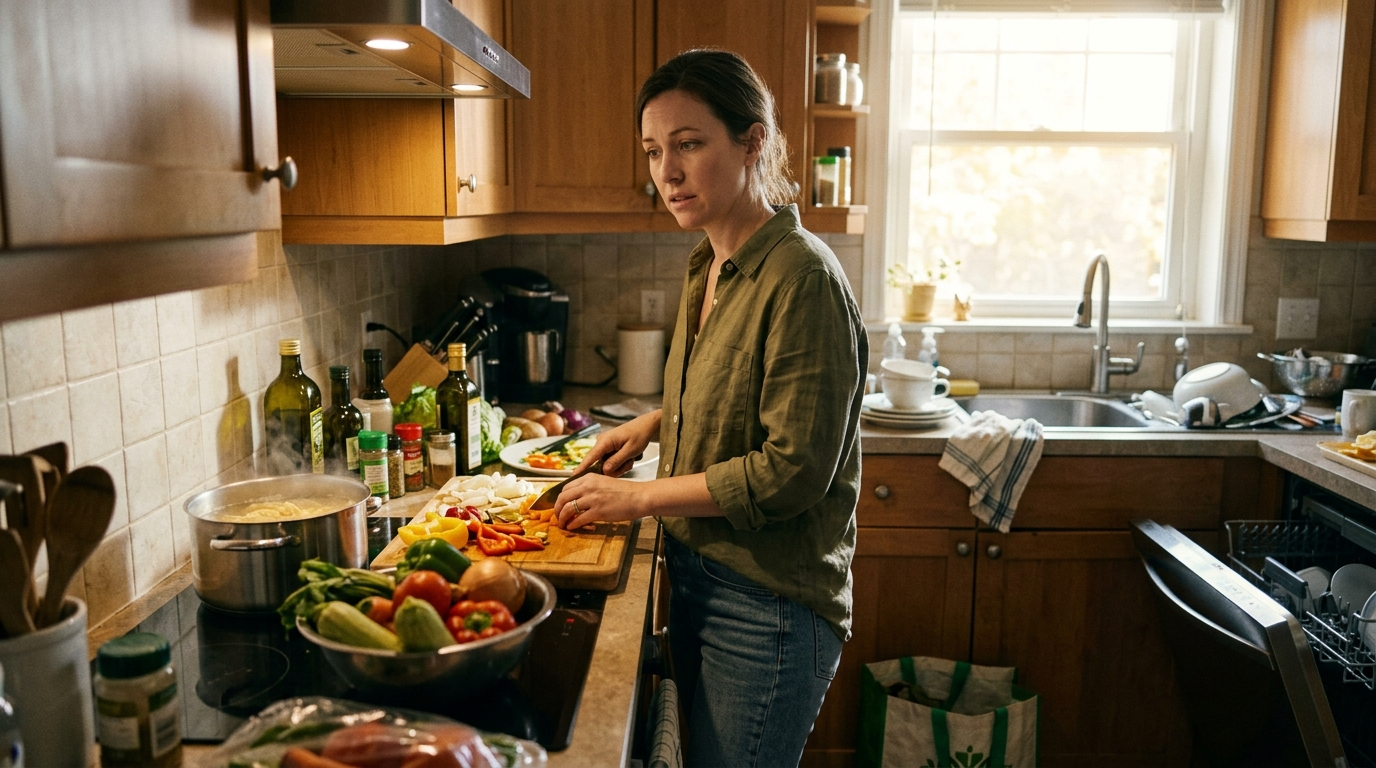
Most kitchens place the sink under a window for the view. This positioning ignores how you actually cook and creates workflow problems you’ve adapted to without realizing they’re problems. The sink-under-window convention comes from pre-dishwasher era when washing dishes meant standing at the sink for extended periods. A window view made the tedious task more bearable. Modern kitchens inherited this layout without questioning whether it still makes sense. Your sink location affects cooking efficiency more than almost any other kitchen design choice. Wrong placement adds steps, creates awkward reaches, and forces inefficient movement patterns during food preparation. Here’s why standard sink placement causes problems, where sinks should actually go based on cooking workflow, and what you can do about your existing kitchen without renovating. The Window Wastes Your Best Counter Space Windows occupy prime real estate in kitchens—exterior walls with natural light. Dedicating that space to a sink means your brightest, most pleasant kitchen area gets used for dish washing instead of food preparation. Natural light matters for detailed work like chopping vegetables, reading recipes, or plating food. The window area provides the best natural illumination in the kitchen. Putting the sink there means you’re doing dishes in the best light while prepping food in dimmer interior spaces. This backwards priority wastes the window location on tasks that don’t require good lighting. Counter space beside window-mounted sinks often ends up narrow and awkward. Window placement constraints leave minimal workspace flanking the sink, creating cramped prep areas. The view argument assumes you spend significant time staring out windows while doing dishes. With modern dishwashers, hand-washing time is minimal. You’re not standing at the sink long enough to justify sacrificing prime counter real estate for the view. Better window use would be placing your primary prep area there—cutting board, ingredient staging, detailed work that benefits from natural light. Save the sink for interior wall placement where windows don’t matter. Sink-to-Stove Distance Creates Unnecessary Walking Standard kitchen layouts often place sinks far from stoves because window locations dictate sink placement rather than cooking workflow dictating design. Think about cooking tasks requiring both sink and stove: draining pasta, transferring parboiled vegetables, filling pots with water, rinsing ingredients mid-cooking. Each task involves carrying heavy, hot, or wet items between sink and stove. Distance between these two workstations multiplies throughout cooking. A recipe requiring five trips between sink and stove in a poorly-designed kitchen might need ten steps per trip. That’s fifty extra steps for one meal. Water spills happen during sink-to-stove transfers. Carrying full pots across the kitchen drips water on floors creating slip hazards and mess. Heavy pot handling over distance strains arms and creates dropping risk. A full stockpot weighs significantly. Carrying it ten feet versus three feet matters for safety and effort. Ideal sink-to-stove distance measures three to six feet. This range allows easy transfer without excessive walking while providing enough separation that sink splashes don’t reach the stovetop. Many kitchens exceed this distance by placing sinks on opposite walls or far corners from stoves. The extra steps add up over years of daily cooking. You’re Prepping in the Wrong Location Most people prep food wherever counter space exists, not where prep should logically happen based on cooking workflow. Prep happens between ingredient retrieval (refrigerator) and cooking (stove). The prep area should sit geographically between these two points creating logical left-to-right or right-to-left workflow. Many kitchens force prep in locations requiring backtracking. You grab ingredients from the refrigerator, walk to the sink area to prep, then walk back past the refrigerator to reach the stove. This backwards flow wastes motion. The sink attracts prep work because it’s where you wash vegetables and dispose of scraps. But using the sink as your prep center puts you in the wrong location relative to refrigerator and stove. Ideal prep location sits between refrigerator and stove, with the sink accessible but not central. You grab ingredients, prep them while moving toward the stove, and cook. Linear workflow without backtracking. Current kitchen layouts often create triangular movement patterns—refrigerator to sink to stove and back—instead of efficient linear flow. The triangle adds unnecessary distance to every cooking task. Observe your own cooking movement. If you’re constantly walking back and forth across the kitchen rather than moving in one general direction from ingredient storage to cooking, your layout forces inefficient patterns. The Dishwasher Dictates More Than You Think Dishwasher placement affects kitchen workflow beyond just dish loading. It determines where clean dishes get stored and how post-cooking cleanup happens. Dishwashers installed far from dish storage cabinets create extra steps during unloading. You’re walking across the kitchen repeatedly carrying plates and glasses to their storage locations. Logical dishwasher placement sits adjacent to dish storage cabinets. Open dishwasher, transfer dishes directly to nearby cabinets. Minimal walking during unloading. Many kitchens place dishwashers next to sinks (logical for plumbing) but put dish storage on the opposite side of the kitchen (illogical for workflow). This split creates unnecessary unloading distance. The dishwasher also affects cleanup workflow. Scraping plates and loading the dishwasher works best when the dishwasher sits near where you eat, not necessarily near where you cook. Some kitchens benefit from dishwasher placement between cooking area and dining area—convenient for both cooking cleanup and dish loading from dining table. This middle-ground location serves both functions. Standard kitchen design puts dishwashers beside sinks without considering whether sink location makes sense for overall dish workflow. The dishwasher follows the sink regardless of whether that placement is optimal. Counter Depth Matters More Than Length Kitchens emphasize counter length—how many linear feet of counter space exists. But counter depth determines usability more than length. Standard counter depth measures 24-25 inches from wall to edge. This depth barely accommodates cutting board, ingredient bowls, and working space simultaneously. Deep counters (30+ inches) provide adequate working space for multiple tasks. You can stage ingredients behind your active cutting board without things falling off the back edge. Shallow counters force choosing between tool placement. The cutting board occupies most

The Drawer Organization That Actually Stays Organized

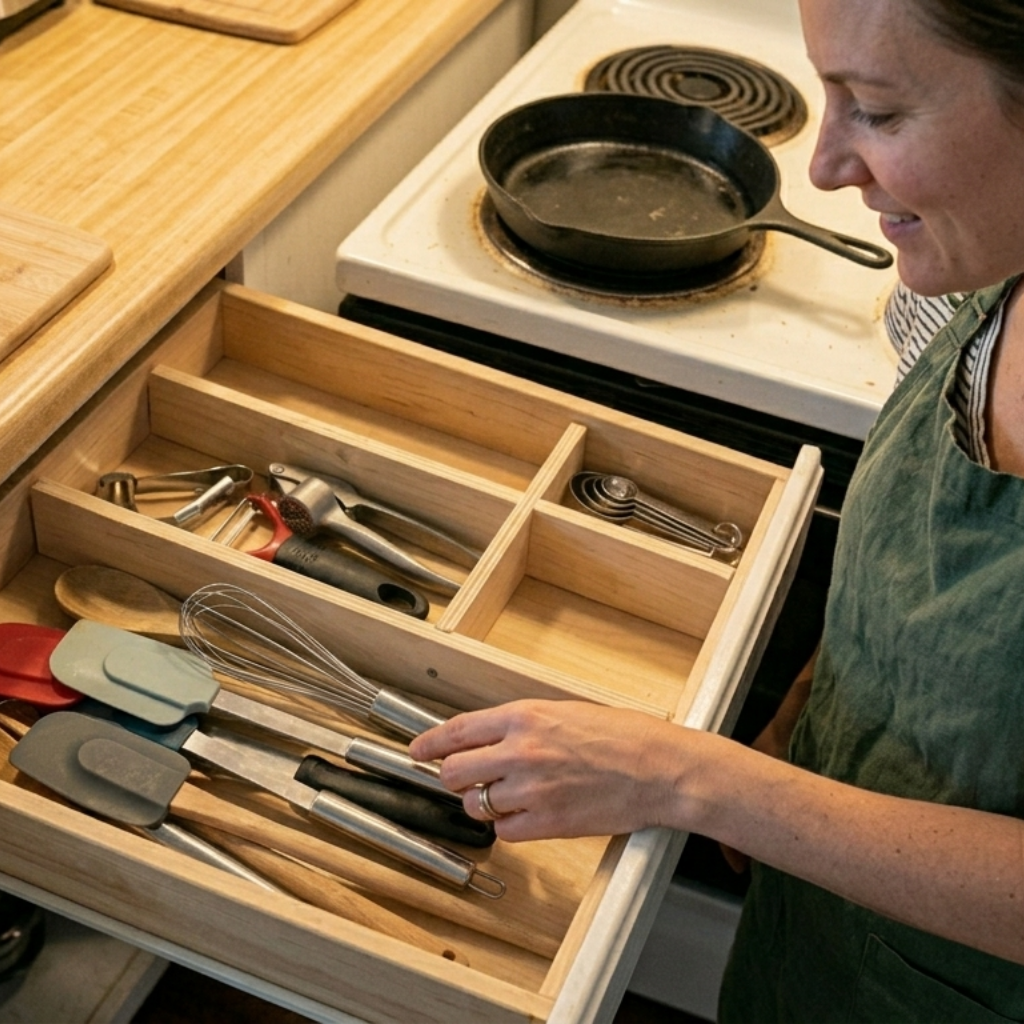
You organize your kitchen drawers. It looks beautiful for three days. Then you need a whisk in a hurry, toss it back imperfectly, and the whole system collapses within a week. The problem isn’t your discipline or commitment. The problem is organizing systems designed for photographs, not daily cooking. They require precision placement and careful maintenance that real cooking doesn’t allow. Drawer organization that actually lasts works with your cooking habits, not against them. It assumes you’ll be rushed, distracted, and unwilling to play Tetris with spatulas while something’s burning on the stove. Here’s why most drawer organization fails, what actually keeps drawers functional long-term, and how to set up systems that survive real kitchen use. Perfect Compartments Create Maintenance Hell Those beautiful drawer organizer systems with precisely-sized slots for every utensil look incredible in before-and-after photos. They fail in actual kitchens because they demand exact placement every time. Custom-fit organizers require identifying which slot belongs to which tool, orienting the tool correctly, and sliding it into its designated space. This works when you’re organizing slowly and deliberately. It fails when you’re cooking three things simultaneously and need to return a spatula quickly. The tighter the fit, the more frustrating the system. That perfectly-sized slot for your fish spatula only accepts the spatula at the correct angle. Put it in slightly rotated and it doesn’t fit. Now you’re fumbling with a greasy spatula while your sauce reduces. Precision systems also break when you add new tools. Buy a second whisk or different-sized spatula and suddenly you’ve got no designated slot. The new item becomes homeless, getting tossed wherever it fits, beginning the drawer’s descent into chaos. Organization that lasts uses zones, not slots. Group similar items together in loose categories without demanding precise placement. Spatulas go in the spatula zone anywhere, not in individually-assigned slots. Wide compartments that hold multiple items of the same type accommodate tools at various angles and positions. You’re dropping items into a zone, not threading them into specific slots. Shallow Organizers For Deep Drawers Guarantee Failure Standard drawer organizers sit shallow in deep drawers, leaving several inches of unused space below. This invites layering, which destroys organization immediately. You buy a utensil organizer that’s two inches deep. Your drawer is six inches deep. That four-inch gap below the organizer becomes tempting storage for overflow items. Initially you resist. Then you acquire a new tool that doesn’t fit in the organizer. “Just temporarily,” you think, sliding it underneath. Then another tool. Then a random kitchen gadget. Within weeks you’ve got a hidden layer of chaos beneath your organized surface. Deep drawers need either organizers that span full depth or intentional use of vertical space with stackable systems. Half-depth organizers in deep drawers are organizational traps. If you’ve got deep drawers, use tall organizers or bins that prevent layering. The goal is making layering physically impossible, not relying on your future self to resist temptation. Alternatively, dedicate deep drawers to large items that actually need the depth: large serving utensils, rolling pins, or bulky kitchen tools. Save shallow drawers for the precision organization that shallow organizers support. Too Many Categories Mean Nothing Has a Home Organizing guides tell you to separate whisks, spatulas, spoons, tongs, peelers, zesters, and measuring spoons into individual compartments. This creates so many categories that placing items correctly becomes a puzzle. Your brain during cooking operates in simplified mode. You’re tracking multiple tasks, monitoring temperatures, and timing various components. Your mental bandwidth for “which compartment does the slotted spoon belong in” is approximately zero. Too many categories increase friction. Is the slotted spoon a spoon or a spatula? Does the silicone scraper go with spatulas or with whisks? These ambiguous items bounce between categories, creating placement inconsistency. Successful organization uses three to five broad categories maximum. “Stirring tools,” “measuring tools,” “cutting tools,” and “miscellaneous” works better than ten specific categories requiring constant decision-making. Broad categories forgive mistakes. Tossing a whisk into the general “stirring tools” zone succeeds even if it lands next to spatulas. Perfect placement isn’t required. You can subdivide within broad categories using visual separation (different colored bins or simple dividers), but the primary organization should be simple enough that rushing doesn’t break the system. Measuring Tools Don’t Belong With Cooking Tools Most drawer organization systems mix measuring cups and spoons with cooking utensils. This creates access conflicts because you use these tools at different times during different tasks. Measuring happens during prep before cooking starts. You’re standing at your prep area measuring ingredients into bowls. Cooking utensils are used at the stove during active cooking. Mixing these tools in the same drawer means accessing the drawer from different locations at different times. Your measuring cup drawer should be near your prep area, not your stove. Separating measuring tools into dedicated drawer near your mixing/prep zone improves workflow. When gathering ingredients, you’re not digging through spatulas to find measuring spoons. This separation also prevents cross-contamination of organizational systems. Cooking utensils get greasy and sauce-covered; they’re cleaned quickly and returned slightly damp. Measuring tools stay cleaner because they’re used during prep, not cooking. Dedicate one small drawer or one large drawer section near your primary prep area exclusively to measuring tools. Everything else goes in cooking utensil drawers near the stove. The Junk Drawer Is Necessary, Not Failure Every kitchen organization guide promises to eliminate your junk drawer. This is unrealistic and counterproductive. The junk drawer serves an important function. Kitchens accumulate miscellaneous items: birthday candles, bag clips, corn holders, specialty tools used quarterly. These items need storage but don’t fit into any logical category. Without a designated miscellaneous drawer, these items infiltrate your organized drawers. The corn holders end up with spatulas. The bag clips migrate to the utensil drawer. Your organization breaks down accommodating items that don’t belong. A dedicated miscellaneous drawer contains chaos in one location rather than letting it spread. Everything else stays organized because the random stuff has somewhere to go. The key is intentionality. Designate

Why Your Kitchen Layout Makes Cooking Harder

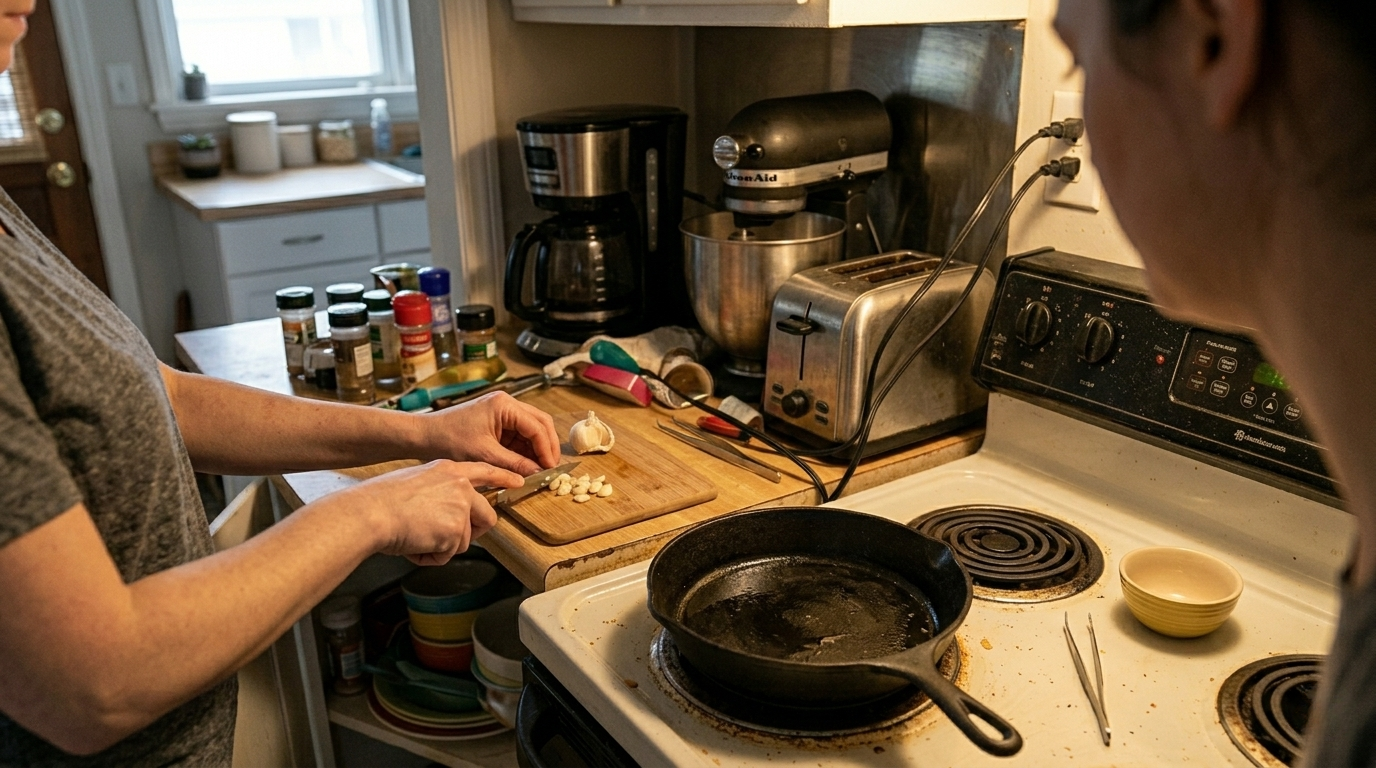
You’ve got decent knives, good pans, working appliances. You follow recipes carefully. Yet cooking still feels awkward and inefficient. The problem might not be your skills or equipment. It might be your kitchen layout forcing you to walk too much, reach too far, and interrupt your workflow constantly. Most home kitchens weren’t designed by people who cook seriously. They were designed to look good in real estate photos and maximize cabinet storage. The result is layouts that create unnecessary steps, dangerous reaches, and workflow interruptions. Here’s what makes cooking harder in poorly-designed kitchens, why standard layouts ignore actual cooking needs, and what you can fix without renovating. The Refrigerator Is Too Far From Everything Walk into most kitchens and the refrigerator sits at one end while the stove sits at the opposite end. This creates exhausting back-and-forth trips every time you cook. Think about a typical cooking sequence. Retrieve vegetables from refrigerator, walk to sink to wash them, walk to cutting board to chop them, walk back to refrigerator for protein, walk to stove to cook. You’ve crossed the kitchen five times before cooking even starts. Professional kitchens cluster refrigeration near prep areas. Home cooks walk marathons because refrigerators get placed based on cabinet layouts and electrical outlet locations, not cooking workflow. Each unnecessary trip adds time and disrupts focus. You’re mentally tracking cooking progress while physically retrieving ingredients across the room. This divided attention leads to mistakes like overcooked onions or forgotten ingredients. The refrigerator-to-prep-to-stove triangle should be tight. Ideal distance totals 12-25 feet for all three legs combined. Many home kitchens exceed this by placing refrigerator far from primary work areas. If you can’t move your refrigerator, adapt your workflow. Stage all ingredients on counter near stove before starting to cook, eliminating mid-cooking refrigerator trips. The Sink Isn’t Where You Actually Prep Standard kitchen design puts the sink under a window for aesthetic reasons. This forces you to prep food wherever counter space exists, which often isn’t near the sink. Washing vegetables at the sink then carrying them across the kitchen to cutting board creates dripping mess. Chopping produces scraps that need disposal, requiring trips back to sink or trash. The sink should sit adjacent to your primary prep area, not isolated in its own zone. Professional cooks keep prep within arm’s reach of water and waste disposal. Many kitchens have ample counter space beside the stove but minimal space beside the sink. This backwards priority means you’re prepping far from water source then walking ingredients to heat source. Deep sinks create ergonomic problems too. Reaching into deep basin to wash large items strains your back. Shallow prep sinks or dual-basin configurations work better for actual cooking tasks. Consider adding a cutting board that fits over your sink if counter space beside sink is limited. This creates temporary prep area directly over water and waste disposal. Your Stove Sits in a Corner or Against a Wall Stoves placed in corners or tight against walls limit access and create dangerous reaching angles over active burners. Corner stoves force you to reach across multiple burners to access back burners. This puts your arm over open flames or hot pots every time you stir something cooking at the back. Wall-mounted stoves without adequate side clearance mean you’re reaching from one direction only. Professional ranges have approach space from multiple sides allowing safer access. The range hood’s positioning matters too. Low hoods help ventilation but reduce visibility and access to back burners. You’re cooking half-blind. Inadequate counter space flanking the stove creates nowhere to set hot pans when removing them from burners. You’re carrying hot cookware across the kitchen searching for landing space. Ideally, stoves have 15-18 inches of counter space on at least one side, preferably both sides. This provides pot-setting space and ingredient staging area within arm’s reach while cooking. If your stove lacks side counter space, add a rolling cart positioned beside it during cooking. This temporary surface provides the landing zone and staging area the permanent layout omits. Cabinet Storage Ignores Cooking Frequency Most kitchens dedicate prime real estate to items used rarely while forcing frequently-used items into inconvenient locations. Pots and pans belong near the stove. Yet many kitchens store them in cabinets across the room or in lower cabinets requiring bending and digging. Meanwhile, fancy serving platters used twice annually occupy prime locations. Spices should live near cooking area. Common kitchen layouts put spice storage far from stove, interrupting cooking flow every time you need to season food. Everyday dishes and glasses should be near dishwasher for easy unloading. Storing them far away adds steps to post-cooking cleanup. The “work triangle” concept (sink-stove-refrigerator) addresses appliance placement but ignores storage. You can have a perfect triangle yet still walk unnecessarily if your storage doesn’t support your workflow. Reorganize cabinets based on use frequency rather than matching dish sets or traditional storage conventions. Daily-use items get prime real-estate. Occasional-use items get less convenient storage. Upper cabinets within arm’s reach should hold items you grab while cooking: oils, vinegars, frequently-used spices, go-to pans. Lower cabinets work for items retrieved during prep: mixing bowls, baking sheets, storage containers. Counter Space Isn’t Continuous Broken counter runs interrupted by appliances or sink create workflow problems requiring shifting food and equipment between disconnected surfaces. You need continuous counter space for multi-step tasks. Kneading bread dough, rolling pasta, or arranging ingredients for complex recipes requires uninterrupted work surface. Many kitchens break counter runs with range placement, creating two separate prep zones instead of one continuous surface. This forces choosing which side to work on rather than spreading out naturally. Small counter segments between appliances become dead zones too small for actual work. That 8-inch gap beside the stove holds dish soap but can’t accommodate cutting board or mixing bowl. Island or peninsula additions help only if they’re positioned within the work triangle. Islands far from primary work area become overflow surfaces that don’t integrate into cooking workflow. Minimum useful counter space measures at

The Mise en Place Myth: Why Prep-Everything-First Doesn’t Always Work

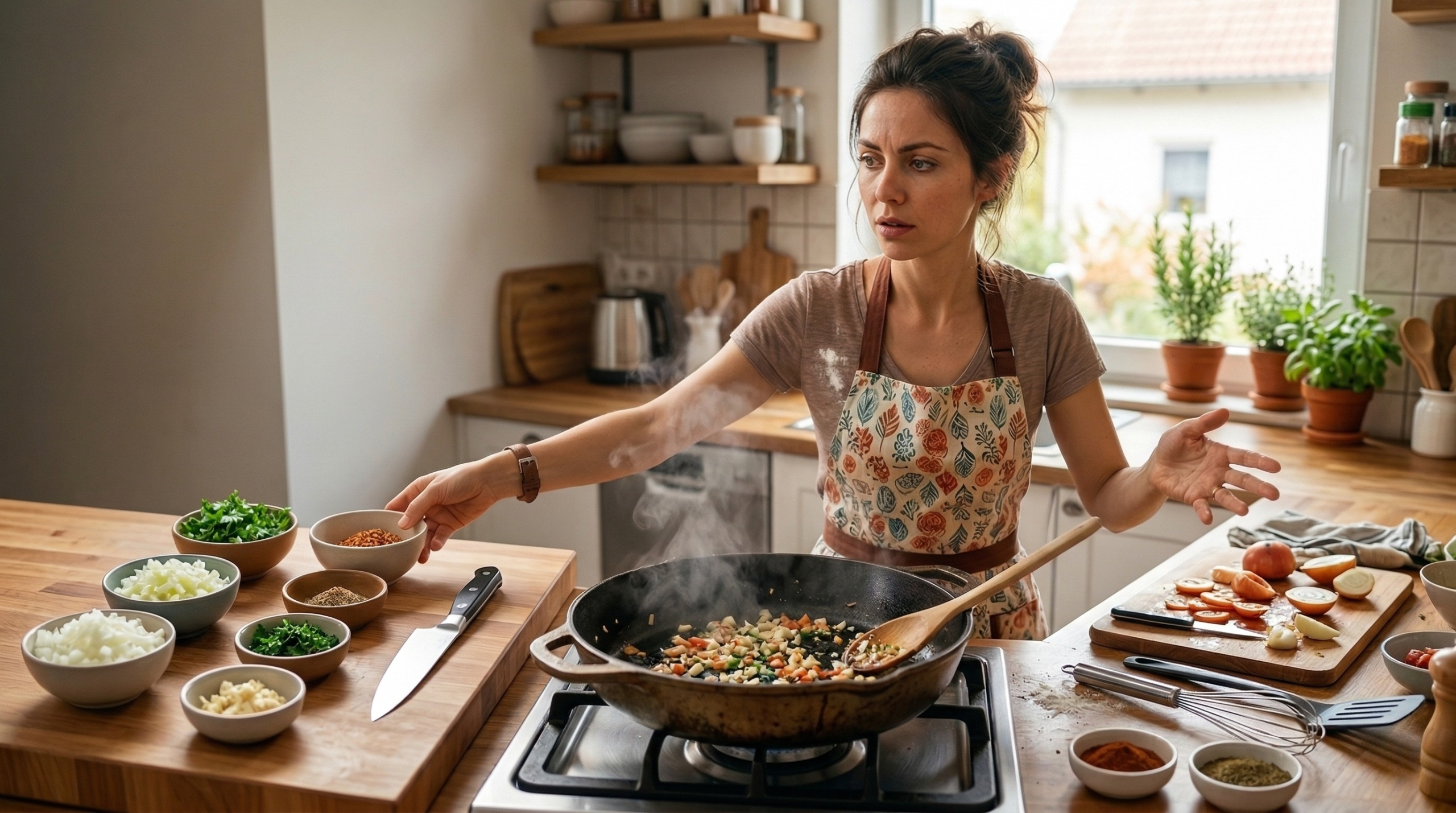
Professional chefs prep everything before they start cooking. You’ve seen it on cooking shows—neat little bowls of chopped vegetables, measured spices, prepped proteins all lined up before heat touches pan. Then you try it at home. You spend 45 minutes chopping, measuring, and organizing. Your counter looks like a bowl store exploded. Half your ingredients sit getting warm or oxidizing while you finish prep. And somehow the actual cooking still feels rushed. The problem isn’t your knife skills. The problem is blindly applying restaurant kitchen logic to home cooking without understanding why restaurants work that way or how your kitchen differs. Here’s the truth about mise en place, when complete pre-prep actually helps versus hurts, and how to adapt the concept for home cooking efficiency. Restaurant Kitchens Aren’t Home Kitchens Restaurants prep everything first because they’re cooking the same dishes repeatedly under time pressure for paying customers who expect fast service. Restaurant line cooks work during service rush cooking identical orders back-to-back. Prepping once lets them execute quickly when orders arrive. They make the same pasta dish 50 times per night—complete prep makes sense. Restaurants have prep cooks whose entire job involves chopping vegetables and measuring ingredients. Line cooks receive already-prepped ingredients. The division of labor spreads prep burden across multiple people. Restaurant mise en place prevents mistakes during rush. When cooking under pressure with tickets piling up, having everything measured prevents forgetting ingredients or adding wrong amounts. Restaurants optimize for speed during service, not efficiency of total labor. They accept longer total prep time because it enables faster cooking when customers are waiting. Your home kitchen operates differently. You’re cooking one or two portions, not fifty. You’re the prep cook and line cook. You’re not racing against customer expectations. Different constraints require different strategies. Downtime During Cooking Is Wasted Prep Time Most recipes include natural waiting periods where you’re not actively doing anything—perfect opportunities for prep work without adding total cooking time. Onions take ten minutes to soften properly. You can chop garlic, measure spices, and prep other vegetables during those ten minutes instead of standing watching onions. Water takes time to boil. While waiting for pasta water, you can grate cheese, chop herbs, or prepare sauce ingredients rather than prepping everything before you start. Meat needs time to brown undisturbed. Flipping chicken too early prevents proper browning. Use that hands-off time productively prepping what comes next. Ovens need preheating time. While the oven reaches temperature, prep your ingredients instead of prepping before you turn the oven on. Rice cookers, slow cookers, and other set-it-and-forget-it equipment create prep windows. Use their cooking time for other preparation instead of front-loading everything. Sequential prep during natural downtime means your total time from starting to eating stays roughly the same, but you’re not creating artificial prep time before cooking begins. Some Ingredients Suffer From Early Prep Certain ingredients degrade when prepped too far in advance, making complete mise en place actively harmful to final dish quality. Cut avocados oxidize and brown within minutes. Prep avocado right before using, not at the start of your prep session. Sliced apples and pears discolor quickly. Chop them last to maintain appearance and prevent browning. Minced garlic loses pungency and develops harsh flavors when sitting. Chop garlic right before it hits the pan for best flavor. Fresh herbs wilt and blacken when chopped early. Prep herbs at the last minute to maintain color and aroma. Salad greens get soggy when dressed too early. Keep components separate until serving time. Some vegetables release moisture when salted and chopped. Prepping too early creates watery mess rather than neat mise. Complete advance prep forces you to compromise ingredient quality. Strategic last-minute prep maintains optimal flavor and texture. Partial Mise Works Better for Home Cooks Instead of all-or-nothing approach, prep strategically based on cooking sequence and ingredient needs. Prep long-cooking components first. If recipe starts with onions cooking for 15 minutes, chop those onions before anything else. Prep quick-cooking ingredients during the onion cooking time. Group ingredients by cooking stage. Prep everything for step one together. Prep step two ingredients while step one cooks. Prep step three during step two. Measure dry ingredients in advance. Spices, flour, and shelf-stable items can sit measured without quality loss. Prep these first if it helps organization. Keep proteins refrigerated until needed. Don’t let chicken or fish sit at room temperature for 30 minutes while you prep vegetables. Prep proteins right before cooking. Wash and dry produce in advance but don’t chop until needed. Clean vegetables store better than chopped vegetables. Do the washing early, the cutting strategically. This hybrid approach gives you organization benefits without quality compromises or artificial waiting time. Your Recipe Determines Your Strategy Different recipes require different prep approaches based on cooking intensity and timing demands. Stir-fries need complete mise. When cooking happens in three minutes over high heat, stopping mid-cooking to chop something means burned food. Everything must be prepped and ready. Braises allow progressive prep. When something simmers for two hours, you have abundant time for prep during cooking. Front-loading makes no sense. Baking often requires complete mise. When ratios and techniques are precise, having everything measured prevents mistakes. Measure before mixing. One-pan meals with sequential cooking work well with progressive prep. Brown meat, remove it, prep vegetables while pan cools slightly, continue cooking. The sequence builds in prep time. Recipes with many components benefit from partial advance prep. If making main dish plus two sides, prepping some elements early prevents last-minute chaos. Read your recipe before deciding prep strategy. Let the cooking method and timing dictate your approach. Mise en Place Is About Readiness, Not Bowls The core concept behind mise en place isn’t having pretty bowls, it’s being ready to execute without scrambling or forgetting things. Mental mise matters more than physical mise. Knowing what ingredients you need and what order they’re added prevents mistakes regardless of when you chop them. Reading the recipe through completely before starting provides mental organization. Understanding the flow prevents