
realistic cooking

Why “Quick Weeknight Dinners” Take 90 Minutes

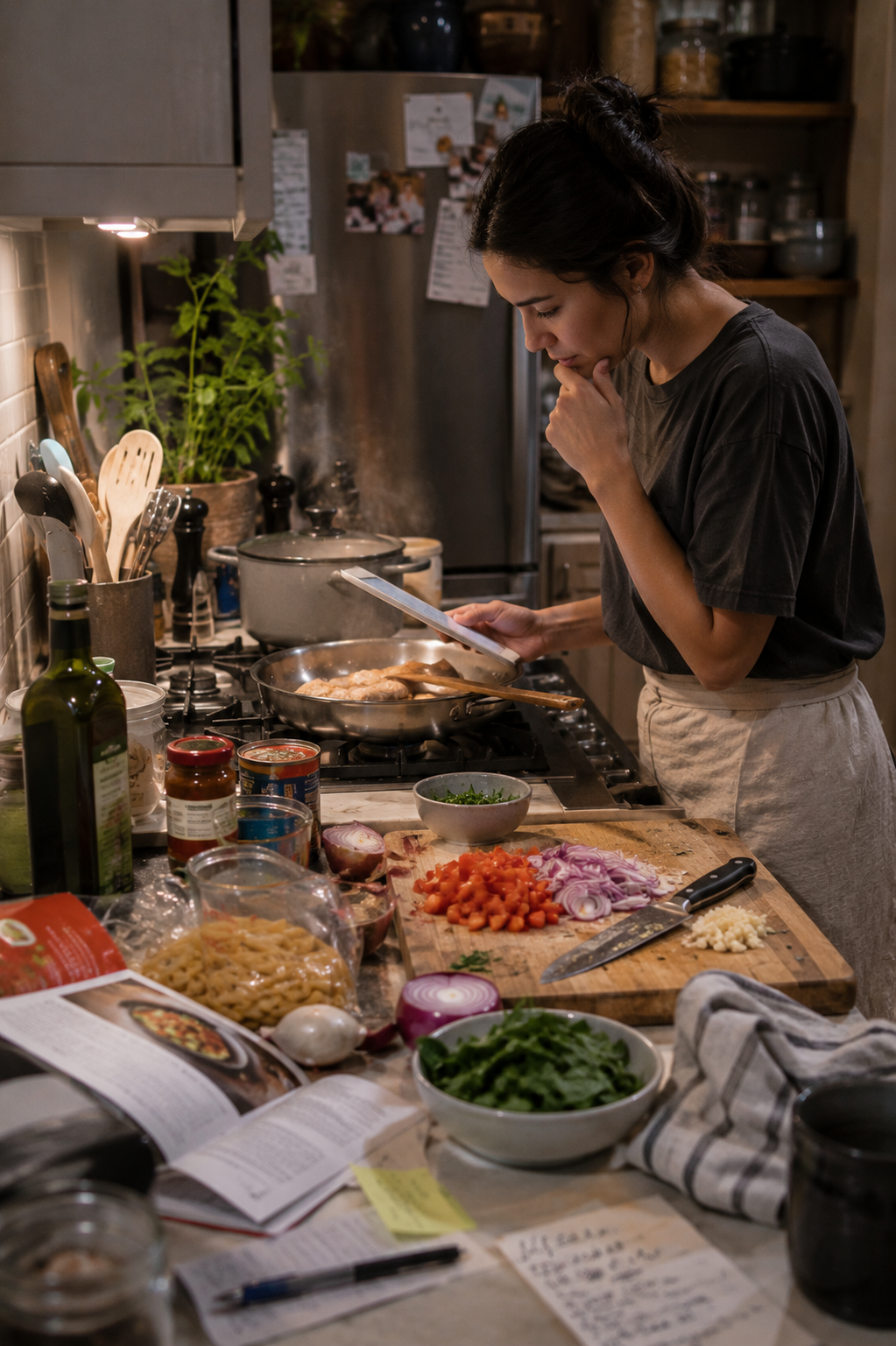
Recipe blogs promise 30-minute meals. You start cooking at 6pm. You sit down to eat at 7:30pm. The recipe lied, you’re slow, or something else is happening. The problem isn’t your cooking speed. The problem is recipe timing that ignores everything except active cooking time. Recipes skip the prep before cooking starts, the transitions between steps, the cleanup that happens during cooking, and the realistic pace of home cooking without professional mise en place. A recipe claiming 30 minutes might involve 30 minutes of actual cooking time. But getting from decision to plated food takes substantially longer when you account for all the steps recipes don’t time. Here’s why quick dinner recipes take longer than advertised, which time costs recipes ignore, and how to actually get dinner done faster without feeling incompetent. Recipe Time Doesn’t Include Deciding What to Cook The timer starts when you begin cooking. It doesn’t count the time spent deciding what to make. Standing in front of the open refrigerator considering options takes five to ten minutes. Scrolling through saved recipes looking for something that matches available ingredients adds more time. Recipe blogs assume you arrived at their recipe through direct intent. Real cooking involves browsing, reconsidering, checking ingredient availability, and settling on an option. This decision time happens before the recipe timeline begins but it’s still part of getting dinner on the table. Meal planning eliminates this time cost by deciding in advance. Without planning, decision time adds 10-15 minutes to dinner preparation that recipes never acknowledge. The “quick” recipe becomes less quick when preceded by 15 minutes of deciding what quick recipe to make. Ingredient Retrieval Isn’t Counted Recipes list ingredients assuming they’re magically assembled. Gathering them from pantry, refrigerator, and freezer takes time. Each ingredient requires opening storage, locating the item among other items, retrieving it, and transporting to the work area. Multiply this by 10-15 ingredients per recipe. Spices particularly add retrieval time. Finding oregano among 30 spice jars, opening it, measuring, and returning it happens separately from other ingredients. Recipes assume instant ingredient availability. Reality involves searching through drawers, moving items blocking other items, and discovering you’re almost out of something requiring substitution decisions. Professional kitchens use mise en place precisely because ingredient retrieval during cooking interrupts workflow. Recipe times assume this pre-gathering happened somehow outside the timeline. Five minutes retrieving ingredients, five more getting tools and pans, and suddenly the 30-minute recipe needs 40 minutes before cooking even begins. Prep Time Estimates Are Fantasy Recipe prep times assume knife skills and efficiency most home cooks don’t possess. “Finely dice one onion” takes a professional cook 60 seconds. It takes a home cook three to five minutes including peeling, halving, and chopping. “Mince three garlic cloves” is 15 seconds for professionals, two minutes for home cooks finding a knife, peeling cloves, and mincing. Recipe writers develop speed through repetition. They’ve made the recipe dozens of times perfecting efficiency. You’re making it once. Prep times listed in recipes reflect idealized professional speed, not realistic home cook pace. The cumulative difference across all prep steps adds 10-15 minutes. Recipes also assume continuous uninterrupted prep. Real home cooking involves answering questions, preventing toddler disasters, or checking messages. These interruptions don’t stop the food from needing attention. The “10 minute prep time” becomes 20-25 minutes accounting for realistic home cook speed and normal household interruptions. Cooking Time Ignores Stove Variations “Bring to a boil” timing depends on your stove’s BTU output. Recipe writers’ stoves aren’t your stove. High-BTU gas ranges boil water in five minutes. Standard electric coils take twelve minutes. The recipe assumes boiling happens quickly without specifying which type of quick. “Sauté until softened” varies by burner output and pan material. What takes five minutes on a strong burner takes ten on a weak one. Recipes tested on professional-grade ranges produce different timing than cooking on standard residential equipment. The gap in equipment capability translates directly to timing differences. Oven temperature accuracy varies wildly. Your oven set to 400°F might actually run at 375°F or 425°F. This changes cooking duration substantially. Without acknowledging equipment variations, recipe times reflect the writer’s specific equipment, not universal cooking times. Add five to ten minutes to cooking times when using standard residential equipment rather than high-output professional ranges. Simultaneous Steps Aren’t Really Simultaneous Recipes instruct “while pasta cooks, prepare sauce” assuming perfect parallel workflow. This requires experience and confidence most home cooks lack. Managing multiple things simultaneously demands attention splitting. You’re monitoring pasta, stirring sauce, and potentially prepping additional components all while tracking timing. Recipe writers perform these tasks smoothly through repetition. First-time cooks focus on one task at a time, completing steps sequentially that professionals would overlap. The sequential approach takes longer but reduces mistakes and stress. Adding sequential buffer time turns the 30-minute recipe into 40 minutes without any cooking errors. Recipes also assume everything goes smoothly. They don’t account for discovering you’re missing an ingredient, something boiling over, or needing to adjust heat mid-cooking. These small pauses and corrections add minutes throughout the cooking process that recipe times ignore. Plating and Serving Add Time Recipe timing ends when food is cooked. Getting from cooked food to eating food requires additional steps. Finding serving dishes, plating food, setting the table, pouring drinks, calling family to dinner, and getting everyone seated takes five to ten minutes. This post-cooking time doesn’t appear in recipe timing but must happen before eating begins. Some recipes require resting time after cooking. “Let rest 5 minutes before slicing” extends the timeline without counting as cooking time. Cleanup that happens before eating also adds time. Wiping major spills, moving hot pans off burners, or creating space to serve all happen post-cooking but pre-eating. The true time from starting the recipe to first bite includes these serving logistics recipes pretend don’t exist. Recipe Familiarity Makes Everything Faster The first time making a recipe takes substantially longer than the fifth time. First-time cooking includes reading instructions, checking measurements, verifying technique, and moving cautiously.
What Professional Cooks Do at Home (It’s Not What You Think)

You might assume that chefs and professional cooks go home after work and prepare elaborate, restaurant-quality meals for themselves using advanced techniques and exotic ingredients. The reality is almost the opposite – most professional cooks eat simply at home, often relying on quick preparations, leftovers, and minimal cooking after spending all day in professional kitchens. Understanding how professionals actually cook at home reveals important truths about sustainable cooking, what techniques genuinely matter, and the difference between cooking as a job versus cooking as part of daily life. The disconnect between professional cooking and home cooking by professionals highlights that elaborate restaurant techniques often aren’t practical, necessary, or even desirable for everyday eating. Professional cooks develop strong opinions about what’s worth doing at home versus what’s just work they’re glad to leave at the restaurant. Their home cooking choices reflect what actually matters for daily meals when you deeply understand cooking but aren’t trying to impress anyone or optimize for restaurant economics and presentation. They Eat Way More Simply Than You’d Expect Professional cooks who spend 8-12 hours preparing complex dishes at work often have zero interest in cooking elaborately at home, choosing instead the simplest meals that meet their needs. Pasta with butter and cheese becomes a legitimate dinner after a long shift, not a shameful shortcut. Professional cooks don’t judge simple food harshly because they understand that elaborate doesn’t necessarily mean better for everyday eating. Eggs in various forms – scrambled, fried, omelets – appear frequently because they’re quick, nutritious, satisfying, and require minimal cleanup. The speed and reliability matter more than impressiveness. Rice bowls with whatever’s available represent common professional cook dinners at home. Simple rice topped with leftover protein, fresh vegetables, and a sauce makes a complete meal in minutes. Sandwiches and toast get elevated by technique and quality ingredients rather than complexity. A perfectly grilled cheese or excellent toast with good butter satisfies without requiring elaborate preparation. The willingness to eat simply comes from understanding that cooking skill isn’t demonstrated through complexity but through making simple things well. A perfectly cooked egg shows more skill than an over-complicated dish executed poorly. Professional cooks also recognize that food fatigue is real – after tasting and smelling food all day at work, they often want minimal food involvement at home, not more elaborate cooking. They Actually Use Convenience Products Professional cooks use store-bought items at home without guilt because they understand that some convenience products offer excellent value and quality that doesn’t justify making from scratch. Rotisserie chickens from grocery stores appear regularly in professional cooks’ home meals. They recognize that the economics and convenience make these purchased birds smarter than roasting chicken themselves for weeknight dinners. Quality jarred pasta sauce gets used and enhanced with fresh ingredients rather than making sauce from scratch every time. Adding fresh herbs, garlic, or vegetables to good jarred sauce creates excellent results with minimal effort. Pre-washed salad greens eliminate tedious washing and spinning for simple weeknight salads. Professional cooks value their time and recognize when convenience justifies the cost premium. Frozen vegetables often appear because professionals know these are frozen at peak freshness and require zero prep. The quality frequently exceeds “fresh” vegetables that spent days in transport and storage. Good bread from bakeries replaces homemade for most purposes because professional cooks know their bread-baking time is better spent elsewhere unless they genuinely enjoy baking. The key insight is that professional cooks use convenience strategically where it makes sense rather than either avoiding it entirely or relying on it completely. They know which shortcuts maintain quality and which ones compromise results. They Focus on a Few Techniques Done Well Rather than using the full range of professional techniques they know, home cooking by professionals usually involves a small set of reliable methods used repeatedly. High-heat searing appears frequently because professionals know proper searing creates flavor quickly without elaborate preparation. A well-seared steak or piece of fish needs little else to be excellent. Simple roasting of vegetables and proteins at high heat produces reliable results with minimal attention. Sheet pan dinners represent professional-level efficiency applied to home cooking. Quick sautés that combine protein and vegetables in one pan create complete meals while minimizing cleanup. The speed and simplicity make this technique ideal for weeknight cooking. Basic pan sauces from fond (browned bits) elevate simple proteins without requiring separate sauce preparation. This single technique adds restaurant quality to home meals with minimal additional effort. The techniques professionals actually use at home are ones that create good results quickly with minimal setup and cleanup. Elaborate multi-step techniques stay at work where they have time, space, and economic justification. They Keep Pantries Extremely Simple Professional cooks’ home pantries often contain fewer items than enthusiastic home cooks keep, focusing on versatile staples rather than extensive collections of specialty ingredients. Quality olive oil, salt, and pepper represent the foundation because professionals know that proper seasoning matters more than exotic ingredients. These basics appear in almost every dish. Garlic, onions, and fresh herbs provide flavor bases for countless dishes without requiring extensive spice collections. A few aromatics create more versatility than dozens of specialty spices. Rice, pasta, and one or two grains cover starch needs without maintaining extensive variety. Having too many options creates decision fatigue without adding genuine value. Canned tomatoes, beans, and a few other pantry staples support quick meals without requiring extensive inventory management. Professional cooks know which shelf-stable items actually get used. The minimal pantry reflects understanding that having too many ingredients creates waste and complexity without improving daily cooking. Better to have fewer items you actually use than extensive collections that expire before you finish them. They’re Extremely Practical About Leftovers Professional cooks waste almost nothing at home, viewing leftovers as valuable resources rather than depressing repeats to avoid. Intentional leftover planning means cooking extra deliberately to provide future meals, not just dealing with whatever remains. Making a large batch of rice or beans is efficient meal planning, not accidental excess. Leftover