
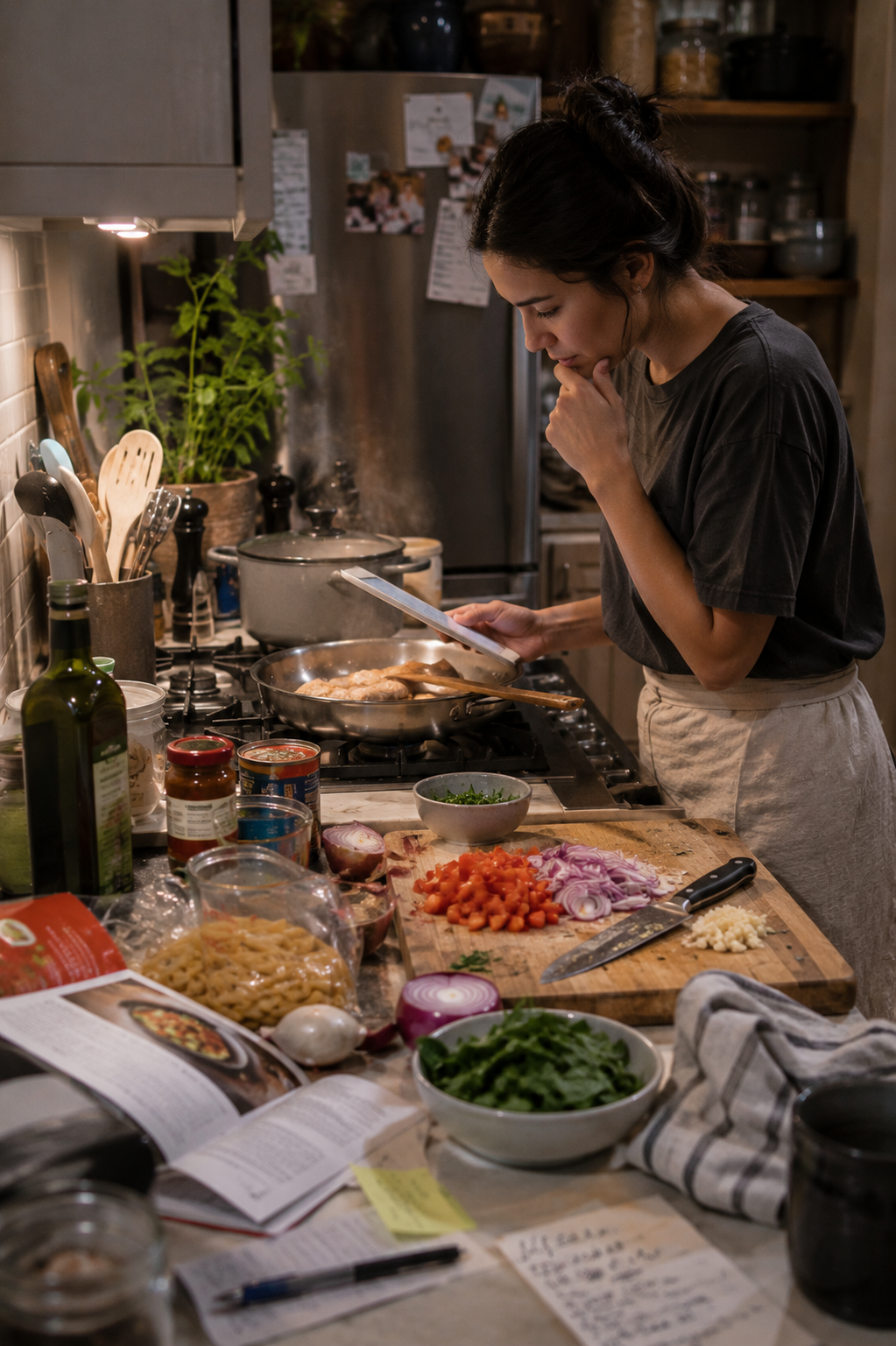
kitchen reality

Why “Quick Weeknight Dinners” Take 90 Minutes

Recipe blogs promise 30-minute meals. You start cooking at 6pm. You sit down to eat at 7:30pm. The recipe lied, you’re slow, or something else is happening. The problem isn’t your cooking speed. The problem is recipe timing that ignores everything except active cooking time. Recipes skip the prep before cooking starts, the transitions between steps, the cleanup that happens during cooking, and the realistic pace of home cooking without professional mise en place. A recipe claiming 30 minutes might involve 30 minutes of actual cooking time. But getting from decision to plated food takes substantially longer when you account for all the steps recipes don’t time. Here’s why quick dinner recipes take longer than advertised, which time costs recipes ignore, and how to actually get dinner done faster without feeling incompetent. Recipe Time Doesn’t Include Deciding What to Cook The timer starts when you begin cooking. It doesn’t count the time spent deciding what to make. Standing in front of the open refrigerator considering options takes five to ten minutes. Scrolling through saved recipes looking for something that matches available ingredients adds more time. Recipe blogs assume you arrived at their recipe through direct intent. Real cooking involves browsing, reconsidering, checking ingredient availability, and settling on an option. This decision time happens before the recipe timeline begins but it’s still part of getting dinner on the table. Meal planning eliminates this time cost by deciding in advance. Without planning, decision time adds 10-15 minutes to dinner preparation that recipes never acknowledge. The “quick” recipe becomes less quick when preceded by 15 minutes of deciding what quick recipe to make. Ingredient Retrieval Isn’t Counted Recipes list ingredients assuming they’re magically assembled. Gathering them from pantry, refrigerator, and freezer takes time. Each ingredient requires opening storage, locating the item among other items, retrieving it, and transporting to the work area. Multiply this by 10-15 ingredients per recipe. Spices particularly add retrieval time. Finding oregano among 30 spice jars, opening it, measuring, and returning it happens separately from other ingredients. Recipes assume instant ingredient availability. Reality involves searching through drawers, moving items blocking other items, and discovering you’re almost out of something requiring substitution decisions. Professional kitchens use mise en place precisely because ingredient retrieval during cooking interrupts workflow. Recipe times assume this pre-gathering happened somehow outside the timeline. Five minutes retrieving ingredients, five more getting tools and pans, and suddenly the 30-minute recipe needs 40 minutes before cooking even begins. Prep Time Estimates Are Fantasy Recipe prep times assume knife skills and efficiency most home cooks don’t possess. “Finely dice one onion” takes a professional cook 60 seconds. It takes a home cook three to five minutes including peeling, halving, and chopping. “Mince three garlic cloves” is 15 seconds for professionals, two minutes for home cooks finding a knife, peeling cloves, and mincing. Recipe writers develop speed through repetition. They’ve made the recipe dozens of times perfecting efficiency. You’re making it once. Prep times listed in recipes reflect idealized professional speed, not realistic home cook pace. The cumulative difference across all prep steps adds 10-15 minutes. Recipes also assume continuous uninterrupted prep. Real home cooking involves answering questions, preventing toddler disasters, or checking messages. These interruptions don’t stop the food from needing attention. The “10 minute prep time” becomes 20-25 minutes accounting for realistic home cook speed and normal household interruptions. Cooking Time Ignores Stove Variations “Bring to a boil” timing depends on your stove’s BTU output. Recipe writers’ stoves aren’t your stove. High-BTU gas ranges boil water in five minutes. Standard electric coils take twelve minutes. The recipe assumes boiling happens quickly without specifying which type of quick. “Sauté until softened” varies by burner output and pan material. What takes five minutes on a strong burner takes ten on a weak one. Recipes tested on professional-grade ranges produce different timing than cooking on standard residential equipment. The gap in equipment capability translates directly to timing differences. Oven temperature accuracy varies wildly. Your oven set to 400°F might actually run at 375°F or 425°F. This changes cooking duration substantially. Without acknowledging equipment variations, recipe times reflect the writer’s specific equipment, not universal cooking times. Add five to ten minutes to cooking times when using standard residential equipment rather than high-output professional ranges. Simultaneous Steps Aren’t Really Simultaneous Recipes instruct “while pasta cooks, prepare sauce” assuming perfect parallel workflow. This requires experience and confidence most home cooks lack. Managing multiple things simultaneously demands attention splitting. You’re monitoring pasta, stirring sauce, and potentially prepping additional components all while tracking timing. Recipe writers perform these tasks smoothly through repetition. First-time cooks focus on one task at a time, completing steps sequentially that professionals would overlap. The sequential approach takes longer but reduces mistakes and stress. Adding sequential buffer time turns the 30-minute recipe into 40 minutes without any cooking errors. Recipes also assume everything goes smoothly. They don’t account for discovering you’re missing an ingredient, something boiling over, or needing to adjust heat mid-cooking. These small pauses and corrections add minutes throughout the cooking process that recipe times ignore. Plating and Serving Add Time Recipe timing ends when food is cooked. Getting from cooked food to eating food requires additional steps. Finding serving dishes, plating food, setting the table, pouring drinks, calling family to dinner, and getting everyone seated takes five to ten minutes. This post-cooking time doesn’t appear in recipe timing but must happen before eating begins. Some recipes require resting time after cooking. “Let rest 5 minutes before slicing” extends the timeline without counting as cooking time. Cleanup that happens before eating also adds time. Wiping major spills, moving hot pans off burners, or creating space to serve all happen post-cooking but pre-eating. The true time from starting the recipe to first bite includes these serving logistics recipes pretend don’t exist. Recipe Familiarity Makes Everything Faster The first time making a recipe takes substantially longer than the fifth time. First-time cooking includes reading instructions, checking measurements, verifying technique, and moving cautiously.

Your Kitchen Is Too Clean (And Why That Slows You Down)

Spotless kitchens look beautiful in magazines. They’re also slower to cook in than kitchens with some working mess. The Instagram-perfect kitchen with empty counters, hidden appliances, and no visible ingredients creates friction at every cooking step. You’re constantly retrieving items from storage, clearing space to work, and putting things away mid-process to maintain the aesthetic. Working kitchens have visible tools, accessible ingredients, and surfaces that tolerate temporary mess during active cooking. This doesn’t mean filth or neglect. It means distinguishing between cooking mess and actual dirt, and understanding which cleanliness standards help cooking versus which ones slow it down. Here’s why excessive tidiness creates inefficiency, which mess is actually productive, and how to maintain a kitchen that’s clean enough without being so pristine it’s dysfunctional. Empty Counters Force Constant Retrieval The design aesthetic of clear counters looks stunning. It’s terrible for cooking efficiency. Countertop appliances stored in cabinets require retrieval before each use. Pulling out the blender, finding the lid, setting it up, and returning it afterward adds five minutes to every smoothie. Multiply this across multiple appliances and meals. Frequently-used items deserve counter space. Coffee maker, toaster, knife block, cutting board, and oil bottle sitting out eliminate dozens of retrieve-and-return cycles weekly. The aesthetic argument prioritizes looking at the kitchen over using the kitchen. If you cook daily, optimize for function over appearance. Guests spend minutes looking at your kitchen. You spend hours working in it. Cabinet storage for everyday items creates decision fatigue. Where did I put the pepper grinder? Which drawer has the spatulas? Visible storage eliminates these micro-decisions dozens of times daily. Different items have different storage thresholds. Stand mixer used weekly deserves counter space. Waffle iron used monthly belongs in the cabinet. The distinction is use frequency, not appearance. Empty counters serve people who cook rarely and photograph often. Working cooks need accessible tools. Cleaning While Cooking Interrupts Workflow The advice to “clean as you go” sounds efficient. It’s actually disruptive to cooking flow. Stopping mid-recipe to wash a bowl breaks concentration and momentum. You’re tracking multiple timings, temperatures, and tasks. Interrupting this mental juggling for cleanup fragments attention. Cooking requires sustained focus through multiple overlapping tasks. Pausing to wipe counters or wash dishes interrupts the cooking rhythm creating missed timings and forgotten steps. Better approach: contain mess during cooking, clean after eating. Stack used bowls in the sink. Wipe major spills that create hazards. Leave everything else until food is plated and served. The clean-as-you-go mandate assumes cooking is linear with natural pauses. Real cooking involves simultaneous management of multiple components. Cleaning interrupts this parallelism. Exception: clean during genuine downtime. While something simmers for twenty minutes, washing a few dishes makes sense. But stopping pasta-making to clean the counter actively harms cooking flow. Your kitchen can tolerate some mess for the hour you’re actively cooking. Prioritize cooking well over maintaining pristine surfaces during the process. Visible Spills Aren’t Dirty Tomato sauce splattered on the stovetop during cooking isn’t dirt. It’s evidence of cooking in progress. The obsession with immediately wiping every drip creates constant interruption. You’re stirring sauce, some splatters, you stop stirring to wipe it. Meanwhile the sauce burns because you’re cleaning instead of cooking. Splatter during cooking is temporary mess, not permanent filth. It wipes easily after cooking finishes. Stopping cooking to clean cooking mess is backwards priority. Distinguish between contamination and clutter. Raw chicken juice needs immediate cleanup preventing cross-contamination. Splattered marinara just needs wiping eventually. Cooking generates temporary mess. This is normal and acceptable. The mess serves as workspace evidence, not failure to maintain standards. Clean the splatter after the meal. While food rests or during post-dinner cleanup, wipe everything down. The splatter isn’t getting worse sitting there for thirty minutes while you finish cooking. Stop interrupting cooking to maintain aesthetics. The kitchen can look messy while you cook. That’s what kitchens do. Dish Washing Mid-Recipe Breaks Focus Recipes often instruct “wash bowl and reuse.” This sounds efficient but fragments the cooking process. Stopping to wash a bowl means leaving the stove, scrubbing the dish, drying it, and returning to cooking. This takes three to five minutes. During those minutes, something on the stove needs attention you’re not providing. Using extra bowls is more efficient than stopping to wash. Yes, you’ll wash more dishes later. But washing five bowls consecutively takes less total time than washing one bowl five separate times with interruptions between. The extra dish argument prioritizes minimal dishwashing over efficient cooking. This backwards priority sacrifices cooking quality to save one bowl. Most kitchens own enough bowls and utensils for one meal without washing mid-recipe. If you’re stopping to wash because you’ve run out of bowls, you need more bowls, not better cleaning habits. Cook first, clean after. Don’t let cleaning interrupt cooking. The dishes wait. The food on the stove doesn’t. Ingredient Containers Stay Out During Cooking Putting ingredients away between uses adds steps without benefit during active cooking. You use olive oil five times during one meal. Retrieving it from the cabinet and returning it five times adds ten trips. Leaving it on the counter during cooking eliminates unnecessary movement. The container sitting out for thirty minutes doesn’t suffer. Oil doesn’t degrade from brief counter exposure. Neither do spices, flour, or other cooking ingredients. After cooking finishes, return everything at once. One trip putting five items away beats five trips putting one item away repeatedly. This applies to tools too. The spatula used for three different cooking steps stays out until the meal completes. Washing and storing between each use is pointless efficiency theater. Kitchen efficiency favors batch actions over constant tidying. Retrieve everything needed at the start, use as needed, return everything at the end. Stop the retrieve-use-return-retrieve cycle mid-cooking. Cutting Board Cleaning Between Tasks Is Excessive Food safety guidelines create excessive cutting board washing requirements for home cooking. The warning against cross-contamination leads to washing the board between every ingredient. This creates constant interruption and generates unnecessary water and soap use. Reasonable approach: