
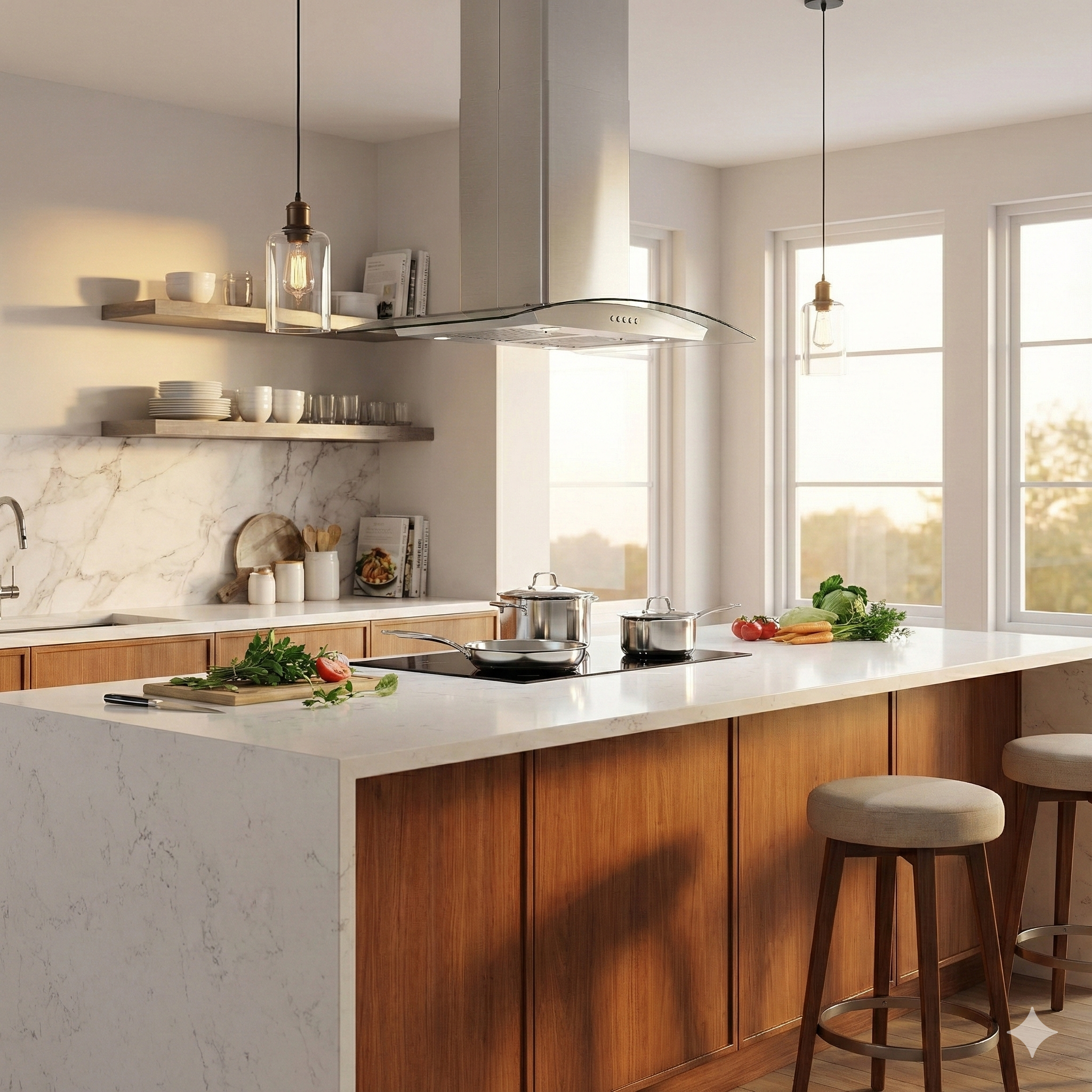
The COS-668A750 Range Hood: 30-Inch Wall Mount with Glass Canopy and ARC-FLOW Filtration
Kitchen ventilation represents one of those appliance categories where function absolutely must come first, yet design still matters because range hoods occupy prominent visual positions in most kitchens. The COS-668A750 addresses both requirements through wall-mounted ventilation with glass canopy aesthetics, permanent stainless steel filters, LED lighting, and straightforward push button controls. This 30-inch hood from Cosmo’s 668A Series combines visible design elements—particularly the sleek glass visor—with practical ventilation features that handle smoke, grease, and odors during daily cooking.
Wall mount installation positions the hood directly against the wall above your cooktop, creating ventilation without requiring cabinet integration or ceiling suspension. The glass canopy adds contemporary visual interest while the ARC-FLOW permanent filters eliminate recurring filter replacement costs. Three fan speeds provide control over ventilation intensity, while LED lights illuminate the cooking surface below. For kitchens wanting wall-mounted ventilation with modern glass design elements and permanent filtration in a 30-inch format, these features provide genuine utility that balances appearance with cooking needs.
30-Inch Width for Standard Cooktop Coverage
The 30-inch dimension matches standard residential cooktop sizes, providing appropriate ventilation coverage for the most common kitchen configurations.
Direct alignment with 30-inch cooktops and ranges ensures the hood captures cooking emissions effectively without significant overhang or insufficient coverage. The hood width should match or slightly exceed cooktop width for best performance.
Standard residential sizing means this hood fits kitchens designed around conventional appliance dimensions. You won’t need to modify cabinetry or wall mounting for non-standard widths.
Space efficiency in smaller kitchens benefits from appropriate hood sizing that provides needed ventilation without overwhelming the space or extending unnecessarily beyond the cooking surface.
Two permanent stainless steel filters positioned across the 30-inch width capture grease and airborne particles effectively. The dual filter configuration provides adequate filtration area for the hood’s ventilation capacity.
Cabinet fit considerations are simpler with standard sizing. The 30-inch hood integrates with standard cabinet layouts without requiring custom spacing or unusual arrangements.
The width serves typical home cooking needs effectively. Unless you’re installing over a 36-inch or larger cooktop, the 30-inch format handles ventilation requirements for most residential cooking.
Wall Mount Installation for Conventional Kitchens
Wall mounting attaches the hood directly to the wall surface above the cooktop, creating ventilation without requiring cabinet integration or ceiling suspension like island hoods need.
Installation against the wall provides secure mounting to wall studs rather than relying on ceiling support. This conventional mounting method works in most kitchens without extraordinary structural requirements.
Clearance from the cooktop follows standard recommendations—typically 24-30 inches above the cooking surface depending on cooktop type. Wall mounting allows adjusting installation height within manufacturer specifications.
Ductwork routing through the wall or up through cabinetry to the roof depends on your kitchen layout and structure. Wall hoods typically offer top venting through cabinetry or rear venting directly through the wall behind the hood.
Visual integration in standard kitchen layouts works naturally because wall hoods occupy the expected position above ranges and cooktops. This conventional placement doesn’t create unusual design challenges.
Professional installation is recommended for proper mounting, electrical connection, and ductwork integration. Wall mounting requires locating studs, ensuring level installation, and properly sealing ductwork connections.
Kitchen layout compatibility works best when the cooktop sits against a wall rather than on an island. Wall mount hoods cannot serve island cooktops—those require ceiling-suspended island models.
Glass Canopy for Contemporary Aesthetics
The glass visor distinguishes the 668A Series from basic stainless steel hoods, adding visual interest through material contrast and modern design elements.
Sleek glass panel across the front face creates contemporary appearance that coordinates with modern kitchen designs. The transparent or translucent glass provides visual lightness compared to solid metal hoods.
Visual distinction from standard all-metal hoods makes the glass canopy a design statement rather than just functional equipment. The glass element suggests current design trends and attention to aesthetics beyond basic ventilation.
Easy cleaning of glass surfaces requires only wiping with glass cleaner to maintain appearance. The smooth glass doesn’t accumulate grease or grime in textured surfaces like some hood designs.
Light reflection through or across the glass can enhance the hood’s lighting effects. The glass interacts with the LED lights below, potentially creating interesting visual elements during operation.
Material durability of tempered glass handles kitchen heat and cleaning products without issues. The glass construction provides long-term visual appeal without discoloration or degradation that affects some materials.
The glass canopy makes the hood more noticeable as a design element rather than trying to hide or minimize its presence. If you want your hood to contribute to kitchen aesthetics, the glass visor accomplishes that goal.
ARC-FLOW Permanent Stainless Steel Filters
The permanent filter system eliminates recurring costs and waste associated with disposable filters while providing effective grease capture through multiple-layer stainless steel construction.
Stainless steel baffle construction captures grease particles through directional flow forcing grease-laden air through multiple turns. The baffles separate grease from airflow, collecting it in the filter rather than letting it pass into ductwork.
Dishwasher safe cleaning makes filter maintenance straightforward—simply remove filters and run through your dishwasher whenever they accumulate visible grease. No special cleaning products or techniques required.
Unlimited reuse means these filters last the lifetime of the hood. You never need to budget for replacement filters or schedule regular filter changes like disposable fiber filters require.
Environmental benefit results from eliminating disposable filter waste. You’re not regularly throwing away used filters that end up in landfills.
Cost savings accumulate over years of ownership. While initial hood cost might be slightly higher than models with cheap disposable filters, you save money by never buying replacements.
Effective grease capture when filters are cleaned regularly maintains ventilation performance. The permanent filters work as well as disposables when properly maintained—the key is washing them before grease buildup restricts airflow.
Two filters across the 30-inch width provide adequate filtration area for the hood’s ventilation capacity. The dual filter configuration ensures thorough grease capture across the entire hood opening.
Three Fan Speeds for Ventilation Control
The three-speed fan system provides control over ventilation intensity, allowing you to match airflow to current cooking activities without running maximum ventilation constantly.
Low speed handles gentle cooking tasks, keeping air moving without excessive noise or energy use. Use low speed for simmering, general cooking, or when you want continuous ventilation without high airflow.
Medium speed serves most everyday cooking—sautéing, boiling, regular stovetop tasks that generate moderate steam and odors. This middle speed balances ventilation effectiveness with reasonable noise levels.
High speed tackles intense cooking situations—searing meat, stir-frying at high heat, or cooking methods that generate significant smoke or steam. Maximum airflow clears the air quickly during demanding cooking.
Manual speed selection through push button controls lets you choose appropriate ventilation for current needs. You decide when to increase or decrease ventilation based on what you’re cooking.
Energy efficiency improves when running lower speeds for tasks that don’t require maximum ventilation. Using appropriate speeds avoids wasting electricity on excessive airflow when it’s not needed.
Noise considerations make having multiple speeds valuable—running low or medium speed keeps noise moderate while still providing ventilation. You can have conversation while cooking without shouting over the hood.
The three-speed system provides useful control without excessive complexity. More speeds don’t necessarily improve functionality—three levels serve most cooking situations effectively.
Push Button Controls for Simple Operation
Push button controls provide straightforward operation through mechanical switches that respond to light pressure, offering simple interface without touch controls or digital displays.
Tactile feedback from buttons clicking confirms your input immediately. You feel the button press and hear the click, providing clear confirmation that the hood registered your command.
Durable mechanical construction withstands years of use without the sensor failures that sometimes affect touch controls. Push buttons rarely fail and continue working reliably throughout the hood’s life.
Easy operation even with greasy fingers works better with push buttons than touch controls. Mechanical buttons respond to pressure regardless of whether your hands are clean or covered in cooking residue.
Clear labeling on buttons shows fan speed selections and light controls. The straightforward interface makes operation obvious without consulting manuals.
No electronic displays to fail or complicate the interface keeps things simple. The push button system provides only what you need—on/off and speed controls—without unnecessary features.
Cleaning around buttons requires wiping the control panel surface. The buttons themselves are sealed to prevent liquids from entering the control mechanism.
The simple interface suits people who prefer straightforward mechanical controls over digital interfaces. If you value reliable, uncomplicated operation, push buttons deliver exactly that.
LED Lighting for Cooking Surface Illumination
Two front-mounted LED lights illuminate the cooktop surface below the hood, providing task lighting that helps you see what you’re cooking without relying solely on overhead kitchen lighting.
Energy-efficient LED technology consumes minimal electricity while providing bright illumination. LEDs last for years without needing replacement, unlike incandescent bulbs that burn out regularly.
Front mounting positions lights to shine directly down onto the cooking surface. This direct lighting illuminates pots, pans, and food better than ambient kitchen lighting typically can.
Long LED lifespan means you likely won’t ever replace these lights during the hood’s useful life. LED bulbs can last 20,000-50,000 hours—far longer than traditional bulb technologies.
Bright illumination helps you monitor cooking progress, check food color and texture, and work safely at the cooktop. Adequate lighting is a genuine safety feature that reduces cooking accidents.
Separate light control allows operating lights independently from the ventilation fan. You can illuminate the cooktop without running the fan if needed, or run ventilation without lights.
Low heat output from LEDs doesn’t add to the cooking heat in your kitchen. Unlike incandescent bulbs that radiate considerable heat, LEDs stay cool during operation.
The lighting enhances cooking capability by ensuring you can always see clearly while cooking, regardless of time of day or ambient lighting conditions in your kitchen.
430-Grade Stainless Steel Construction
The hood body uses 430-grade stainless steel with 20-gauge thickness, providing durable construction that resists corrosion while maintaining structural integrity throughout the hood’s service life.
Stainless steel resists rust, corrosion, and staining from cooking exposure. The material handles heat, moisture, grease, and cleaning products without deteriorating over years of kitchen use.
20-gauge thickness (about 0.036 inches) provides adequate structural rigidity without excessive material or weight. The gauge represents good balance between strength and cost for residential range hoods.
430-grade stainless contains less chromium than premium 304-grade but costs less while still offering good corrosion resistance for kitchen environments. The 430 alloy works well for appliances that don’t face extreme conditions.
Easy cleaning of stainless steel surfaces requires only wiping with appropriate cleaners. The smooth metal doesn’t absorb stains or odors and maintains appearance with basic maintenance.
Professional appearance of brushed stainless steel coordinates with other stainless appliances common in modern kitchens. The material suggests quality construction and integrates visually with contemporary kitchen designs.
Long service life results from durable metal construction that doesn’t degrade or fail like plastic components might. Properly maintained stainless steel hoods can last decades.
The stainless construction provides both functional durability and visual appeal appropriate for the hood’s prominent position in the kitchen.
Backdraft Damper for Airflow Control
The included backdraft damper prevents outside air from flowing backward through the ductwork into your kitchen when the hood isn’t operating, maintaining climate control and preventing drafts.
One-way airflow during hood operation allows exhaust to vent outside while preventing reverse flow. The damper opens when the fan creates airflow and closes when the fan stops.
Draft prevention when the hood is off keeps cold air from entering through ductwork during winter or hot air during summer. Without a damper, ductwork acts like an open hole in your wall.
Energy efficiency improves by reducing heating and cooling losses through the hood ductwork. Preventing outside air infiltration helps maintain comfortable kitchen temperatures.
Pest barrier function stops insects, birds, or small animals from entering through external vent openings. The damper provides physical barrier when closed.
Weather protection prevents rain, snow, or debris from entering ductwork during storms or high winds. The damper shields your kitchen from outdoor elements.
Automatic operation requires no manual intervention—the damper responds to airflow automatically. It opens when needed and closes when the fan stops without you doing anything.
The backdraft damper represents essential functionality for ducted hoods. Without it, your hood ductwork becomes a continuous opening between inside and outside.
Three-Prong Power Cord for Standard Installation
The included power cord with standard three-prong plug simplifies electrical connection, allowing installation using existing 120V outlets without hardwiring requirements.
Standard electrical connection uses typical household outlets rather than requiring dedicated circuits or special wiring. If you have an accessible outlet near the installation location, electrical hookup is straightforward.
Grounded three-prong plug provides proper electrical safety through the ground wire. The grounding protects against electrical faults that could create shock hazards.
Installation flexibility allows moving the hood if needed without rewiring. You can plug into different outlets or relocate the hood more easily than hardwired models allow.
No electrician required for electrical connection if an appropriate outlet exists near the installation location. You plug in the hood just like any other appliance.
Cord management during installation means routing the cord neatly to the outlet location. The cord should be positioned where it won’t be visible or create tripping hazards.
Outlet accessibility needs verification during installation planning. Ensure an outlet exists or will be installed in an appropriate location that the included cord can reach.
The power cord simplifies installation compared to hardwired models but requires accessible outlet placement during kitchen design or renovation.
Value and Performance in Wall Mount Ventilation
The COS-668A750 delivers solid value by combining effective ventilation with glass canopy aesthetics and permanent filtration in wall-mounted format at reasonable cost for the features provided.
The glass visor provides distinctive appearance that differentiates this hood from basic all-metal models without excessive cost premium. You get contemporary aesthetics without luxury pricing.
Permanent filters eliminate ongoing filter replacement costs and environmental waste. The dishwasher-safe stainless steel filters provide lifetime filtration.
Three-speed ventilation offers useful control without unnecessary complexity. The fan speeds serve different cooking intensities effectively.
LED lighting provides energy-efficient task illumination that will likely never require bulb replacement during the hood’s service life.
Push button controls deliver reliable operation through proven mechanical interface that continues working long after fancier digital controls might fail.
Stainless steel construction ensures long service life without material deterioration. The hood provides years of reliable ventilation performance.
Making the Right Choice for Your Kitchen
The COS-668A750 works best for kitchens wanting wall-mounted ventilation with contemporary glass design in 30-inch format over standard cooktops.
Consider your cooktop width when selecting hood size. The 30-inch hood appropriately serves 30-inch cooktops and ranges—verify your cooktop width before purchasing.
Wall mounting requires the cooktop to be positioned against a wall. If you have an island cooktop, you need an island hood instead of this wall-mounted model.
The glass canopy appeals to those wanting the hood to serve as a design element rather than trying to make it disappear. If you prefer minimal hood visibility, all-metal designs might suit you better.
Permanent filters suit people willing to wash filters periodically to avoid replacement costs. If you prefer disposing of dirty filters rather than cleaning them, consider models with disposable filters.
Push button controls appeal to those valuing straightforward mechanical operation over digital interfaces. If you prefer touch controls or digital displays, the “S” variant in this series offers soft touch controls.
Kitchen layout must accommodate proper ductwork routing. Verify you can vent through the wall or up through cabinetry to the roof before purchasing.
The COS-668A750 range hood brings together wall-mounted ventilation, glass canopy aesthetics, and permanent ARC-FLOW filtration in 30-inch format designed for standard residential kitchens. For households wanting effective ventilation with contemporary glass design elements and lifetime filtration in wall-mounted configuration, this hood delivers functional performance that handles daily cooking needs while adding visual interest to your kitchen.
The COS-668A750 delivers solid value by combining effective ventilation with glass canopy aesthetics and permanent filtration in wall-mounted format at reasonable cost for the features provided, making it a great choice for those looking for contemporary design without breaking the bank.