
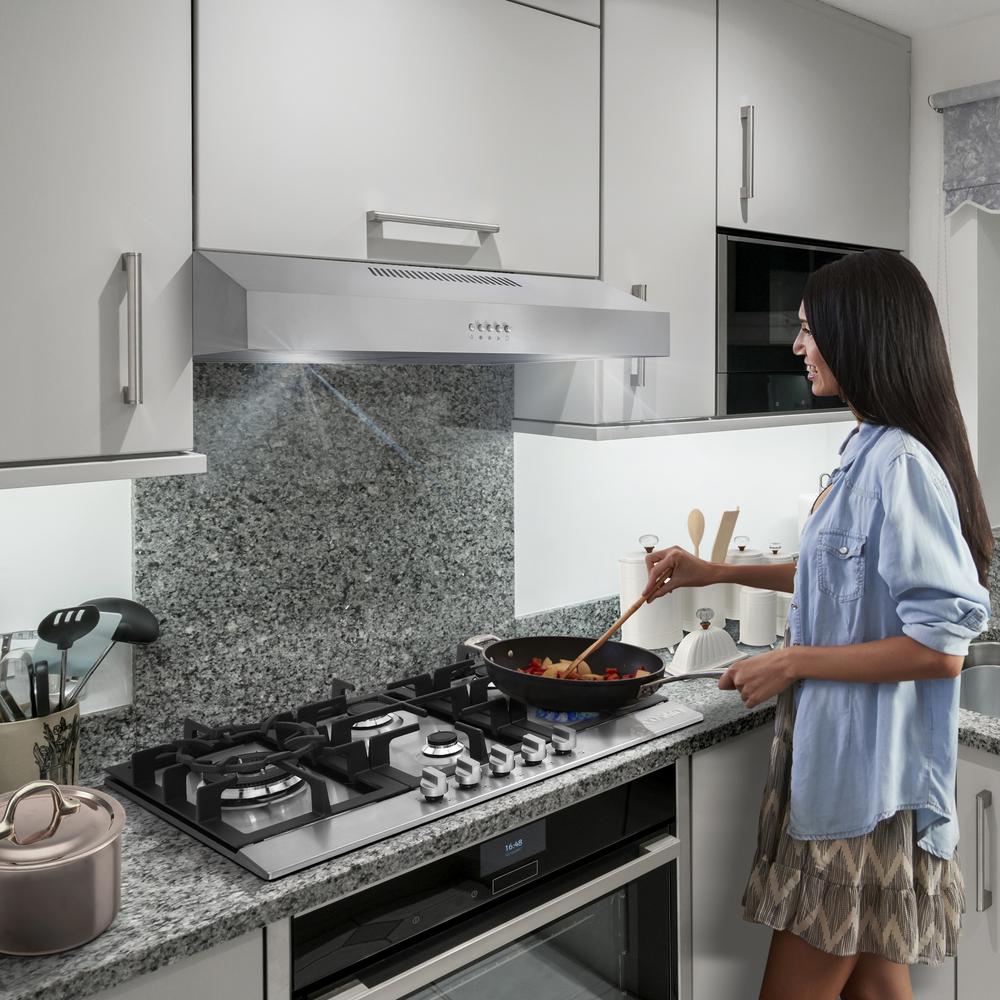
The COS-850SLTX-E Gas Cooktop: 30-Inch Drop-In with Flame Failure Technology
Drop-in gas cooktops provide cooking power and control without the bulk of full ranges, making them ideal for custom kitchen layouts where separate cooktops and wall ovens create more functional cooking zones. The COS-850SLTX-E delivers five sealed gas burners across a 30-inch stainless steel surface, combining the instant heat response gas cooking provides with modern safety features like flame failure technology and electronic ignition. Heavy-duty cast iron grates support cookware while distributing weight evenly, and front-mounted metal control knobs allow easy burner adjustments without reaching across hot surfaces. The brushed stainless steel finish resists fingerprints and cleans easily, while the drop-in installation creates seamless integration with surrounding countertops for a built-in appearance.
What sets this cooktop apart is the combination of practical features that address real cooking needs. Sealed burners prevent spills from dripping into burner mechanisms, making cleanup straightforward. Flame failure technology automatically shuts off gas if flames extinguish unexpectedly, preventing dangerous gas leaks. The included conversion kit allows switching from natural gas to liquid propane, providing fuel flexibility for different homes and situations. These thoughtful design elements create a cooktop that cooks effectively while prioritizing safety and long-term usability.
Why The COS-850SLTX-E Gas Cooktop Stands Out
Gas cooktop technology has refined significantly over decades, and the COS-850SLTX-E incorporates the features that genuinely improve daily cooking while eliminating outdated compromises that older designs required.
Five burner configuration provides more simultaneous cooking capacity than standard four-burner layouts. The additional burner means you can prepare complete meals without juggling pots or waiting for burner availability. Holiday cooking, weekend meal prep, and busy family dinners all benefit from having five cooking zones available when needed.
Sealed burner design represents a major improvement over older open burner styles where spills dropped directly into burner mechanisms. Sealed burners feature raised edges that contain spills on the cooktop surface rather than letting liquids seep into internal components. This design dramatically simplifies cleaning while preventing the corrosion and clogging that plagued older gas cooktops.
Flame failure technology monitors burner flames through thermocouples that detect heat. If flames blow out from drafts, boilovers, or other causes, the system automatically shuts off gas flow within seconds. This safety feature prevents gas from accumulating in your kitchen, eliminating a significant fire and health hazard that older gas cooktops presented.
Electronic ignition eliminates the need for pilot lights that waste energy by burning continuously. Push and turn the control knob to spark ignition – the electronic system generates the spark that lights the gas. This modern ignition method is more reliable than matches or piezo igniters while consuming minimal electricity.
Front control location allows operating burners without reaching across hot pots and open flames. Controls positioned at the cooktop front provide safer access, reducing the risk of sleeve burns or accidental contact with hot cookware. This ergonomic advantage matters most for shorter cooks and when handling multiple burners simultaneously.
Heavy-duty cast iron grates distribute cookware weight across the entire cooktop surface rather than concentrating pressure on individual points. The continuous grate design also lets you slide heavy pots between burners without lifting, reducing strain and spill risk. Cast iron’s thermal mass helps stabilize burner heat even as air currents or door openings create temperature fluctuations.
Brushed stainless steel construction provides durability that resists stains, scratches, and corrosion from kitchen environments. The brushed finish hides minor scratches better than polished surfaces while maintaining an upscale appearance. Stainless steel won’t rust like porcelain-coated surfaces that chip over time, ensuring the cooktop maintains its appearance for years.
Drop-in installation creates the built-in look of expensive custom kitchens at accessible price points. The cooktop edges rest on countertop cutouts, creating flush integration that looks seamless. This installation style works particularly well for kitchen islands or when pairing cooktops with separate wall ovens in ergonomic cooking zones.
Understanding Sealed Burner Advantages
Sealed burners represent one of the COS-850SLTX-E’s most valuable features, though many buyers don’t fully appreciate the practical benefits this design delivers compared to traditional open burner systems.
Spill Containment: The raised seal around each burner prevents liquids from flowing into burner assemblies. When pots boil over or ingredients spill, the mess stays on the cooktop surface where you can wipe it up easily. Open burners allow spills to drop into the burner box, creating sticky residue that hardens on hot components and requires disassembly to clean properly.
Easier Cleaning: Sealed burner cooktops clean with simple wipes across smooth surfaces. Remove the grates, wipe the burner caps and surface with degreasing cleaner, and you’re done. Open burner designs require removing drip pans, scraping hardened residue from burner rings, and cleaning multiple components individually – a time-consuming process that many people avoid until buildup becomes severe.
Prevented Corrosion: Liquids dripping into open burner mechanisms cause corrosion that eventually damages igniters and gas valves. Salt in particular accelerates corrosion of metal components. Sealed designs prevent these liquids from reaching sensitive parts, extending cooktop lifespan significantly.
Consistent Performance: Open burners affected by spill buildup develop uneven flames as clogged ports restrict gas flow. You notice performance degrading gradually until cleaning becomes mandatory. Sealed burners maintain consistent flame patterns because spills can’t clog internal ports.
Improved Safety: Sealed burners reduce the fire hazard of grease accumulating in burner boxes. Open designs allow grease to collect where it’s difficult to clean, creating potential fire sources if enough residue accumulates. Sealed designs keep these flammable deposits on surfaces where regular cleaning removes them.
Flame Failure Technology Explained
The flame failure safety system represents critical technology that prevents the dangerous gas leaks possible when burner flames extinguish unexpectedly – a scenario that occurs more commonly than many people realize.
How It Works: Each burner includes a thermocouple – a temperature-sensing device positioned in the burner flame. When the flame heats the thermocouple, it generates a small electrical current that holds a safety valve open, allowing gas to flow. If the flame extinguishes for any reason, the thermocouple cools rapidly. Within 3-5 seconds, it stops generating current and the safety valve automatically closes, shutting off gas flow.
Common Flame-Out Scenarios: Pot boilovers frequently extinguish burner flames as liquids spill onto flames. Strong drafts from opening doors or windows can blow out flames, particularly on lower settings. Pots lifted momentarily to stir contents sometimes block air supply enough to extinguish flames. In all these situations, flame failure technology prevents gas from continuing to flow once flames are gone.
Gas Leak Prevention: Without flame failure protection, extinguished burners continue releasing unburned gas into your kitchen. Natural gas and propane are both highly flammable, and even small concentrations create explosion hazards. The accumulating gas also poses health risks through oxygen displacement and direct inhalation. Flame failure technology eliminates these hazards by stopping gas flow immediately when flames go out.
Distinguishing from Manual Shut-Off: Some people assume they’ll simply notice and manually shut off burners if flames go out. In reality, many flame-out situations happen when cooks aren’t watching – they’re tending other dishes, answering doors, or handling other kitchen tasks. Flames may extinguish just seconds after you turn away. Automatic shut-off provides protection even when you’re not monitoring burners constantly.
System Reliability: Thermocouple technology is mechanically simple and highly reliable. There are no complex electronics to malfunction or calibrations to drift. The system works purely through heat generation, making it extremely dependable over years of use. Occasional cleaning of thermocouple tips maintains optimal response times.
Five-Burner Configuration Benefits
The COS-850SLTX-E’s five-burner layout provides cooking capacity advantages that become apparent particularly during complex meals or when multiple family members cook simultaneously.
Capacity for Complete Meals: Five burners let you handle entire meal components at once – protein in one pan, two vegetable preparations, a sauce or gravy, and rice or pasta simultaneously. Four-burner cooktops force sequencing or juggling that slows meal preparation and complicates timing.
Power Distribution: The five-burner layout typically includes varied BTU outputs across burners. High-power burners handle rapid boiling and high-heat searing. Medium burners work well for general sautéing and frying. Low-output burners maintain gentle simmers without the cycling common when using high-power burners at low settings.
Space Efficiency: Five burners fit into the same 30-inch width as many four-burner models by optimizing burner spacing and grate design. You gain cooking capacity without requiring wider countertop cutouts or sacrificing counter space to accommodate a larger cooktop.
Flexibility for Multiple Cooks: When two people cook together, five burners reduce conflicts over burner access. Each cook can claim multiple burners without monopolizing the entire cooktop. This collaborative cooking becomes increasingly common as kitchen designs emphasize social cooking spaces.
Holiday and Entertainment Cooking: Big cooking days like Thanksgiving or party hosting benefit dramatically from extra burner capacity. You can simultaneously warm multiple side dishes, prepare gravy, steam vegetables, and handle last-minute sautéing without waiting for burner availability.
Electronic Ignition System
Modern electronic ignition provides reliable burner lighting while eliminating the energy waste and maintenance hassles associated with standing pilot lights that older gas cooktops required.
Spark Generation: Electronic igniters create electrical sparks that ignite gas flowing from burners. The spark occurs between an electrode and the burner when you push and turn the control knob. You hear a rapid clicking sound as the igniter fires repeatedly until flames establish.
Energy Efficiency: Standing pilots burn gas continuously, consuming energy 24 hours daily even when you’re not cooking. Electronic ignition uses tiny amounts of electricity only during the moments when lighting burners. Over a year, this eliminates significant gas consumption while reducing cooling loads in summer as pilots aren’t adding constant heat to your kitchen.
Reliable Operation: Electronic igniters work consistently across wide temperature and humidity ranges. Unlike pilot lights that blow out from drafts or fail to light in certain conditions, electronic systems fire reliably whenever you need them. The included 3-prong power cord connects to standard household outlets, providing electricity for the ignition system.
Troubleshooting Considerations: If igniters fail to light burners, common causes include wet burner surfaces (from cleaning or spills), clogged burner ports, or loose electrical connections. Ensuring burners are dry and clean resolves most ignition issues. The mechanical simplicity of spark igniters means they rarely fail completely.
LP Conversion Capability
The included liquid propane conversion kit provides fuel flexibility that matters for various housing situations and allows the cooktop to adapt if your fuel supply changes.
Natural Gas vs. Propane: Most urban and suburban homes receive natural gas through utility lines, making it the standard fuel for gas appliances. Rural homes and some properties without gas utility service use liquid propane stored in tanks. The two fuels require different burner orifices due to their different pressures and combustion characteristics.
Conversion Process: The included LP conversion kit contains replacement orifices sized appropriately for propane’s higher pressure. Converting involves shutting off gas, removing burner caps and heads, replacing the orifices with the LP versions, and adjusting air shutters according to included instructions. Many handy homeowners can perform this conversion, though hiring professionals ensures proper completion.
When Conversion Matters: New homes may use propane during construction before natural gas service connects. Some properties switch from propane to natural gas as utility lines expand into their areas. Having conversion capability built-in means your cooktop adapts to these changing situations without requiring appliance replacement.
Performance Differences: Propane contains more BTUs per cubic foot than natural gas, potentially providing slightly higher heat output after proper conversion. However, most users notice no practical cooking difference between fuels when appliances are correctly configured for the fuel being used.
Cast Iron Grate System
The continuous cast iron grate design provides practical advantages for daily cooking while supporting varied cookware sizes and types safely.
Weight Distribution: Cast iron grates spread cookware weight across the entire cooktop surface rather than concentrating pressure on small points. This distribution prevents damage to the stainless steel surface beneath while allowing safe use of heavy cookware like cast iron Dutch ovens, stockpots, and griddles.
Cookware Sliding: Continuous grate design lets you slide pots between burners without lifting. This capability reduces strain when moving heavy cookware and minimizes spill risk from lifting pots off burners. The feature proves particularly valuable when transferring large stockpots or when both hands are needed to stabilize extra-large cookware.
Heat Retention: Cast iron’s thermal mass absorbs and retains heat, helping stabilize cooking temperatures despite momentary air currents or flame fluctuations. This thermal stability contributes to more consistent cooking results, particularly during long simmers or when maintaining specific temperatures matters.
Durability: Cast iron withstands the thermal cycling and physical impacts that kitchen use involves without warping, cracking, or degrading. Quality cast iron grates last decades with proper care, outliving many other cooktop components.
Cleaning and Maintenance: Remove grates periodically for thorough cleaning with hot soapy water. For stuck-on residue, use degreasers and non-abrasive scrubbers. Some cooks periodically season cast iron grates with light oil coatings to prevent rust and make cleanup easier. Avoid putting cast iron grates through dishwashers, as harsh detergents can damage the finish.
Installation Requirements and Planning
Proper COS-850SLTX-E installation ensures safe operation while achieving the seamless built-in appearance that makes drop-in cooktops attractive alternatives to traditional ranges.
Countertop Cutout: The drop-in design requires precise countertop cutouts according to specifications in the installation manual. The cooktop lip rests on the countertop surrounding the cutout, supporting the unit’s weight while creating a flush appearance. Professional installers ensure accurate cuts that fit properly without gaps or misalignment.
Gas Line Connections: Natural gas or LP supply lines must route to the cooktop location following local building codes. Many municipalities require licensed professionals to perform gas connections due to safety concerns and legal liability. Proper connections include shut-off valves, flexible connector lines rated for gas appliances, and leak testing to verify safe operation.
Electrical Requirements: The 3-prong power cord connects to standard 120V household outlets, providing electricity for electronic ignition. Position outlets in adjacent cabinets or behind the cooktop where they’re accessible for plugging in the cooktop but hidden from view.
Ventilation Planning: While not hardwired to cooktops, proper ventilation is essential for gas cooking. Install a range hood rated for the cooktop’s total BTU output, typically requiring 100-150 CFM per 10,000 BTUs. The COS-850SLTX-E pairs well with 30-inch range hoods from Cosmo’s lineup positioned 24-30 inches above the cooking surface.
Clearance Requirements: Follow manufacturer specifications for minimum clearances to combustible materials like cabinets and walls. Adequate clearances prevent fire hazards while ensuring proper air circulation around the cooktop. Heat shields may be required in situations where minimum clearances can’t be met.
Comparing 24-Inch vs. 30-Inch Models
The STX-E series includes both COS-640STX-E (24-inch) and COS-850SLTX-E (30-inch) models, with size determining cooking capacity and kitchen fit.
Burner Count: The 24-inch model includes 4 sealed burners while the 30-inch COS-850SLTX-E provides 5 burners. This extra cooking zone significantly impacts meal preparation capacity for households that regularly cook multiple dishes simultaneously.
Standard Sizing: The 30-inch width matches standard range dimensions, making it ideal for replacing existing 30-inch ranges when converting to separate cooktop and wall oven configurations. The 24-inch model works well for compact kitchens, small apartments, or secondary cooking stations.
Cooking Capacity: The additional burner and wider cooking surface on the 30-inch model accommodates larger cookware and provides more space for maneuvering pots. Serious cooks who regularly prepare complex meals typically prefer the extra capacity.
Price Difference: The 30-inch model costs more than the 24-inch version, reflecting the additional burner and larger cooking surface. However, both models represent good value within their size categories.
Installation Considerations: Choose the cooktop size based on available counter space and existing cutouts if replacing an older unit. The 30-inch model requires 30 inches of continuous counter space, while the 24-inch version fits tighter spaces.
The COS-850SLTX-E demonstrates that quality gas cooking doesn’t require complicated technology or premium pricing. With five sealed burners, flame failure safety, electronic ignition, heavy-duty cast iron grates, and durable stainless steel construction, this 30-inch drop-in cooktop delivers reliable performance that handles daily cooking demands. Whether you’re building a new kitchen or upgrading from an older cooktop, the COS-850SLTX-E provides the gas cooking control and safety features that make meal preparation efficient and secure.
The COS-850SLTX-E really stands out with its five sealed burners, which make it a game-changer for anyone who frequently cooks multiple dishes at once. It’s not just about the number of burners though; the additional cooking surface and wider width offer more space for maneuvering pots and pans, making meal prep much smoother.