
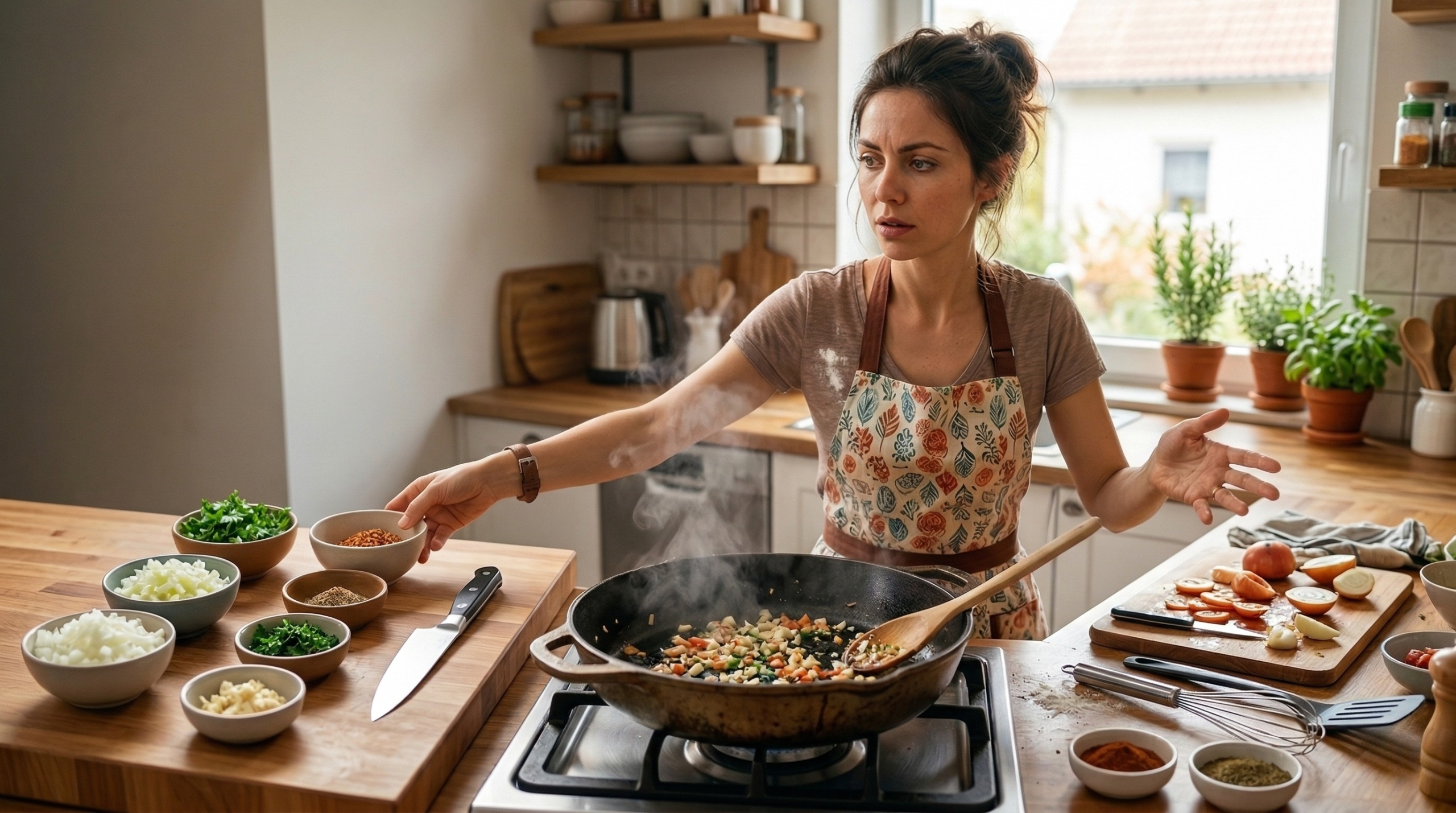
The Mise en Place Myth: Why Prep-Everything-First Doesn’t Always Work
Professional chefs prep everything before they start cooking. You’ve seen it on cooking shows—neat little bowls of chopped vegetables, measured spices, prepped proteins all lined up before heat touches pan.
Then you try it at home. You spend 45 minutes chopping, measuring, and organizing. Your counter looks like a bowl store exploded. Half your ingredients sit getting warm or oxidizing while you finish prep. And somehow the actual cooking still feels rushed.
The problem isn’t your knife skills. The problem is blindly applying restaurant kitchen logic to home cooking without understanding why restaurants work that way or how your kitchen differs.
Here’s the truth about mise en place, when complete pre-prep actually helps versus hurts, and how to adapt the concept for home cooking efficiency.
Restaurant Kitchens Aren’t Home Kitchens
Restaurants prep everything first because they’re cooking the same dishes repeatedly under time pressure for paying customers who expect fast service.
Restaurant line cooks work during service rush cooking identical orders back-to-back. Prepping once lets them execute quickly when orders arrive. They make the same pasta dish 50 times per night—complete prep makes sense.
Restaurants have prep cooks whose entire job involves chopping vegetables and measuring ingredients. Line cooks receive already-prepped ingredients. The division of labor spreads prep burden across multiple people.
Restaurant mise en place prevents mistakes during rush. When cooking under pressure with tickets piling up, having everything measured prevents forgetting ingredients or adding wrong amounts.
Restaurants optimize for speed during service, not efficiency of total labor. They accept longer total prep time because it enables faster cooking when customers are waiting.
Your home kitchen operates differently. You’re cooking one or two portions, not fifty. You’re the prep cook and line cook. You’re not racing against customer expectations. Different constraints require different strategies.
Downtime During Cooking Is Wasted Prep Time
Most recipes include natural waiting periods where you’re not actively doing anything—perfect opportunities for prep work without adding total cooking time.
Onions take ten minutes to soften properly. You can chop garlic, measure spices, and prep other vegetables during those ten minutes instead of standing watching onions.
Water takes time to boil. While waiting for pasta water, you can grate cheese, chop herbs, or prepare sauce ingredients rather than prepping everything before you start.
Meat needs time to brown undisturbed. Flipping chicken too early prevents proper browning. Use that hands-off time productively prepping what comes next.
Ovens need preheating time. While the oven reaches temperature, prep your ingredients instead of prepping before you turn the oven on.
Rice cookers, slow cookers, and other set-it-and-forget-it equipment create prep windows. Use their cooking time for other preparation instead of front-loading everything.
Sequential prep during natural downtime means your total time from starting to eating stays roughly the same, but you’re not creating artificial prep time before cooking begins.
Some Ingredients Suffer From Early Prep
Certain ingredients degrade when prepped too far in advance, making complete mise en place actively harmful to final dish quality.
Cut avocados oxidize and brown within minutes. Prep avocado right before using, not at the start of your prep session.
Sliced apples and pears discolor quickly. Chop them last to maintain appearance and prevent browning.
Minced garlic loses pungency and develops harsh flavors when sitting. Chop garlic right before it hits the pan for best flavor.
Fresh herbs wilt and blacken when chopped early. Prep herbs at the last minute to maintain color and aroma.
Salad greens get soggy when dressed too early. Keep components separate until serving time.
Some vegetables release moisture when salted and chopped. Prepping too early creates watery mess rather than neat mise.
Complete advance prep forces you to compromise ingredient quality. Strategic last-minute prep maintains optimal flavor and texture.
Partial Mise Works Better for Home Cooks
Instead of all-or-nothing approach, prep strategically based on cooking sequence and ingredient needs.
Prep long-cooking components first. If recipe starts with onions cooking for 15 minutes, chop those onions before anything else. Prep quick-cooking ingredients during the onion cooking time.
Group ingredients by cooking stage. Prep everything for step one together. Prep step two ingredients while step one cooks. Prep step three during step two.
Measure dry ingredients in advance. Spices, flour, and shelf-stable items can sit measured without quality loss. Prep these first if it helps organization.
Keep proteins refrigerated until needed. Don’t let chicken or fish sit at room temperature for 30 minutes while you prep vegetables. Prep proteins right before cooking.
Wash and dry produce in advance but don’t chop until needed. Clean vegetables store better than chopped vegetables. Do the washing early, the cutting strategically.
This hybrid approach gives you organization benefits without quality compromises or artificial waiting time.
Your Recipe Determines Your Strategy
Different recipes require different prep approaches based on cooking intensity and timing demands.
Stir-fries need complete mise. When cooking happens in three minutes over high heat, stopping mid-cooking to chop something means burned food. Everything must be prepped and ready.
Braises allow progressive prep. When something simmers for two hours, you have abundant time for prep during cooking. Front-loading makes no sense.
Baking often requires complete mise. When ratios and techniques are precise, having everything measured prevents mistakes. Measure before mixing.
One-pan meals with sequential cooking work well with progressive prep. Brown meat, remove it, prep vegetables while pan cools slightly, continue cooking. The sequence builds in prep time.
Recipes with many components benefit from partial advance prep. If making main dish plus two sides, prepping some elements early prevents last-minute chaos.
Read your recipe before deciding prep strategy. Let the cooking method and timing dictate your approach.
Mise en Place Is About Readiness, Not Bowls
The core concept behind mise en place isn’t having pretty bowls, it’s being ready to execute without scrambling or forgetting things.
Mental mise matters more than physical mise. Knowing what ingredients you need and what order they’re added prevents mistakes regardless of when you chop them.
Reading the recipe through completely before starting provides mental organization. Understanding the flow prevents surprises mid-cooking.
Gathering all ingredients before starting ensures you don’t discover missing items halfway through cooking. The gathering is the valuable part, not the chopping.
Clearing workspace and having tools ready creates readiness. You don’t need pre-chopped ingredients if your cutting board and knife are accessible.
The professional kitchen concept of “everything in its place” applies to mental preparation and ingredient availability, not mandatory advance chopping.
You can achieve cooking readiness through smart sequencing rather than extensive front-loaded prep work.
Trust Your Cooking Rhythm
As you cook more, you’ll develop natural sense of when to prep what based on your pace and comfort level.
Some people feel less stressed with everything prepped. If advance prep reduces anxiety and makes cooking enjoyable, the time cost might be worth the peace of mind.
Some people find prep-as-you-go more engaging. If chopping during cooking keeps you focused and prevents boredom, sequential prep works better for your personality.
Your knife skills affect optimal strategy. Slow choppers benefit more from advance prep preventing cooking timeline pressure. Fast choppers can prep during cooking more easily.
Your kitchen layout influences efficiency. Tight kitchens with limited counter space make 15 prep bowls impractical. Spacious kitchens accommodate mise better.
Your recipe familiarity changes needs. New recipes might benefit from complete prep reducing variables. Familiar dishes allow more improvisation and progressive prep.
There’s no universal right answer. Optimize for what makes cooking efficient and enjoyable for you in your kitchen with your skills.
Mise en place as practiced in restaurant kitchens solves restaurant problems, feeding many people quickly with consistency. Your home kitchen has different constraints and different goals. Adapt the concept of readiness and organization to your situation rather than mimicking professional setups that weren’t designed for cooking one dinner at home. Prep strategically based on your recipe, your timeline, and your ingredients rather than following rigid rules that might waste your time and compromise your food.