
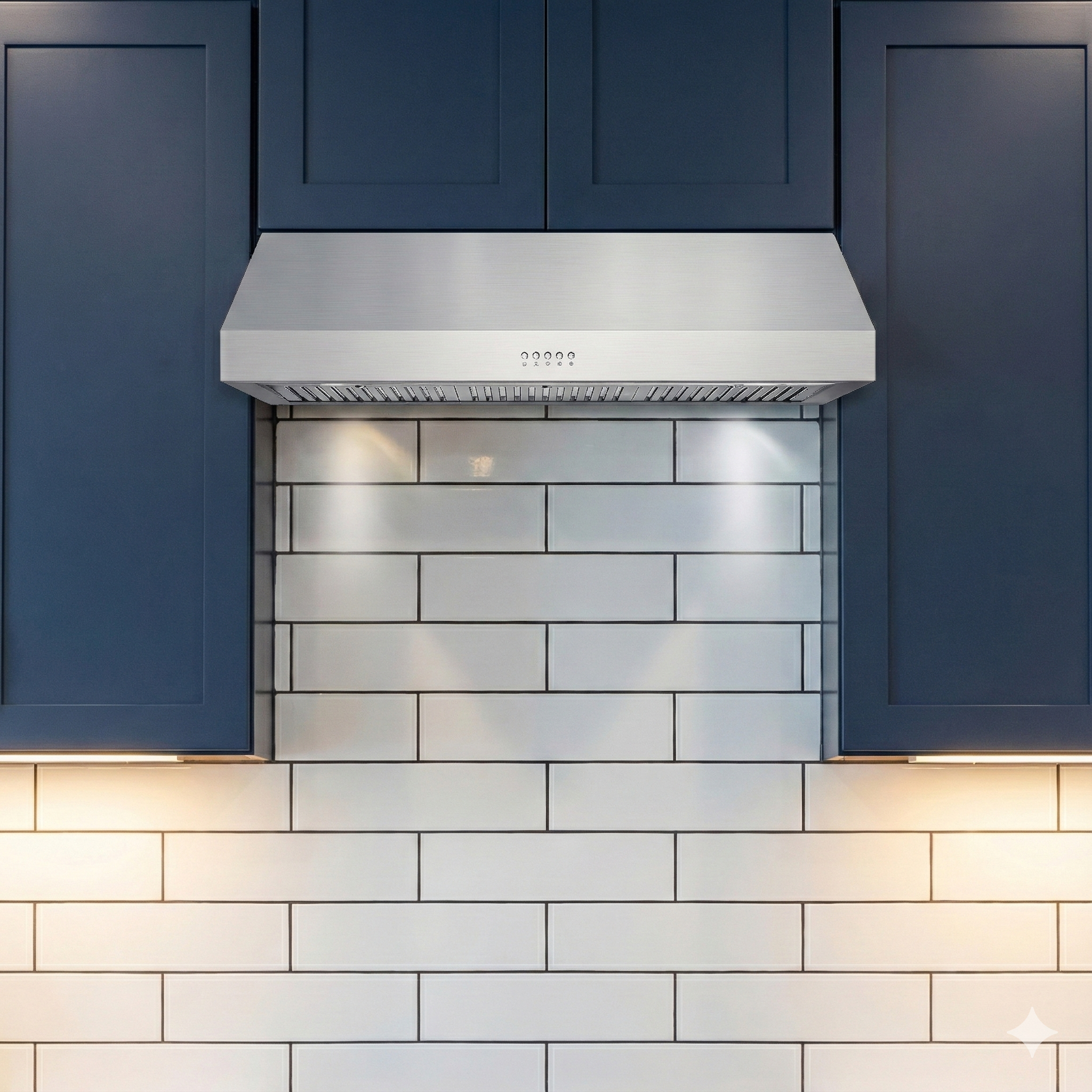
The UC36 Under Cabinet Range Hood: 36-Inch Performance with Permanent Filters
Under cabinet range hoods solve ventilation challenges without sacrificing valuable kitchen space that wall-mount or island designs require. The UC36 delivers powerful air extraction through a slim profile that tucks directly beneath your existing cabinets, keeping your cooktop area clear while removing cooking smoke, steam, and odors efficiently. This 36-inch hood features permanent stainless steel ARC-FLOW filters that capture grease without the ongoing expense of replaceable filters, three fan speeds that adapt to different cooking intensities, and front-mounted LED lights that illuminate your cooking surface. Constructed from 430-grade stainless steel with 18-gauge thickness, the UC36 combines durability with straightforward push button controls that make operation simple and intuitive.
What makes this range hood particularly practical is the focus on long-term value rather than flashy features. Permanent filters eliminate the recurring cost of disposable filters while providing unlimited uses through simple dishwasher cleaning. The noise level stays as low as 45 dB on lower settings, making kitchen conversations possible even while the hood runs. Top venting configuration works with standard ductwork, and the included 3-prong power cord simplifies installation. These practical considerations address the daily realities of range hood ownership, creating an appliance that serves your needs reliably for years.
Why The UC36 Under Cabinet Range Hood Stands Out
Range hood technology has matured significantly, and the UC36 demonstrates how thoughtful design choices create appliances that genuinely improve kitchen environments without unnecessary complexity.
Under cabinet installation maximizes kitchen space by utilizing the area between your cooktop and existing cabinets. This mounting style keeps the hood out of sight lines while maintaining easy access to controls and lights. Unlike wall-mount hoods that require exposed ductwork or island hoods that hang from ceilings, under cabinet models integrate seamlessly with standard kitchen layouts.
36-inch width matches most standard ranges and cooktops, providing appropriate coverage for 30-inch or 36-inch cooking surfaces. Proper sizing matters because undersized hoods fail to capture all cooking byproducts while oversized hoods look disproportionate and may require custom cabinetry modifications. The UC36 hits the sweet spot for typical home kitchen configurations.
ARC-FLOW permanent stainless steel filters represent a significant advantage over aluminum mesh or charcoal filters requiring regular replacement. These high-quality filters capture grease particles effectively through multiple layers of stainless steel baffles. When filters get dirty, simply remove them and run them through your dishwasher. This unlimited reuse saves hundreds of dollars over the hood’s lifetime compared to disposable filter systems.
Three fan speed options provide flexibility for different cooking situations. Low speed handles gentle simmering and warming without excessive noise. Medium speed works well for most everyday cooking including sautéing and frying. High speed tackles heavy-duty tasks like searing steaks or stir-frying where significant smoke and steam production requires maximum extraction power.
Push button controls offer tactile, reliable operation that doesn’t depend on sensitive touch sensors. Physical buttons provide clear feedback when pressed and continue working reliably even after years of kitchen use. The straightforward control layout makes operation obvious – power, fan speed, and lights all have dedicated buttons.
LED lighting technology mounted directly beneath the hood illuminates your cooktop with bright, energy-efficient light. The two front LED lights create shadow-free cooking surfaces that make monitoring food easier. Unlike incandescent bulbs that burn out regularly and consume significant electricity, LEDs last for years while using minimal power.
Premium 430-grade stainless steel construction with 18-gauge thickness ensures structural integrity that resists dents and damage. This is noticeably heavier-duty than the thin sheet metal used in budget range hoods. The material won’t rust, maintains its appearance with basic cleaning, and stands up to the heat and moisture that kitchen environments generate.
Understanding ARC-FLOW Filter Technology
The permanent filter system represents one of the UC36’s most valuable features, but understanding how these filters work helps you maintain them properly and appreciate their advantages over disposable alternatives.
Baffle Filter Design: ARC-FLOW filters use a baffle construction where stainless steel layers are arranged in overlapping patterns. As grease-laden air passes through, it hits the baffles and changes direction multiple times. This zigzag path causes grease particles to condense on the metal surfaces where they’re trapped, while cleaner air continues through to the ductwork.
Multi-Layer Capture: The multiple baffle layers create numerous opportunities for grease capture, dramatically improving filtration efficiency compared to simple mesh screens. Even fine grease particles that might pass through a single layer get caught by subsequent layers, preventing buildup in your ductwork.
Dishwasher Safe Maintenance: Remove the filters by releasing the quick-release latches, then place them directly in your dishwasher. Run a normal cycle with regular detergent – the high-temperature water and strong detergent action dissolve accumulated grease. This cleaning method is remarkably thorough and requires no special cleaners or soaking.
Unlimited Lifespan: Unlike disposable filters that degrade and require regular replacement, stainless steel baffles maintain their structure and effectiveness indefinitely. Clean them monthly during heavy cooking periods or every 2-3 months with lighter use, and they’ll continue capturing grease as effectively as when new.
Cost Savings: Disposable aluminum mesh filters for similar range hoods cost $15-30 per replacement, with recommendations to replace them every 3-6 months. Over a 10-year period, disposable filters cost $300-600. Permanent filters eliminate this entire expense beyond the minor cost of dishwasher detergent for cleaning.
Environmental Benefits: Permanent filters prevent dozens of disposable filters from ending up in landfills over the range hood’s lifetime. This sustainability advantage aligns with reducing household waste while saving money – a genuine win-win situation.
Installation Planning and Requirements
Proper UC36 installation ensures optimal performance while preventing common issues that reduce efficiency or create safety concerns. Understanding requirements before starting helps installations go smoothly.
Cabinet Compatibility: The UC36 installs directly to the underside of upper cabinets, requiring cabinets strong enough to support the hood’s weight. Standard kitchen cabinets built to modern codes handle this easily, but older or damaged cabinets may need reinforcement. Check that cabinet bottoms are solid wood or plywood rather than thin particleboard.
Height Positioning: Install the hood 24-30 inches above your cooktop surface for optimal capture of cooking byproducts. Too low creates head-bumping hazards and limits cooking space. Too high reduces capture efficiency as smoke and steam dissipate before reaching the hood. The 24-30 inch range balances these concerns for most cooking styles.
Ductwork Planning: Top venting means ductwork exits through the top of the hood into the cabinet space above, then routes to an exterior wall or roof vent. Use rigid metal ductwork rather than flexible ducts whenever possible – smooth metal provides better airflow and collects less grease. Keep duct runs as short and straight as possible, as each elbow and foot of length reduces efficiency.
Electrical Requirements: The UC36 operates on standard 120V household power through the included 3-prong plug. Some installations may require an electrician to install an outlet inside the cabinet above the hood. Ensure the outlet is readily accessible for plugging in the hood without stretching cords or creating strain on connections.
Venting to Exterior: Proper venting requires exhausting to building exteriors rather than recirculating air back into the kitchen. Recirculating modes work in situations where exterior venting is impossible, but they rely on charcoal filters that remove odors without addressing heat or humidity. Exterior venting provides superior results by removing all cooking byproducts from your home.
Professional vs. DIY Installation: Handy homeowners with basic tools can install under cabinet hoods successfully by following manufacturer instructions carefully. However, if ductwork modifications are needed or electrical outlets must be added, hiring professionals ensures code-compliant work and prevents costly mistakes.
Three-Speed Fan Operation
Understanding how to use the UC36’s three fan speeds effectively balances ventilation needs with energy consumption and noise levels, making your range hood work smarter for different cooking situations.
Low Speed Applications: Use low speed for gentle cooking methods like simmering soups, warming foods, or cooking with minimal oil. This setting provides adequate air movement for light steam and odors without excessive noise. Low speed works well when cooking timing allows the hood to run longer at lower power rather than blasting high speed briefly.
Medium Speed Performance: Medium speed handles typical daily cooking including sautéing vegetables, cooking pasta, frying eggs, and general stovetop work. This setting strikes the balance between adequate ventilation and reasonable noise levels, making it the most frequently used speed in typical kitchens. It effectively captures standard cooking byproducts without overwhelming kitchen conversations.
High Speed Situations: Reserve high speed for heavy-duty cooking that generates significant smoke, steam, or strong odors. Searing steaks, stir-frying at high heat, blackening fish, and deep frying all benefit from maximum extraction power. High speed pulls more air through the filters and ductwork, preventing smoke from escaping into your kitchen and setting off smoke alarms.
Noise Level Considerations: The UC36 operates as quietly as 45 dB on lower settings, comparable to normal conversation or quiet background music. High speed naturally produces more noise as the motor works harder and more air moves through the system, but it remains reasonable for the extraction power provided. Running appropriate speeds for each task prevents unnecessary noise.
Timer and Auto-Shut-Off: Some cooking situations benefit from leaving the hood running after you finish cooking to clear residual odors and steam. The hood doesn’t include automatic timers, so set a reminder to turn it off after 5-10 minutes when cooking is complete. This practice clears your kitchen air without wasting energy by running the hood all day.
LED Lighting Benefits
The UC36’s dual front LED lights provide practical illumination that improves cooking safety and results while consuming minimal electricity and lasting for years.
Bright, Focused Illumination: The two LED lights mount in the hood’s front edge, directing light downward onto your cooking surface. This positioning eliminates shadows that can hide food sticking or burning. Bright light makes reading temperature displays, monitoring food color changes, and safely handling sharp knives much easier.
Energy Efficiency: LED bulbs consume approximately 75% less electricity than incandescent bulbs while producing equivalent light output. Over a year of typical use, LED task lights cost just a few dollars in electricity compared to $20-30 for incandescent equivalents. This efficiency adds up over the hood’s lifetime.
Long Bulb Life: LED technology typically lasts 25,000-50,000 hours – potentially a decade or more of typical use before requiring replacement. This longevity eliminates the hassle of frequently changing burned-out bulbs, particularly relevant since range hood lights often require removing filters to access bulb sockets.
Cool Operation: Unlike incandescent bulbs that produce significant heat, LEDs remain cool during operation. This characteristic matters above cooking surfaces where added heat serves no purpose and may even interfere with temperature-sensitive cooking methods.
Instant Illumination: LEDs reach full brightness immediately when switched on, unlike compact fluorescent bulbs that warm up gradually. This instant response means you have full task lighting the moment you start cooking, improving safety when handling pots and ingredients.
Color Quality: Modern LEDs produce clean white light that shows food colors accurately. Proper color perception helps you judge doneness – browned meat, caramelized vegetables, and golden baked goods all appear true to color under quality LED lighting.
Maintenance and Cleaning
Regular maintenance keeps the UC36 operating efficiently while preventing grease buildup that reduces performance and creates fire hazards. Fortunately, the permanent filter design makes maintenance straightforward.
Filter Cleaning Schedule: Clean filters monthly if you cook daily with significant grease (frying, sautéing). Clean every 2-3 months with lighter cooking patterns. Signs filters need cleaning include visible grease accumulation, reduced suction power, or grease dripping from filters. Don’t let filters get so dirty that grease clogs the baffles completely.
Dishwasher Cleaning Method: Release the quick-release latches that hold filters in place and lift filters out. Place them in your dishwasher, laying flat on the bottom rack if they fit or standing upright against supports. Run a normal wash cycle with standard detergent. The combination of hot water, detergent, and spray action thoroughly degreases the baffles.
Hand Washing Alternative: If dishwasher space is limited, hand wash filters in very hot water with degreasing dish soap. Let them soak 10-15 minutes to soften grease, then scrub with non-abrasive sponges. Rinse thoroughly and allow to air dry before reinstalling. This method works well but requires more effort than dishwasher cleaning.
Exterior Cleaning: Wipe the hood exterior regularly with damp microfiber cloths to remove cooking splatters and fingerprints. For stubborn grease spots, use stainless steel cleaner or mild degreasing dish soap. Always wipe in the direction of the stainless steel grain to avoid scratching. Avoid abrasive cleaners or scrubbing pads that damage the finish.
Interior Cleaning: Periodically wipe the hood interior surfaces above the filters to remove any grease that accumulated before reaching filters. This prevents buildup from eventually dripping back onto your cooktop. Use degreasing cleaners and soft cloths, reaching as far as practical into the hood cavity.
Fan Cleaning: Once or twice yearly, visually inspect the fan blades visible after removing filters. Grease can accumulate on fan blades over time, reducing efficiency. Carefully wipe accessible fan surfaces with degreasing cleaner on cloths, being cautious not to bend blades or damage motor connections.
Noise Level Performance
Range hood noise significantly impacts kitchen comfort, and the UC36’s design minimizes noise while maintaining extraction power through thoughtful engineering.
45 dB Rating: At 45 dB on lower settings, the UC36 operates at noise levels comparable to quiet conversation or a peaceful office environment. This lets family members talk normally while cooking without shouting over hood noise. The relatively quiet operation encourages actually running the hood consistently rather than leaving it off because excessive noise makes conversation impossible.
Speed-Related Noise: Noise levels increase with higher fan speeds as motors work harder and more air rushes through filters and ductwork. This is physics – moving more air always creates more noise. The key is that the UC36 balances extraction power with acceptable noise at each speed level.
Installation Impact on Noise: Proper installation significantly affects hood noise levels. Loose mounting creates vibrations that amplify noise. Undersized or kinked ductwork increases back-pressure, making motors work harder and louder. Following installation instructions carefully and using properly sized ductwork ensures the hood operates as quietly as designed.
Comparison to Other Appliances: For perspective, refrigerators typically operate at 40-50 dB, dishwashers during wash cycles run 45-55 dB, and normal conversations measure 60 dB. The UC36’s noise levels fall within the range of other common kitchen appliances, making it unobtrusive during typical operation.
Noise Reduction Tips: Run appropriate fan speeds for cooking intensity rather than always using high speed. Ensure filters are clean, as clogged filters make motors work harder and louder. Check that ductwork is properly secured and doesn’t vibrate. These simple practices keep noise minimal.
Comparing Push Button vs. Soft Touch Controls
The UC36 uses push button controls rather than soft touch sensors, a deliberate choice that offers specific advantages for kitchen environments and user preferences.
Tactile Feedback: Physical push buttons provide immediate tactile confirmation when pressed. You feel the button click, confirming the command registered. This feedback matters when your hands are wet, greasy, or when you’re focused on cooking rather than the hood controls. Soft touch sensors sometimes don’t register commands on the first try, particularly with wet or dirty fingers.
Durability and Reliability: Physical buttons last longer in harsh kitchen environments. They continue working after years of exposure to heat, moisture, and grease. Touch sensors can become less responsive over time, particularly if moisture seeps behind the panel or if surface coatings degrade. Buttons remain functional through decades of use.
Ease of Use: Buttons require minimal explanation – press the button for the function you want. Touch sensors sometimes require specific gestures or hold durations that aren’t immediately obvious. Guests or family members unfamiliar with your kitchen can operate push buttons intuitively.
Cleaning Considerations: Button panels clean easily with damp cloths without risk of accidentally activating functions. Touch panels require activating lock modes before cleaning or risk triggering multiple unwanted commands while wiping surfaces. This matters when quick cleaning is needed during cooking.
Cost and Repair: Push button controls cost less to manufacture and repair if issues develop. Touch sensor panels integrate electronics that may require complete panel replacement if sensors fail, while individual buttons can be replaced economically.
Venting Configuration Options
The UC36’s top venting design works with most under-cabinet installations, but understanding venting principles helps optimize performance and avoid common issues.
Top Venting Standard: Air exits through the hood’s top into the cabinet space above, where ductwork routes it to exterior vents. This is the most common under-cabinet hood configuration since most ductwork runs through walls or ceilings above kitchen cabinets.
Duct Size Requirements: Use 6-inch or 7-inch diameter round duct or equivalent rectangular duct for best performance. Undersized ductwork restricts airflow, reducing hood effectiveness and making motors work harder. Follow manufacturer recommendations for duct dimensions.
Duct Run Planning: Shorter, straighter duct runs perform better than long, convoluted paths. Each 90-degree elbow reduces airflow by the equivalent of 5-10 feet of straight duct. When possible, route ductwork as directly as possible to exterior vents. In situations requiring multiple turns, consider using two 45-degree elbows instead of single 90-degree turns for improved flow.
Exterior Venting vs. Recirculation: Always vent to building exteriors when possible. Exterior venting removes heat, moisture, grease, and odors from your home entirely. Recirculating modes (with optional charcoal filters) can only filter odors while returning heat and humidity to your kitchen. Exterior venting provides dramatically better results.
Damper Importance: Install a damper (backdraft preventer) at the exterior vent opening to prevent outside air from entering your home when the hood isn’t running. Without dampers, cold winter air or hot summer air flows backward through ductwork into your kitchen, affecting comfort and energy efficiency.
30-Inch vs. 36-Inch Model Selection
The U Series includes both UC30 and UC36 models, with the primary difference being width. Selecting the right size ensures proper coverage and proportional appearance.
Cooktop Coverage: Choose hood width based on your cooktop or range size. The hood should be at least as wide as your cooking surface, with slight overhang preferred. 30-inch cooktops pair best with the UC30, while 36-inch cooking surfaces need the UC36. Undersized hoods miss cooking byproducts from outer burners.
Filter Count Difference: The 30-inch UC30 includes 2 permanent stainless steel filters, while the 36-inch UC36 includes 3 filters. More filters mean more surface area for grease capture, providing higher efficiency for the wider hood that handles more cooking area.
Airflow Capacity: Both models provide similar airflow per square inch of hood coverage, but the wider UC36 handles more total air volume to cover its larger capture area. This ensures comparable performance across both sizes relative to the cooktop dimensions they’re designed to cover.
Cabinet Fit: The UC36 requires 36 inches of continuous cabinet width for installation. Kitchens with shorter cabinet spans above cooktops should use the UC30 or consider different hood styles. Measure your available space carefully before ordering to ensure proper fit.
Price Differences: The 36-inch model typically costs $50-100 more than the 30-inch version, reflecting additional material and the third filter. Both models represent good value within their size categories, with the price difference justified by the extra coverage.
The UC36 demonstrates that effective kitchen ventilation doesn’t require complicated controls or disposable filters. With permanent stainless steel ARC-FLOW filters, reliable push button controls, energy-efficient LED lighting, and quality construction from 18-gauge stainless steel, this 36-inch under cabinet range hood handles daily cooking demands while keeping operating costs minimal. Whether you’re replacing an aging hood or installing ventilation in a newly renovated kitchen, the UC36 provides straightforward performance that works reliably for years without the ongoing expenses of disposable filters or frequent maintenance.