
Things You’re Doing That Make Your Kitchen Smell (And How to Actually Fix It)
Your kitchen smells off and you can’t figure out why. You clean regularly, take out the trash, run the dishwasher, yet persistent odors linger or return within hours of cleaning. The problem usually isn’t that you’re not cleaning enough – it’s that you’re missing specific sources that continuously generate odors while focusing on obvious areas that might not be the actual culprits. Understanding where kitchen smells actually originate versus where you think they come from helps you eliminate odors at their source rather than just masking them with air fresheners that don’t address root causes.
Kitchen odors come from biological processes – bacteria breaking down organic matter, mold growing in damp areas, grease oxidizing and going rancid, and food decomposing in places you don’t realize it’s accumulating. These processes happen continuously in kitchens because kitchens provide ideal conditions: moisture, warmth, and organic material. Effective odor elimination requires interrupting these processes by removing moisture, eliminating food sources, or cleaning areas where bacteria and mold establish themselves. Spraying air freshener just covers smells temporarily without stopping their generation.
Your Garbage Disposal Is Growing a Bacterial Garden
Garbage disposals seem self-cleaning since water constantly runs through them, but they’re actually odor-generating machines that cultivate bacteria in areas you can’t see or easily reach.
Food particles stick to the underside of the rubber splash guard, decomposing in the warm, moist environment the disposal provides. This hidden area accumulates slime and debris that generates persistent odors even when the visible disposal area looks clean.
The grinding chamber retains food particles in crevices and around grinding components where water flow doesn’t fully remove debris. These particles decompose over days, creating the source of smells that seem to come from the drain.
Grease and fat coat disposal interiors, going rancid over time and creating persistent odors that water alone won’t remove. The oxidized fat smells musty and unpleasant while providing food for bacteria.
Biofilm develops on all disposal surfaces – a slimy bacterial layer that regenerates quickly even after cleaning. This living layer continuously produces odors as bacteria metabolize residual organic matter.
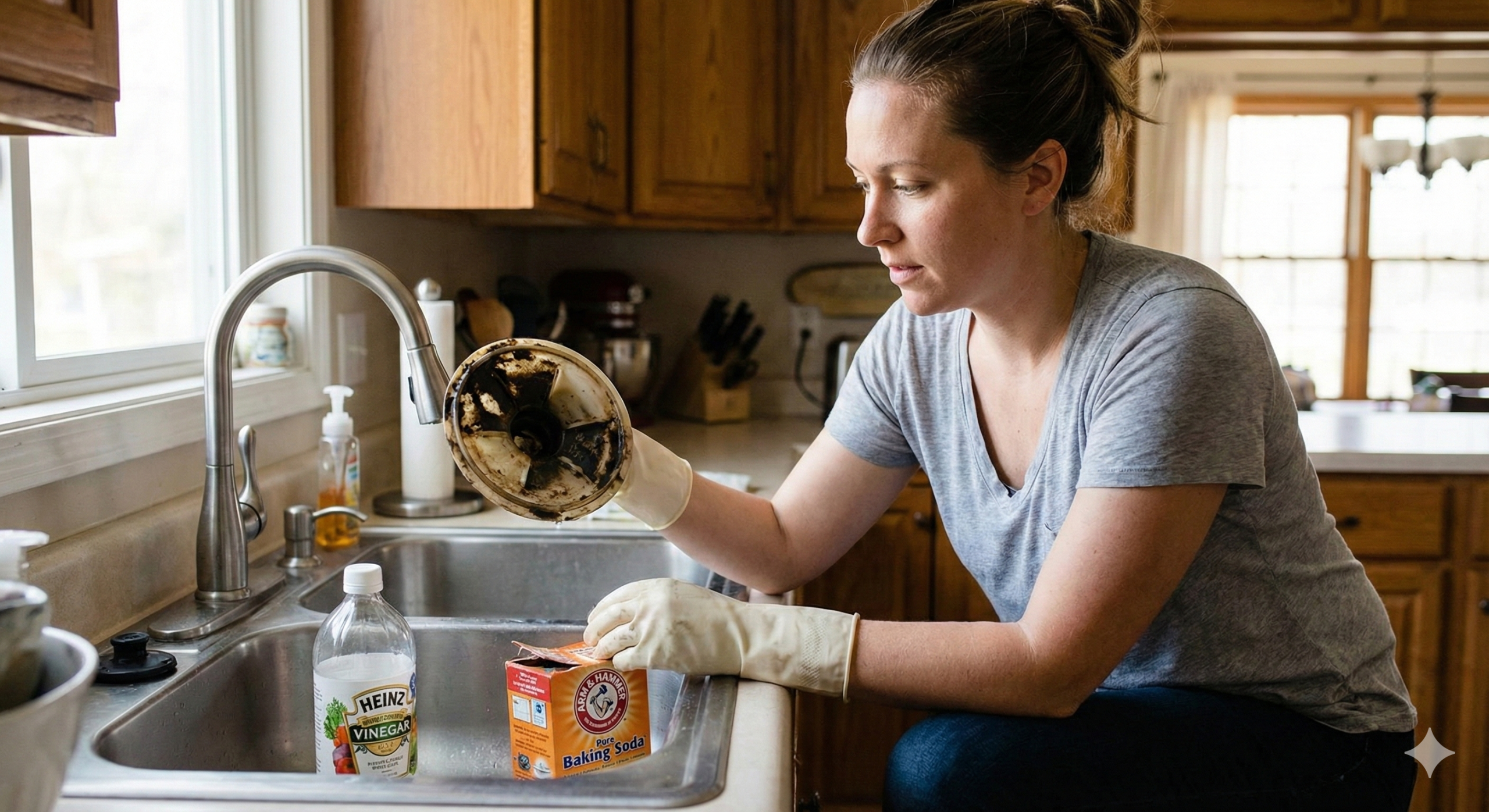
How to actually fix it: Lift the rubber splash guard and scrub its underside weekly with dish soap and a brush. The slime and debris here are often the primary odor source. Run ice cubes and rock salt through the disposal to scour surfaces, followed by citrus peels to freshen. Pour a paste of baking soda and vinegar into the disposal, let it sit 15 minutes, then flush with very hot water. The goal is mechanical removal of biofilm and debris, not just rinsing.
For persistent odors, fill the sink with hot soapy water, run the disposal while draining to flush the entire chamber thoroughly, then repeat with clean water. This volume flush removes debris that normal use doesn’t dislodge.
Your Dishwasher Filter Is Disgusting
Most people never clean their dishwasher filter despite it catching food particles from every load, creating a bacterial breeding ground that makes your entire kitchen smell like old food and standing water.
The filter traps food debris to prevent clogging the drain pump, but this debris sits in warm water between cycles, decomposing and generating odors that spread when you open the dishwasher.
Standing water in the filter area provides ideal bacterial growth conditions. The combination of warmth, moisture, and organic matter creates perfect conditions for odor-producing bacteria.
Grease accumulation in filters creates rancid odors as the fat oxidizes. This smell differs from decomposing food but is equally unpleasant and often stronger.
Mold growth in and around filters happens when dishwashers stay closed between uses, trapping moisture without adequate airflow. The musty mold smell spreads throughout your kitchen when you open the dishwasher door.
How to actually fix it: Locate your dishwasher filter (usually in the bottom of the tub) and remove it according to your model’s instructions. Most twist and lift out easily. Rinse the filter under hot water while scrubbing with a brush to remove trapped debris. Soak stubborn buildup in hot soapy water, then scrub clean.
Clean the filter housing and drain area visible after removing the filter. Food particles accumulate here and contribute to odors even when the filter itself is clean.
Do this weekly if you run the dishwasher daily, every other week for less frequent use. The improvement in kitchen smell after the first thorough cleaning is often dramatic because most people have never cleaned this area.
Leave the dishwasher door slightly ajar between uses to allow air circulation that prevents mold growth and musty smells.
You’re Storing Dish Sponges Wet
Sponges seem innocent but are actually odor factories that spread bacteria and smell throughout your kitchen while you use them to “clean.”
The porous structure retains moisture and food particles, creating ideal bacterial growth conditions. Sponges can harbor more bacteria than toilet seats despite being used to clean dishes.
Warmth from your kitchen plus moisture in sponges creates perfect bacterial growth temperatures. The bacteria multiply rapidly, producing the characteristic sour smell of old sponges.
Food particles trapped in sponge pores decompose, feeding bacterial growth while generating odors that transfer to dishes and surfaces you’re supposedly cleaning.
The sour smell that develops in sponges after a few days comes from bacterial waste products. You’re essentially spreading bacterial colonies around your kitchen while trying to clean.
How to actually fix it: After each use, thoroughly rinse sponges to remove all food particles, then squeeze them as dry as possible. Standing water in sponges accelerates bacterial growth.
Microwave wet sponges for one minute to kill bacteria (ensure they’re wet to prevent fire), or run them through the dishwasher on the hottest cycle. Do this daily for sponges that get heavy use.
Replace sponges weekly or when they develop any smell, regardless of how they look. The bacterial contamination isn’t visible even when it’s severe.
Better yet, switch to washable dish cloths that you can launder frequently. Cloths dry faster than sponges and go through washing machines that kill bacteria more effectively than any sponge-cleaning method.
Your Refrigerator Has Hidden Spills and Expired Food
Refrigerators accumulate odors from spills you don’t notice, expired food pushed to the back, and condensation in areas you rarely check.
Spills under crisper drawers and in door bins go unnoticed for weeks, decomposing slowly in the cold but still generating smells that spread throughout the refrigerator.
Expired food in back corners or behind other items decomposes while you’re unaware it’s there. That smell didn’t appear mysteriously – there’s a source you haven’t found yet.
The drip pan under the refrigerator (if your model has one) collects condensation that evaporates, leaving behind concentrated organic residue that smells increasingly bad over time. Many people don’t know this pan exists or that it needs cleaning.
Door seals trap crumbs and liquid that support mold and bacterial growth. The rubber gasket around your refrigerator door is probably dirtier than you realize.
How to actually fix it: Remove all items from your refrigerator and check expiration dates ruthlessly. That condiment from two years ago needs to go regardless of how much is left.
Remove all shelves, drawers, and bins. Wash them in hot soapy water, checking underneath and in corners for hidden spills. Wipe down all interior surfaces with a solution of baking soda and water (not harsh cleaners that might affect food).
Clean door seals with a toothbrush and soapy water, getting into the folds where debris accumulates. Rinse and dry thoroughly.
Locate and clean the drip pan if your refrigerator has one (usually accessed from the back or bottom front). Wash it thoroughly and let it dry before replacing.
Place an open box of baking soda in the refrigerator to absorb ongoing odors, replacing it every three months.
You’re Not Actually Cleaning Your Trash Can
Taking out trash bags doesn’t clean the trash can itself, which accumulates leaked liquids and decomposing matter that creates persistent odors even with fresh bags.
Liquids leak from trash bags even when they don’t appear torn, pooling in the bottom of the can and decomposing over time. This residue becomes increasingly concentrated and foul-smelling.
Food particles fall out of bags when removing them, accumulating in the bottom and sides of the can. These particles decompose in the warm kitchen environment.
The lid underside and rim accumulate residue from bags touching these surfaces. These areas rarely get cleaned but contribute significantly to trash odors.
Bacteria thrive in trash cans because conditions are ideal – warmth, moisture, and abundant organic matter. The bacterial colonies produce odors continuously.
How to actually fix it: Take the trash can outside and wash it thoroughly with hot soapy water and a brush, including the lid, rim, and interior surfaces. Rinse completely and let it dry in the sun if possible – UV light kills bacteria.
Spray the clean, dry interior with a disinfectant or white vinegar solution to kill remaining bacteria. Let it dry completely before putting in a new bag.
Do this monthly, or more frequently if you notice odors developing. The cleaning takes 10 minutes but eliminates a major odor source.
Consider using trash can liners that fit your can properly to prevent leaks from reaching the can interior. Some people double-bag to add protection.
Sprinkle baking soda in the bottom of the can before placing a new bag to absorb odors and moisture.
Your Kitchen Towels Are Mildewing
Kitchen towels seem clean when they come out of the dryer, but they often harbor mold and bacteria that create musty smells, especially if they stay damp between uses.
Damp towels left hanging or in piles provide perfect mold growth conditions. The combination of moisture, warmth, and organic matter (food particles in the towels) supports rapid mold development.
Insufficient washing – using cold water or inadequate detergent – doesn’t kill bacteria or remove oils that support bacterial growth. The bacteria survive washing and continue reproducing.
Towels used for multiple purposes – wiping hands, drying dishes, cleaning spills – accumulate more bacteria than dedicated single-purpose towels because cross-contamination introduces diverse bacterial populations.
Fabric softener residue can trap bacteria and reduce towel absorbency, making them stay damp longer and smell worse over time.
How to actually fix it: Wash kitchen towels in hot water with adequate detergent at least twice weekly. Don’t let damp towels sit in the hamper – either wash immediately or hang to dry first.
Add white vinegar to the rinse cycle monthly to remove detergent buildup and kill bacteria. The vinegar smell disappears when towels dry but the antibacterial effect remains.
Hang towels to dry completely between uses rather than leaving them wadded on counters or in damp piles. Proper air circulation prevents mold growth.
Replace kitchen towels when they develop persistent odors despite washing. Sometimes bacterial contamination becomes so established that normal washing can’t eliminate it.
Don’t use fabric softener on kitchen towels – it reduces absorbency and creates residue that traps bacteria.
Grease Is Coating Everything
Cooking creates aerosolized grease that settles on surfaces throughout your kitchen, oxidizing over time and creating persistent rancid odors you might not identify as grease.
Cabinet surfaces, particularly near the stove, accumulate grease film that becomes sticky and smelly as it oxidizes. This film isn’t always visible but you can feel it as tackiness when you touch surfaces.
Range hood filters saturated with grease can’t filter effectively, allowing more grease to spread throughout the kitchen while the saturated filters themselves smell rancid.
Behind and around the stove accumulates concentrated grease from splatter and aerosolized oil. These hidden areas rarely get cleaned but contribute significantly to kitchen odors.
Grease oxidation creates aldehydes and other compounds that smell distinctly unpleasant – the characteristic smell of old restaurant kitchens comes from oxidized grease accumulation.
How to actually fix it: Degrease all surfaces monthly using appropriate cleaners. Wipe down cabinet fronts, especially near the stove, with degreasing cleaner or a solution of dish soap and hot water.
Clean range hood filters monthly (or more frequently if you cook often). Soak them in hot water with degreasing dish soap, scrub to remove buildup, rinse thoroughly, and let dry before reinstalling.
Pull out the stove and clean behind and beside it where grease accumulates unseen. This cleaning reveals how much grease spreads beyond obvious areas.
Wipe down walls and backsplashes near cooking areas with degreaser to remove film you might not realize is there.
Your Drain Isn’t Actually Clean
The drain itself – beyond the garbage disposal – harbors bacteria in biofilm that generates ongoing odors even when the disposal is clean.
Biofilm grows on drain pipe interiors, creating a slimy bacterial layer that produces odors while being difficult to remove with water flow alone. This film extends well beyond what you can reach.
Food particles lodge in drain curves and rough areas where they decompose slowly while feeding bacterial growth.
Grease coats drain interiors, going rancid while providing nutrients for bacteria. This combination creates particularly persistent and unpleasant odors.
Vent stack issues can allow sewer gases to enter through drains when water seals evaporate or venting fails, creating smells that seem to come from drains but actually originate in sewer lines.
How to actually fix it: Pour boiling water down drains weekly to help remove biofilm and flush decomposing matter. Follow with a baking soda and vinegar treatment – pour baking soda down the drain, follow with vinegar, let it fizz for 15 minutes, then flush with hot water.
For persistent drain odors, use enzymatic drain cleaners designed to break down organic matter and biofilm rather than harsh chemical cleaners that might damage pipes without fully addressing odors.
Ensure drain p-traps stay filled with water by running water in all sinks regularly, even ones you rarely use. The water seal prevents sewer gases from entering your home.
You’re Creating Conditions for Mold Growth
Kitchen humidity and warmth create ideal mold growth conditions in areas you might not think to check, and mold produces distinctive musty odors even in small quantities.
Under-sink areas stay damp from plumbing condensation and minor leaks, providing perfect conditions for mold on cabinet surfaces, pipes, and stored items.
Behind appliances where air doesn’t circulate well and cleaning rarely happens, moisture accumulates and mold grows on walls, floors, and appliance backs.
Window sills and areas around sinks exposed to splashing develop mold in grout, caulk, and porous surfaces where moisture accumulates.
Ceiling areas above stoves and dishwashers receive warm, moist air that can cause mold growth when ventilation is inadequate.
How to actually fix it: Check under sinks monthly for moisture, leaks, or musty smells that indicate mold growth. Wipe down surfaces and fix any leaks immediately.
Pull out appliances periodically to clean behind them and check for mold growth. The area behind refrigerators in particular tends to develop mold from condensation.
Improve ventilation by running range hoods during cooking and opening windows when possible to reduce humidity that supports mold growth.
Fix any water leaks immediately – even small drips create enough moisture to support extensive mold growth over time.
Clean visible mold with appropriate cleaners, but more importantly, eliminate the moisture source that allowed it to grow in the first place.
The Real Solution to Kitchen Odors
Kitchen odor elimination requires identifying and addressing actual sources rather than just covering smells with air fresheners or assuming regular cleaning is sufficient.
The most effective approach combines regular maintenance of odor-generating areas – disposal, dishwasher filter, trash can, sponges – with periodic deep cleaning of less obvious sources like drains, behind appliances, and under-sink areas.
Understanding that odors come from biological processes – bacteria and mold growing on organic matter in moist, warm environments – helps you address root causes by eliminating moisture, removing food sources, and regularly disrupting bacterial colonies before they establish themselves.
Most kitchen odor problems resolve quickly once you identify the actual source, which is often somewhere you weren’t looking because it’s not obviously dirty. The smell from a filthy dishwasher filter disappears immediately when you clean the filter – the solution is that simple once you know where the problem actually is.
Stop trying to cover kitchen odors with air fresheners and start systematically checking the specific areas where odors actually generate. The improvement after addressing even one or two of these sources is usually dramatic and immediate.