
Why Your Kitchen Timer Is Lying to You (And What to Do About It)
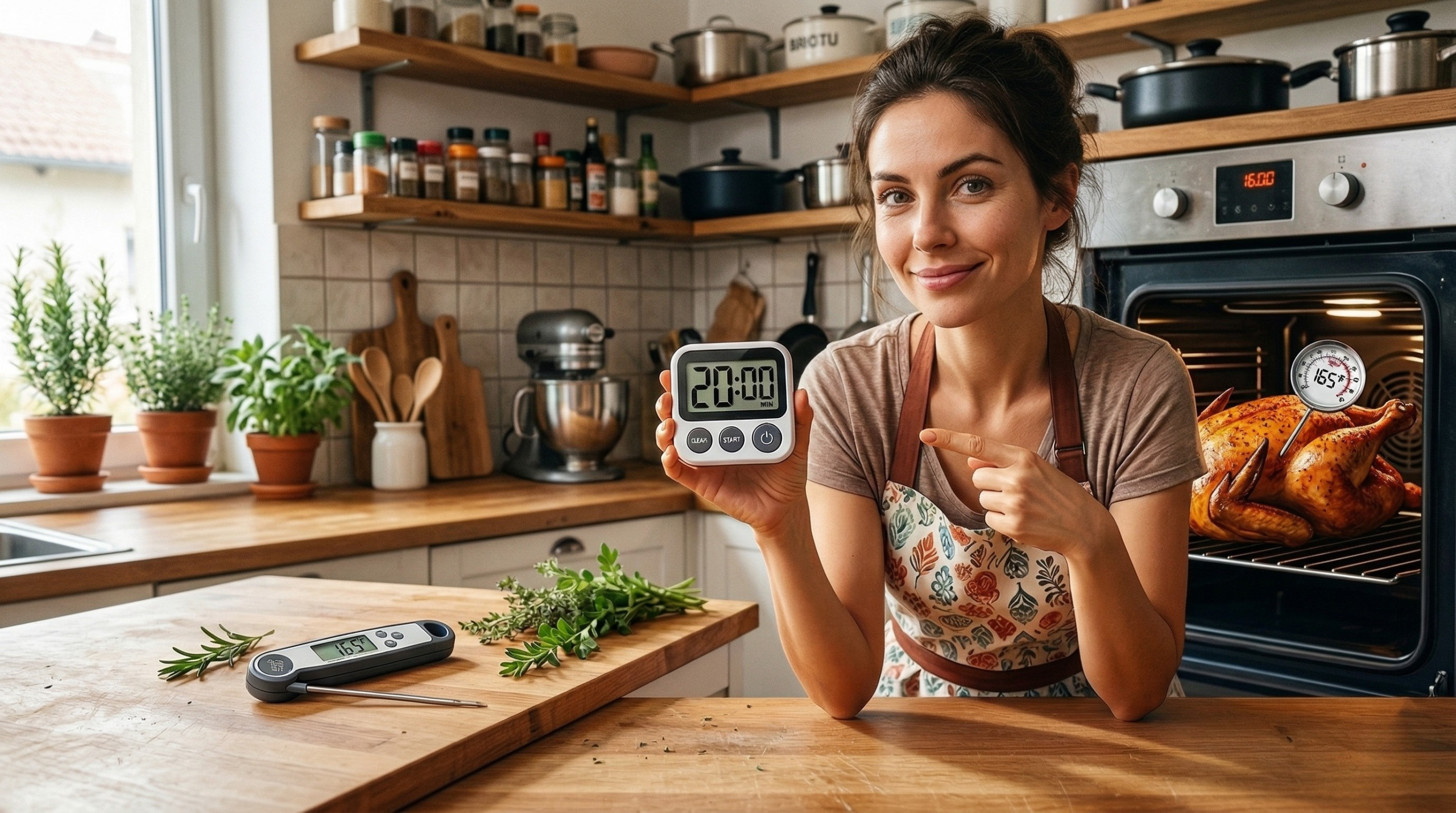
Kitchen timers tell you when 20 minutes have passed. They don’t tell you when your chicken is actually done.
This distinction trips up more home cooks than almost any other kitchen mistake. You follow a recipe’s timing exactly, pull the dish out right when the timer beeps, and somehow it’s undercooked. Or dried out. Or weirdly uneven.
The problem isn’t your timer. The problem is treating time as the finish line instead of a checkpoint.
Here’s what actually determines when food is done, why recipe times mislead you, and how to know when to pull things from heat regardless of what the clock says.
Recipe Times Assume Conditions You Don’t Have
That recipe saying “bake for 35 minutes” was tested in someone else’s kitchen with different equipment, different ingredients, and different environmental conditions than yours.
Your oven runs hot or cold compared to the test kitchen oven. Oven thermostats vary significantly between models and drift over time. A recipe tested in an oven that runs true might finish early in an oven running 25 degrees hot.
Your ingredient sizes differ from recipe assumptions. “Medium onion” means different things to different people. Chicken breasts vary wildly in thickness. Larger pieces need more time, smaller pieces less.
Your starting temperatures affect cooking duration. Ingredients straight from the refrigerator need longer than room-temperature ingredients. Recipes rarely specify starting temperature assumptions.
Your cookware conducts heat differently. Dark pans absorb more heat than shiny pans. Heavy pans retain heat better than thin pans. Glass bakes differently than metal.
Your altitude changes cooking times. Water boils at lower temperatures at higher elevations affecting cooking speed. Baked goods behave differently as elevation increases.
Recipe times provide rough estimates, not precise instructions. Treating them as exact specifications leads to inconsistent results.
Doneness Indicators Beat Timers Every Time
Experienced cooks use time as a suggestion but rely on doneness indicators showing when food actually finishes cooking.
Internal temperature tells truth about meat doneness. Chicken reaches safe consumption at 165°F regardless of whether that happens in 30 minutes or 45 minutes. Invest in instant-read thermometer.
Visual cues show baking progress. Bread is done when deeply golden and sounds hollow when tapped. Cakes are done when toothpick inserted in center comes out clean or with few moist crumbs.
Texture changes signal completion. Pasta is done when it has slight resistance when bitten. Vegetables are done when fork-tender or crisp-tender depending on desired result.
Aroma indicates roasting progression. Coffee, nuts, and spices release distinct aromas when properly toasted. Burning smell means you’ve gone too far.
The wiggle test works for custards and cheesecakes. Center should jiggle slightly like gelatin when gently shaken. Firm center means overcooked.
These indicators work regardless of your oven’s quirks, your ingredient sizes, or your cookware. They measure actual doneness rather than elapsed time.
Start Checking Before the Timer
Most cooking disasters happen because people wait for the timer then discover problems too late to fix.
Check baked goods five to ten minutes before minimum suggested time. Oven hot spots or size variations might finish items early. Catching them early prevents burning.
Check roasted meats at three-quarter point of suggested time. Large temperature variations between ovens mean some chickens finish well before recipe timing suggests.
Check stovetop items frequently regardless of timing. Burner heat output varies. Pan sizes affect cooking speed. Ingredient moisture content changes evaporation rates.
Early checking catches problems while you can still fix them. Underdone food can cook longer. Overdone food is ruined.
Set timer for earlier than recipe suggests then extend if needed. Better to add five minutes than serve burnt dinner.
The timer’s job is reminding you to check, not telling you when food is done.
Carryover Cooking Continues After Heat Stops
Removing food from heat doesn’t stop cooking immediately. Internal temperature continues rising from residual heat.
Large roasts continue cooking 5-10 degrees after removal from oven. A roast pulled at 130°F might reach 135-140°F during rest. Account for carryover when checking temperature.
Thick steaks gain several degrees during resting. Pull steak from heat five degrees below target temperature. Resting time allows temperature to coast to target while redistributing juices.
Baked goods firm up as they cool. Slightly underdone center becomes properly set during cooling. Overbaking trying to achieve firm center results in dry edges.
Pasta continues softening in hot water. Drain pasta slightly before reaching desired texture. Residual heat finishes cooking while you toss with sauce.
Carryover cooking means your target isn’t when food comes off heat but when it finishes cooking minutes later. Adjust accordingly.
Develop Your Calibration Instinct
Over time you’ll learn how your specific kitchen equipment behaves and adjust automatically without conscious thought.
Track your oven’s personality. Notice whether things consistently finish early or late. Adjust all recipe times based on your oven’s tendency to run hot or cold.
Learn your stovetop burner outputs. Some burners run hotter than others. Some respond quickly to adjustments, others slowly. Use appropriate burner for each task.
Know your favorite pans’ characteristics. Your heavy Dutch oven retains heat differently than your thin saucepan. Your dark sheet pans brown faster than shiny ones.
Recognize your ingredient patterns. If you consistently buy large chicken breasts, you know they need longer than recipe times suggest. If you prefer thin-cut pork chops, subtract time.
This calibration happens subconsciously as you cook repeatedly in the same kitchen with the same equipment. Your instinct for “about done” becomes more reliable than any timer.
Make Peace with Approximation
Cooking isn’t chemistry requiring precise measurements. It’s craft requiring judgment and adaptation.
Recipe times guide you to approximate doneness window. They tell you roughly when to start checking rather than exactly when to stop cooking.
Different results are okay. Slightly more or less cooking time creates different textures. Learn which you prefer rather than obsessing over exact timing.
Batch cooking reveals timing variations. Baking multiple sheet pans of cookies shows how position in oven affects timing. Front cookies might finish before back cookies.
Experience matters more than precision. You’ll develop feel for doneness that timers can’t provide. Trust your judgment over arbitrary time specifications.
The timer is a tool, not a boss. It reminds you to check progress. You decide when food is actually done based on what you observe and measure.
Your kitchen timer keeps you from forgetting about food in the oven. It doesn’t cook your dinner. You cook your dinner by recognizing when food reaches proper doneness regardless of what the clock says. Set timers as reminders to check, then trust your eyes, thermometer, and judgment to know when cooking is actually complete.