
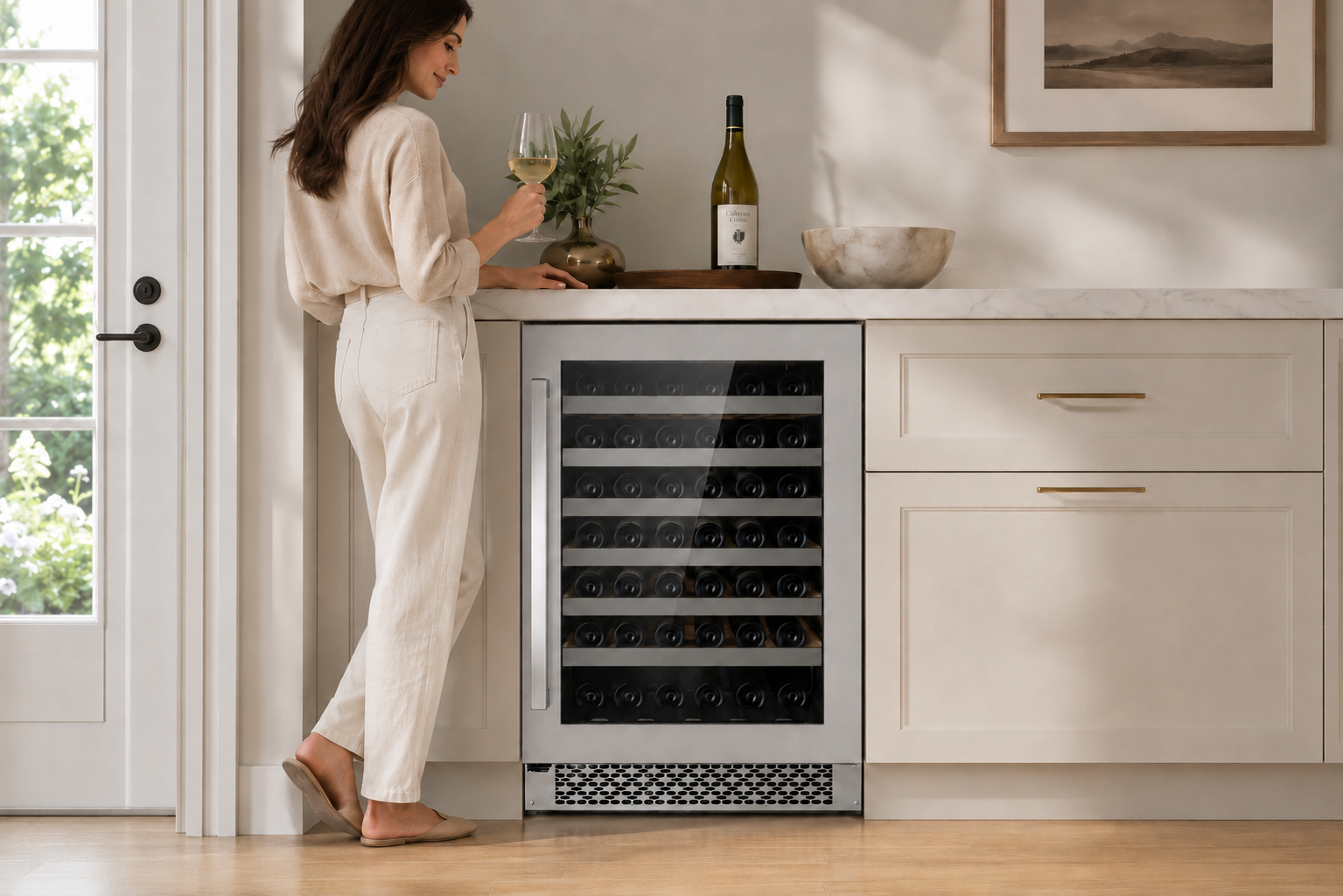
The COS-24BIWCS Wine Cooler: 52-Bottle Built-In or Freestanding with Advanced Fan Cooling
Wine stored at the wrong temperature loses what makes it worth buying in the first place. The tannins in reds soften properly only within a narrow temperature range. Whites lose their crispness when stored too warm. Both deteriorate when temperatures fluctuate constantly, which is exactly what happens in a standard kitchen refrigerator running at 35-38°F with a compressor cycling on and off all day. The COS-24BIWCS addresses this directly with a dedicated wine cooling system maintaining consistent temperatures specifically suited to wine storage and serving, across a 52-bottle capacity that handles serious collections without monopolizing kitchen space.
This wine cooler works either built into cabinetry or freestanding depending on your kitchen configuration, giving it placement flexibility that dedicated wine appliances often lack. Electronic temperature controls with digital touch operation provide precise temperature management, telescopic beechwood shelves slide fully out for easy bottle access, LED lighting illuminates the interior without generating the heat that incandescent bulbs produce, and a door lock security feature protects the collection from unintended access. The insulated 3-layer glass door maintains interior temperatures while making the entire collection visible without opening the unit. Available in stainless steel or matte black finish, the COS-24BIWCS integrates into contemporary kitchen designs that treat wine storage as a considered design element rather than an afterthought.
Why Dedicated Wine Storage Matters
Understanding what separates purpose-built wine storage from general refrigeration helps explain why serious wine collections benefit from dedicated coolers rather than standard kitchen appliances.
Temperature Stability: Standard refrigerators cycle compressors on and off frequently to maintain food-safe temperatures, creating constant minor temperature fluctuations throughout the day. Wine is sensitive to these fluctuations in ways that food simply isn’t. Repeated warming and cooling causes wine to expand and contract inside bottles, eventually degrading corks and accelerating oxidation. Wine coolers use systems designed specifically for stable, consistent temperatures that minimize this cycling.
Correct Temperature Range: Kitchen refrigerators run at 35-38°F, correct for food safety but too cold for wine storage. Reds ideally store between 55-65°F depending on variety. Whites store best between 45-55°F. Sparkling wines prefer 40-50°F. These ranges differ from food refrigeration temperatures in ways that genuinely affect wine development and serving quality.
Humidity Considerations: Proper wine storage maintains moderate humidity levels that keep corks from drying and shrinking. Standard refrigerators dehumidify air aggressively to prevent food spoilage, often dropping humidity to levels that dry corks over extended storage periods. Dried corks eventually allow air contact that ruins wine, particularly for bottles stored longer than a few months.
Vibration Effects: Refrigerator compressors generate vibration that disturbs wine sediment and accelerates chemical reactions that degrade wine over time. This matters most for wines stored for years rather than weeks, but even moderate-term storage benefits from the reduced vibration that wine-specific cooling systems produce.
Light Protection: Standard UV light accelerates chemical degradation in wine, which is why quality bottles use dark glass. The COS-24BIWCS’s tinted 3-layer glass door filters UV while still allowing the collection to be viewed, protecting bottles from light exposure that standard glass-door refrigerators can’t prevent.
Advanced Fan Cooling System
The fan-based cooling system in the COS-24BIWCS represents a deliberate design choice over thermoelectric alternatives, with meaningful performance implications for storage capacity and temperature consistency.
How Fan Cooling Works: The advanced fan cooling system circulates refrigerated air throughout the interior using a compressor-based system designed for the specific temperature ranges wine requires. A fan distributes this cooled air evenly, preventing temperature stratification where upper shelves run warmer than lower shelves. Even distribution across all 52 bottle positions means every bottle in the collection stores at consistent temperatures regardless of shelf position.
Temperature Range Capability: Fan cooling systems maintain temperatures across a wider range than thermoelectric alternatives and perform reliably regardless of ambient room temperature. Thermoelectric coolers work adequately in climate-controlled rooms but struggle to maintain target temperatures when room temperatures rise in summer or vary seasonally. Fan systems maintain consistent performance across varying conditions.
Capacity and Consistency: For collections of this size, 52 bottles, fan cooling provides the consistent air distribution necessary to maintain uniform temperatures across multiple shelves. Thermoelectric systems that work adequately for 12-bottle countertop coolers lose temperature consistency across larger capacities where air circulation becomes critical.
Noise Considerations: Fan cooling systems produce slightly more noise than thermoelectric alternatives due to compressor and fan operation. The system operates at background levels appropriate for living spaces, but buyers should understand that any compressor-based cooling produces some operational sound. Proper installation in cabinetry or against walls reduces resonance that amplifies perceived noise.
Energy Efficiency: Modern fan cooling systems operate efficiently while maintaining consistent temperatures that thermoelectric systems sometimes struggle to achieve without running continuously at higher power draws. The efficiency advantage becomes more meaningful in warmer environments where thermoelectric systems work harder against ambient temperature.
52-Bottle Capacity and Shelf Configuration
Understanding how 52 bottles actually fit and what the telescopic shelf system offers helps you assess whether this capacity and configuration suits your collection and usage patterns.
Bottle Count Reality: The 52-bottle rating assumes standard 750ml Bordeaux-style bottles stored horizontally on the shelves. Burgundy-style bottles with their wider shoulders fit fewer per shelf. Champagne and sparkling wine bottles are larger and reduce total capacity. Mixed collections with varied bottle shapes typically hold somewhat fewer than the rated capacity. Understanding this helps set realistic expectations rather than discovering the limitation after purchase.
Telescopic Sliding Rails: Each shelf extends fully on telescopic rails, allowing complete access to bottles at the back without removing those in front. This seemingly simple feature makes a significant practical difference in daily use. Standard fixed shelves require removing multiple bottles to reach one stored behind them — acceptable occasionally but frustrating in regular use. Telescopic rails mean the bottle you want is always accessible without disruption.
Beechwood Shelf Material: Beechwood shelves are a traditional choice for wine storage that combines aesthetic appeal with practical function. The wood surface holds bottles without rolling while absorbing minor vibrations. Beechwood’s appearance integrates naturally with wine cellar aesthetics that glass or wire shelves can’t match. The material is also easy to clean if spills occur.
Horizontal Storage Orientation: Horizontal bottle storage keeps wine in contact with corks, preventing them from drying and shrinking. The shelf configuration maintains this orientation throughout the cooler. Bottles never need to stand upright during storage, which would allow corks to dry over time even in a properly humidified environment.
Collection Organization: 52 bottles provides meaningful flexibility for organizing a collection by type, region, or drinking timeline. You can dedicate sections to reds versus whites, group bottles by serving temperature preference, or organize chronologically so the oldest bottles are most accessible. The visible interior through the glass door helps you monitor the collection without opening the cooler.
Electronic Temperature Controls and Door Security
The digital control system and door lock work together to maintain proper storage conditions and protect the collection from disturbance.
Digital Touch Controls: Electronic controls with digital display allow setting precise temperatures rather than adjusting vague “warmer/cooler” dials. You can set exact target temperatures and monitor current interior temperature through the display. This precision matters for households storing wines at specific temperatures recommended for particular varieties or aging stages.
Temperature Range: The electronic system maintains temperatures across the range appropriate for both red and white wine storage. While single-zone coolers like this one maintain one consistent temperature throughout, the adjustable range allows you to optimize for whichever type dominates your collection, or to find a compromise temperature suitable for mixed storage of reds and whites.
Display Visibility: The digital display shows current interior temperature and target settings at a glance without opening the door. This visibility allows monitoring storage conditions during daily kitchen activity without any interaction with the cooler itself.
Door Lock Security: The lock prevents the glass door from being opened without deliberate action, protecting the collection from children, casual access by guests, or accidental contact. For households where the cooler sits in entertaining areas or kitchens with frequent traffic, the lock provides peace of mind without requiring the cooler to be repositioned in a less accessible location.
Hidden Hinge Mechanism: Internal hinges maintain clean exterior lines without visible hardware interrupting the door’s appearance. Beyond aesthetics, hidden hinges provide structural integrity that exposed hinges sometimes lack over years of repeated opening cycles. The mechanism supports the substantial weight of the insulated 3-layer glass door reliably.
Insulated 3-Layer Glass Door
The door construction balances visibility, insulation performance, and UV protection in ways that simpler glass doors can’t match.
Triple Layer Insulation: Three layers of glass with insulating air gaps between them significantly reduce heat transfer compared to single or double-layer doors. This insulation means the cooling system works less to maintain target temperatures, reducing energy consumption while improving temperature stability. The thermal barrier also prevents condensation on the exterior door surface that single-layer glass produces in humid kitchens.
UV Filtering: The tinted glass filters UV light that degrades wine compounds over time. This protection matters particularly for bottles stored months to years rather than weeks. The tinting allows viewing the collection clearly while blocking the wavelengths most harmful to wine chemistry.
Collection Visibility: Seeing the entire collection through the door without opening it allows selecting bottles, monitoring organization, and checking inventory without temperature disruption. Opening the door for every inspection introduces warm air that the cooling system must then remove. Visibility through the door eliminates most of these unnecessary openings.
Practical Benefit: The combination of insulation and UV filtering in a fully transparent door represents a genuine engineering balance, providing the visual display of a showpiece while delivering the protection wine actually requires. Cheaper single-layer glass doors that look similar in showrooms don’t provide equivalent protection in extended use.
Built-In vs. Freestanding Installation
The COS-24BIWCS works in either configuration, but the two installations differ in requirements and outcomes that affect placement decisions.
Built-In Requirements: Under-counter installation positions the cooler flush with surrounding cabinetry for a seamless built-in appearance. Built-in installation requires front ventilation, the cooling system exhausts heat through the front rather than the back or sides, allowing the unit to sit enclosed within cabinetry without overheating. Verify that the installation space provides adequate front clearance and that the opening dimensions match the cooler’s specifications.
Freestanding Flexibility: Freestanding placement allows positioning the cooler anywhere with appropriate electrical access, kitchen corners, dining rooms, home bars, entertainment spaces, or home offices. The same front-ventilation design that enables built-in installation also works freestanding, though leaving some side clearance improves airflow and reduces ambient heat buildup around the unit.
Location Considerations: Regardless of installation type, avoid placing wine coolers in locations subject to direct sunlight, near heat-producing appliances, or in spaces with extreme temperature variations. Ambient heat forces the cooling system to work harder and can compromise temperature stability. Consistent room temperatures between 60-80°F represent ideal operating conditions.
Floor and Surface Requirements: Wine coolers carry significant weight when fully loaded, 52 bottles of wine plus the unit itself can exceed 200 pounds. Verify that floors, shelving units, or cabinetry can support this weight before installation. Adjustable leveling feet allow fine-tuning stability on imperfect surfaces.
Comparing Single-Zone vs. Dual-Zone Wine Coolers
The COS-24BIWCS uses a single temperature zone throughout its interior. Understanding when this suffices versus when dual-zone coolers make more sense helps buyers choose appropriately.
Single-Zone Advantages: Single-zone coolers maintain one consistent temperature throughout the entire cabinet. This consistency is ideal for collections dominated by one wine type, primarily reds, primarily whites, or primarily sparkling. The entire capacity serves one purpose, maximizing storage at optimal conditions for that wine type.
Single-Zone Limitations: Storing reds and whites simultaneously in a single-zone cooler requires compromising on temperature, choosing a setting that’s slightly too warm for whites or slightly too cool for reds. For casual drinkers who consume wine within weeks of purchase, this compromise matters little. For collectors storing wine months to years, the temperature mismatch affects quality more meaningfully.
When Dual-Zone Makes Sense: Households with substantial collections of both reds and whites who store bottles for extended periods benefit from dual-zone coolers that maintain different temperatures in separate sections simultaneously. The additional cost reflects genuine functional value for these usage patterns.
When Single-Zone Is Adequate: A single temperature works well for collections focused on one wine type, for households that turn over inventory quickly, or for buyers whose primary need is serving temperature rather than long-term aging storage. Setting the cooler to a compromise temperature around 55°F serves both reds and whites adequately for storage up to several months.
Maintenance and Long-Term Care
Wine coolers require modest periodic maintenance that keeps the system running efficiently and the interior clean for proper wine storage conditions.
Coil and Vent Cleaning: Condenser coils and ventilation grilles accumulate dust that reduces cooling efficiency over time. Clean exterior vents every 3-6 months with a soft brush or vacuum attachment. Accessible interior components benefit from annual cleaning to maintain optimal system performance.
Interior Cleaning: Empty the cooler periodically for thorough interior cleaning with mild solutions that won’t leave odors. Wine storage environments should be odor-free — strong cleaning products leave residues that can affect wine over extended storage. Mild dish soap diluted in water, applied with soft cloths, cleans without problematic residue.
Shelf Maintenance: Remove beechwood shelves for cleaning when needed, drying thoroughly before replacement. Avoid soaking wood shelves, which can cause warping or cracking. Light cleaning with damp cloths removes normal residue without damaging wood surfaces.
Door Gasket Inspection: The door gasket maintains the seal that preserves interior temperatures and humidity. Inspect periodically for cracks, hardening, or gaps that compromise sealing. A simple test places a piece of paper in the closed door, proper sealing should hold the paper firmly against the gasket with meaningful resistance when pulled.
Temperature Monitoring: Periodically verify that displayed temperatures match actual interior temperatures using a separate thermometer. Electronic controls remain accurate over time, but confirming calibration prevents situations where display temperatures diverge from actual storage conditions without your awareness.
The COS-24BIWCS delivers dedicated wine storage that a standard kitchen refrigerator genuinely can’t replicate, consistent temperatures within the ranges wine actually requires, stable humidity, reduced vibration, UV-filtering glass, and organized capacity for a collection of meaningful size. Whether you’re building a collection around a home bar, organizing wine for regular entertaining, or simply want bottles stored properly rather than crammed into a kitchen refrigerator running 20°F too cold, the 52-bottle capacity and thoughtful feature set of this cooler addresses wine storage needs without requiring a dedicated cellar or separate room. The dual installation flexibility, built-in or freestanding, means it fits wherever your kitchen layout and lifestyle place it best.