
Why Stainless Steel Is the Gold Standard for Kitchen Appliances
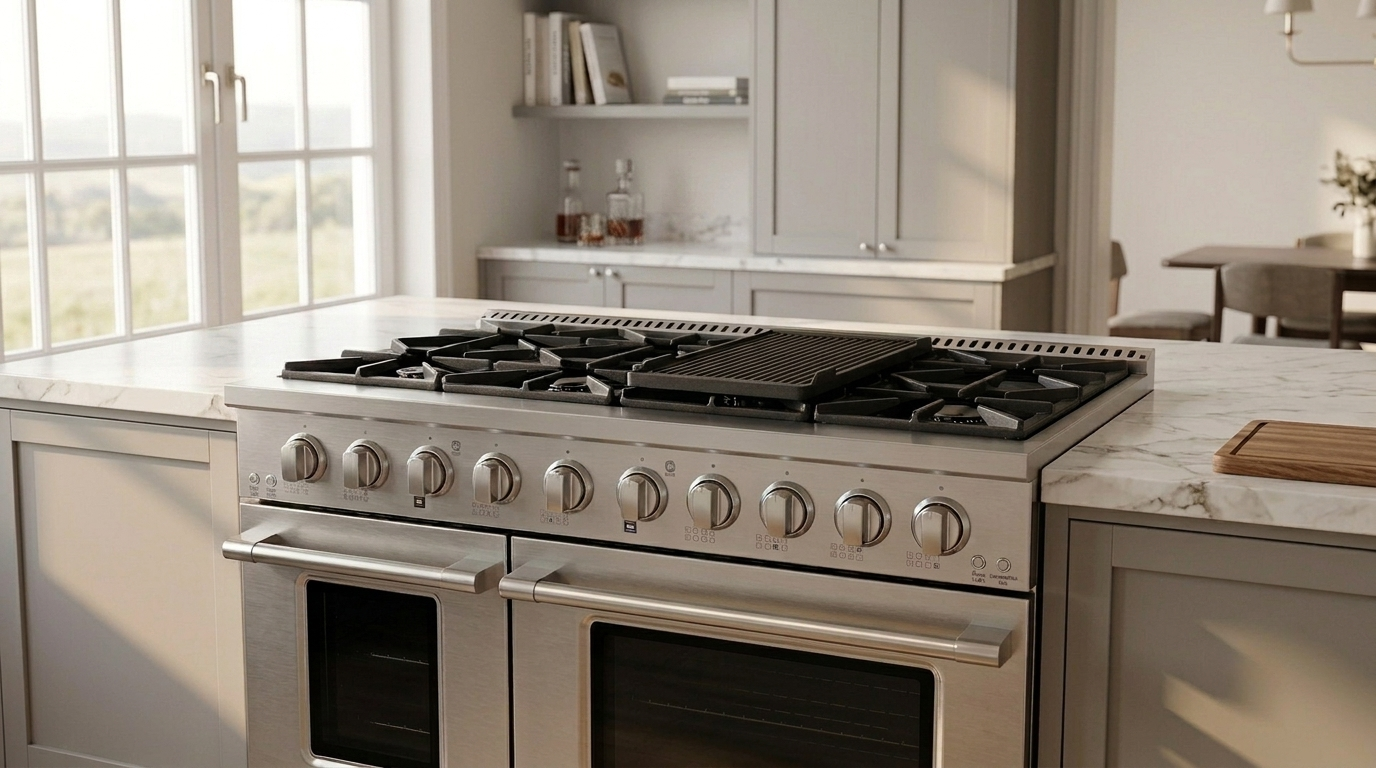
Step into any professional kitchen, and one material sets the standard for everything around it. It is not the flooring underfoot or the finish on the walls. It is stainless steel, present across countertops, hoods, and ranges, engineered to perform under pressure for decades at a time. That same material has since made its way from commercial kitchens into homes across the country, and the reasons are not difficult to see. Stainless steel has become the gold standard for kitchen appliances through a rare combination of durability, hygiene, and enduring design that no alternative material has been able to replicate. To illustrate what that standard looks like in practice, this piece features the Cosmo COS-GRP486G, a 48 inch professional style gas range built around the very qualities that make stainless steel the material of choice for serious cooking.
An Accidental Discovery That Changed the Kitchen Forever
Stainless steel was never meant for cooking. Its story begins in 1913, when English metallurgist Harry Brearley was searching for a steel alloy that could resist erosion inside gun barrels. While testing combinations of iron and chromium in a Sheffield laboratory, he noticed that a sample containing roughly 12.8 percent chromium refused to rust, even after weeks of exposure. He had accidentally discovered what the world now knows as stainless steel.
Cutlery and surgical instruments adopted the material within a few years, since the same corrosion resistance that protected gun barrels also resisted tarnish and withstood repeated sterilization. The real turning point for kitchens came in 1934, when the ocean liner SS Queen Mary launched with the first fully stainless steel kitchen ever built, designed to withstand constant moisture and the demands of feeding thousands of passengers. Restaurants, hotels, and hospitals followed soon after, and by the postwar boom of the 1950s and 1960s, stainless steel had moved from professional kitchens into American homes. Nearly a century later, that same chromium bearing steel remains the material of choice for serious kitchen appliances, including the range that anchors this article.
The Silent Bodyguard of Every Serious Kitchen
Three qualities explain why this material has earned such widespread trust: it resists corrosion, it upholds the highest standards of hygiene, and it withstands extreme heat without compromise. That chromium in stainless steel creates a super thin protective layer that heals itself if it gets scratched, which is why a range can sit next to boiling pots and acidic sauces for years and still look pristine. It’s also nonporous, meaning liquids, oils, and odors don’t soak into it, so bacteria have nowhere to hide and cleanup is quick. It holds its shape through the wild temperature swings a kitchen appliance deals with every day, unlike plastic or painted finishes that can warp or crack after a while. That’s also why the grade of steel actually matters. The
Cosmo COS-GRP486G uses industrial 304 grade stainless steel, which is the gold standard for tough kitchen environments thanks to its higher chromium and nickel content.
Beyond protection, the metal earns its keep in quieter ways. It distributes heat evenly, which prevents scorched spots and inconsistent results. It holds up over decades rather than years, which helps stainless steel appliances retain resale value. Its neutral, brushed finish suits nearly any kitchen style without competing with cabinetry or countertops, something visible on the COS-GRP486G in its fingerprint resistant exterior, heavy duty metal knobs, and matching stainless steel door handle. And because the material does not off gas or degrade under heat, it supports the kind of safety engineering built into the range, including auto reignition burners that relight automatically if extinguished by a draft or spill.
Where the Metal Meets the Meal
In a well engineered range, stainless steel is integrated into nearly every stage of cooking, and the COS-GRP486G shows exactly how. Its 48 inch cooktop is fitted with eight sealed Italian made burners, ranging from two 20,000 BTU power burners to two 6,000 BTU simmer burners, all set into a stainless surface that resists staining from boil overs, oil splatter, and acidic sauces and wipes clean rather than baking spills into the material.
Behind the cooktop, a dual oven configuration serves the needs of a serious home cook. The primary 3.5 cubic foot oven uses a convection fan to eliminate cold spots, aided by how evenly stainless steel distributes heat inside the cavity, while a secondary 2 cubic foot oven allows two dishes to cook independently, useful when a roast and a side need different treatment at once. Six special oven functions round out the precision. A dedicated griddle attachment adds controlled, direct contact heat for pancakes or seared proteins, and the heavy duty cast iron grates rest on the stainless surface and lift out easily for a deep clean. A removable backsplash even lets the same range install as freestanding or slide in, depending on kitchen layout, a flexibility only possible because the surrounding stainless housing looks finished either way.
Everyday care matches this practicality. A damp cloth and mild dish soap handle routine grease, and a stainless steel cleaner wiped along the grain lifts tougher, baked on spots without scratching, a forgiving standard that painted or enamel finishes cannot match.
A Standard That Never Went Out of Style
From a Sheffield laboratory in 1913 to the deck of the SS Queen Mary in 1934, and into American homes by the mid twentieth century, stainless steel earned its place in the kitchen through performance, not trend. It resists corrosion, discourages bacteria, distributes heat evenly, and withstands decades of use without losing its function or its finish. Those same qualities make a range like the Cosmo COS-GRP486G capable of professional level cooking in a home setting. For cooks who want the reliability of a commercial kitchen without leaving their own, stainless steel remains, more than a century after its invention, the clearest signal of an appliance built to last.