
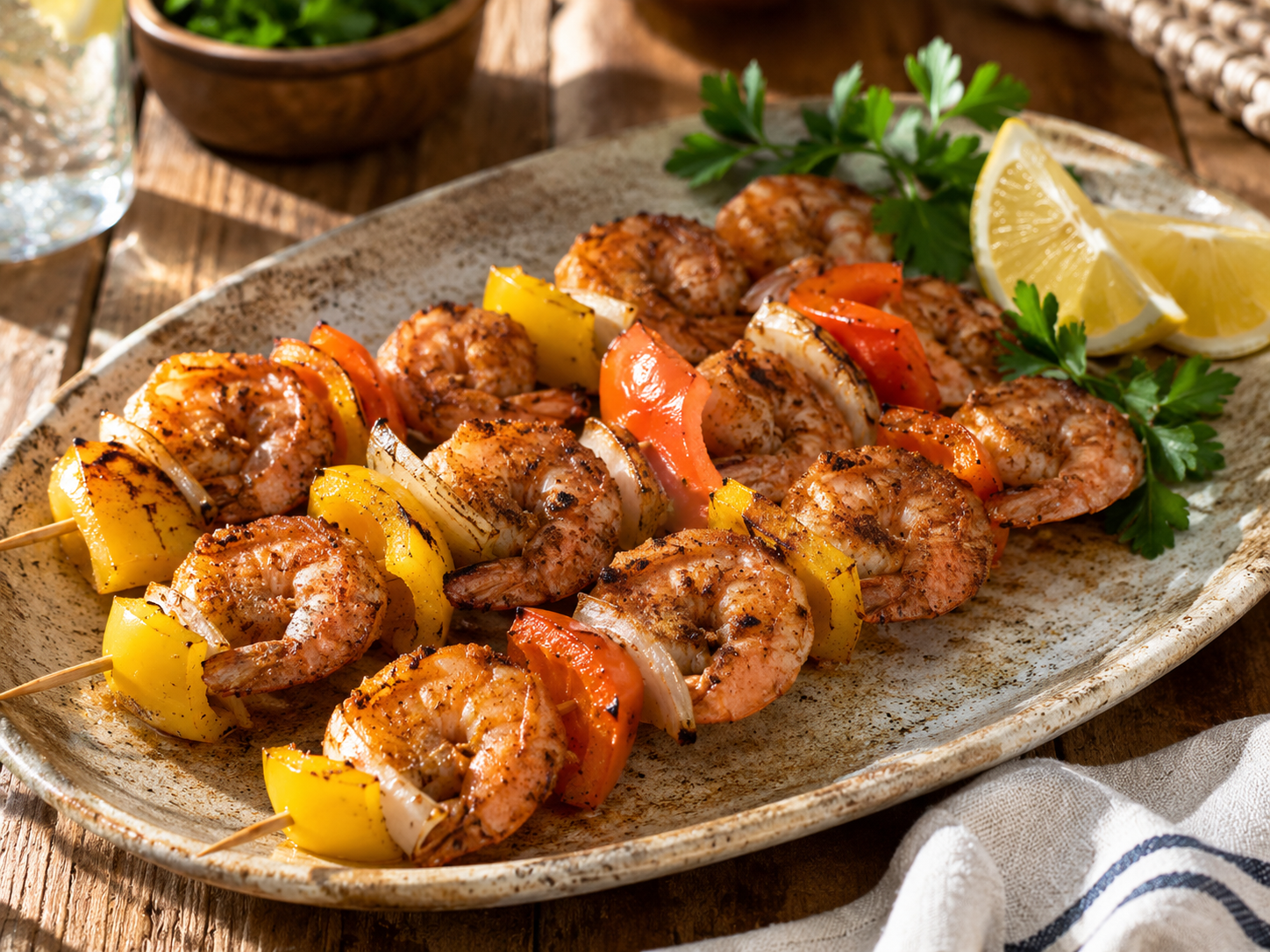
Grilled Shrimp Kabobs: Juicy Jumbo Shrimp with Tri-Color Peppers and Lemon Butter Sauce
Grilled shrimp kabobs are one of summer’s most reliable crowd-pleasers, and they earn that reputation for good reason. The combination of jumbo shrimp absorbing a bold spiced marinade, hitting high grill heat to develop char on the edges while staying juicy inside, and landing on the plate drenched in lemon butter sauce is a summer cooking sequence that consistently produces results worth making again. They’re fast — shrimp cook in minutes on a properly preheated grill — visually striking with their tri-color pepper arrangement on the skewer, and flexible enough to serve as a main course, an appetizer for a larger spread, or the centerpiece of a backyard cookout menu.
The lemon butter sauce is the detail that separates this version from a standard grilled shrimp preparation. Shrimp that’s well-seasoned and properly grilled is already good. The same shrimp finished with a warm lemon butter that carries garlic, salt, and pepper poured directly over the hot kabobs the moment they come off the grill is genuinely different — the butter melts into the char on the shrimp’s exterior, the lemon brightens everything, and the sauce pools around the peppers and onion on the skewer in a way that makes every component on it better. It’s a finishing step that takes thirty seconds and transforms the dish.
Why This Recipe Works So Well
Every element here is doing specific work that adds up to grilled shrimp kabobs worth making on any occasion the grill comes out.
The olive oil marinade functions as both flavor carrier and grill lubricant. Shrimp without oil coating can stick to grill grates and tear when flipped — an annoying outcome when you want the full kabob to come off the grill intact. Coating the shrimp thoroughly in olive oil before threading them onto skewers prevents this while also helping the spice blend adhere evenly rather than falling off during cooking.
Lemon pepper in the spice blend alongside paprika and garlic powder creates a layered seasoning profile that stays interesting across multiple bites. The paprika adds warmth and color that develops visually as the shrimp grill. The garlic and onion powders build savory depth. The lemon pepper introduces brightness and mild heat that complements the lemon juice in the finishing sauce without duplicating it — two different expressions of citrus at different stages of the recipe rather than redundancy.
Tri-color peppers — red, yellow, and orange — bring more than visual interest. Each color represents a different sweetness level and slightly different flavor profile, creating variation between bites on the same skewer. Red peppers are the sweetest and mellow fully on the grill. Yellow peppers are slightly more mild. Orange peppers fall between them. The combination alongside white onion’s savory sharpness gives the kabob a flavor range across its length that makes it more interesting to eat than single-vegetable skewers.
Soaking bamboo skewers in cold water for 30 minutes before grilling is a small step that matters significantly. Dry bamboo on a hot grill chars and sometimes catches flame, which at minimum produces off-flavors on the food and at worst requires managing a small fire on the grill. Soaked skewers don’t have this problem — the moisture content keeps them from igniting during the brief high-heat cooking time shrimp kabobs require.
Choosing the Right Ingredients
Each component here warrants a few specific choices that affect the finished result.
Shrimp: Jumbo shrimp — typically sold as 16-20 count per pound, meaning 16-20 individual shrimp per pound — is the right size for kabobs. Smaller shrimp cook too quickly on high grill heat, leaving no margin for error between done and overcooked, and are more difficult to thread onto skewers without splitting. Jumbo shrimp also hold their position on the skewer better between the vegetables, maintaining the kabob’s structure through flipping. Fresh shrimp is ideal but high-quality frozen shrimp thawed overnight in the refrigerator performs nearly as well. Peel and devein before marinating — shells protect the shrimp during cooking but make the finished kabob more difficult to eat and prevent the marinade from penetrating the shrimp’s exterior.
Bell Peppers: Buy fresh, firm peppers with no soft spots or wrinkled skin — these indicate age that will affect how the pepper holds up on the grill. The tri-color combination of red, yellow, and orange is both visually intentional and practically smart since all three have similar cooking times, unlike green peppers which cook differently and have a more assertive flavor that can dominate.
Onion: White onion has a sharper, more pungent flavor than yellow or sweet onion that stands up well to grill heat without becoming too sweet. Cut pieces large enough to thread onto the skewer without splitting — roughly 1-inch chunks work best.
Butter: Unsalted butter for the finishing sauce gives you control over the salt level, since the shrimp are already seasoned. Half a stick (4 tablespoons) provides enough sauce for a generous pour over the kabobs. Real butter rather than margarine or butter spreads — the flavor difference in a simple sauce where butter is the primary ingredient is significant.
Lemon Juice: Fresh squeezed lemon juice rather than bottled. The finishing sauce is simple enough that the quality of each component is directly apparent in the flavor — fresh lemon juice’s brightness is noticeably different from the flatter, sometimes slightly bitter quality of bottled alternatives.
Ingredients
Serves 2-4
For the Shrimp Marinade:
- 1 lb jumbo shrimp, peeled and deveined
- ½ cup olive oil
- 1 tbsp garlic powder
- 1 tbsp onion powder
- 1 tbsp paprika
- 1 tbsp lemon pepper
For the Kabobs:
- 1 red bell pepper, cut into 1-inch pieces
- 1 yellow bell pepper, cut into 1-inch pieces
- 1 orange bell pepper, cut into 1-inch pieces
- 1 white onion, cut into 1-inch pieces
- Bamboo skewers
For the Lemon Butter Sauce:
- ½ stick (4 tbsp) unsalted butter
- Juice of 1 lemon
- Salt and pepper, to taste
- Garlic powder, to taste
Step-by-Step Instructions
Step 1 — Soak the Skewers
Place bamboo skewers in a shallow dish or baking pan filled with cold water and let them soak for at least 30 minutes before grilling. This is the first step because it needs to happen while everything else gets prepped — starting the soak immediately when you begin prep ensures they’re ready by the time the kabobs are assembled.
Step 2 — Prep the Vegetables
Dice the white onion into 1-inch pieces and place in a bowl. Dice the red, yellow, and orange bell peppers into similarly sized pieces — consistency in size ensures everything cooks evenly on the grill — and place in a separate bowl. Keep onion and peppers separate at this stage for easier threading during assembly.
Step 3 — Marinate the Shrimp
Place the peeled and deveined shrimp in a bowl and pour ½ cup of olive oil over them. Add 1 tablespoon each of garlic powder, onion powder, paprika, and lemon pepper. Mix thoroughly until the seasoning is completely and evenly distributed across all the shrimp. Every shrimp should be coated — uncoated shrimp will be noticeably bland next to well-seasoned ones on the same skewer.
Let the shrimp sit in the marinade while you prepare the butter sauce and preheat the grill. Even 10-15 minutes of marinating time allows the seasonings to penetrate slightly beyond the surface.
Step 4 — Make the Lemon Butter Sauce
Place half a stick of butter in a microwave-safe bowl and melt in short 20-30 second bursts, stirring between each, until fully melted. Remove from the microwave and immediately add fresh lemon juice, salt, pepper, and a pinch of garlic powder. Stir to combine. Set aside — the sauce will stay warm enough for finishing the kabobs since they come off the grill hot and the pour happens immediately.
Step 5 — Assemble the Kabobs
Remove soaked skewers from the water. Thread ingredients onto each skewer in the following sequence: onion, yellow bell pepper, shrimp, onion, red bell pepper, shrimp, onion, orange bell pepper, shrimp. Press each piece firmly against the previous one to minimize gaps — kabobs with significant gaps between pieces cook unevenly and fall apart more easily during flipping.
The order isn’t strictly mandatory — threading in a way that alternates protein and vegetable is the core principle, with color distribution creating the visual appeal that makes these kabobs look as good as they taste.
Step 6 — Grill the Kabobs
Heat the grill to medium-high heat for 5 minutes with the lid closed — a properly preheated grill is what produces the char marks and quick surface searing that grilled shrimp kabobs need. Place kabobs directly on the grill grates and cook for 3-5 minutes without moving them, allowing grill marks to develop and the shrimp to begin turning pink and opaque from the bottom up.
Flip each kabob carefully using tongs — grip the skewer rather than individual pieces to keep the assembly intact. Cook the second side for another 3-5 minutes until shrimp are pink and opaque throughout with char marks on both sides. Shrimp are done when they curl into a C-shape and the flesh is completely opaque from exterior to center. Watch carefully — the window between perfectly cooked and overcooked shrimp is narrow, and overcooked shrimp become rubbery quickly.
Step 7 — Sauce and Serve
Remove kabobs from the grill and place immediately on a serving plate. Pour the lemon butter sauce generously over the entire plate of kabobs while they’re still at maximum heat — the heat from the shrimp and vegetables keeps the butter fluid and helps it penetrate into the char on the shrimp’s exterior. Serve immediately.
Recipe Variations and Combinations
The grilled shrimp kabob formula translates well across several variation directions once you have the base technique down.
Protein Variations:
- Surf and Turf Kabobs: Alternate shrimp with 1-inch cubes of sirloin or tenderloin on the same skewer. The beef needs slightly longer cook time than the shrimp — start the beef a minute or two before adding the shrimp to the grill if doing separate skewers, or accept that the shrimp will be very slightly firmer at the same doneness point as medium-rare beef.
- Scallop Kabobs: Replace shrimp with large sea scallops using the same marinade. Scallops develop a beautiful sear on high grill heat and pair with the lemon butter sauce even better than shrimp. Pat scallops completely dry before marinating — surface moisture prevents proper searing.
- Mixed Seafood: Combine shrimp with chunks of firm fish like swordfish or mahi-mahi. The fish benefits from the same marinade and cooks in similar time to the shrimp on high grill heat.
Marinade Variations:
- Cajun Shrimp Kabobs: Replace the standard spice blend with a Cajun seasoning mix — cayenne, oregano, thyme, onion powder, garlic powder, paprika — for a spicier, more assertive flavor profile that pairs well with the same lemon butter finish.
- Mediterranean Style: Swap the spice blend for dried oregano, za’atar, garlic, and lemon zest in the olive oil marinade. Serve with tzatziki alongside rather than lemon butter sauce.
- Teriyaki Glaze: Replace the olive oil marinade with a teriyaki sauce marinade and brush kabobs with additional glaze during the last minute of grilling rather than the lemon butter finish.
Vegetable Additions:
- Cherry tomatoes threaded between shrimp add burst-of-juice moments between bites and color contrast with the peppers.
- Zucchini and yellow squash cut into rounds cook in the same time frame as the shrimp and absorb the olive oil marinade beautifully.
- Pineapple chunks provide sweetness that contrasts the savory spice blend, particularly effective alongside the Cajun variation.
Serving Suggestions
Grilled shrimp kabobs work across several serving contexts from casual weeknight to outdoor entertaining centerpiece.
Main Course Pairings: Serve over white rice or coconut rice to absorb the lemon butter sauce that runs off the kabobs. Garlic bread alongside is equally effective for the same purpose. A simple green salad dressed with lemon vinaigrette echoes the citrus in the sauce without duplicating it. Grilled corn, either on the cob or cut off and tossed with butter, is the natural summer side that turns this into a complete outdoor meal.
As an Appetizer: Smaller kabobs with one shrimp and one piece of each pepper, served on short skewers, work perfectly as passed appetizers for outdoor gatherings. The lemon butter sauce can be served in a small bowl for dipping rather than poured directly.
For a Cookout Spread: Grilled shrimp kabobs alongside burgers and hot dogs create a seafood option that makes a standard cookout menu feel more complete. They cook quickly enough that they can go on the grill last, after the proteins requiring more time, and be ready when everything else is finishing.
Troubleshooting Common Issues
Shrimp Sticking to Grates: Insufficient oil on the shrimp or grates that aren’t properly preheated and cleaned are the primary causes. Brush grill grates with oil immediately before placing kabobs if sticking has been a problem. The olive oil in the marinade should provide adequate lubrication on clean, properly preheated grates.
Shrimp Overcooking Before Vegetables Are Done: Cut vegetables into smaller pieces than initially instinctive — 1-inch pieces that are slightly thinner cook in time with shrimp’s brief grilling window. Alternatively, pre-grill pepper and onion pieces slightly before assembly so they need less time on the skewer.
Skewers Burning: Insufficient soaking time is almost always the cause. Thirty minutes is the minimum — an hour produces better results. If skewers are still charring despite soaking, wrap the exposed skewer ends in aluminum foil before grilling to protect them from direct flame.
Kabobs Falling Apart When Flipping: Individual pieces not pressed firmly enough against each other during assembly creates gaps that allow pieces to rotate independently when flipped. Press firmly during assembly and use tongs to grip the skewer close to the food rather than at the end when flipping.
Storage and Reheating
Grilled shrimp kabobs are at their best immediately off the grill and don’t hold their texture through extended storage, but leftovers are worth managing correctly rather than discarding.
Storing: Remove shrimp and vegetables from skewers before refrigerating — stored on the skewer, the pieces in contact with the bamboo develop off-flavors. Store in an airtight container refrigerated for up to 2 days.
Reheating: Reheat gently in a skillet over low heat with a small amount of butter to prevent drying out. Avoid microwaving shrimp leftovers where possible — the microwave’s uneven heating tends to overcook some pieces while others stay cold, further toughening the texture. A brief 2-minute pass in a hot air fryer at 350°F also works well for reviving leftover shrimp without toughening it significantly.
Lemon Butter Sauce: Make fresh sauce for reheated leftovers rather than reheating the original sauce, which separates during storage. A fresh pour takes two minutes and makes leftover kabobs significantly better than trying to reheat old sauce.
Perfect for Any Occasion
Grilled shrimp kabobs fit the full range of summer occasions — fast enough for a weeknight dinner that’s done in 30 minutes from start to plate, impressive enough to anchor an outdoor entertaining spread, and casual enough to make on a quiet weekend afternoon when the grill comes out and good food seems like the obvious direction. The lemon butter finish puts them in a category that feels like more effort than the recipe actually requires, which is exactly the position you want a go-to summer recipe to occupy.