
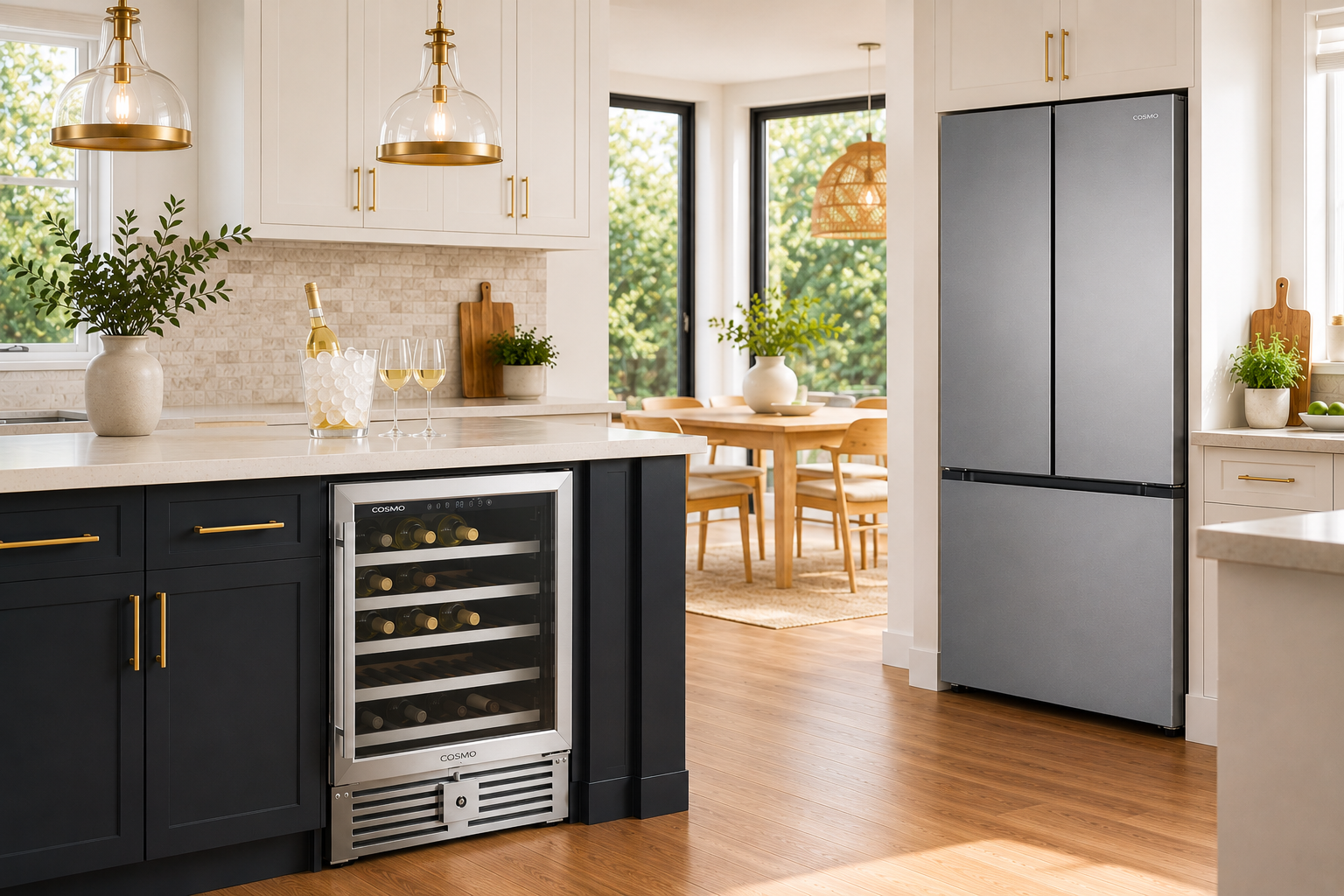
Wine Cooler vs. Regular Refrigerator for Summer Entertaining: Which One Actually Serves Your Guests Better
Summer entertaining creates a specific set of demands that the rest of the year’s hosting doesn’t quite replicate. Guests arrive expecting cold drinks immediately. Wine consumption increases when the weather is hot and gatherings run long. The refrigerator that handles a household’s weekly food storage is suddenly also being asked to chill a case of white wine, keep rosé at serving temperature through a four-hour afternoon party, and produce ice for cocktails while simultaneously storing the potato salad, the marinated chicken waiting to go on the grill, and the dessert that needs to stay cold until serving. Something in that equation usually suffers.
The question of whether a dedicated wine cooler makes sense for summer entertaining isn’t purely about wine enthusiasm or kitchen aesthetics — it’s a practical question about whether your cold storage setup can actually handle what summer hosting demands, and whether the right tool for chilling wine is the same tool that’s keeping your raw chicken food-safe. Those two functions have genuinely different requirements, and understanding the gap between them explains why the answer isn’t simply “put the wine in the fridge like everything else.”
What Your Refrigerator Is Actually Designed to Do
A standard kitchen refrigerator is engineered for food safety — maintaining temperatures cold enough to slow bacterial growth across a wide range of perishable foods. The FDA recommends refrigerator temperatures at or below 40°F for food safety, and most household refrigerators run between 35-38°F to stay safely within this range with some margin for temperature variation from door openings.
This temperature is too cold for wine storage and significantly too cold for wine serving. Red wines served at refrigerator temperature — 35-38°F — taste muted, tannic, and closed because cold temperatures suppress the volatilization of aromatic compounds that give wine its flavor complexity. White wines at these temperatures are drinkable but past the point where their fruit character and acid balance are most expressive. Sparkling wines do reasonably well since they’re typically served very cold, but even they show better at 42-48°F than at 35°F.
Beyond temperature, refrigerators create additional wine-unfriendly conditions. The compressor cycling that maintains food-safe temperatures creates vibration that disturbs wine sediment and, over extended storage, accelerates chemical reactions that degrade wine quality. Refrigerators dehumidify aggressively to prevent food spoilage — exactly the wrong condition for wine corks that need moderate humidity to stay properly sealed against air intrusion. Strong food odors in a refrigerator transfer to wine through cork over time, particularly for wines stored more than a few days.
None of this means wine in the refrigerator is ruined — people store and serve wine from household refrigerators constantly with acceptable results. But “acceptable” and “optimal” are different standards, and understanding what’s actually happening to wine in a standard refrigerator helps frame what a dedicated wine cooler is actually solving.
What Wine Actually Needs
Wine storage and wine serving temperature requirements differ from food refrigeration requirements in specific ways that determine what equipment serves wine best.
Storage Temperature: Long-term wine storage — anything beyond a few weeks — performs best between 55-65°F depending on wine type. Reds generally store toward the warmer end of this range, whites and sparkling wines toward the cooler end. This range is warm enough to allow gradual aging and flavor development but cool enough to prevent the heat damage that accelerates undesirable chemical changes. Standard refrigerators run 15-25°F colder than this range.
Serving Temperature by Wine Type: Different wines have specific serving temperature ranges where they taste best — a detail that matters more in summer entertaining where guests are drinking wine rather than cooking with it.
Red wines: 60-65°F for lighter styles like Pinot Noir and Beaujolais, 65-68°F for fuller-bodied reds like Cabernet Sauvignon and Syrah. These temperatures are actually warmer than many people realize — a red wine pulled from a 68°F room temperature environment in summer is too warm, but a red pulled from a standard refrigerator and allowed to warm slightly for 20-30 minutes is often close.
White wines: 45-55°F depending on style. Crisp, light whites like Pinot Grigio and Sauvignon Blanc serve well at 45-48°F. Fuller, more complex whites like white Burgundy or aged Chenin Blanc show better at 50-55°F. These temperatures are achievable from a standard refrigerator but require timing — pulling white wine too early means it warms past its window before guests can finish the bottle.
Rosé: 48-54°F — cold enough to be refreshing in summer heat but warm enough to show its fruit character. A rosé at 35°F from the back of the refrigerator needs 20-30 minutes on the counter before it reaches this range.
Sparkling wines: 40-50°F — the category that comes closest to refrigerator temperatures, which is why Champagne and Prosecco pulled directly from a household refrigerator is generally fine.
Temperature Stability: Perhaps more important than the specific temperature is temperature consistency. Wine quality degrades faster from repeated temperature fluctuations than from storage at a slightly suboptimal but consistent temperature. A refrigerator that cycles from 35°F to 42°F multiple times daily due to door openings stresses wine differently than a dedicated wine cooler designed for minimal temperature variation.
What a Dedicated Wine Cooler Does Differently
A wine cooler isn’t simply a refrigerator set to a different temperature — it’s an appliance engineered specifically for the conditions wine needs, differing from standard refrigerators in several meaningful ways.
Temperature Range Designed for Wine: Wine coolers typically maintain temperatures between 40-65°F — the range that covers wine serving and short-to-medium-term storage. The Cosmo COS-24BIWCS, for example, maintains temperatures across the range appropriate for both red and white wine storage, allowing you to optimize for whichever type dominates your collection. This is temperature calibrated for wine rather than for food safety.
Temperature Stability: Wine cooler compressor and thermostat systems are designed to minimize temperature fluctuation rather than simply maintaining a target average. The narrower temperature swings in a purpose-built wine cooler stress wine less than the wider cycling of a food refrigerator managing door openings, new food additions, and the competing demands of different storage zones.
Reduced Vibration: Wine cooler cooling systems generate less vibration than full-size refrigerator compressors. Some wine coolers use thermoelectric cooling that operates with virtually no vibration at all. Less vibration means less disturbance to wine sediment and reduced acceleration of the chemical reactions that vibration promotes in stored wine.
Humidity Management: Unlike food refrigerators that actively dehumidify, wine coolers are designed to maintain moderate humidity — typically 50-70% relative humidity — that keeps corks properly moist and sealed. Dry corks that allow air contact are one of the more common mechanisms of premature wine oxidation, particularly for bottles stored more than a few weeks.
UV Protection: Quality wine coolers include tinted glass doors that filter UV light, which degrades wine compounds more rapidly than visible light. The dark glass or solid doors of most food refrigerators provide this protection incidentally, but a wine cooler’s tinted glass allows you to see your collection without compromising UV protection.
Storage Configuration: Wine coolers use horizontal storage racks that keep wine in contact with corks — the essential storage position for bottles sealed with natural cork. Storing wine upright for extended periods allows corks to dry from the inside, eventually compromising the seal. Wine coolers’ horizontal racks also typically accommodate a meaningful bottle count — the COS-24BIWCS holds 52 bottles — that represents a substantial entertaining supply without requiring multiple shelves of a food refrigerator reorganized around wine.
The Summer Entertaining Case for a Dedicated Wine Cooler
Beyond the technical storage arguments, the summer entertaining context creates specific practical reasons why a dedicated wine cooler earns its place during the season where hosting happens most.
Refrigerator Capacity During Gatherings: A summer party’s refrigerator needs are extensive — food storage for all the dishes being served, beverage chilling, ice production, and the ongoing needs of the household’s regular food storage that doesn’t pause because guests are coming. Adding a case of wine to this demand creates real capacity conflicts. A dedicated wine cooler removes the wine entirely from the main refrigerator’s burden, leaving its full capacity available for food and non-wine beverages without reorganization or compromise.
Ready-to-Serve Temperature: Wine in a dedicated cooler set to serving temperature is genuinely ready to pour the moment a guest asks for it. Wine in a household refrigerator requires either pulling it early and timing the warm-up, or serving it too cold and waiting for glasses to warm — both of which require planning and monitoring that adds to the hosting cognitive load. Wine at the right temperature in a dedicated cooler is a hosting convenience that matters more during a party than it seems when you’re planning in advance.
Guest Interaction Opportunity: A well-stocked, visible wine cooler in a kitchen or entertaining area allows guests to browse and select from what’s available — a hosting style that feels generous and participatory rather than requiring the host to manage every wine decision. The COS-24BIWCS’s glass door and interior visibility make this particularly natural, turning the wine cooler itself into part of the entertainment environment rather than a utility appliance hidden from view.
Protecting Good Bottles: Summer entertaining often involves better wine than everyday consumption — bottles opened for guests at gatherings rather than casual Tuesday dinners. These bottles deserve appropriate storage conditions rather than the refrigerator’s food-safe but wine-suboptimal environment. A dedicated wine cooler means good bottles stay in conditions that preserve what made them worth buying until the moment they’re opened.
When the Regular Refrigerator Is Fine
Honest assessment of this question requires acknowledging that a dedicated wine cooler isn’t a universal necessity, and the household refrigerator handles wine acceptably in several specific situations.
Casual Entertaining with Short Lead Times: Wine that goes from store to refrigerator to glass within a day or two doesn’t experience the cumulative storage damage that makes dedicated wine cooling meaningfully beneficial. The humidity, vibration, and long-term storage arguments for wine coolers apply to bottles stored for weeks or months, not hours.
Small Collections and Infrequent Hosting: A household that opens wine occasionally without building a collection and hosts casually once or twice monthly doesn’t need a 52-bottle dedicated appliance. The refrigerator’s acceptable short-term wine storage is genuinely fine for this usage pattern, and the cost and space of a dedicated wine cooler wouldn’t represent good value.
Primarily Sparkling Wine Consumption: The wine type that comes closest to preferring refrigerator temperatures is sparkling wine. A household whose wine consumption is predominantly Champagne, Prosecco, and sparkling water doesn’t face as significant a temperature gap between refrigerator conditions and optimal serving temperature.
Budget and Space Constraints: A dedicated wine cooler represents a real appliance investment and requires counter or floor space. For households where either constraint is binding, the refrigerator handling wine is a perfectly functional compromise, particularly with the understanding of its limitations and appropriate timing adjustments when serving.
Built-In vs. Freestanding Wine Cooler for Summer Entertaining
If a dedicated wine cooler does make sense for your summer entertaining setup, the installation format affects both how it fits in the space and how it integrates with the entertaining environment.
The COS-24BIWCS works in both built-in and freestanding configurations through its front-venting design — the same feature that allows under-counter built-in installation also allows freestanding use without requiring rear or side clearance for heat exhaust. This dual capability means the cooler can fit wherever your space and entertaining flow works best rather than being constrained to a specific installation type.
Built-In Positioning: Under-counter built-in installation creates the most intentional appearance — the wine cooler becomes part of the kitchen’s permanent infrastructure in the same way a dishwasher or built-in refrigerator does. For a kitchen or entertaining area being designed or renovated, this integration is worth planning for specifically. The result is a kitchen that reads as complete and considered rather than assembled from separate components.
Freestanding Positioning: Freestanding placement allows the wine cooler to go where it serves the entertaining flow best — in a dining room near the table where wine is consumed, in a dedicated bar area if the home has one, on a covered patio for outdoor summer entertaining, or simply wherever floor space accommodates it without requiring any installation work. The flexibility matters particularly for summer entertaining that often extends to outdoor spaces.
Visibility as Design Element: The COS-24BIWCS’s glass door and LED interior lighting mean it presents its contents attractively regardless of where it’s positioned. A wine cooler visible to guests from the main entertaining area does something a household refrigerator never does — it makes the available wine selection part of the hosting presentation, allowing guests to see what’s available and participate in the selection rather than requiring the host to retrieve every bottle from a closed refrigerator.
Making the Decision for Your Summer
The question of wine cooler versus regular refrigerator for summer entertaining ultimately comes down to three factors: how much wine you’re buying and storing, how important serving temperature precision is to your hosting style, and whether your household refrigerator’s capacity is genuinely adequate for summer entertaining without the wine competing for space.
If you’re buying wine more than a week in advance of events, regularly finding your refrigerator overcrowded during gatherings, or noticing that wine served from your household refrigerator tastes better after it warms for 20 minutes on the counter — these are signals that a dedicated wine cooler would meaningfully improve your summer entertaining experience rather than simply adding appliance complexity.
If your wine goes from store to refrigerator to glass within a day, your refrigerator has adequate capacity for summer hosting, and temperature precision in wine service isn’t a priority for how you entertain — the refrigerator handles the job adequately and a dedicated wine cooler adds cost and space without proportional benefit for your specific situation.
Summer is the season that makes this question concrete. When you’re hosting outdoors in 90°F heat, going through more wine than any other time of year, asking your refrigerator to manage both food safety and wine service simultaneously, and wanting every aspect of hosting to feel effortless rather than managed — that’s when the right tool for the right job starts to feel less like a luxury and more like the obvious practical decision.