
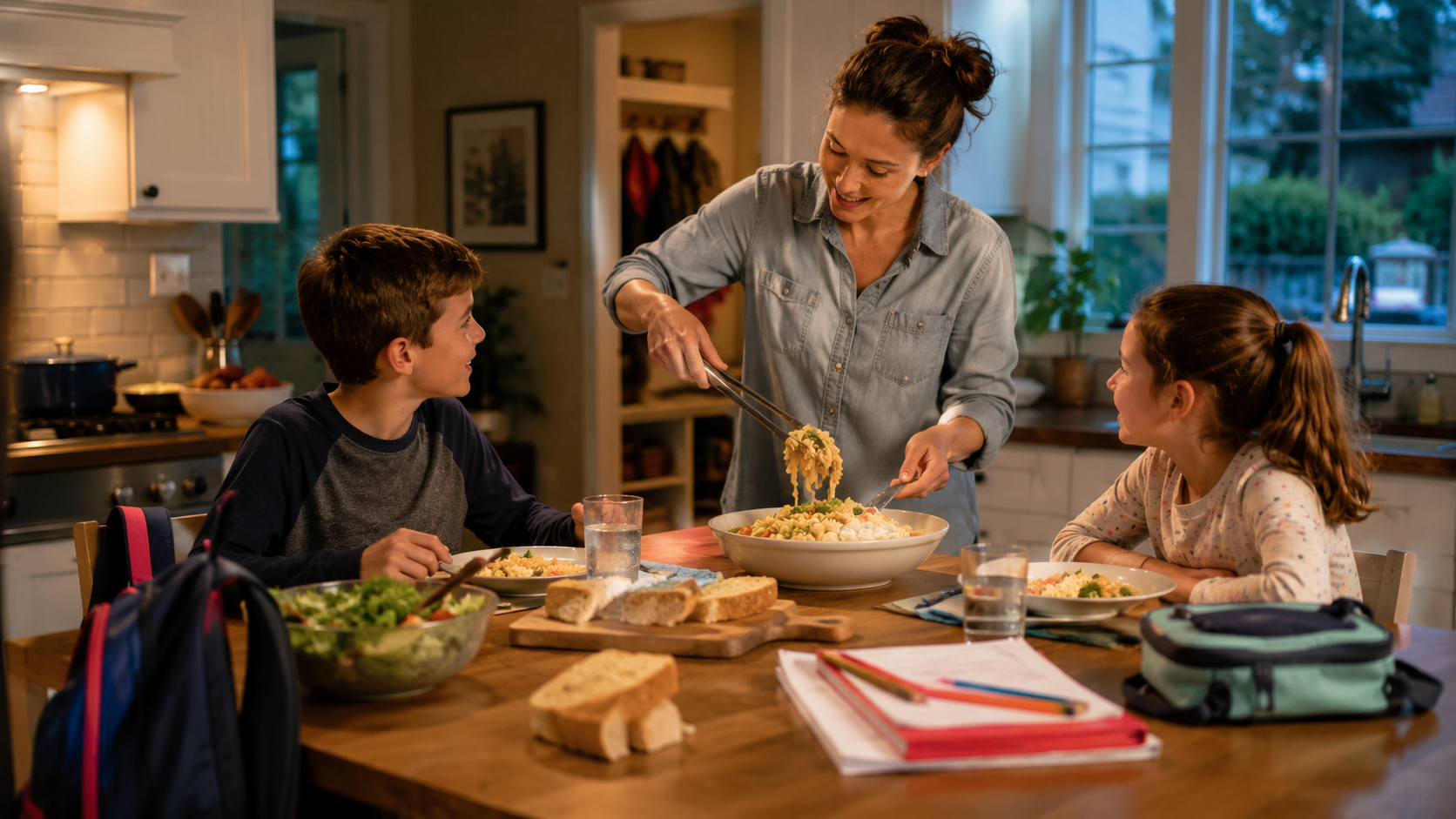
Back to School: Quick Weeknight Dinners for Busy Families
The back to school transition hits the dinner table harder than most families anticipate. Summer’s flexible schedule — cooking when you feel like it, eating when it’s ready, nobody needing to be anywhere at a specific time — gets replaced almost overnight by a logistics operation where dinner needs to be on the table within a defined window between after-school activities, homework, and bedtimes that don’t move. The meals that worked fine in July suddenly feel impossible in September not because they got harder to cook but because the time available to cook them collapsed.
The families that navigate this transition well aren’t necessarily the ones with the most cooking skill or the best equipment. They’re the ones who planned for it — who built a weeknight dinner rotation around the actual constraints of a school-year schedule rather than hoping summer’s relaxed approach would somehow stretch into fall. That planning involves understanding which cooking techniques genuinely fit a 30-minute window, which meals can be partially or fully prepared ahead so weeknight assembly is minimal, and which shortcuts deliver results good enough that nobody at the table is complaining.
This is a practical guide to making weeknight family dinners work during the school year — not aspirationally, but actually, in real households with real time constraints and children who have opinions about what they’ll eat.
Understanding the Real Weeknight Window
Before the recipes, an honest assessment of what the weeknight cooking window actually looks like for most families — because designing dinner around an imaginary 45 minutes of uninterrupted cooking time produces a plan that falls apart immediately.
The Actual Timeline: Most school-year weeknight dinners need to go from starting to eating in 30 minutes or less. This isn’t the time from when you turn on the first burner to when the food hits the table — it’s from when you walk into the kitchen after work or after pickup to when food is in front of everyone. That 30 minutes includes any prep work, any cooking, plating, and getting everyone to the table. Some nights it’s less. Rarely is it more without something being dropped.
Parallel vs. Sequential Cooking: The difference between a 20-minute dinner and a 45-minute dinner is often not the cooking time but whether the steps happen in parallel or sequentially. A pasta dish where you boil water, then cook the pasta, then make the sauce, then combine them takes 40 minutes. The same dish where the water goes on immediately, the sauce is made while the water heats and the pasta cooks, and everything finishes simultaneously takes 20 minutes. Learning to identify and execute parallel cooking — multiple things happening at once rather than one after another — is the single most impactful efficiency change for weeknight cooking.
The Mental Load Factor: Weeknight cooking happens when mental bandwidth is lowest — after a full work day, after school pickup, after the first round of homework negotiations. This is not the time for recipes that require sustained attention, complex technique, or more than two or three active decisions. The best weeknight recipes are ones you could execute while partially distracted because they’ve been made enough times to be familiar, or because they’re genuinely simple enough to manage on autopilot.
The Weeknight Dinner Framework
Rather than a random collection of recipes, a functional back-to-school dinner rotation is built around a framework that tells you how to approach each night of the week based on what that day’s schedule actually allows.
Monday — Fast and Familiar: Monday after the first day of the school week is rarely the night for trying something new. Keep Monday in the rotation for the two or three things your family makes most reliably and most quickly. The goal is getting everyone fed with minimal friction. Speed and familiarity matter more than variety on Monday.
Tuesday — Sheet Pan or One-Pan: One pan, one cleanup, minimal active cooking time. Sheet pan dinners go in the oven and come out ready to serve. One-pan stovetop dishes handle protein and vegetables together in a single skillet. The oven handles the cooking while you handle homework or other tasks.
Wednesday — Make-Ahead Leftover or Batch: Wednesday works best when Monday or Sunday’s cooking produced intentional leftovers or a batch component — a large protein that becomes multiple meals, a big pot of grains that serves as the base for multiple different dinners, or a fully prepared dish that reheats in 15 minutes.
Thursday — Assembly Dinner: Tacos, grain bowls, wraps, salad bars — meals assembled from individual components rather than cooked together. Many components can be prepped Sunday or Monday and held refrigerated through the week. Thursday assembly is genuinely minimal work when the ingredients are already prepared.
Friday — Lower Pressure: Friday’s flexibility depends on the family’s actual Friday activity level, but it’s often the night where a slightly more involved dinner is manageable because the next morning doesn’t start early. Use Friday for anything that needs a little more time or attention than the earlier week allows.
The Recipes: Weeknight Dinners That Actually Fit the Schedule
Monday Rotation: Sheet Pan Chicken Thighs and Vegetables
Sheet pan chicken thighs are the weeknight anchor recipe that families return to continuously because they require almost no active cooking time once prep is done.
Ingredients: Bone-in skin-on chicken thighs, whatever vegetables are available (broccoli, bell peppers, zucchini, cherry tomatoes, potatoes all work), olive oil, garlic powder, smoked paprika, salt, pepper, lemon.
Method: Preheat oven to 425°F. Toss vegetables with olive oil, salt, and pepper on a sheet pan. Season chicken thighs with olive oil, garlic powder, paprika, salt, and pepper and nestle among the vegetables. Roast 35-40 minutes until chicken skin is crispy and golden and vegetables are tender and slightly caramelized at the edges. Squeeze lemon over everything before serving.
Active cooking time: 10 minutes of prep. Then you walk away. The oven handles the rest while you manage everything else happening in the household. Clean up is one pan and a cutting board.
The variation principle: This same approach — protein and vegetables on a pan, oven at 425°F — works with salmon fillets (20 minutes), sausage and peppers (30 minutes), pork tenderloin (25 minutes), and shrimp (12 minutes). Learning the sheet pan format rather than a single recipe gives you a framework that produces different meals every week from the same method.
Tuesday Rotation: One-Pan Creamy Tuscan Chicken
Ingredients: Boneless chicken breasts or thighs, sun-dried tomatoes, baby spinach, heavy cream, garlic, Italian seasoning, parmesan, olive oil, salt, pepper.
Method: Season chicken on both sides with salt, pepper, and Italian seasoning. Heat olive oil in a large skillet over medium-high heat. Sear chicken 4-5 minutes per side until golden and cooked through. Remove and set aside. In the same pan, add minced garlic and sun-dried tomatoes and cook 1 minute. Add heavy cream and bring to a simmer, scraping up any fond from the chicken. Add parmesan and stir until melted. Add spinach and stir until wilted. Return chicken to the pan and spoon sauce over. Serve over pasta or with crusty bread.
Total time: 25 minutes. One pan. The sauce builds from the same pan the chicken seared in, which means you’re not dirtying additional equipment and the fond from the sear adds flavor to the sauce automatically.
Wednesday Rotation: Taco Tuesday on Wednesday (Batch Beef)
The batch approach: On Sunday or Monday, brown 2 pounds of ground beef with taco seasoning — garlic powder, cumin, chili powder, smoked paprika, onion powder, salt, pepper, and a splash of water to bring it together. Refrigerate in an airtight container.
Wednesday assembly: Warm the seasoned beef in a skillet for 5 minutes. Set out tortillas, shredded cheese, sour cream, salsa, shredded lettuce, diced tomato, and lime wedges. Everyone builds their own. Total time from refrigerator to table: 10 minutes if the components are ready.
The batch beef principle extends: The same seasoned ground beef works in nachos on Thursday, rice bowls on Friday, or burritos assembled for lunch the next day. One batch cook on Sunday or Monday creates multiple no-effort weeknight meals.
Thursday Rotation: Quick Shrimp Stir-Fry
Ingredients: Frozen shrimp thawed (or fresh jumbo shrimp), broccoli florets, snap peas, carrots sliced thin, garlic, ginger, soy sauce, oyster sauce, sesame oil, cornstarch, neutral oil, rice.
Method: Start rice first — it takes 18 minutes and finishes as everything else does. Heat a wok or large skillet over high heat with neutral oil until smoking. Add shrimp and cook 1-2 minutes per side until pink. Remove. Add more oil and add garlic and ginger — 30 seconds until fragrant. Add vegetables and stir-fry on high heat 3-4 minutes until bright and tender-crisp. Return shrimp. Add combined soy sauce, oyster sauce, sesame oil, and cornstarch dissolved in water. Toss everything together until the sauce coats and thickens. Serve over rice.
Total time: 20 minutes including rice. The high heat and fast cooking pace of stir-fry means this dinner genuinely comes together faster than most families expect.
Friday Rotation: Homemade Pizza Night
Pizza night is the dinner that both ends the week on a high note and creates minimal cleanup.
Method: Use store-bought fresh pizza dough from the grocery store refrigerator section. Divide into portions, stretch each piece thin, and set up toppings in small bowls — sauce, shredded mozzarella, pepperoni, whatever vegetables people want. Each family member builds their own pizza on a piece of parchment paper. Slide onto a hot pizza stone or preheated heavy sheet pan in a 475-500°F oven. Cook 8-10 minutes until crust is blistered and cheese is bubbling and lightly browned.
The family participation element of pizza night reduces the “what’s for dinner” negotiation that plagues weeknight cooking — everyone made their own, so nobody is complaining. It also teaches basic kitchen participation to children who can spread sauce and add toppings without supervision.
The Appliance Strategy for Weeknight Efficiency
Using the right appliance for each cooking task is the difference between a weeknight dinner that fits the schedule and one that doesn’t.
The Oven for Hands-Off Cooking: Sheet pan dinners, roasted proteins, and oven-baked pasta dishes all use the oven’s ability to cook food without requiring active monitoring. Put the food in, set a timer, do other things. The oven handles it. This is the weeknight cooking approach that scales most naturally to the chaos of a school-night household because it separates the active time from the total time.
The Air Fryer for Speed: When the oven’s 35-40 minute cook time doesn’t fit the available window, the air fryer produces comparable results in 15-22 minutes with no preheat time. Chicken thighs in 22 minutes. Salmon in 12 minutes. Roasted vegetables in 15 minutes. Frozen items that would take 25 minutes in the oven take 12-15 in the air fryer. The air fryer is the weeknight appliance for nights when the schedule is tightest.
The Stovetop for Speed and Flexibility: Fast stovetop cooking — stir-fries, pasta, one-pan sauces — produces complete dinners in 15-20 minutes when the technique is efficient. The stovetop’s speed advantage over the oven makes it the right tool for the nights when dinner needs to happen immediately rather than 35 minutes from now.
The Slow Cooker and Instant Pot for Morning Setup: For families with consistent morning routines that allow 10-15 minutes of prep, slow cooker dinners set up before school produce complete ready-to-serve meals that need no weeknight cooking at all. Pulled pork, chicken soup, beef stew, and similar dishes that benefit from long cooking become weeknight dinners that require zero active effort after school when the slow cooker has been running all day.
Batch Cooking and Prep Strategies That Change the Week
The families who navigate weeknight dinners most effectively aren’t necessarily cooking faster — they’re shifting work to times when it’s less disruptive.
The Sunday Prep Session: One hour of Sunday cooking can change the entire week’s dinner logistics. Roasting a large batch of vegetables that gets used across multiple dinners. Cooking a large protein that becomes multiple meals. Preparing a batch of grains — rice, farro, or quinoa — that serves as the base for grain bowls, stir-fries, and side dishes throughout the week. Washing and prepping salad ingredients so they’re ready to use without any weeknight prep. Making two sauces that can be deployed across different meals.
Component Cooking vs. Meal Cooking: The shift from cooking complete meals to cooking components is the most efficient approach to weeknight dinner management. A batch of roasted chicken thighs is a complete dinner on Monday, the protein in a grain bowl on Tuesday, and taco filling on Wednesday — three dinners from one cooking session. Components give you flexibility that fully assembled meals cooked ahead don’t — you can combine them differently based on what sounds appealing rather than being committed to eating the same dish three times.
Double Batch Principle: When you’re already cooking something, doubling the batch takes minimal additional effort and produces meaningful weeknight payoff. Making pasta sauce — double it and freeze half. Browning ground beef — brown two pounds instead of one and refrigerate the second for later in the week. Roasting a chicken — roast two and use the second for multiple meals. The marginal effort of doubling is small. The weeknight benefit is significant.
Marinate the Night Before: Ten minutes the night before to marinate protein for the next evening’s dinner eliminates that step from the weeknight window entirely and produces better flavor than a rushed marinade applied the same day. Steak, chicken thighs, pork tenderloin — marinated overnight in simple combinations of olive oil, acid, and aromatics — go directly from refrigerator to cooking surface the next evening with no prep required.
Pantry and Freezer Setup for Weeknight Success
A well-stocked pantry and freezer reduce weeknight dinner preparation to assembly more often than it might seem — if you have the right things available.
Pantry Staples That Enable Fast Meals: Canned beans in multiple varieties for quick protein additions. Canned tomatoes for fast sauces. Pasta in multiple shapes. Rice and other quick-cooking grains. Good olive oil. A range of vinegars for acid balance. Fish sauce and soy sauce for umami depth. Canned coconut milk for quick curry bases. These items, combined with whatever fresh protein is available, produce complete dinners in 20-30 minutes from a nearly empty refrigerator.
Freezer Proteins That Thaw Fast: Shrimp thaws in 15-20 minutes under cold running water — the fastest-thawing protein available and one of the fastest-cooking. Thin-cut chicken breasts or chicken tenders thaw faster than thick cuts. Ground beef thaws faster than whole cuts. Stocking the freezer with these fast-thaw options means a forgotten dinner plan doesn’t force takeout — you have protein available within 20 minutes of remembering.
Prepared Sauces Worth Keeping: Quality jarred pasta sauce, good quality salsa, Thai curry paste, miso paste, and similar prepared sauce bases all enable genuinely good fast dinners without the cooking time that homemade equivalents require. A jar of good Thai red curry paste combined with canned coconut milk, vegetables, and protein over rice is a 20-minute dinner that tastes like more work than it was.
Managing the “What’s for Dinner” Problem
The most time-consuming part of weeknight dinner for many families isn’t the cooking — it’s the deciding. Solving the decision problem is as valuable as any cooking efficiency improvement.
The Weekly Plan: Deciding what’s for dinner on Sunday for the entire week eliminates seven individual dinner decisions from seven individual evenings. The decisions get made once, with lower time pressure and higher mental bandwidth, rather than at 5:30pm on seven consecutive evenings when both are lower. The weekly plan also enables the Sunday prep session — you can prep components for the week’s meals because you already know what those meals are.
The Rotation System: Families that build a rotation of eight to twelve reliably successful weeknight dinners and cycle through them — with seasonal variations as ingredients change — eliminate the mental load of deciding entirely. Everyone knows what’s in the rotation, preferences have already been established, and the cooking is familiar enough to execute without consulting the recipe. The rotation system trades variety for reliability, which is often the right trade for weeknight cooking during a busy school year.
The Theme Framework: Assigning themes rather than specific dishes to each night — Meatless Monday, Taco Tuesday, Pasta Wednesday, Asian Thursday, Pizza Friday — narrows the decision from unlimited options to one category. Within Taco Tuesday, the specific protein and toppings can vary week to week while the format stays consistent. This structure gives the meal planning decision enough constraint to be fast without eliminating all variety.
Back to school doesn’t have to mean the quality of weeknight dinners drops to survival-level cooking or takeout three nights a week. It means planning for the actual constraints of a school-year schedule rather than the summer schedule that allowed more flexibility. The families that eat well on weeknights during the school year aren’t doing it through extraordinary effort — they’re doing it through planning that front-loads the decisions and prep work to times when both are easier, and through building a cooking approach around what the schedule actually allows rather than what would be ideal.