
Why a Sunday Pot of Stock Is the Most Useful Thing an October Kitchen Can Make
Ask a good cook what the most useful thing in their kitchen is, and the answer is rarely a gadget. It is often something that barely looks like food: a few quarts of golden, lightly gelled stock waiting in the refrigerator. October is when that pot earns its place. Evenings cool, the oven returns to regular duty, and the week ahead fills up with soups, braises, pan sauces, and grain dishes that all taste better when they start with something richer than water. A Sunday pot of stock costs very little, asks for almost no attention, and raises the quality of every meal that follows it.
Why Stock Is the Best Return on a Sunday Afternoon
Most Sunday cooking is a trade: an afternoon of work for one good dinner. Stock changes the math. Once the pot is on a gentle simmer, it runs largely unattended for three to four hours, and what comes out is not a meal but an ingredient, several quarts of it, ready to improve everything cooked over the next week.
The difference between stock and the boxed broth on a shelf comes down to bones and time. Simmering bones, joints, and connective tissue slowly pulls collagen into the water, and that collagen becomes gelatin. It is what gives a homemade stock its body, the slight silkiness on the tongue and the wobble in the container once it has chilled. Stock made at home is also typically unsalted, which matters more than it sounds. Because you season it later, the same pot can become a delicate soup or a reduced pan sauce without turning too salty halfway through.
It is also one of the most frugal things a kitchen does. The carcass from a roast chicken, the onion ends and carrot peels, and the celery tops and parsley stems that usually head for the compost all have a second job here. Late last month, the Cosmo blog looked at how soup cravings are arriving earlier this year, and this week’s National Gumbo Day recipe calls for eight cups of chicken stock. A freezer stocked with the real thing makes both easier.
What Goes in the Pot
A reliable starting point is about three to four pounds of bones to four quarts of cold water. Chicken carcasses, wings, and backs are the easy choice, while beef or veal bones make a deeper, darker stock. Add roughly a pound of vegetables, using about two parts onion to one part each of carrot and celery, along with a bay leaf, a handful of parsley stems, a few thyme sprigs, and a teaspoon of whole peppercorns. Leave out the salt.
Two choices shape the result. For a brown stock, roast the bones at 425°F for 30 to 40 minutes first, until they take on deep color, since that browning is where much of the savory depth comes from. For a lighter white stock, skip the roasting and go straight to the pot. Either way, start with cold water. Bringing the pot up slowly lets proteins rise to the surface, where they can be skimmed away instead of dispersing into the liquid.
The Sunday Method
- Roast the bones if you want a brown stock, then move them to a large stockpot with the vegetables and aromatics.
- Cover with cold water by an inch or two and bring it slowly to a bare simmer over medium heat.
- Skim the foam that gathers in the first 30 minutes, then lower the heat until only a few bubbles break the surface.
- Simmer chicken stock for three to four hours and beef stock for six to eight, adding a little water if the bones become exposed.
- Strain through a fine-mesh sieve, pressing gently on the solids, and discard them.
- Cool quickly, then refrigerate or freeze.
The Step Most Recipes Skip: Cooling and Storing
A stockpot holds heat for a long time, and that is a food-safety problem as much as a convenience one. USDA guidance is to refrigerate leftovers within two hours of cooking and to divide large amounts into shallow containers so they cool quickly to 40°F or below. A deep pot of hot liquid left on the counter, or placed whole in the refrigerator, lingers in the 40 to 140°F range where bacteria multiply. The fix is simple. Strain the stock into a clean bowl, set it in an ice bath in the sink, stirring now and then, and divide it into shallow containers once it has dropped to lukewarm. Then it goes into the refrigerator, where it keeps for three to four days, or into the freezer.
Once chilled, the fat rises and hardens into a cap on top. Leave it in place as a seal until you use the stock, then lift it off in one piece. A stock that has set to a soft gel is not spoiled. It is a sign you pulled plenty of collagen out of the bones.
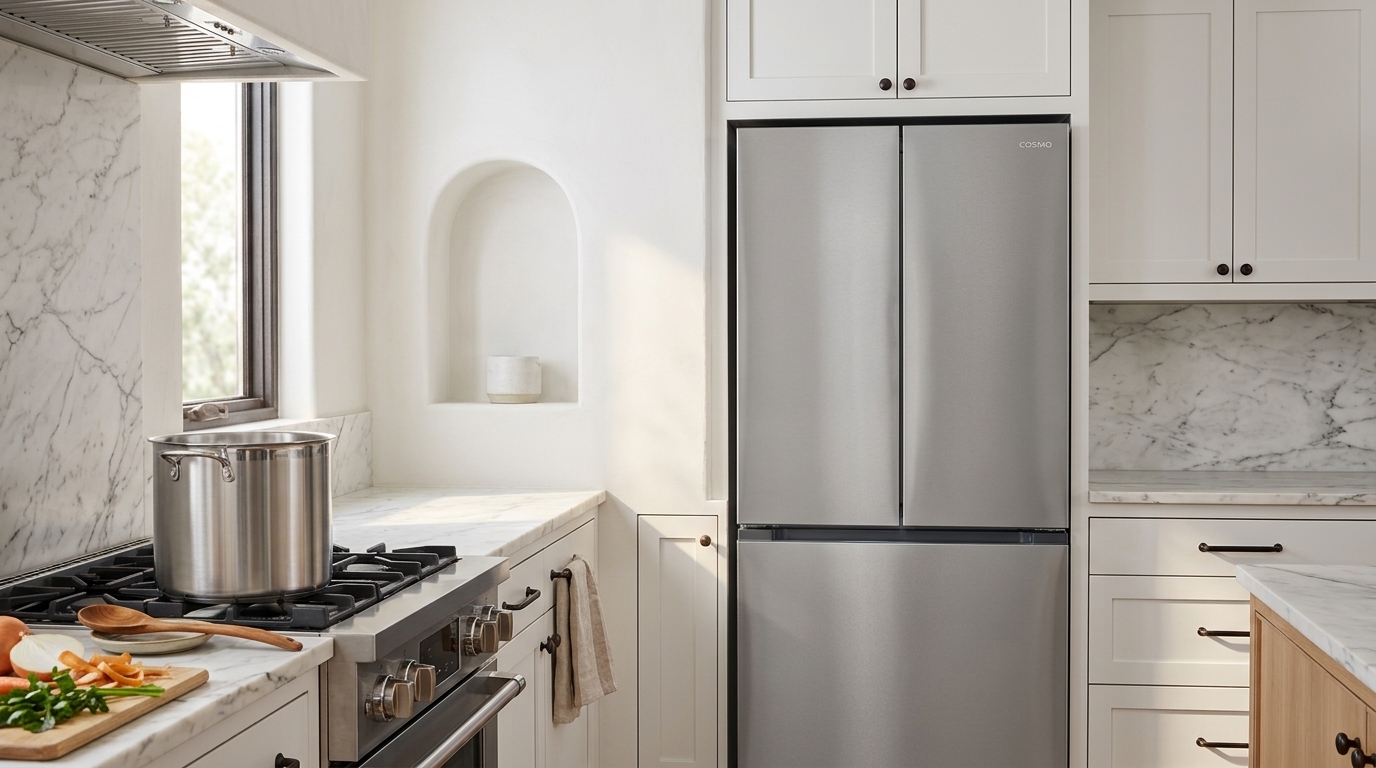
All of this puts real demands on the refrigerator. A week of stock means tall containers and quart jars that need room, plus steady cold while a household opens and closes the doors all week. The Cosmo COS-RFFV183RS, a 30-inch French door refrigerator with 17.5 cubic feet of capacity, is a good fit for the job. Its adjustable glass shelves reposition to fit tall containers without wasting vertical space, and its digital touch controls give the refrigerator and freezer sections separate settings, with recommended targets of about 37°F and 0°F. A door alarm flags a door left ajar, and the freezer drawer at the bottom keeps portioned stock within easy reach. At 30 inches wide, the model also suits condos, older homes, and smaller kitchens that cannot take a 36-inch refrigerator.
Five Ways a Quart of Stock Earns Its Keep
- Pan sauce. After searing chicken thighs or a pork chop, deglaze the skillet with a cup of stock, reduce it by half, and finish with a pat of butter.
- Better grains. Cook rice, farro, or barley in stock instead of water, and a side dish starts to feel like a main.
- Soup in 30 minutes. Stock, a handful of vegetables, and leftover roast chicken make a quick weeknight soup with far more depth than water would give it.
- Braises and stews. A pot roast or a white bean stew gains body from the gelatin that plain water cannot supply.
- Freezer portions. Freeze stock in one-cup containers or ice cube trays, leave headspace for expansion, and label with the date. USDA guidance for frozen leftovers is three to four months for best quality.
A Small Pot With a Big Return
A Sunday pot of stock rewards cooks who treat it as a system: bones and scraps in, a low steady simmer through the afternoon, a fast and careful cool-down, and a refrigerator and freezer organized to keep it usable all week. None of it is difficult, and none of it needs special ingredients. What it needs is a stove that can hold a quiet simmer and a refrigerator that keeps the results cold and within reach.