
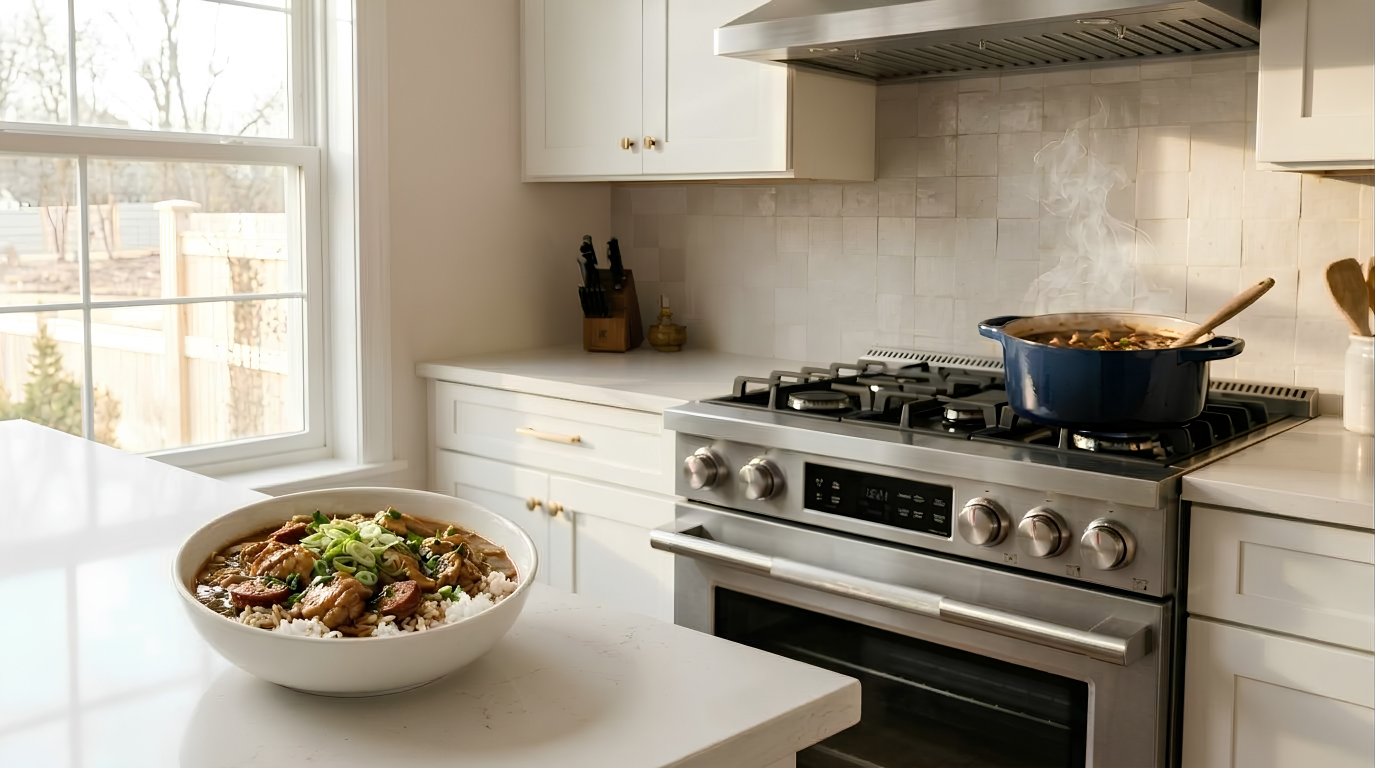
National Gumbo Day and the Slow Roux That Needs a Burner You Can Trust
A Holiday Built on Patience
Every October 12, cooks across the country mark National Gumbo Day, a food holiday devoted to one of the most storied dishes in American cooking. Gumbo belongs to Louisiana first, but its reach has long since spread well beyond the bayou. It shows up at tailgates in Baton Rouge, church suppers in Houston and Sunday kitchens from Chicago to Southern California, wherever someone grew up with a pot of it on the stove or simply fell for it on a trip to New Orleans.
The timing could hardly be better. The second week of October is when evenings finally cool down and a long simmered pot starts to feel like the right way to spend a weekend afternoon. Gumbo is not a weeknight shortcut dish. It rewards patience, and it asks for one thing above all else: a roux cooked slowly, evenly and without a single scorched speck.
Where Gumbo Comes From
Gumbo is a dish of many hands. Its name is widely traced to West African words for okra, a vegetable that enslaved West Africans brought into Louisiana cooking along with their techniques for slow cooked stews. French settlers contributed the roux, the flour and fat base that anchors so many classic sauces. Choctaw cooks are credited with filé, the ground sassafras leaf that thickens and flavors a finished pot. Spanish, German and Caribbean influences layered in along the way, which is why no two families make it quite the same way.
That history explains the long running debates that follow the dish everywhere. Creole gumbo, associated with New Orleans, often includes tomatoes and shellfish. Cajun gumbo, rooted in the rural parishes to the west, tends to skip the tomatoes and lean on a darker roux with chicken, sausage or wild game. Okra or filé, seafood or sausage, rice in the bowl first or last: every answer has its defenders. The one thing nearly everyone agrees on is that the roux decides the gumbo.
The Roux Is the Whole Game
A roux is nothing more than equal parts flour and fat cooked together, but in gumbo it does three jobs at once. It thickens the pot, it builds a deep toasted flavor, and it sets the color of the finished dish. The longer a roux cooks, the darker and nuttier it becomes, moving from blond to the color of peanut butter, then milk chocolate, then dark chocolate. A darker roux carries more flavor but less thickening power, which is why many Cajun cooks take theirs to a deep brown and rely on okra or filé to finish the body.
The challenge is that flour scorches easily. A roux headed toward dark chocolate can take 30 to 45 minutes of steady stirring, and a burner that runs hot in one spot or flares unpredictably can undo that work in seconds. Once a roux scorches, black flecks appear and a bitter, acrid smell rises from the pot. There is no saving it. Nearly every experienced gumbo cook has thrown out at least one batch and started over.
That is why the stove matters as much as the recipe.
The Range That Makes It Easier
Gumbo demands two very different kinds of heat. The roux needs a steady, controllable flame that can be eased down as the color deepens. Later, the pot needs enough power to bring several quarts of stock to a boil quickly before settling into a long simmer.
The Cosmo COS-RGS305SS 30 inch Gas Range, one of the newest models in Cosmo’s Stellar Collection, covers both ends of that spectrum. Its five sealed burners run from a 22,000 BTU burner and an 18,000 BTU burner down through 9,000 and 6,000 BTU burners to a gentle 3,500 BTU burner. For a dark roux, the 9,000 or 6,000 BTU burner delivers the even, moderate heat that lets flour toast without scorching, and the heavy duty metal knobs make it easy to ease the flame lower as the roux approaches the color you want. When it is time to add the stock, the 22,000 BTU burner brings a full pot to a boil without a long wait, while the 3,500 BTU burner can hold a side pot of rice warm without drying it out.
The cast iron grates matter here too. A loaded Dutch oven is heavy, and stirring a roux constantly for half an hour puts real stress on whatever it sits on. Stable grates keep the pot steady through every pass of the spoon. Once the gumbo is simmering, the range’s convection oven with Air Fry is ready for a pan of cornbread or a loaf of French bread, and its Steam Clean function makes quick work of any splatters left behind from the long cook.
Whatever range you use, switch on the range hood before the roux goes in. Browning flour and sizzling sausage both release smoke and strong aromas, and good ventilation keeps the kitchen comfortable through a long afternoon at the stove.
Chicken and Andouille Gumbo
Serves: 8
Prep time: 30 minutes
Cook time: about 2 1/2 hours
Ingredients
- 3/4 cup vegetable oil or lard
- 3/4 cup all purpose flour
- 1 large onion, diced
- 2 celery ribs, diced
- 1 green bell pepper, diced
- 4 cloves garlic, minced
- 1 pound andouille sausage, sliced into rounds
- 2 pounds boneless, skinless chicken thighs
- 8 cups chicken stock, warmed
- 2 bay leaves
- 1 teaspoon dried thyme
- 1 teaspoon Cajun or Creole seasoning, plus more to taste
- 1/2 teaspoon cayenne pepper
- Kosher salt and freshly ground black pepper
- 1 teaspoon filé powder (optional)
- Sliced green onions and chopped parsley, for finishing
- Cooked long grain white rice, for serving
Method
- Prep everything first. Dice the onion, celery and bell pepper, the combination Louisiana cooks call the holy trinity, and keep them in a bowl beside the stove. Once the roux reaches its color, there is no time to chop.
- Brown the sausage and chicken. In a heavy 7 to 8 quart Dutch oven over medium high heat, brown the andouille, then remove it with a slotted spoon. Season the chicken thighs with salt and pepper, brown them in the rendered fat and set them aside. They do not need to cook through.
- Make the roux. Add the oil to the pot and reduce the heat to medium low. Whisk in the flour until smooth. Stir constantly with a flat edged wooden spoon, scraping the bottom and corners, for 30 to 45 minutes, until the roux reaches a deep milk chocolate to dark chocolate brown. Lower the flame any time it begins to smoke.
- Add the trinity. Stir the onion, celery and bell pepper into the roux. The vegetables stop the roux from darkening further and soften in about 5 minutes. Add the garlic for the final minute.
- Build the pot. Slowly ladle in the warm stock, stirring well between additions so the roux dissolves without lumps. Add the bay leaves, thyme, Cajun seasoning and cayenne. Return the sausage and chicken to the pot and bring everything to a boil.
- Simmer. Reduce to a gentle simmer and cook uncovered for about 1 1/2 hours, skimming any oil that rises to the surface. Once the chicken is tender, lift it out, shred it with two forks and return it to the pot.
- Finish. Taste and adjust the salt and spice. Remove the pot from the heat before stirring in the filé, if using, since boiling turns it stringy.
Bringing It to the Table
Spoon rice into warm bowls and ladle the gumbo over it, or follow the old Louisiana habit of adding the rice on top. Scatter green onions and parsley over each bowl, and keep hot sauce and extra filé on the table. A scoop of potato salad, sometimes stirred straight into the bowl, is a regional tradition worth trying at least once.
Gumbo is famously better the next day, once the flavors have had time to settle. Cool leftovers quickly, refrigerate them within two hours, and freeze extra portions without the rice for up to three months.
National Gumbo Day is a reminder that some dishes simply cannot be rushed. Make the roux slowly, keep stirring, and let the pot simmer as long as it needs. With patience and a range that offers real control from the first stir to the last simmer, a pot of gumbo that tastes like Louisiana is well within reach.