
The Time Change Dinner Reset: Weeknight Meals for When It’s Dark by 5 p.m.
At 2 a.m. on Sunday, the clocks fall back an hour, and by Monday afternoon the kitchen window has become a mirror. It is not yet five o’clock. The porch light is on, the street has gone blue, and a question that normally waits until six has arrived early and in a worse mood: what is for dinner?
Daylight saving time ends this year on Sunday, November 1, and the effect is immediate. Sunset will come before 5 p.m. in New York, Chicago, Denver, Los Angeles, and Seattle, and farther north it comes sooner still. Nothing about the evening has actually changed, yet it feels later, heavier, and harder to cook through. The answer is not more willpower. It is a dinner routine built for the dark.
Why Dark Evenings Change the Way We Cook
Anyone who has stood at the counter at 5:15 on a November weeknight knows the mismatch. The body reads the darkness as the end of the day, while the calendar insists that dinner, homework, and dishes are all still ahead. Energy dips, patience thins, and the ambitious recipe that looked so reasonable on Sunday begins to feel like a punishment.
Kitchens respond in predictable ways. People reach for food that is warm, filling, and forgiving, and they want it quickly. That instinct is a good guide, not a weakness. Roasted vegetables, soups, braises, and anything crisp from a hot oven suit the season, and nearly all of them reward a little advance effort more than they reward skill at six o’clock. The point of a time change reset is to move the effort to the hours when you still have some.
A useful rule is to treat 3:30 p.m. as the real start of dinner, even when nothing gets cooked until later. Ten minutes at that hour, choosing the meal, taking protein out of the freezer, and setting a pan on the stove, are worth half an hour of improvising after dark.
Build the Week Around Three Anchors
Rather than planning five separate dinners, plan three kinds of meal and rotate them. The first is the sheet pan dinner, which asks for chopping and almost nothing else. The second is the pot meal, a soup, stew, or braise made in bulk that tastes better on day two. The third is the fast skillet meal, reserved for the evening when everything has run late and dinner must be on the table in twenty minutes. Each solves a different kind of night, and a week that contains all three rarely falls apart.
The skillet meal is where equipment quietly matters most. A burner that responds the moment you adjust it turns a twenty minute dinner into an actual twenty minute dinner, and gas adds the advantage of a flame you can read at a glance. That is the everyday case for Cosmo’s COS-EPGR366-BK, a 36 inch matte black gas range from the Haven Collection. Its six sealed burners leave room to boil orzo, sear cutlets, and reduce a pan sauce all at once, which helps on a night when the cook is also refereeing a spelling quiz. The sealed design keeps spills on the surface, where a damp cloth can reach them, so the cleanup that follows a fast dinner stays fast too.
A Dark Evening Menu, Night by Night
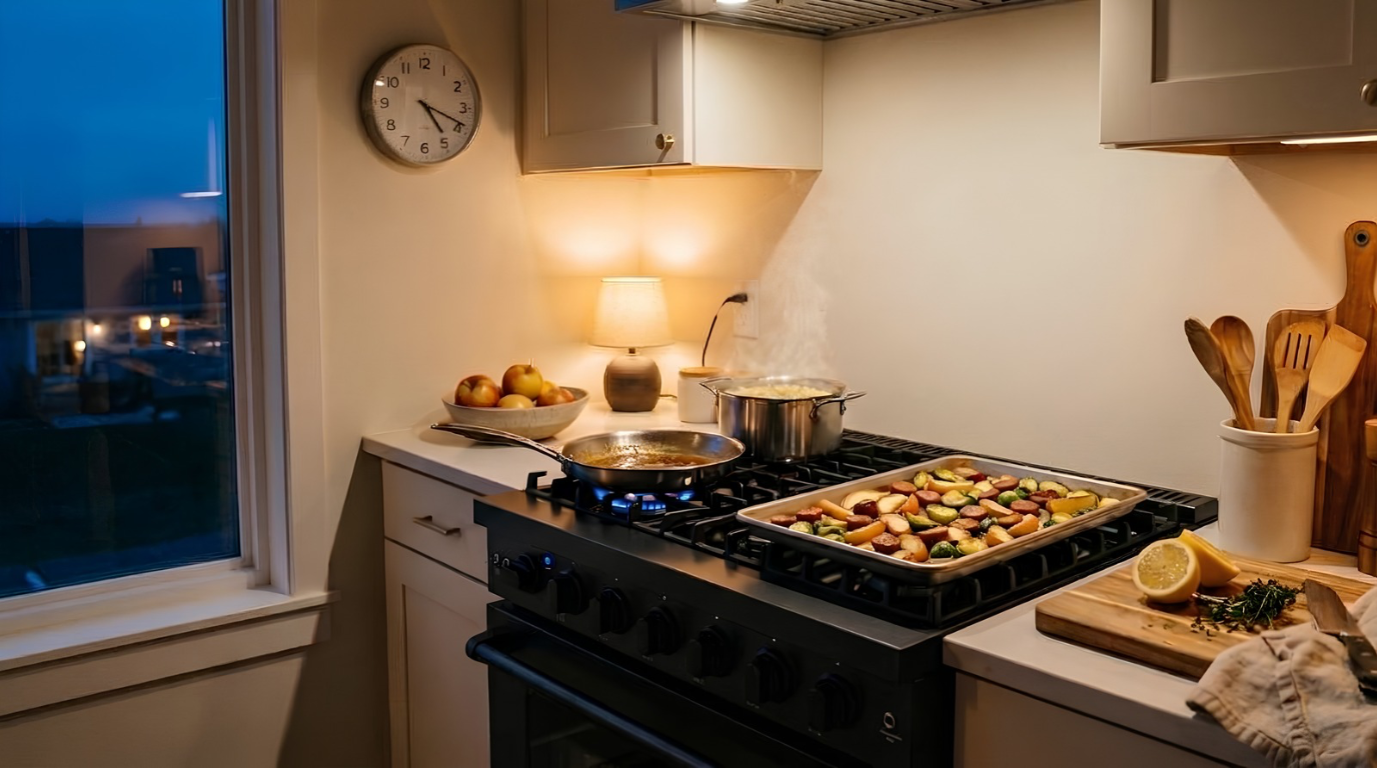
Monday. Start with the easiest dinner of the week. Slice fully cooked sausage into coins and toss it on a sheet pan with apple wedges, halved Brussels sprouts, and red onion. Add olive oil, salt, and a spoonful of grainy mustard, then roast at 425 degrees until the edges caramelize, about 25 minutes. The sweetness of the apple against the bitterness of the sprouts is the kind of balance that makes a simple dinner feel considered. A 6.0 cubic foot oven has room for two pans at once, so a second tray of potatoes or squash can roast beside the first and become tomorrow’s side dish. The convection fan browns faster than standard bake, so check a few minutes early.
Tuesday. This is soup night, and the soup was made on Sunday. A pot of white bean and kale, or lentil with a little smoked paprika, only needs reheating while bread toasts alongside it. If you made a double batch, cool the leftovers quickly in shallow containers, refrigerate them within two hours, and plan to finish them within three to four days.
Wednesday. The week is half over, which makes this the right night for the fast skillet. Sear chicken cutlets or shrimp over high heat, remove them, and build a pan sauce from garlic, lemon, white wine or broth, and a pat of butter. Start orzo on a second burner while the cutlets sear, and the pasta and the sauce finish together. The whole dinner takes about twenty minutes, and having a spare burner within reach is what keeps it moving.
Thursday. Crisp is a comfort food, and Thursday is for it. Bone in chicken thighs, seasoned and set skin side up on a rimmed pan, come out with deeply browned skin when roasted at 400 degrees with the convection fan running, usually in 35 to 45 minutes. Cook until the thickest part reads at least 165 degrees, and serve with a quick salad of shaved cabbage and apple cider vinegar to cut through the richness. If someone in the household gets home at 6:30, a low oven can hold their plate, provided the food stays at 140 degrees or above.
Friday. End the week by breaking the rules. Breakfast for dinner is a legitimate reward after four nights of discipline. Pancakes, eggs, and bacon all cook at different paces, and with six burners a griddle pan, a skillet, and a kettle can all run at once, so no one waits for the first batch to be finished before the last one begins. Syrup, candles, and pajamas are optional but encouraged.
Light, Warmth, and the Mood of the Room
Dark evenings are not only a scheduling problem. They also change how a kitchen feels, and that feeling is worth cooking for. A single overhead fixture makes a room look like a waiting area. Switch it off and lean on under cabinet lights, a lamp on the counter, or a candle on the table, and the same kitchen becomes the warmest room in the house. People linger in it. Children do homework at the island instead of retreating to their rooms.
Good light also helps the cook. The LED lights at the range knobs keep burner settings easy to read even when the rest of the kitchen is deliberately dim, so a low simmer stays a low simmer without a flashlight angled at the panel.
Resetting, Not Resisting
The early dark is going to arrive whether the kitchen is ready or not. Fighting it with elaborate plans only guarantees a winter of disappointing dinners. Working with it, by planning three kinds of meals, starting at 3:30, cooking food that comforts, and finishing the night quietly, turns the darkest months into some of the best eating of the year.
This Sunday, as you move the clocks back, take ten minutes to write down five dinners, one for each weeknight. Put the soup on the stove, let the kitchen fill with its smell, and notice how different 5 p.m. feels when dinner is already underway. The sun will still set early. Dinner just does not have to be a race against it.