
Caramel Apples Without the Sticky Mess: A Kitchen Cleanup Guide
Halloween lands on Oct. 31, and for most home cooks the caramel apples are the easy part. The dread comes afterward: a pot welded shut with hardened caramel, sticky spatulas, a counter that grabs your sleeve, and a stack of dishes nobody wants to touch.
The good news is that most of that mess is decided before the first apple is dipped. A little setup, one smart habit at the sink, and a dishwasher that does the heavy lifting turn caramel apples from a project you regret into one you repeat every fall.
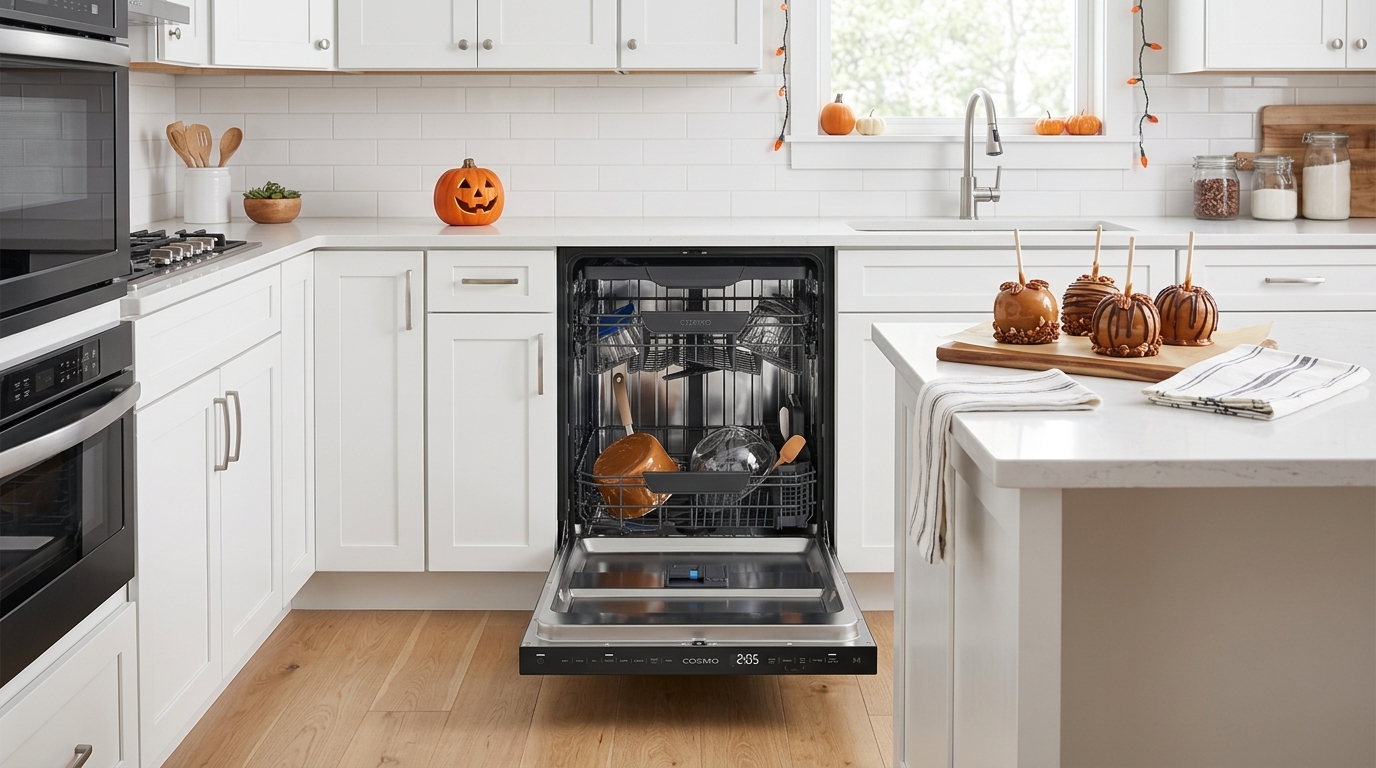
This guide follows the order you will actually work in: setting up your station, cooking the caramel, dipping, the soak that saves your pots, and loading the Cosmo 24″ matte black dishwasher so cleanup mostly runs itself.
Set up your station before you start
Lay everything out before the stove is on, because caramel does not wait. Line a rimmed baking sheet with parchment or a silicone mat and butter it lightly so the finished apples release cleanly. Set that tray where it will stay. Carrying a dripping apple across the kitchen is how floors get sticky.
Wash and dry your apples thoroughly. Grocery store apples often carry a waxy coating that keeps caramel from clinging, and any leftover moisture makes the caramel slide off in a sheet. Wipe each apple dry, then push a stick or sturdy wooden skewer into the stem end.
Next, build a small toppings station: chopped nuts, mini chocolate chips, or sprinkles in shallow bowls set on a second sheet pan. The pan catches everything that misses the apple, and you can tip the leftovers back into the bowls in one move.
Finally, put a large bowl or the sink basin of hot, soapy water within arm’s reach. You will use it in a few steps, and that one habit does more for your cleanup than any gadget.
Cook the caramel in a pot you can soak
Choose a heavy-bottomed saucepan with higher sides than you think you need. Caramel bubbles up fast, and a deeper pot keeps it off your burners and out of the stovetop seams.
Stir with a silicone spatula rather than a wooden spoon. Silicone sheds caramel more easily and goes straight into the dishwasher later, while wood soaks up sugar and stays tacky. If you are melting store-bought caramel with a splash of cream, keep the heat on medium-low and stir steadily so nothing scorches onto the bottom of the pot.
Resist the urge to scrape the pot clean when you are done. Every scraped bit is another spot on your counter and another coating on your spatula. Keep the pot on the lowest heat while you dip so the caramel stays fluid, then take it straight to the sink the moment the last apple is coated.
If you used a candy thermometer, pull it out as soon as you finish. Caramel releases most easily while it is still warm, and it sets like glue once it cools.
Dip and decorate without the drips
Work one apple at a time. Tilt the pot, roll the apple through the caramel, and lift it out while turning it slowly over the pot so the excess runs back in. Drag the bottom of the apple against the rim to remove the last drip before it ever reaches the tray.
Set the apple on the prepared tray right away. Add toppings while the caramel is still tacky, and hold the apple over the sheet pan of toppings as you press them on, so every stray nut and sprinkle lands somewhere you can sweep up in one go. Work in a fixed order: caramel, topping, tray. A short stay in the refrigerator firms the coating once the batch is done.
If you are finishing with a chocolate drizzle, skip the spoon. Melt the chocolate in a zip-top bag, snip a small corner, and squeeze. When you are done, the bag goes in the trash, which is one less thing to wash.
Keep a damp kitchen towel folded beside the tray and wipe your fingers between apples. Sticky hands are how caramel ends up on cabinet handles, the faucet, and your phone.
Soak first, scrub never
As soon as the last apple is dipped, fill the pot with hot water, add a squirt of dish soap, and let it sit. Sugar dissolves in hot water, so caramel that looks like cement loosens on its own while you admire your apples. For a pot with a truly stubborn layer, bring the water to a gentle simmer on the stove and the hardened caramel will melt off the bottom. Let the water cool before you pour it out.
Drop the spatula, whisk, and any metal tools into the same pot or into a basin of hot, soapy water. Add the toppings bowls and anything else that touched the caramel. Give everything about 20 minutes, longer if you would rather eat first and clean later.
A few things never go in the sink. Do not pour leftover caramel down the drain, because it cools and hardens in the pipes. Scrape it into the trash once it has set. The same goes for the parchment: crumple it up and toss it rather than rinsing it. And never scrub a caramel pot dry. You will only polish the sugar into the surface.
After the soak, the dishwasher takes over. This is where the Cosmo 24″ matte black dishwasher earns its place in a caramel-apple kitchen, because the job is mostly volume and stubborn sugar, and it is built for both.
Rinse the soaked pot and tools under the tap so the loosened caramel goes down the drain, then load. The Cosmo has a tall stainless steel tub, three racks, and a silverware basket, with room for up to 15 place settings. That means the pot, spatulas, toppings bowls, and the family’s regular dinner dishes can all go in one load instead of two. Angle the pot so the spray reaches the inside, and check your thermometer’s care instructions before it goes through.
For the cycle, choose Heavy for a pot that still has baked-on sugar. The Cosmo also offers Zone wash, which concentrates wash power on a selected area for heavily soiled items, so the pot can get extra attention while the rest of the load runs normally. Use Auto or Normal for lighter loads. If you want extra confidence for utensils, the sanitize function is rated by Cosmo at 99.99% bacteria reduction.
Because the dishwasher runs at 45 dB, which Cosmo compares to light rain, you can start the cycle and sit down with your apples without the kitchen turning loud. At the end, fan-assisted drying and Auto Open Dry, which cracks the door slightly, help the load dry. FloorGlow throws a light onto the floor to show where the cycle stands.
One more detail suits this job. Caramel makes everyone’s hands sticky, and the fingerprint- and smudge-resistant matte black finish means the door and recessed handle wipe clean with a damp cloth.
Counters, stovetop, and the finishing touches
While the dishwasher runs, clean the surfaces the same way you cleaned the pot: with hot water, not force. Lay a hot, damp towel over any caramel on the counter for a minute or two to soften it, then wipe. Scraping hardened caramel with a knife is how countertops get scratched.
Lift the parchment by its corners, fold in the drips, and toss it. If you used a silicone mat, rinse it and add it to the next load. Wipe the stovetop once it has cooled, and finish by wiping the dishwasher’s front panel and handle, since that is where sticky fingers land.
Wrap-up
Caramel apples are only a mess if cleanup starts after the fun ends. Set up the station first, cook in a pot you can soak, dip over a lined tray, and let hot water do the scrubbing. Then let the dishwasher handle the rest, with room for the whole load, a Heavy cycle for the pot, and a quiet hum while you finally eat one.