
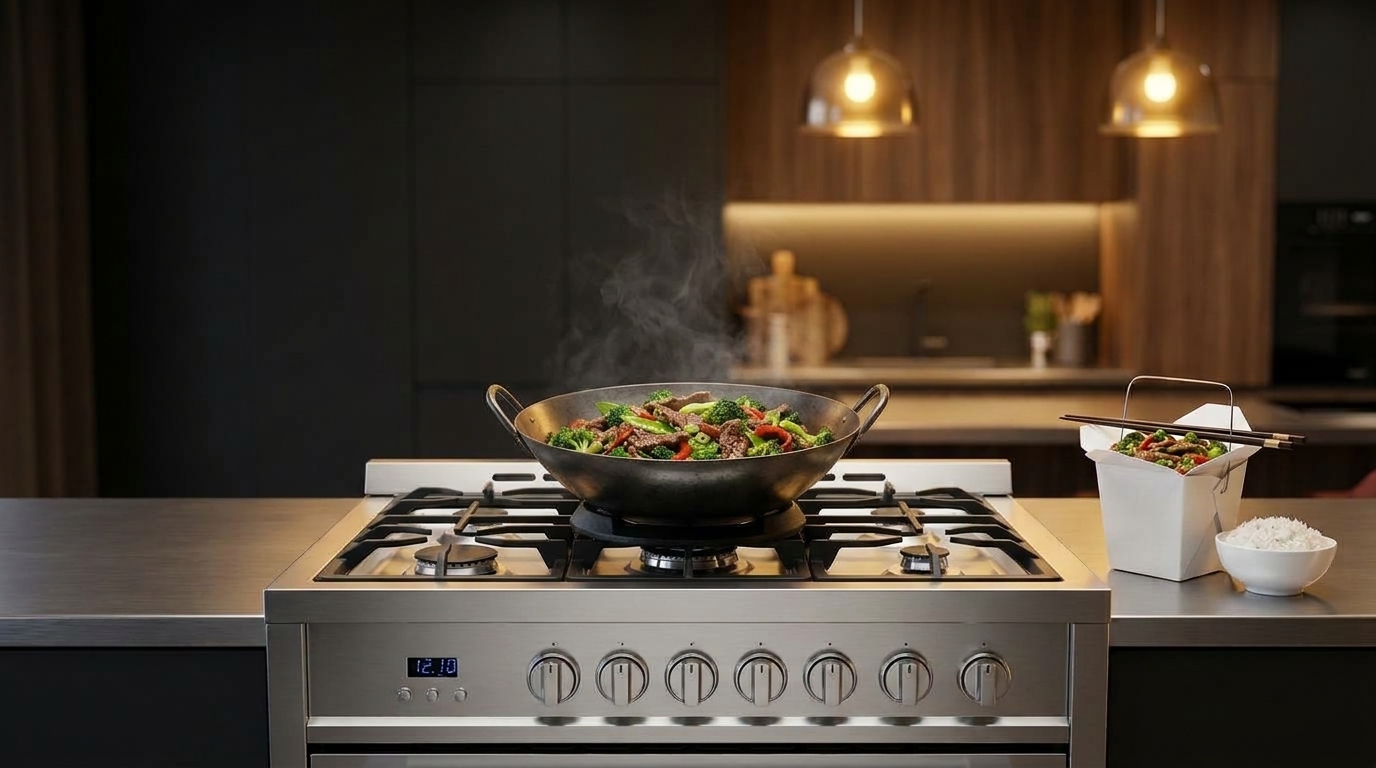
National Chinese Take-Out Day: How to Get Restaurant-Style Stir-Fry Heat on a Home Range
Every November 5, National Chinese Take-Out Day gives millions of households a reason to reach for the familiar white carton and the paper bag that arrives warm and fragrant. The dishes inside, a glossy beef and broccoli, a fiery kung pao chicken, a tangle of noodles with a faint smoky edge, taste a particular way, and most home cooks who have tried to reproduce that taste know how quickly it slips away. The ingredients are rarely the problem. A pan of stir-fry made at home often arrives pale and slightly soft, sitting in a pool of its own liquid, while the restaurant version comes out seared, crisp-tender, and carrying a flavor that is hard to name. That difference has little to do with a secret sauce. It comes down to heat, how much a stove can deliver and how well a cook can use it.
What Restaurant Stir-Fry Is Actually Chasing
Cooks who work with woks have a name for the quality that separates a great stir-fry from an ordinary one: wok hei, often translated as the “breath of the wok.” It describes the faint smoky, slightly charred character that develops when food is tossed in a very hot wok for a very short time. The effect is partly chemical. At high temperatures, the surface of meat and vegetables browns rapidly, and a thin film of oil vaporizes and ignites briefly at the edge of the pan, adding a seared, aromatic note that cannot be added afterward with a sauce.
What makes this possible is speed and intensity working together. A professional wok station delivers a roaring flame concentrated beneath a rounded pan, so ingredients cook in a minute or two and the pan never loses its heat. The vegetables keep their snap because they spend so little time in the pan, and the sauce reduces to a glaze almost instantly instead of thinning out and turning the dish into a soup. Every part of that process depends on a burner that can keep up with the cook.
Why Most Home Stoves Fall Short
A typical home burner was designed for boiling a pot of pasta or simmering a sauce, tasks that reward steady, moderate heat. Drop a handful of cold chicken into a pan on one of those burners and the temperature falls fast, then struggles to climb back. The meat releases moisture, the pan fills with liquid, and the food begins to steam instead of sear. Cooks often respond by lowering the heat to avoid scorching the garlic, which makes the problem worse.
Burner output matters, and so does what the burner sits beneath. A flat grate forces a round-bottomed wok to wobble or hover, and a pan that cannot sit securely over the flame wastes much of the heat around its edges. Commercial wok stations are commonly rated at several times what a residential burner produces, so a home range will not replicate a restaurant line exactly. It can, however, get remarkably close when it offers a strong primary burner, stable support for the wok, and controls that respond the moment a cook asks for more or less flame.
Cosmo’s COS-965AGC, a 36-inch professional-style gas range, is well suited to this kind of cooking. The centerpiece of its cooktop is an 18,000 BTU triple ring burner, built to deliver a wide, concentrated flame that gets a pan hot quickly and helps it recover when cold ingredients go in. Around it sit an 8,800 BTU rapid burner, two 6,900 BTU semi-rapid burners, and a 5,000 BTU auxiliary burner, a spread that matters for a stir-fry dinner because the dish rarely happens on a single burner. The triple ring handles the wok itself, while a mid-range burner can cook rice, and the 5,000 BTU burner can keep a pot of broth or a small saucepan of sauce warm without scorching.
An included wok ring is the feature that ties the rest together. It lifts a round-bottomed wok into the right position over the flame and holds it steady, so a cook can toss and stir with real force without the pan shifting. Heavy-duty cast iron grates carry the weight of a loaded wok comfortably and retain heat evenly around the burner. Sealed burners keep spills from working their way into the cooktop, which is a practical comfort when a recipe involves hot oil, soy sauce, and a lot of motion. Metal control knobs give a cook a firm, direct feel when adjusting the flame, and the push-and-turn ignition adds a layer of protection against accidental lighting.
The oven earns its place at the same dinner. Its 4.4 cubic foot capacity and rapid convection system can keep a tray of spring rolls crisp or hold a platter of finished dishes warm while the last batch comes off the wok, so the table can sit down together instead of eating in shifts. A range that handles both the roaring heat of the wok and the quiet work around it lets a home cook run an entire take-out-style menu from one appliance.
Technique Notes for Better Stir-Fry at Home
Even a strong burner works best alongside good habits, and a handful of them make the largest difference.
Prepare everything before the heat goes on. A stir-fry moves too quickly for chopping mid-cook. Slice the protein and vegetables to a similar size, measure the sauce into a small bowl, and set the aromatics, garlic, ginger, and scallions, within reach of the stove. Once the wok is hot, there is no time to search the counter.
Heat the wok before adding oil. Let the empty wok warm over the high burner until a drop of water evaporates on contact, then add a neutral oil with a high smoke point, such as peanut or avocado oil, and swirl it up the sides. The oil should shimmer almost immediately.
Cook in small batches. Crowding is the most common reason home stir-fries turn out soft. Searing the protein first, removing it, and returning it at the end keeps the pan hot and gives each ingredient room to brown. For a household cooking for four, two rounds of cooking will beat one overloaded pan every time.
Stage the ingredients by cooking time. Dense vegetables like broccoli and carrots go in first, quick-cooking ones like snow peas and bell peppers follow, and the aromatics join in the final moments so they perfume the dish without burning.
Add the sauce at the edge of the pan. Pouring sauce along the hot side of the wok lets it sizzle and caramelize briefly before it meets the food, which builds flavor and helps it cling instead of pooling.
Use day-old rice. Freshly cooked rice carries too much moisture to fry well. Rice that has been refrigerated overnight separates into individual grains and takes on color in the wok the way restaurant fried rice does.
A Note on Ventilation
High-heat wok cooking produces more smoke and steam than a typical weeknight dinner, and a little preparation keeps the kitchen comfortable. Turn the range hood on before the wok heats up so airflow is already established when the oil begins to shimmer, and leave it running for a few minutes after the burner goes off. A nearby window cracked open helps the hood do its work. These small steps keep the aroma of a good stir-fry in the dish rather than in the curtains.
A Take-Out Night Worth Staying In For
Chinese take-out has earned its place in American dinner traditions because it delivers speed, comfort, and bold flavor in a single box. Making it at home lets a cook control the ingredients, adjust the spice, and serve everything at the moment it is best, still hissing from the pan. The gap between a home stir-fry and the restaurant version has always been less about recipes and more about how well a kitchen can deliver and manage heat. A range like the COS-965AGC, with its 18,000 BTU triple ring burner, included wok ring, and a full set of burners for everything surrounding the main event, gives a home cook the tools to close that gap. This National Chinese Take-Out Day, the best order might be the one you cook yourself.